Launch dynamic QR Codes that connect offline moments to results you can measure.
Create & Brand
Design beautifully branded QR Codes that drive action from every scan.
Collect Leads & Insights
Turn every scan into qualified leads and actionable insights with Forms and Pages.
Optimize with Analytics
Refine campaign performance and unlock smarter retargeting with analytics.
Manage & Scale
Centralize control, automate management, and scale QR campaigns confidently.
Generate a QR Code
UNIQODE CARDS
Capture contacts and engagement with branded Digital Business Cards built to scale.
Collect & Convert Leads
Instantly capture and sync leads from every card exchange.
Personalize & Brand
Customize every card to strengthen brand presence at every touchpoint.
Measure Every Interaction
Track every interaction and prove ROI with real-time engagement data.
Manage & Scale Teams
Automate provisioning and scale card management without losing oversight.
Download the Uniqode Cards app
PLATFORM
Integrations
Connect Uniqode to your stack to turn engagement into automated action.
...and more
Security
Protect every scan and exchange with enterprise-grade security and compliance.
SOC 2
HIPAA
GDPR
ISO
2FA
SSO
Why Uniqode?
Choose a platform built for reliability, security, and performance at every stage of growth.
Book a demo
Start Free Trial
BY INDUSTRY
Retail
Consumer Goods
Healthcare
Finance
Hospitality
Education
BY USE CASE
QR Codes for Marketing
QR Codes for Product Packaging
QR Codes for Events
Business Cards for Field Sales
Business Cards for C-Suite Executives
Business Cards in Email Signatures
More Use Cases
BY BUSINESS
Enterprise
Mid-sized businesses
Small businesses
BLOGS
Best QR Code Generators
Free vs. Paid QR Code Generators
Static vs. Dynamic QR Codes
How to Edit a QR Code
Guide to Safe QR Codes
COMPARE
Uniqode vs. Flowcode
Uniqode vs. Bitly
Uniqode vs. QR Tiger
UNIQUE ANGLES
Playbooks
Expert Speak
Newsletter
QR Code Scan Index
The State of QR Codes 2026
HELP CENTER
How to design a custom QR Code
How to restore a lost QR Code
How to duplicate a QR Code
Uniqode’s solution has made our lives a lot easier. Creating QR Codes is quick, and being able to track their performance has proven to be essential for our business.
Marcelo Yanez
Product Manager
Read all customer stories
Book a demo
Start Free Trial
QR Code Coupon: Deliver Deals and Offers Instantly
Use and design coupon QR Codes for your business to deliver discounts, offers and more - all with a single QR Code generator
A coupon QR Code delivers a discount or offer when scanned: a promo code, a landing page with the offer already applied, or a pass added straight to a phone's wallet. It is not just a way to attach that offer to a scannable image. It's a decision about how much control you keep over who redeems it, and how many times.
The QR Code itself is only the delivery mechanism. What happens after the scan, whether the offer can be screenshotted, forwarded, and redeemed by someone who was never marketed to, comes down to how the code is built.
The State of QR Codes 2026 found that 52% of consumers scan QR Codes specifically to access discounts or offers. This means half of everyone who scans any QR Code you print already expect a deal. But only a code built with redemption limits and expiry rules turns that intent into a tracked, one-time sale instead of a coupon that gets screenshotted and passed around.
How to create a coupon QR Code
Here’s how you can create a coupon QR Code in four steps.
Sign in to Uniqode: Open Uniqode's QR Code generator and start a free 14-day trial. No credit card required. Select Coupon QR Code under dynamic QR Codes.
Enter your coupon details: Add your coupon code, set an expiry date, and decide whether it can be redeemed once or multiple times. You can also add the offer headline and message that scanners will see, along with your company name, location, and terms and conditions. Customize the coupon with available themes or create a custom one.
Customize the QR Code: Customize the coupon QR Code further by changing the color gradient, eyes, and template of the QR Code
Test and download the QR Code: Check the scannability score and make sure your QR Code works by scanning on your phone Download the QR Code in your preferred format.
By default, a coupon QR Code adds the offer to a customer's Apple Wallet on scan, with no equivalent Android wallet step yet.
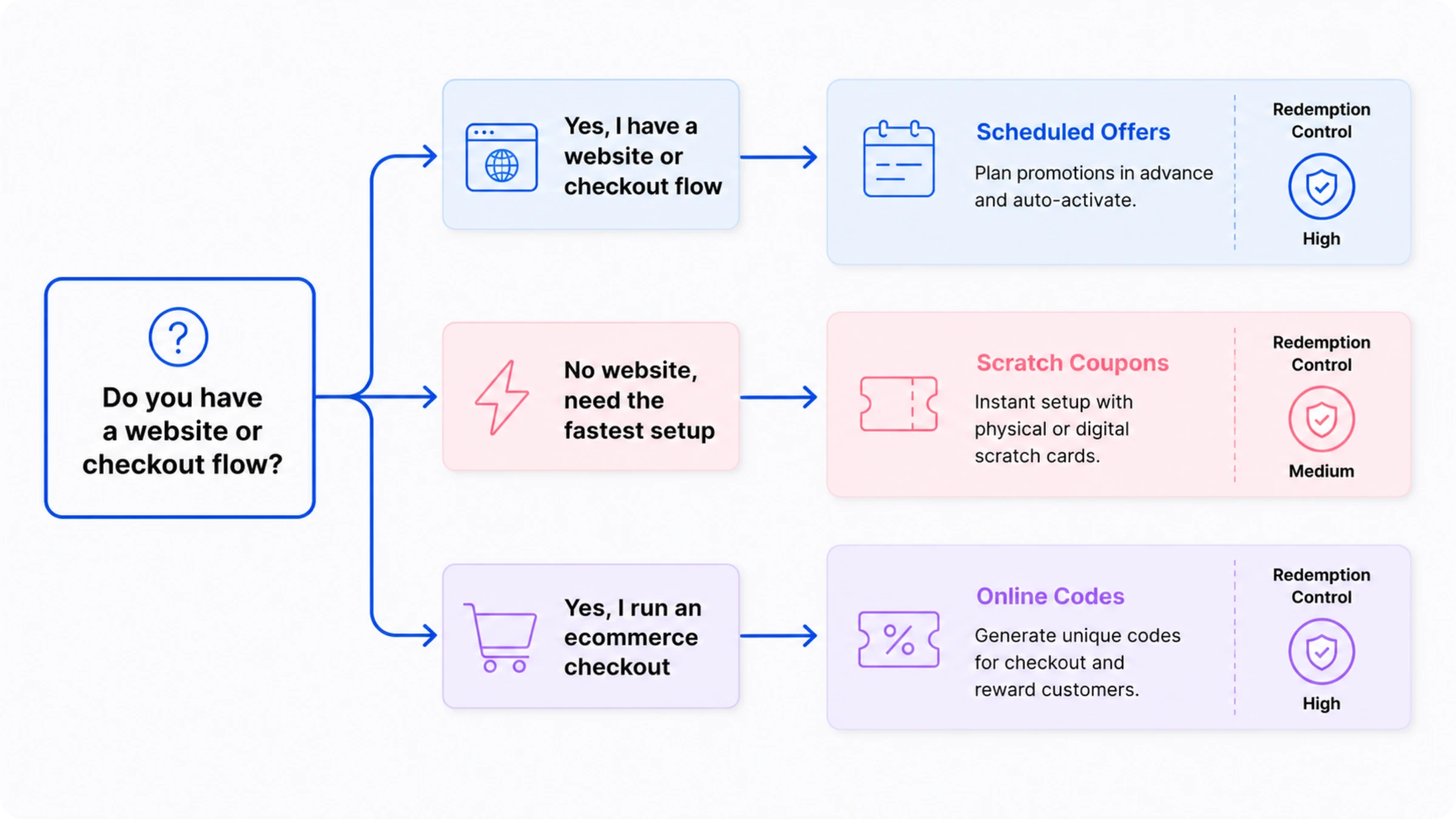
Scheduled offers, scratch coupons, or online codes: which fits your business
Three ways handle every Coupon QR Code on Uniqode. Which one fits depends on your checkout, not on which one happens to be listed first.
Scheduled offers work best for businesses without a website. Uniqode's markdown cards (a no-code, hosted landing page) serve as the offer page, with new offers rotated in on a schedule you set. Lowest redemption control of the three: roughly one shared code per print run.
Scratch coupons are the fastest to launch: enter the promo code, customize the design, generate, and download. Customers scan it and redeem the same code by showing the cashier or entering it at self-checkout. This carries the same forwarding risk as any static code, so it fits a low-stakes, high-volume offer, not a scarce, high-margin discount.
Online coupon codes work best for retail and consumer goods ecommerce checkout flows. The QR Code opens a page with the discount already applied, and because the destination is a full landing page rather than a static image, this method supports the highest redemption control of the three: expiring codes, unique codes per customer, or both.
Wallet is only required for scheduled offers, not across all three. Scratch coupons and online codes skip the wallet step entirely, which matters if a team scans codes at a physical counter instead of asking a customer to add a pass to their phone. Pick the method that matches what the counter already does, not the order the three happen to be listed in.
Redemption security: stop screenshot fraud and shared-code leakage
Four controls limit who can redeem a Coupon QR Code, and how many times: a unique code per recipient instead of one shared code, an expiry window through Campaign scheduling, an optional password gate, and Smart Rules' scan-count condition, which routes a code to an "already redeemed" page after a set number of scans.
A static code carries no tracking by default, so a leaked offer goes unnoticed until finance flags a discount-to-revenue mismatch, weeks after the print run is already circulating. Only 58% of consumers feel confident QR Codes are safe, and 14% have already experienced a QR Code scam, per Uniqode's State of QR Codes 2026 report. So make sure that your code is secure by creating dynamic coupon QR Codes.
Four industries already run coupon QR Codes to drive redemptions. A fifth is proving the model at enterprise scale.
1. Retail
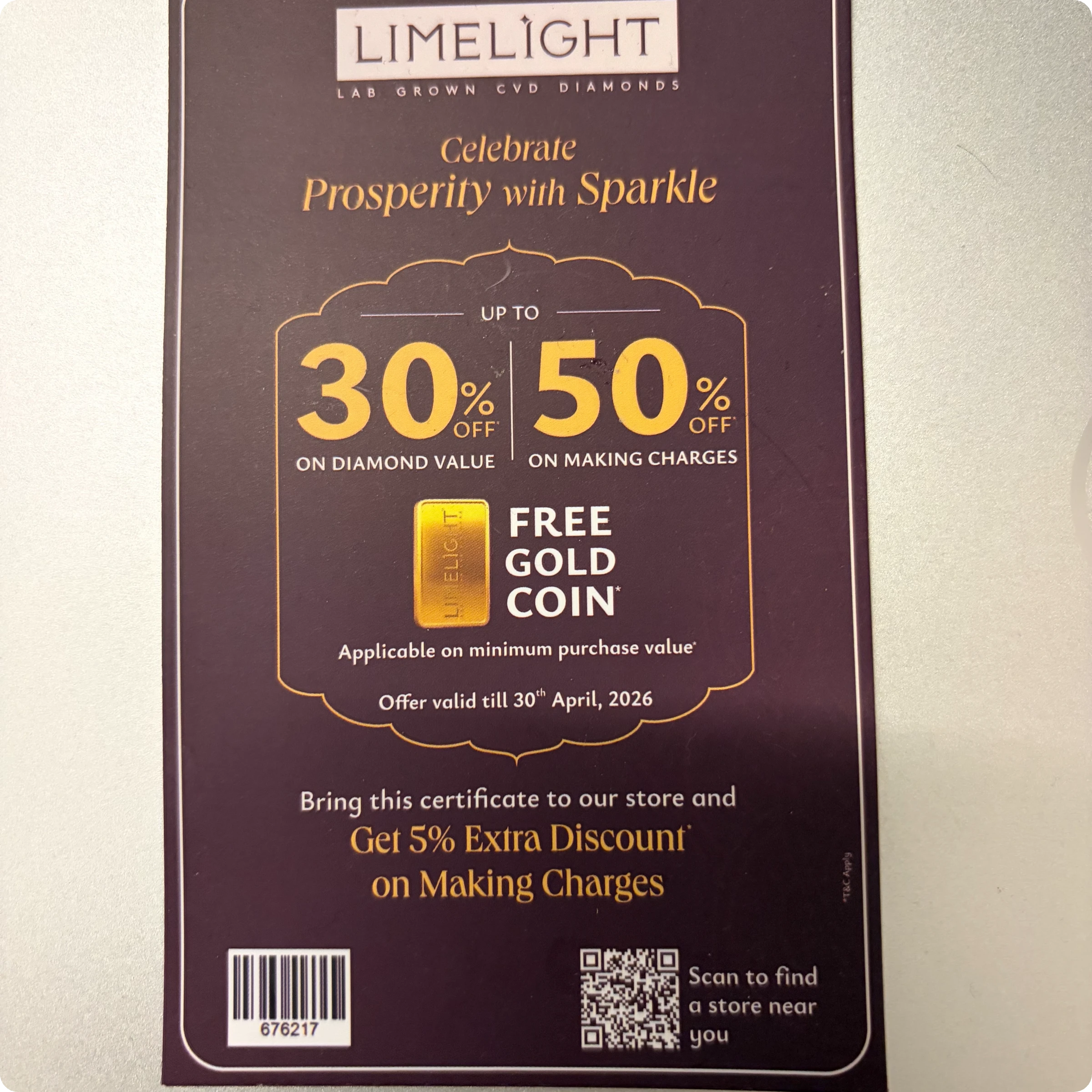
85% of Americans use coupons, according to CreditCards.com. A digital QR Code coupon meets that habit where shoppers already are: comparing prices on a phone, in the aisle, before deciding what goes in the cart. That's not a habit tied to one shopping season. It's a daily behavior a retail team can meet with a scannable offer instead of a paper insert that gets tossed before checkout.
2. Movie theaters
An extra 20% off the next ticket, or a free popcorn tied to a QR Code, turns a one-time visitor into a repeat one without adding staff at the box office.
3. Restaurants and bars
A QR Code coupon for a free drink or appetizer during happy hour gets scanned at the table, not carried home and forgotten in a coat pocket.
4. Online food delivery
A QR Code discount code slipped into the packaging gives a customer a reason to order again, right when they're already holding the box. Pair it with a marketing campaign built around the same offer, and the code becomes the bridge between a one-time delivery order and a repeat customer, tracked from packaging to redemption.
5. Quick-service restaurant chains and loyalty programs
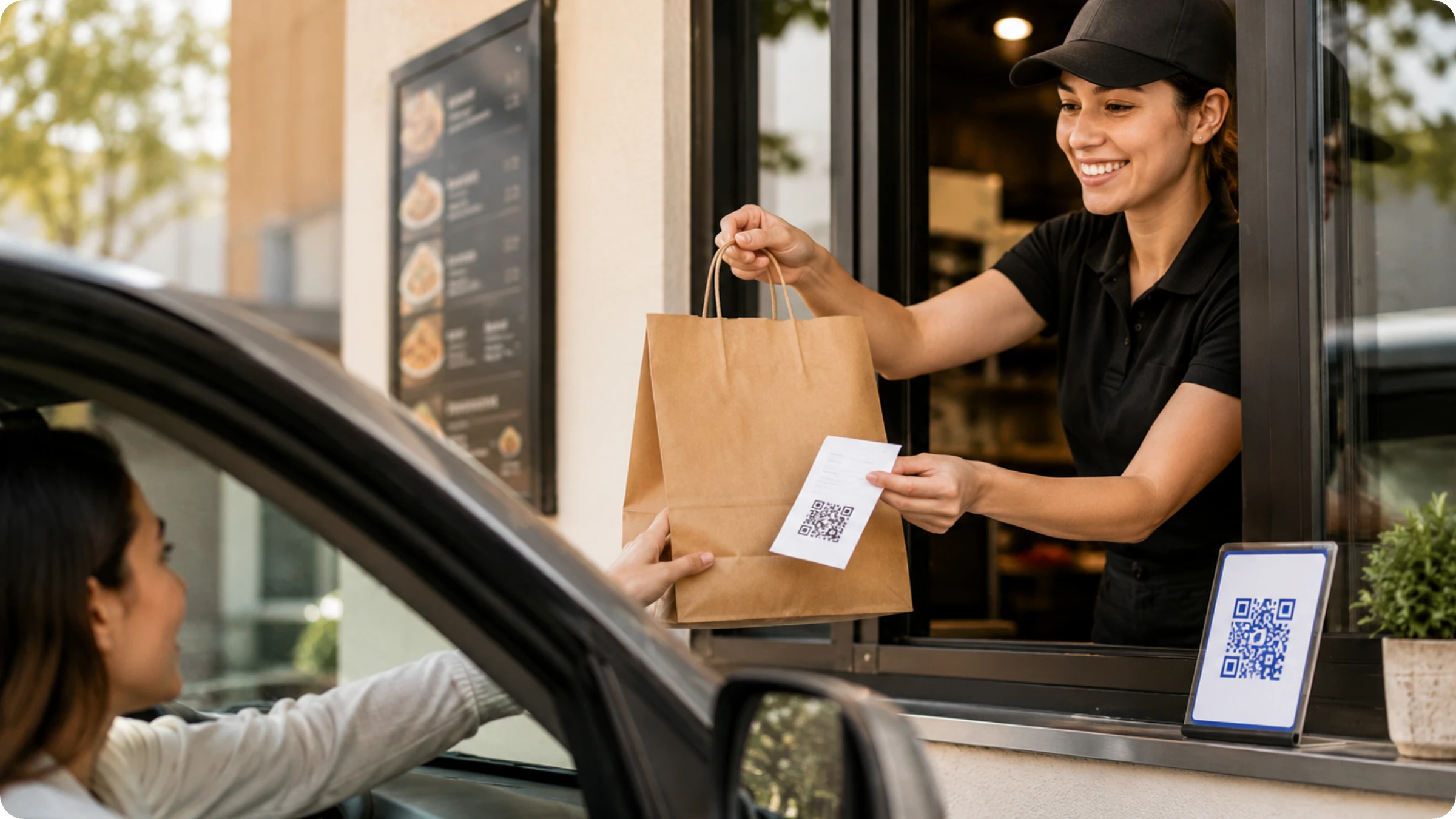
QSR chains use coupon QR Codes to move customers from a single visit to a repeat one. A code on a receipt, table tent, or drive-thru menu can deliver a free side, a loyalty point boost, or a limited-time combo deal the moment someone finishes eating.
Because each QR Code can carry a redemption limit and expiry date, chains control exactly how many times an offer gets used and by whom, without printing new material for every promotion. Paired with location tracking, the same code also shows which stores drive the most redemptions. So franchise owners can see what's working and adjust their next offer accordingly.
The Uniqode advantage for coupon QR Codes
188M+ QR Code scans processed. 796,000+ QR Codes created. 50,000+ businesses across 119 countries. Free, single-purpose generators don't operate at that scale or carry the same security posture.
Bulk creation turns a 25,000-code send into one spreadsheet upload, with Auto Design applying on-brand styling automatically and a real-time scannability score catching unreadable codes before download.
Every code stays dynamic after it's printed, so an expiry date or a leaked code gets fixed from the dashboard, no reprint needed. SOC 2 Type II, GDPR, HIPAA, and ISO 27001 certifications cover the platform when a campaign's landing page collects a phone number or email to unlock the offer.
Put these controls to work on your next campaign: start a free Coupon QR Code and watch the redemption data roll in from the first scan.
Frequently asked questions
How do I get a QR Code for coupons?
How do you use QR Code coupons?
How do I create a Coupon QR Code for free?
What is a Coupon QR Code generator?
Do coupon QR Codes have to be added to a mobile wallet?
Can I stop a coupon QR Code from being redeemed more than once?
Is a Coupon QR Code free?
Can I edit or deactivate my Coupon QR Code after creating it?


.png)


 Templates
 Logo
Logo
 Design
 Frame
Frame






%20(1).webp)
.webp)
.webp)
.webp)
.webp)
.webp)
.webp)
.webp)
.webp)
.webp)
.webp)