Event QR CODE Generator: Track and Manage Every Event Interaction

Create custom QR Codes for events to streamline check-ins, engage attendees, and measure your event's success.

What is an event QR Code?

event QR Code

An event QR Code is a dynamic QR Code that sends attendees directly to a mobile-optimized landing page with your event schedule, venue details, RSVP link, check-in process, and post-event survey. Because it's dynamic, you can update the destination even after everything is printed.

That's what transforms printed materials into live event assets. Update the venue address, change the agenda, or redirect the code to a feedback form after the event ends, all without reprinting a single invitation, badge, or sign.

Static QR Codes can't keep up. Fix the destination at creation and any venue change forces a full reprint of every piece of printed material. Dynamic event QR Codes eliminate that constraint entirely and that's precisely what separates them from the basic free-generator tools most event teams start with and quickly outgrow.

How to create an event QR Code in 4 steps

1. Open Uniqode's QR Code generator
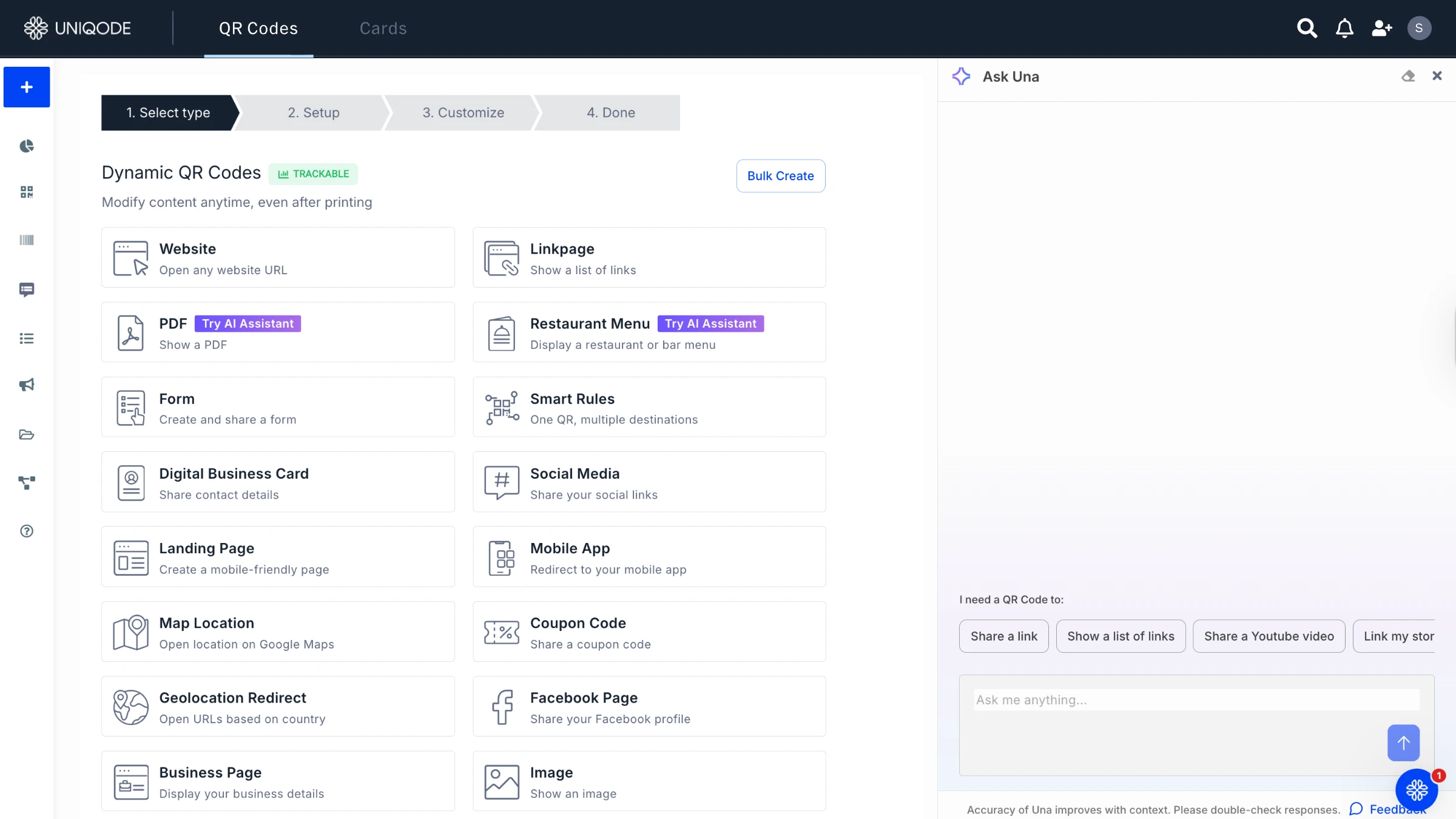
Uniqode dashboard

No account required to start. Choose from the QR Code type that suits your usage closely. For example, you can try location QR Code, website QR Code, landing page, and Facebook QR Code.

2. Add your event details

Add event details

If you already have a landing page ready, add it under setup, or you can create a new landing page from scratch on the Uniqode dashboard.

3. Customize your QR Code design

customize the QR Code design

Add your logo, match your brand colors, and choose a frame with a call-to-action label: "Scan to RSVP," "Scan for Schedule," or "Check In Here." Dynamic QR Codes retain full scannability across any color or design variation.

4. Download, deploy, and track

download QR Code

Download in PNG, SVG, or PDF. Deploy on event invitations, badge lanyards, session room signage, or email campaigns. Every scan surfaces in the Uniqode analytics dashboard with real-time location, device type, and unique vs. repeat scan data.

4 reasons event planners use Uniqode QR Codes

From check-in to CRM, every event interaction is tracked and connected.

1. Check-in that doesn't create a queue

According to Bizzabo's 2025 Event Technology Report, 71% of attendees say the check-in process significantly shapes their event experience. QR-based check-in registers each attendee in under 10 seconds, cutting wait times by up to 70% compared to paper-list verification. Uniqode's dashboard delivers real-time attendance updates, so staff can immediately identify congested entry points and clear ones and reassign volunteers in 30 seconds from a mobile device, with no lengthy communication chains required.

2. Attendee engagement beyond the badge scan

Each check-in code generates a unique data point and that's just the start. Place additional QR Codes at session rooms, sponsor booths, networking stations, and photo walls, and every scan updates the Uniqode analytics dashboard in real time. You see which sessions drew the most attendees, which sponsors captured the most attention, and which participants engaged at three or more locations. A check-in system that only tracks entry can't give you any of that.

3. Registration and RSVP without a third-party form tool

Event QR Codes connect directly to Uniqode's form builder, letting attendees RSVP, register, or join a waitlist with a single scan. Every response lands in a single dashboard and exports automatically to HubSpot or Salesforce. Registration data, scan data, and CRM contact records are unified in one system the moment the QR Code goes live.

That unified approach makes follow-up straightforward. Connecting to your CRM takes a single setup step, not a time-consuming post-event data import.

4. Scan data that actually reaches your CRM

According to Uniqode's State of QR Codes 2026 report, only 12% of marketers connect QR Code scan data to revenue outcomes. Scans happen but follow-up campaigns often don't. Uniqode's native integrations with HubSpot, Salesforce, Google Analytics, and Meta route scan data directly into existing workflows, making timely follow-up automatic. Every attendee who scans at a booth or session becomes a trackable contact before they leave the venue.

Set UTM parameters during QR Code creation and every scan from a conference badge or session sign records in GA4 as a tagged session, attributed to the exact code that generated it.

How to use QR Codes in events

  • Event Promotion: QR Codes on flyers, posters, and digital ads make it simpler for potential attendees to find event details or registration pages instantly. A quick scan removes the hassle of typing long URLs, increasing sign-up chances.

🚀 See How New Life Community Alliance improved event attendance with QR Codes!

By adding QR Codes to event signage, they made the registration smooth for job seekers and gathered valuable feedback from employers and attendees.

The Results?

  • 20x more attendees
  • 2x more feedback
  • Smoother event management

Read the full story to learn how QR Codes can complement your events.

  • E-invites: Digital invitations with embedded QR Codes simplify RSVPs, provide direct links to event locations, and allow attendees to save the event to their calendars effortlessly. This minor feature can lead to a major boost in engagement.
  • Registration: On-site registration flows smoothly with QR Codes linked to online forms. Attendees scan, fill in details, and register quickly—no paperwork, no long lines. It’s efficient for both organizers and guests.
  • Material Sharing: Instead of printing hundreds of pages, QR Codes link to presentation slides, event schedules, and handouts. Attendees can download what they need directly to their phones, keeping things organized and eco-friendly.
  • Feedback Collection: Post-event surveys are more accessible when linked through QR Codes. A simple scan can encourage attendees to share their feedback, helping organizers gather insights without extra effort.
  • Networking: Digital business cards with QR Codes make exchanging contacts smooth. Whether it’s LinkedIn profiles, portfolios, or personal websites, a quick scan helps build connections effortlessly.
  • Interactive Maps: QR Codes that link to interactive maps make navigating large venues less stressful. Attendees can find booths, restrooms, or emergency exits without asking around.
  • Real-Time Stats and Player Info: At sports events, QR Codes are linked to live stats, player profiles, and game updates. Fans stay engaged with real-time information, enhancing their overall experience.
  • Food & Beverage Orders: In-seat ordering through QR Codes reduces the hassle of waiting in lines at food stalls. Attendees can browse menus, place orders, and get food delivered right to their seats.

Event QR Codes for every type of event (use cases and examples)

Honestly, there is no bar for the events that can benefit from QR Codes. Here we discuss some of them:

1. Corporate events and conferences

Upload a CSV file and generate unique QR Codes for every attendee badge in one step. Manage session check-ins, track attendance in real time, and update speaker schedules directly from the Uniqode dashboard. New Life Community Alliance put this into practice at a hiring conference using Uniqode event QR Codes and achieved 20 times more attendees and double the feedback response rate compared to their previous event.

⚙️Use cases:

  1. Contactless check-in: QR Codes can enable fast, contactless check-ins. Attendees can receive a QR Code for event registration at the venue entrance, which they can scan to reduce the waiting time.
  2. Digital business cards: At networking events, attendees can share digital business cards with QR Codes that link to their LinkedIn profile, website, or personalized landing page.
  3. Event schedules and maps: QR Codes on physical signage or badges can link to digital schedules, session locations, or venue maps for navigation.

💡Example: 

Web Summit uses QR Codes on badges for contactless networking, allowing attendees to connect by scanning each other’s QR Codes. QR Codes can link to dynamic event schedules and venue maps, which managers can update in real-time as sessions change.

QR Codes at corporate events

2. Music festivals and concerts

Set up tiered access control using QR Codes for general admission, backstage, and VIP areas. Each tier gets a unique QR Code that deactivates automatically at a specified date and time. No manual deactivation needed, and no risk of unauthorized access from uncollected printed materials after the event ends.

⚙️Use cases:

  • Digital ticketing: Instead of paper tickets, festival-goers can scan QR Codes on their phones to enter, with codes featuring a rotating design to prevent ticket fraud
  • VIP and special access: Use QR Code tickets for tiered access levels, allowing VIPs to scan codes for exclusive areas or perks
  • Interactive merch: QR Codes on festival merchandise can link to exclusive content, such as behind-the-scenes footage or digital downloads, to improve loyalty

💡Example: 

Bacardi launched a novel music distribution program with streetwear brand Nahmias and Grammy Award-winning producer Boi-1da. The partnership launched an outfit line featuring QR Codes, which led fashion lovers to albums of less famous artists. The goal was to raise awareness of underrepresented artists.

As an incentive to the wearers, they will continue to receive loyalty points each time someone scans the QR Code, which attendees can redeem for live music concert tickets.

event QR Codes at music festivals

🪞Mirror this use-case

Design a custom QR Code with error correction and a high scannability score for use on fabrics. Learn more here.

3. Trade shows and expos

Replace traditional business card exchanges with a scan-to-contact process. Visitors scan, complete a brief form, and land directly in your HubSpot or Salesforce pipeline automatically. Exhibitors track booth engagement by scan volume, time of day, and device type, giving sales teams a prioritized lead list before the event is even over.

⚙️Use cases:

  • Product demos and information: Exhibitors can place QR Codes on products to provide technical specs, videos, or digital brochures, reducing the need for printed materials.
  • Lead generation: Attendees can scan QR Codes on exhibitor booths to submit their contact details, enabling exhibitors to capture leads instantly.
  • Event polls and feedback: QR Codes can link to surveys that let attendees rate presentations, providing organizers with feedback to improve future events.

💡Example:

At CES (Consumer Electronics Show) 2024, brands such as Targus used QR Codes to capture leads, share product information through AR, and offer booth check-ins.

event QR Code at trade shows
Type image caption here (optional)

4. Weddings and private events

Create RSVP QR Codes for invitations, table cards with scan-to-menu or scan-to-photo gallery links, and guestbook forms that guests can complete from any phone camera. Dynamic codes let you update event details after the cards are printed, with no reprint cost.

⚙️Use cases:

  • Invitations and RSVPs: QR Codes on wedding invitations can link to RSVP forms so guests can respond digitally.
  • Photo sharing: QR Codes can point guests to a shared online album to upload and view event photos in real-time.
  • Interactive seating charts: QR Codes can direct guests to a digital seating arrangement or event schedule for easy navigation.

💡Example:

Many modern wedding invitations now include a QR Code for RSVPs. QR Codes are often displayed on tables to link guests to photo albums or wedding highlights during the reception.

wedding invitation with a QR Code

5. Art exhibitions and museums

Enhance attendee experiences with easy-to-find event resources and offer more touchpoints throughout the event lifecycle:

⚙️Use cases:

  • Augmented reality (AR) integration: QR Codes on exhibits can link to curated AR experiences, adding an interactive, immersive layer for viewers.
  • Audio guides: Attendees can scan QR Codes for audio explanations or background stories about specific exhibits, enhancing their understanding of the art at museums.
  • Virtual exhibits: Museums and galleries can use QR Codes to expand the accessibility of exhibits by linking to digital resources, allowing differently-abled visitors to continue exploring from home.

💡Example:

The British Museum recently used QR Codes to trigger an AR app, transforming ten renowned horse paintings into whimsical My Little Pony portraits.

In this AR experience, iconic works such as George Stubbs’ Whistlejacket and Jean-Louis André Théodore’s A Horse Frightened by Lightning are reimagined to feature characters from the beloved animated film. This interactive trail is tailored for families, creating an engaging and enchanting experience that appeals to an international audience.

event QR Code for art exhibition

Best practices for creating event QR Codes

Here’s a hygiene checklist for creating an event QR Code:

  • Use dynamic QR Codes, not static ones. Static QR Codes cannot be edited after printing. One venue change or agenda update on a static code means reprinting every invitation, badge, and poster in the run.
  • Test on iOS and Android at the minimum print size before committing to a print run. The smallest reliably scannable size is 2x2 cm (0.8x0.8 in). Below that threshold, ambient lighting and camera variation cause scan failures.
  • Set auto-deactivation for the event end date. After the event, redirect the code to a post-event survey or highlight reel instead of leaving it pointing at a stale registration page.
  • Put the CTA label on the code frame, not next to it. "Scan to Check In" or "Scan for Schedule" inside the code frame produces 3.8x higher scan rates than unlabeled codes, according to research from The QR Code Generator (qr-code-generator.com), Uniqode's sister brand.
  • Connect scan data to your CRM before the event, not after. Set up the HubSpot or Salesforce integration during QR Code creation so every scan on event day lands in the right pipeline automatically. Post-event data imports are lossy and slow.
QR Code scanning metrics

How to measure ROI from events using QR Code tracking

QR Codes offer a powerful way to measure your event success. By strategically placing QR Codes throughout your event, you can track various metrics to measure your return on investment (ROI). You can create a QR Code code for an event​ to track the following activities:

Attendance and demographics

  • Assign a unique QR Code to each attendee for check-in
  • Include optional fields in the QR Code scan to collect attendee information (age, industry, etc.)
  • Analyze scan data to determine peak attendance periods

Booth performance

  • Place a QR Code at each booth to track visitor interest
  • You can assess each representative’s performance and offer targeted training by tracking the number of scans and interactions

Promotion effectiveness

  • Create QR Codes for event registration​ and add them to promotional materials and campaigns at your offline event 
  • By monitoring scan counts and interactions, you can gain valuable insights into the effectiveness of each promotion

Content consumption

  • Link QR Codes to downloadable resources (e.g., whitepapers, case studies)
  • Track which content is most accessed. Use this data to tailor future offerings

Lead generation

  • Include lead capture forms linked to QR Codes so attendees can provide contact information
  • Nurture leads post-event by following up with attendees who engage the most and providing them with additional resources or offers related to their interests

Want to dive deeper into QR Code tracking? Check out our comprehensive guide on QR Code tracking for a detailed breakdown of strategies.

Should I keep the QR Code active after the event?

Yes, you should keep the QR Code active after the event for continued engagement and marketing. With dynamic QR Codes, you can update content even after printing, giving you flexibility. 

If you’ve used QR Codes on merchandise, they can link attendees back to event content, such as recordings or announcements. You can also drive post-event marketing by linking to surveys, follow-up materials, or social media, keeping the connection alive. Plus, dynamic QR Codes let you retarget attendees with personalized follow-ups, exclusive offers, or early bird tickets for future events.

Create your first customizable QR Code for your event using Uniqode’s free QR Code generator. Explore our QR Code marketing solution for more use cases, or schedule a demo to seek guidance from our QR Code marketing expert.

Frequently Asked Questions