Smart QR Codes Explained: What They Are and How to Create One
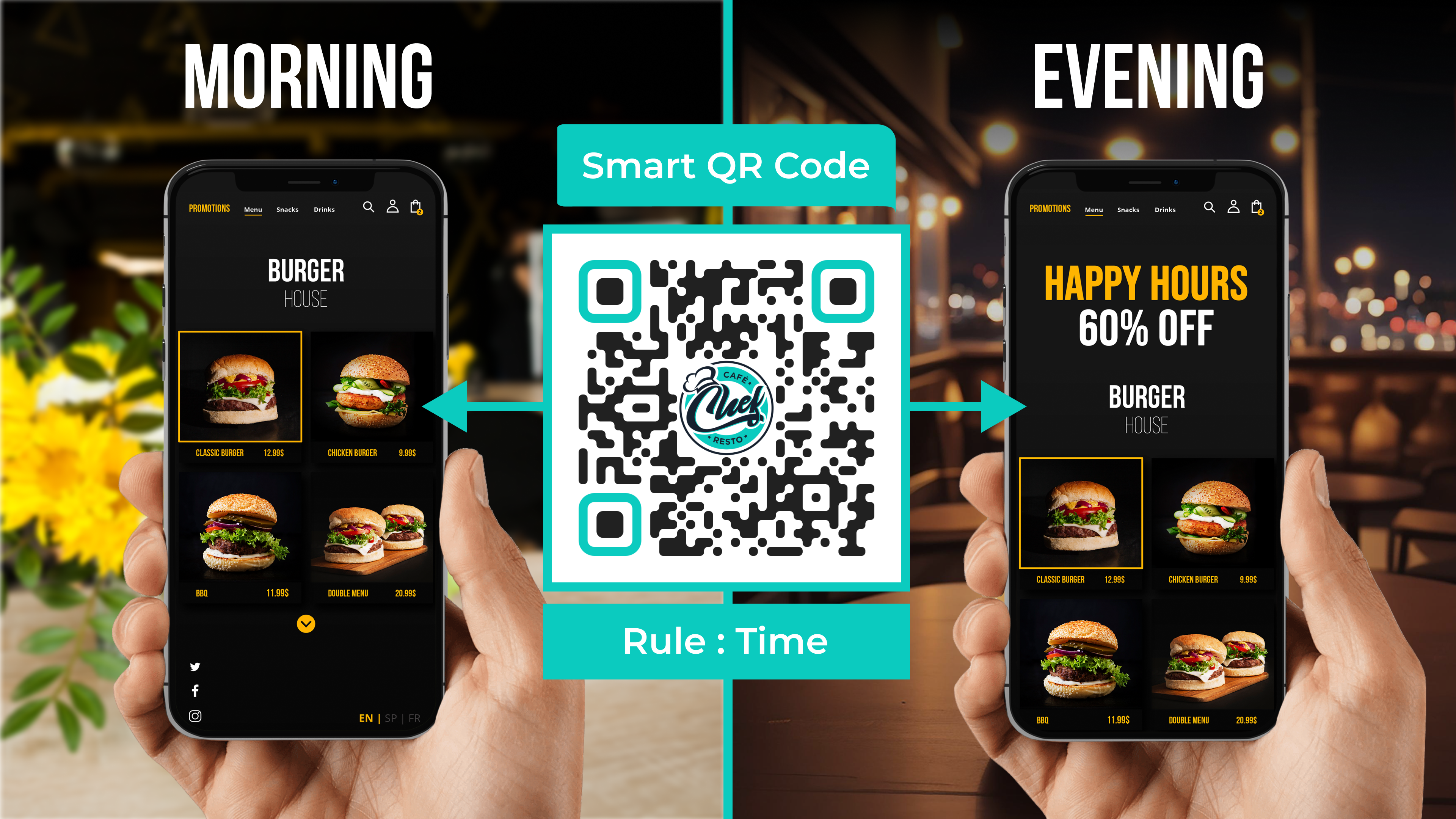
Automate QR Code redirection with Smart Rules. One dynamic QR Code, multiple destinations based on different conditions. Personalize experiences for each user based on time, location, device, and more.
A Smart QR Code is a dynamic QR Code that automatically shows different content based on rules you set, like time, location, or device type, instead of sending every scanner to the same destination.
39% of people expect a personalized experience when they scan a QR Code. Smart Rules, Uniqode's rule-based redirection engine, deliver that: one code, multiple destinations, chosen automatically. Rules have edge cases, though: what happens when two rules both apply to the same scan?
Here's how the rules work, where they break, and how to create one.
What is a Smart QR Code?
A Smart QR Code is a dynamic QR Code that automatically displays different content based on Smart Rules, such as time, location, or device type. The rules do the deciding. The code itself never changes.
That distinction is what separates a Smart QR Code from a plain dynamic QR Code, which sends every scanner to the same link regardless of who they are or when they scan. A Smart QR Code checks a condition first, then routes the scanner accordingly. A billboard shows the same message to everyone who drives past it. A Smart QR Code behaves more like a targeted social ad, adjusting based on who's actually looking at it.
Every Smart QR Code is built on a dynamic QR Code, which means it inherits the base capabilities that make dynamic codes worth using in the first place:
- Change the destination URL anytime, without reprinting
- Track scan performance over time
- Connect to Google Analytics and Meta Pixel for retargeting
- Give team members access without sharing one login
- Create and edit codes in bulk through the API
Smart Rules add the routing logic on top of that foundation.
Why use Smart QR Codes?
Smart QR Codes solve problems a single static destination can't. Here's what they unlock for a marketing or ops team:
- One code instead of many. Route different audiences to different content without printing a separate QR Code for each channel, location, or campaign.
- No reprinting when plans change. Update a rule's destination instantly instead of scrapping printed materials when a promotion, menu, or event schedule changes.
- Built-in personalization. Show breakfast menus before 11 a.m., alcohol menus to scanners over 21, or app-store links matched to the scanner's device, automatically.
- Abuse prevention for promotions. Cap total scans or limit claims to one per person, so a giveaway or discount can't be gamed by repeat scanning.
- A path that scales with the campaign. Add a new rule, like a new date range or a new region, without touching the printed code at all.
For any campaign running across more than one channel, location, or time window, a Smart QR Code replaces what would otherwise take several separate QR Codes to manage.
How do Smart QR Codes work?
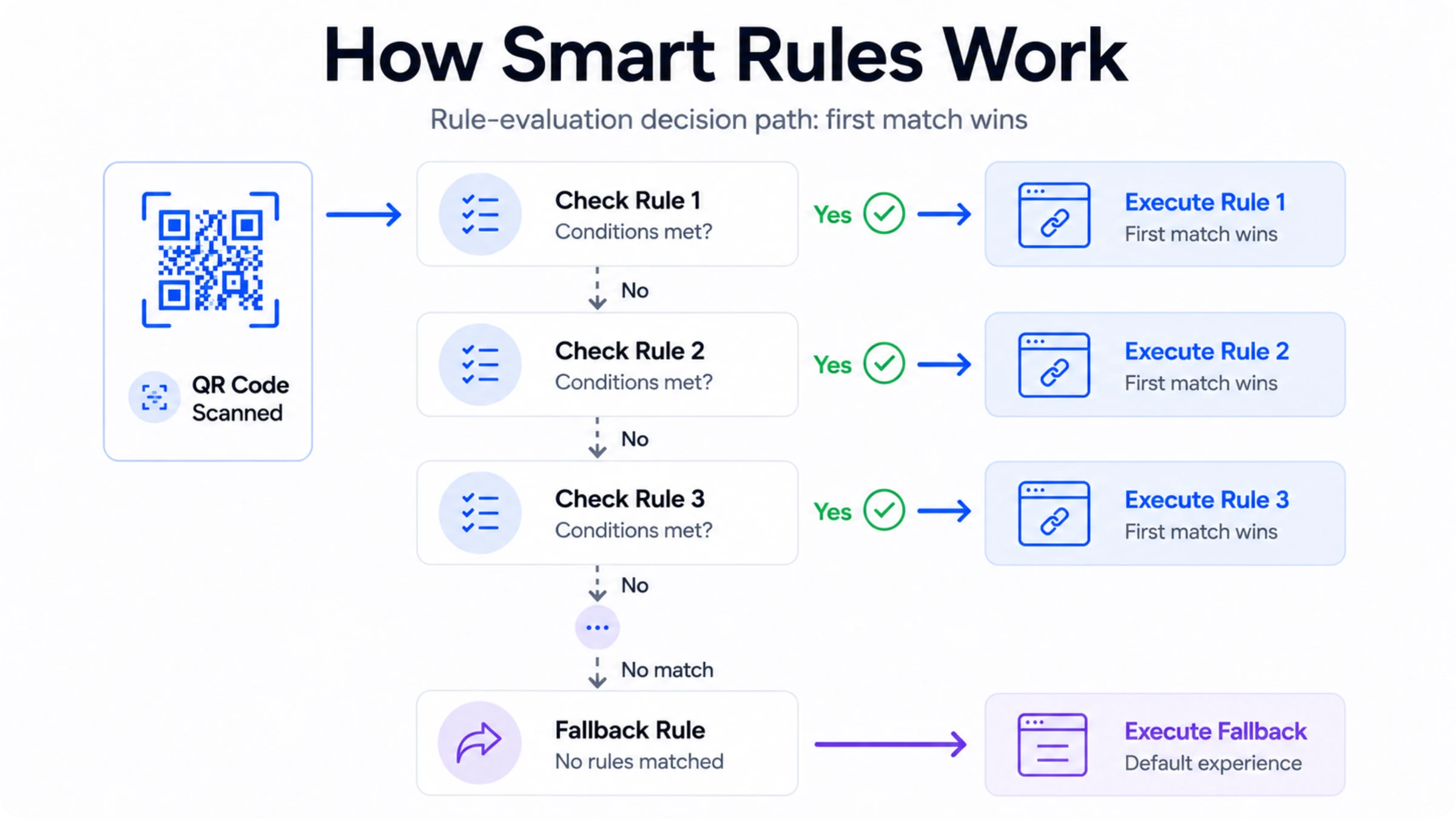
Smart QR Codes run on a rules-based redirection system that checks conditions every time someone scans:
- You set the conditions on your dynamic QR Code platform, like time, location, device type, or scan count.
- A customer scans the code, and the system checks your rules in real time.
- The scanner is redirected to whichever destination matches the first rule that applies.
- The code itself never changes. Only the content behind it does.
- You can edit the rules anytime, without reprinting.
That third step hides an edge case: what happens when two rules both match the same scan? Smart Rules are checked in the order you've set them on the dashboard, and the first match wins. Get the order wrong, and a scanner sees the wrong offer.
Different QR Code Smart Rules explained
Uniqode supports 11 Smart Rule types, and each one solves a different targeting problem: time, date, day, location, country, device OS, device language, total user scans, unique user scans, passcode, and user age.
- Time: With time-based smart QR Codes, you can redirect users to different content based on a specific time or time range. Restaurants use it to swap breakfast and dinner menus automatically, without a manager touching the code twice a day. It also works for flash sales or daily specials that need to change on a schedule nobody has to remember.
- Date: Redirects based on a specific date or date range. Useful for shifting a code's destination before, during, and after an event, or for seasonal offers that start and stop on fixed calendar dates.
- Day: Redirects based on the day of the week. A code can point to a lighter weekday menu at reduced prices and switch to weekend surge pricing automatically, or promote a "Taco Tuesday" deal without a separate code for that one day.
- Location: Location-based smart QR Codes redirect based on latitude, longitude, and a radius you set. Retailers use it to send shoppers to store-specific promotions. Real estate teams show full listing details and virtual tours to on-site scanners, while remote scanners see a broader portfolio and contact options instead. Events use it to route attendees to personalized agendas or vendor directories depending on where in the venue they scan.
- Country: Redirects based on the country a scan originates from. A single code can show Canadian dollar pricing to scanners in Canada and French-language content to scanners in France, or route each country to its own regional support contact.
- Device OS. Device-based smart QR Codes detect whether a scanner is on iOS, Android, or a desktop. The most common use is sending iOS users to the App Store and Android users to Google Play from the same printed code, but it also works for routing smartphone scanners to touch-friendly forms, while desktop scanners get a fuller layout built for a bigger screen.
- Device language: Detects the scanner's device language setting and matches content to it. Spanish-language devices see Spanish content, English-language devices see English, without asking the scanner to choose.
- Total user scans: Redirects based on how many times the code has been scanned in total, counting every scan even from the same person. This is how tiered rewards work: the first 100 scans unlock a 10% discount, the next 400 unlock free shipping, and so on.
- Unique user scans: Redirects based on how many distinct people have scanned the code, counting each person once no matter how many times they scan. This is the rule that limits an offer to the first 100 individuals rather than the first 100 scans, which matters more than it sounds like it should.
- Passcode: Gates content behind a password. Useful for VIP access, internal documents, or any content that shouldn't be open to anyone who happens to scan the code.
- User age: Gates content behind an age input. A restaurant can show an alcohol menu to scanners over 21 and a standard menu to everyone else from the same printed code.
The total-scan and unique-scan rules look similar and solve different problems. Get them backward, and a promotion meant to reward the first 100 people can end up rewarding the same one or two people a hundred times instead. That's exactly the mistake the next section walks through.
How to create a Smart QR Code on Uniqode
Smart QR Codes are only available on Uniqode, and you can try the feature with a 14-day free trial that doesn't require a credit card. Creating one takes four steps: plan the campaign, build the rule, customize the design, and test before printing.
Step 1: Plan the campaign
Define what the Smart QR Code campaign is meant to achieve, identify your audience and the specific rules that will reach them, and plan how you'll test each condition once it's live. Prepare every destination URL in advance, for every rule you plan to set, and finalize the code's design before printing to avoid a second print run over a cosmetic change.
Step 2: Select smart rules QR Code
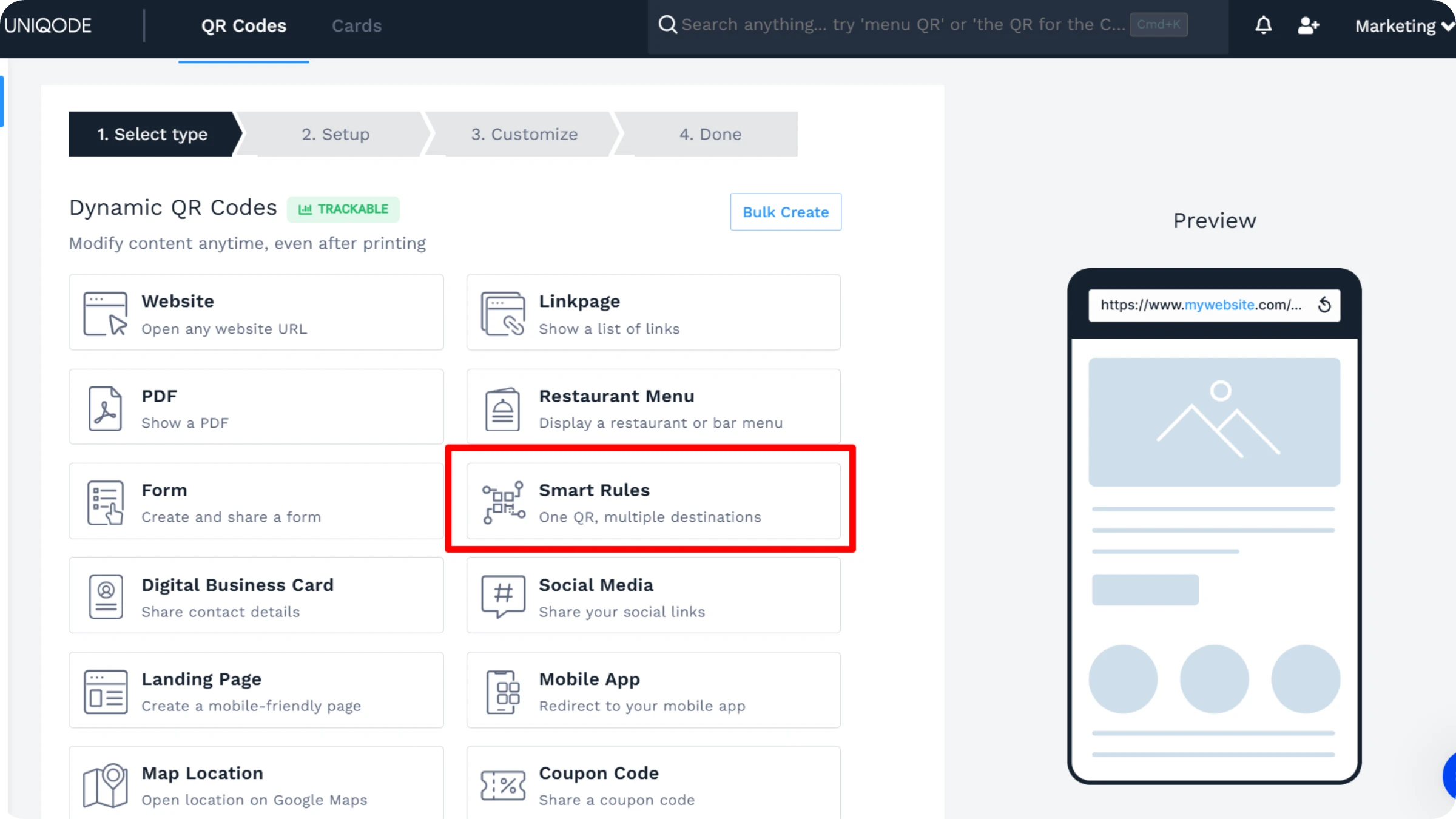
Log in, select + Create in the top right corner, and choose Smart Rules as the QR Code type under the dynamic QR Code section.
Step 3: Set your campaign rules
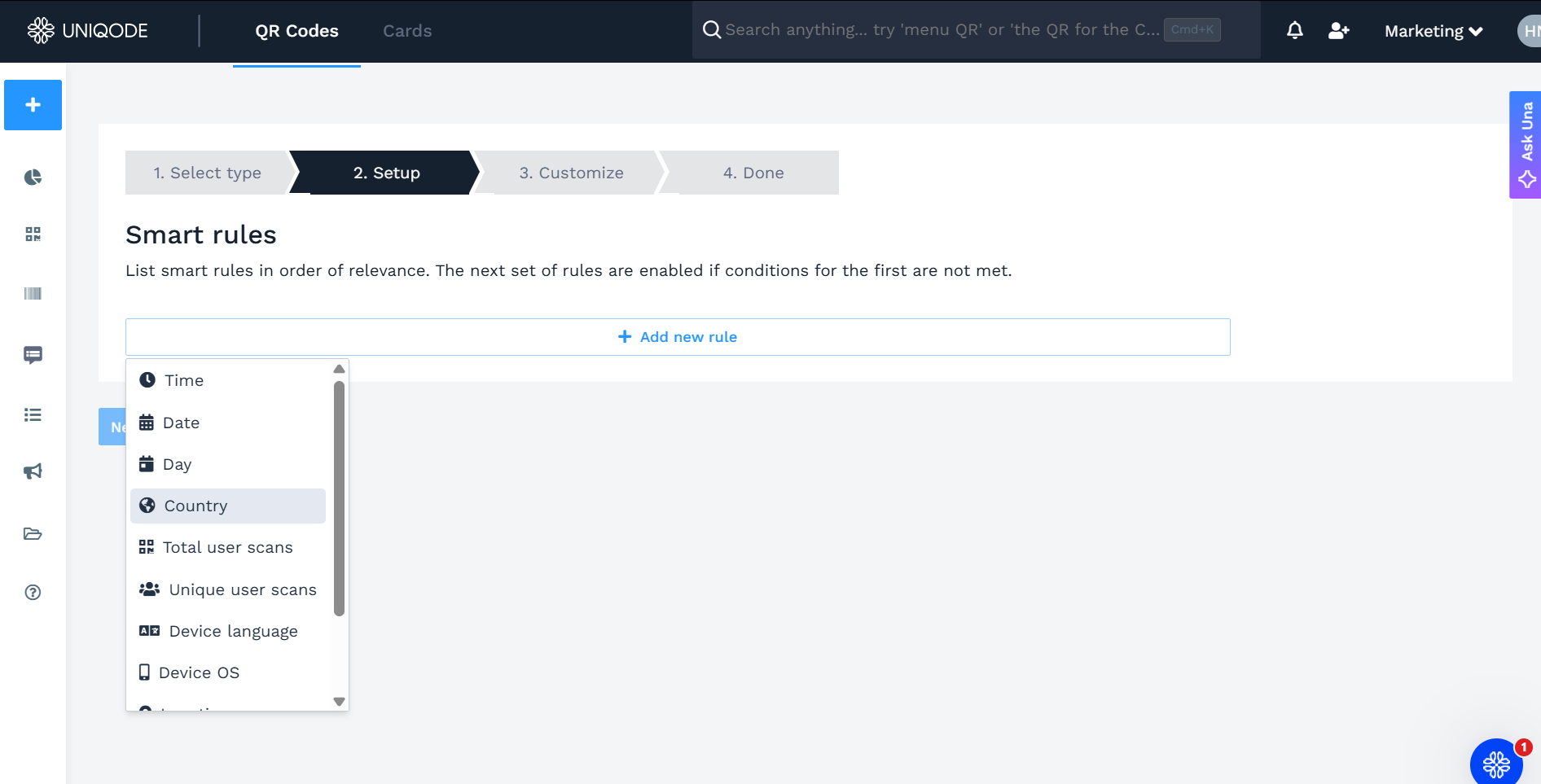
Select the rule your campaign needs from the dropdown. You can select multiple rules. Add a fallback destination for scans that don't match any of them. Uniqode lets you combine multiple rules on the same code, so a single Smart QR Code can run a campaign that would otherwise need three or four separate codes.
Step 4: Customize the design
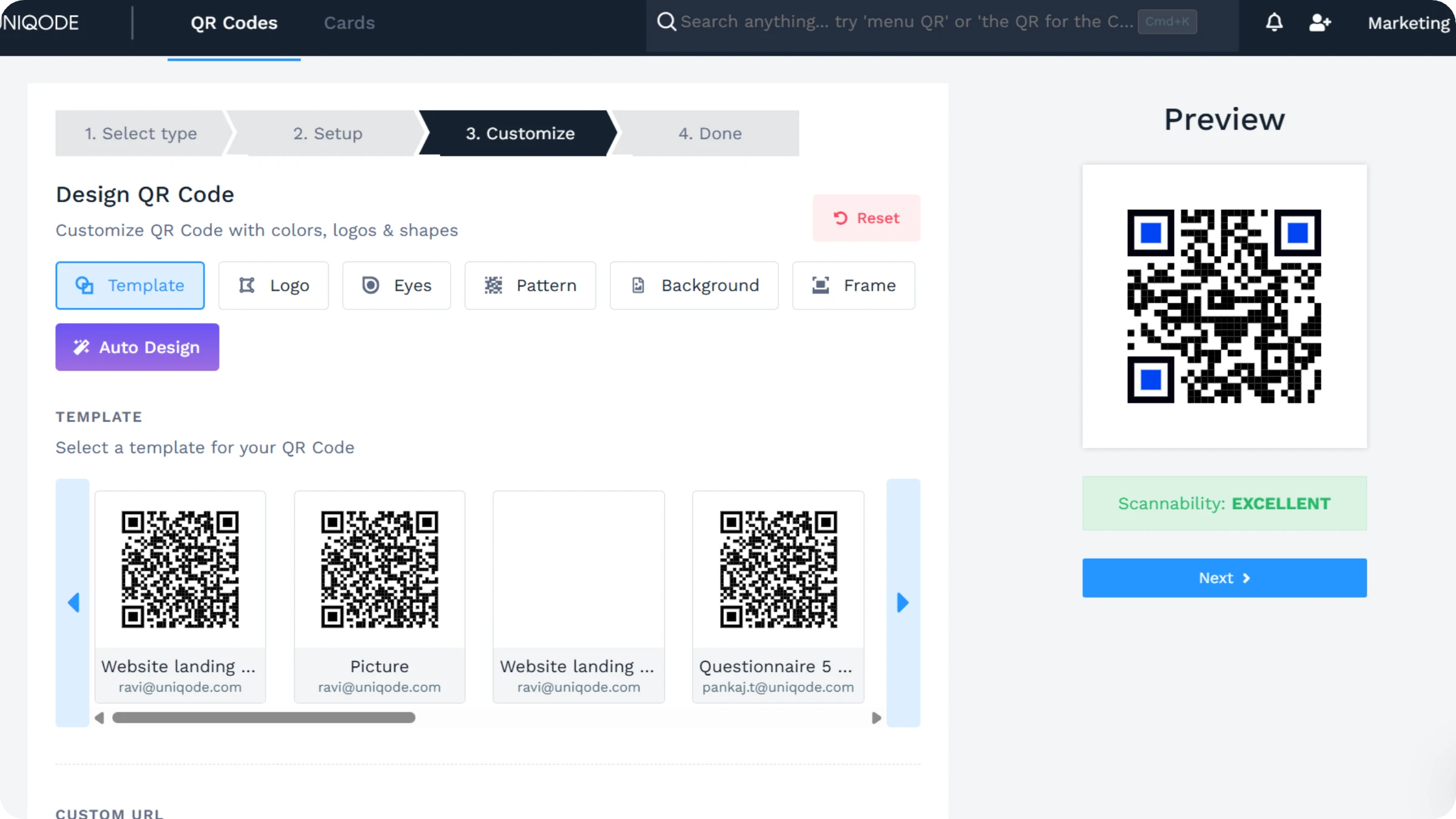
Change the eye shape, adjust the data pattern, set a solid color or gradient, add a background image, or attach a frame with a clear call to action. Edit the design as many times as you want in the dashboard.
Step 4: Test and download
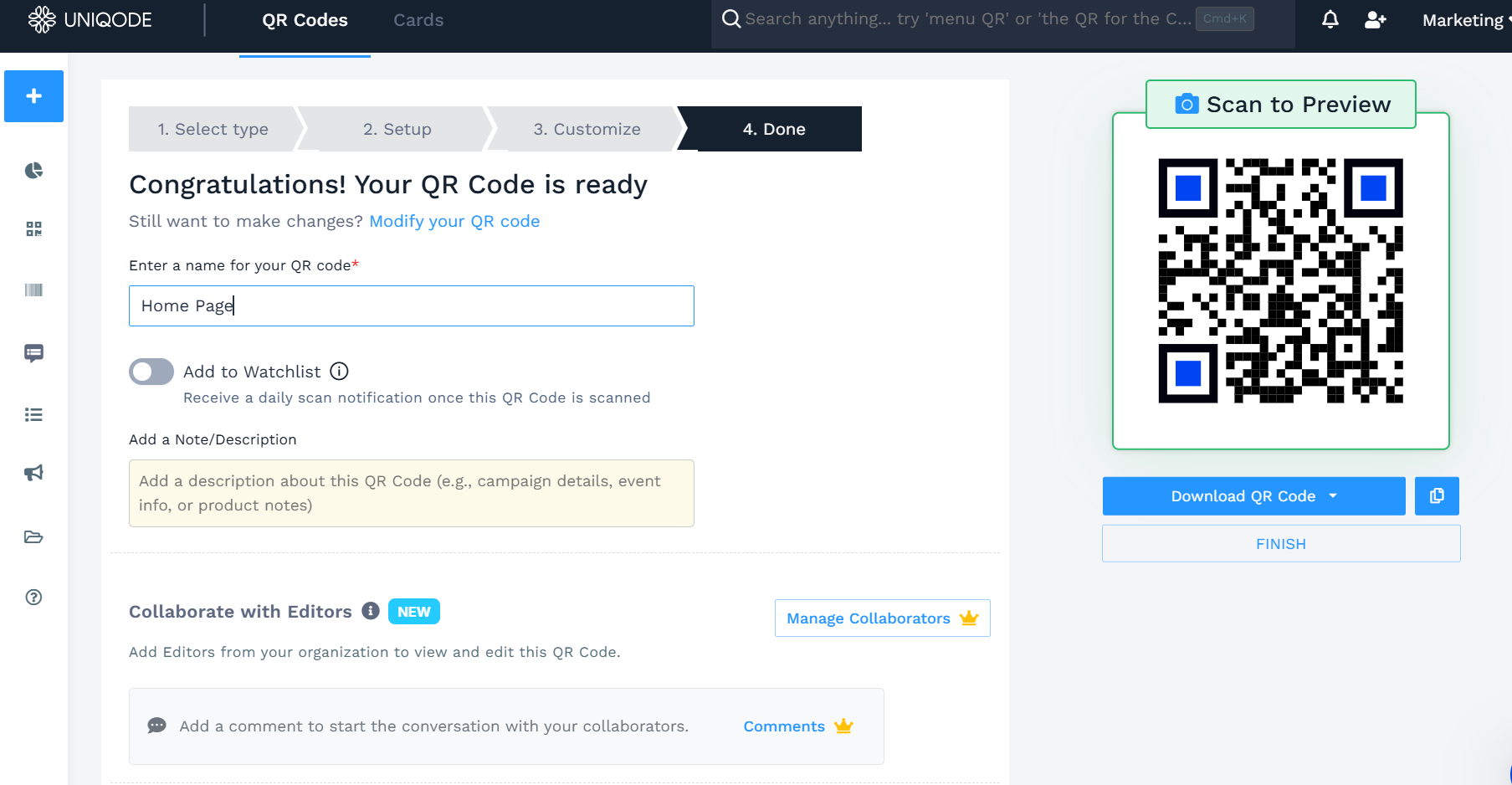
Test the code the way a real scanner would before it goes anywhere near a printer. If a rule routes iOS and Android scanners to different app store pages, test it on an actual iPhone and an actual Android device, not just in the dashboard preview. Once testing confirms every rule behaves the way you expect, download the code in whichever format your print vendor needs.
Best practices and common failure modes
- Prevent scan abuse. Stack a total-user-scan rule (sets the prize pool) with a unique-user-scan rule (one claim per person). One restaurant chain almost shipped a promotion without this pairing, and caught the gap only by imagining someone scanning the same code repeatedly.
- Catch what rules can't. ScanGuard flags unusual scan patterns, like sudden spikes or bot-like repeat activity, that a scan-limit rule alone won't catch.
- Plan for retirement. 22% of marketers report difficulty retiring obsolete QR Codes. Set a custom error page for any code you'll eventually retire, so an expired code shows a branded message instead of stale content.
- Give every rule a fallback. A scan that matches no rule should always have somewhere to go.
How do I choose a reliable Smart QR Code platform?
A simple and free QR Code generator will not suffice when creating Smart QR Codes. This is why Smart QR Codes must be powered by a versatile QR Code platform made for businesses that emphasize safety and reliability.
That's why Uniqode's dynamic QR Code platform offers:
- Endless Smart Rules customization to create targeted workflows.
- Granular-level analytics from your campaigns to measure success and improve workflows.
- Integration with third-party tools such as GA4 or Meta Pixel for further retargeting.
- Airtight security and privacy protocols for your Smart QR Code workflows, such as SOC 2 Type II certification, along with GDPR and HIPAA compliance.
Want to get started with Smart QR Codes and experiment for yourself? Sign up for Uniqode’s free 14-day trial and create your first Smart QR Code below.
Frequently Asked Questions
- How is a Smart QR Code different from a regular dynamic QR Code?
You can change the destination URL after printing with a dynamic QR Code. A Smart QR Code lets you set multiple rules to direct different users to different experiences, all from the same QR Code.
- Do Smart QR Codes work offline?
The QR Code itself can be scanned offline, but the rule-based redirection requires an internet connection to deliver the personalized experience.
- Can I track analytics with Smart QR Codes?
Absolutely. Uniqode allows you to track your analytics for each Smart QR Code and get data such as the number of scans, unique scans, location, device type, and time of scan.
- What happens if two Smart Rules both apply to the same scan?
Uniqode checks the rules in the order you've set them on the dashboard, and the first one that matches decides the destination. Order your rules deliberately whenever a scan can satisfy more than one condition.
- What happens if a scan doesn't match any rule?
It goes to the fallback destination you set when creating the code. Always define a fallback, even if you expect every scan to match a rule; an unhandled scan without one leads nowhere useful.
- Do Smart QR Codes help with marketing performance?
Yes. Personalized, context-aware experiences increase engagement, reduce content fatigue from showing the same message to everyone, and improve conversion rates compared to a single static destination.
- Can I change the rules after the QR Code is printed?
Yes, as many times as you want, without reprinting. That's the entire point of building the campaign on a dynamic QR Code in the first place.
- Are Smart QR Codes secure?
Yes, provided they're built on a trusted dynamic QR Code platform like Uniqode, with the same account-level protections (malware scanning, access controls) applied to every code you create.
About the Author
Ektha is a QR code expert with years of research and analysis into the evolution of QR codes. Having written over 70 in-depth articles on QR technology, she has developed a comprehensive understanding of how QR codes are transforming industries. Her insights, including The State of QR Report, have been featured in leading publications. With a passion for simplifying complex topics and providing actionable strategies, Ektha helps businesses leverage QR codes to enhance their 'phygital' connections.
Related Posts
Static QR Code: Definition, Uses, Benefits & Limitations
Multimedia QR Code generator: turn audio, video, images, and PDFs into one scannable code
The Complete Guide to QR Codes: How They Work, Types, and Best Practices
Do QR Codes Expire? How Long They Last & Why
How To Scan a QR Code From a Photo, Gallery, or Screenshot in 2026