









 Explore All Features

💻 Key takeaways: 1. Google Drive QR Codes are used to direct users, after scanning, to shared files or folders in Google Drive. You can either create a URL QR Code for your file/folder in Google Drive or connect Uniqode with Zapier to create a Zap to automate Google Drive QR Code generation. 2. There are 3 triggers to automate QR Code generation: when a new file is added to Google Drive, when a new file is added to a specific folder in Google Drive, and when a new folder is added to Google Drive.
With nearly 2 billion monthly active users, Google Drive is one of the most reliable and widely adopted platforms for storing and sharing files and folders. Its appeal lies in more than just convenience; Google Drive keeps everything centralized, syncs seamlessly across devices, and makes it easy to collaborate in real time.
You can make sharing even easier by linking your Google Drive video to a QR Code. Rather than copying and pasting long links, just place the QR Code on a document, screen, handout, or send it via email so anyone can scan and instantly access what you’ve shared.
But how do you actually create a QR Code for Google Drive? And how do you make sure it works well?
That’s precisely what this guide walks you through. Below are a few simple ways to make a QR Code for a Google Drive file or folder.

Table of contents
- What is a Google Drive QR Code?
- How to generate a QR Code for Google Drive
- Benefits of using QR Codes for Google Drive sharing
- Best practices for creating a Google Drive QR Code
- Can you generate Google Drive QR Codes in bulk?
- How to choose the right QR Code tool for Google Drive
- Frequently asked questions
What is a Google Drive QR Code?
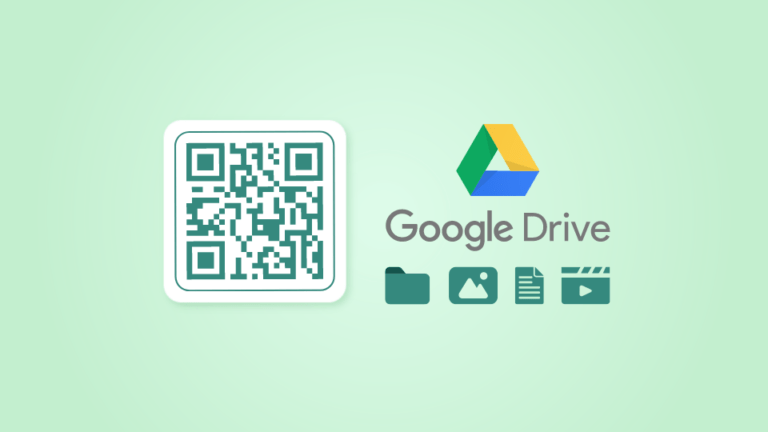
A Google Drive QR Code is a QR Code that directs users to a specific file (like a document, photo, or video) or folder in Google Drive when scanned.
For example, if you want to share a Google Drive video, simply use a QR Code generator and the shareable link of your video to generate the QR Code. Anyone who scans it can access the video instantly, based on the permissions you’ve set.
How to create a QR Code for a Google Drive
STEP 1: Go to the file or folder you wish to share on Google Drive and click ‘Share’.
STEP 2: Change the ‘General access’ to ‘Anyone with the link’ and and set the appropriate permission (Viewer, Commenter, or Editor).
STEP 3: Click on ‘Copy link’. Then, click ‘Done’.
STEP 4: Go to the Uniqode dashboard and click ‘+Create QR Code’ at the top right corner of your screen.
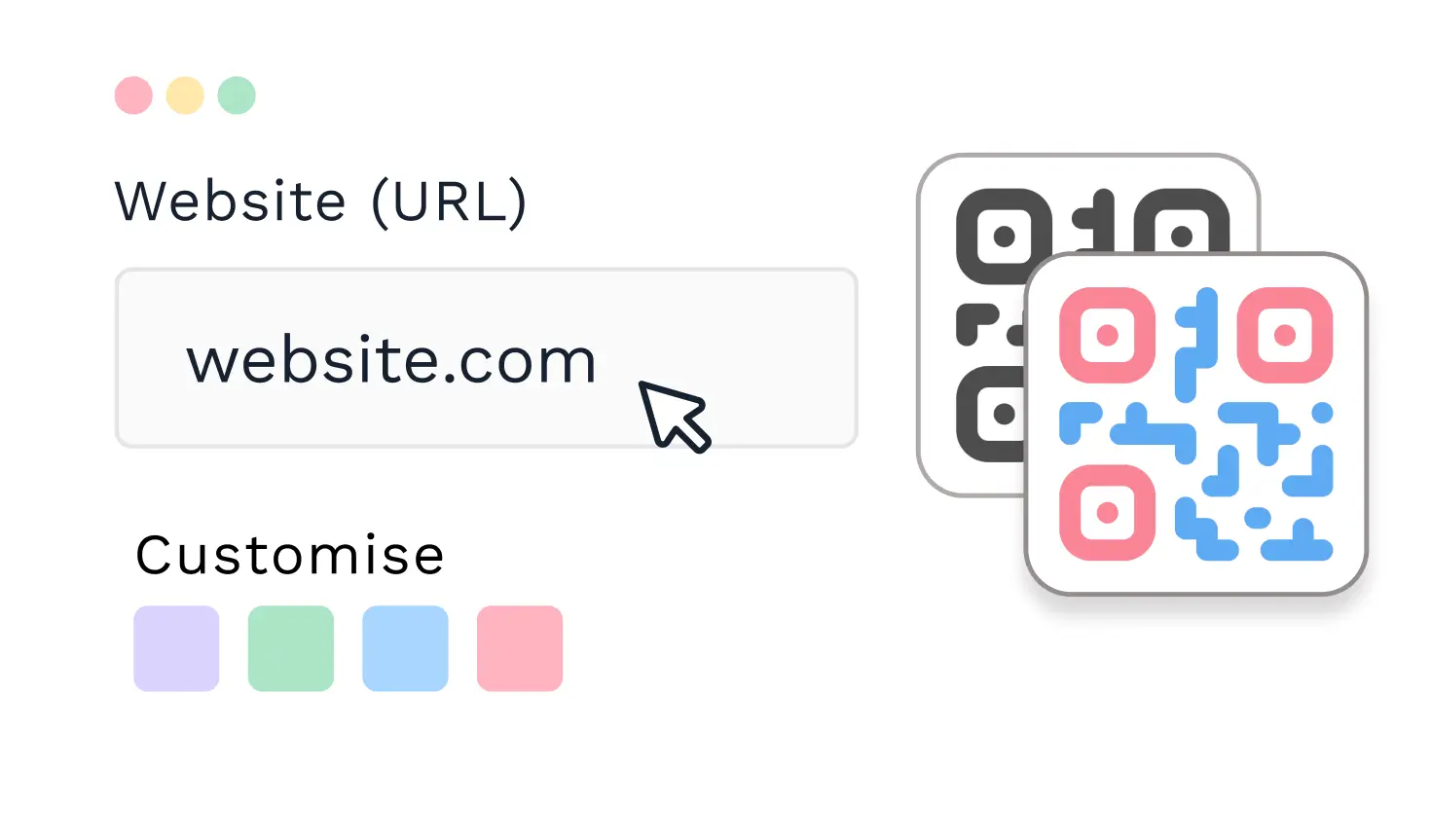
STEP 5: Select ‘Website’ from the list of dynamic QR Code campaign types.
STEP 6: Paste the Google Drive link in the box provided. Click ‘Next’.
STEP 7: Customize your QR Code. When you’re done, click ‘Next’.
STEP 8: Name and save your QR Code, and download it in the format of your choice (e.g., PDF, EPS, SVG).
For example, if you want to create a QR Code for a Google Doc, here’s a video showing the exact steps.
You can follow the same process for any other Google Drive item, whether it’s a video, PDF, image, or an entire folder.
|
⚡ Pro Tip: If you frequently add or update files in Google Drive, you don’t have to create QR Codes manually every time. Platforms like Uniqode offers Zapier integration to generate QR Codes automatically. This works on a simple trigger-and-action setup (for example: when a new file is created → generate a QR Code). 👉 Learn how to integrate Zapier with Uniqode 👉 Learn how to use Zaps to automate QR Code creation and workflows |
Benefits of using QR Codes for Google Drive sharing
If you rely on Google Drive for distributing resources, adding a QR Code makes access faster and far more reliable; whether you’re sharing a document, a folder, or even a Google Drive video.
- Users go straight to the file or folder with a scan. There’s no room for copying and pasting or mistyping long URLs.
- Anyone with a smartphone camera can access the Drive item, even if they’re not logged into email or internal tools at that moment.
- One QR Code replaces repeated link-sending, reducing “I didn’t get the link” or “Can you resend?” requests.
- With a dynamic QR Code, you can update the linked Drive file or folder without needing to reprint the QR code.
- Instead of circulating new versions of PDFs or documents, you update the Drive file once; everyone scanning the same QR code always sees the latest version.
- Google Drive permissions (viewer/commenter/editor, restricted, domain-only) still apply, so access control remains centralized.
- QR platforms like Uniqode can add password protection or expiry dates as an extra security layer without altering Drive settings.
- Dynamic QR Codes provide scan analytics (counts, device type, general location), giving insight into how often and where your Drive resources are being accessed.
Best practices for creating a Google Drive QR Code
Whether you’re sharing a Google Drive video, a pdf, a doc, or an entire folder, a few best practices can help ensure your QR Code works exactly as intended.
The following tips will help you avoid access issues, maintain proper permissions, and deliver a smooth scanning experience for anyone accessing your Google Drive content.
- Ensure the Drive link is set to “Anyone with the link” with the proper permission (Viewer or Commenter).
- Avoid giving Editor access unless necessary to prevent accidental changes or deletion.
- Use a dynamic QR Code so you can update the qr code destination without reprinting.
- Test the QR Code on at least two devices (Android + iPhone) and in different lighting/distance conditions.
- Match the QR Code size to placement: small for handouts/desks, larger for posters or walls.
- When printing, add a simple call-to-action, such as “Scan to view the file” or “Scan to access the folder.”
- When sharing a folder, ensure that all sub-files inherit the correct permissions; restrictive sub-file settings can still block access.
- For sensitive content, consider adding password protection or expiry dates through your QR Code platform as an additional layer of security beyond Drive permissions.
Can you generate Google Drive QR Codes in bulk?
Yes, you can create hundreds or even thousands of Google Drive QR Codes using Uniqode.
With Uniqode’s bulk QR Code generator, you can create up to 2,000 QR Codes in less than 5 minutes. This is the perfect solution when you need thousands of QR Codes, but you’re in a pinch.
Here’s how it works:
Step 1: Access the Bulk Upload feature
- Log in to your Uniqode dashboard
- In the left panel, click QR Codes
- Select Bulk Upload
- Choose Website
Step 2: Prepare your spreadsheet
- Download Uniqode’s pre-defined spreadsheet template (if you haven’t already)
- The template will be downloaded in .csv and .xlsx formats
- Open the file and fill in the spreadsheet with the data for each QR Code
Step 3: Upload your data
- Return to the Bulk Upload page
- Upload your completed spreadsheet
Step 4: Customize your batch
- Customize your QR Code batch (design and settings)
- Add a batch name for easy identification
- Click Apply
Step 5: Generate your QR Codes
- Click Submit to generate your QR Codes
You will receive an email to your registered email address to view the generated QR Code batch once it is ready.
How to choose the right QR Code tool for Google Drive
When sharing Google Drive files and folders via QR Codes, choosing a reliable, flexible, and easy-to-manage tool makes all the difference.
Here’s what you must look for:
1. Dynamic QR Codes
Choose a tool that lets you update or replace the Google Drive file or folder without reprinting the QR Code. This is essential when links change or files are updated.
2. Actionable scan analytics
Choose a platform that goes beyond basic scan counts and offers reliable QR tracking. Helpful insights include things like:
- whether people are scanning multiple times
- what type of devices are they using
- which general locations scans are coming from
- when people are scanning
These insights help measure real usage across scenarios like training materials, onboarding docs, event folders, or shared instructions. Tools like Uniqode also integrate with Google Analytics to track QR scans alongside other traffic sources.
3. Strong security options
Google Drive permissions are not enough on their own. A robust QR Code platform should offer added security such as password protection, expiry dates, scan disabling, and device-based access limits.
It also helps if the platform follows established security standards and compliance frameworks. For example, Uniqode is compliant with GDPR, SOC 2® Type 2, HIPAA, and ISO.
4. Automation and integrations
If you regularly upload or update files and folders, make sure the QR Code platform integrates with Zapier, Make, or offer APIs to automatically generate QR Codes when new files or folders are created.
5. Flexible, high-quality download formats
The tool should allow you to download QR Code in different formats that maintain clarity in various environments. For instance, SVG for large posters or screens, PNG for digital work, and PDF for printing in bulk, and so on.
But beyond that, the platform should ensure the QR Code scales correctly and maintains its error correction so it scans even when resized.
6. Understand the limitations of free tools
Yes, there are free QR Code generators. However, they handle the absolute basics and usually break down the moment your use case becomes even slightly complex.
Here’s what typically becomes a problem:
- Links can’t be edited later, so you’re stuck reprinting everything
- Analytics are either nonexistent or unreliable
- Security controls don’t exist
- Exported QR Codes may not scale well for print
- Support is minimal or missing
These limitations become critical when Google Drive files are updated, moved, or replaced.
|
Related → What Is the Difference Between Free vs. Paid QR Code Generators? |
A practical choice for managing Google Drive QR Codes
Uniqode is built for teams that need QR Codes to work reliably at scale. The platform focuses on getting the fundamentals right: clear workflows, consistent scan quality, and the ability to update destinations without replacing existing codes.
Security is also taken seriously. Uniqode meets standards such as SOC 2 Type 2 and GDPR and includes safeguards like MFA, custom domains, and phishing detection.
These features make Uniqode a good fit for organizations that share Google Drive files frequently or need a dependable way to keep distributed materials up to date.
Uniqode also earns strong feedback from users, holding a 4.8/5 rating on G2.

Frequently asked questions
1. How to create QR Code for a PDF in Google Drive?
You can easily create a QR Code for a PDF in Google Drive using a QR Code maker. Here’s how to do it in 5 steps:
- Click on ‘Share’ and copy the URL of the PDF in Google Drive
- Log in to the Uniqode dashboard and click “+ Create”
- Choose “Website” as your campaign
- Insert the URL in the provided box
- Customize the QR Code, save changes, and download
2. How to create QR Code for a Google Drive folder?
You can easily create a QR Code for a Google Drive folder. Here’s how to do it in 5 steps:
- Open the Google Drive folder of your choice, and click ‘Share’ and ‘Copy link’
- Log in to the Uniqode dashboard and click “+ Create”
- Choose “Website” as your campaign
- Insert the URL in the field provided
- Customize the QR Code, save changes, and download
3. How to link a file in my Google Drive to a QR Code?
You can link a Google Drive file, such as a PDF, Video, or Image, to a QR Code in just a few steps:
- Copy the shareable link of your file from Google Drive
- Log in to your Uniqode dashboard and select + Create.
- Choose Website as your campaign type.
- Paste the file URL into the provided field.
- Customize the QR Code, save your changes, and download it.
4.Can someone view a Google Drive file without signing in?
Yes, as long as the file’s sharing settings allow it. If your Google Drive file is set to “Anyone with the link”, anyone who scans the QR Code can open and see the file without signing in.
If it’s restricted to specific people or groups, they’ll be asked to request access or sign in with the allowed email.
5.Do QR Codes for Google Drive links expire?
Yes, dynamic QR Codes for Google Drive links can expire if you set a start and end date for your campaign. Some platforms allow you to schedule when a QR Code should become active and when it should stop functioning. This is helpful for time-bound videos, event content, or internal announcements that shouldn’t be accessible indefinitely.
6.Is there a 100% free QR Code generator?
There are free tools available online that can generate simple, static QR Codes. But they usually come with limitations:
- no ability to edit the link later
- no scan analytics
- no security options
- no custom branding
- limited export quality
They’re fine for quick, one-time personal use, but not reliable for videos shared with teams, customers, or large groups.
7. Can I password-protect a video QR Code?
Yes, you can. QR Code platforms like Uniqode let you add a password directly to the QR Code itself. This means that when someone scans the code, they’ll first be asked to enter the password before they can access your Google Drive video.
It’s an easy way to add an extra layer of protection, especially when the content is sensitive or meant only for a specific group.

Nidhi is a content marketer at Uniqode, where she explores the phygital world one scan at a time. When she’s not praying to the SERP gods to get her content noticed, you’ll find her teaming up with product folks to decode the tech behind QR Codes and exploring fresh use cases for these tiny squares and circles. She also lives for customer conversations and goes full detective mode on Reddit, uncovering insights like she’s working on a true crime case. She scans every QR Code she finds, analyzing the tech behind them and critiquing campaigns (yep, Taylor Swift’s included). If you’re curious about what QR Codes can do (spoiler: they can do SO much), she’s your go-to guide for understanding their full potential.
Related Posts
-
 How to Make a Dropbox QR Code for a File or Folder
-
 How to Make a Wedding RSVP QR Code: Your Complete Guide
-
 Make User Sign-Ups Simple and Secure with QR Code Registration
-
 To Survive the Pandemic, Every Company Must Be a Tech Company – Here’s How QR Codes Can Make That Happen
-
 How To Make A Google Form QR Code & Get More Responses