How Can Healthcare Systems Use QR Codes to Improve Safety, Efficiency, and Compliance

Healthcare runs on complex, error-prone workflows. This guide explains how QR Codes act as secure digital infrastructure, streamlining training, device and medicine management, patient engagement, and hospital operations, while meeting strict HIPAA compliance requirements.
Anyone working in healthcare knows how complex and chaotic the industry can be. In fact, former U.S. Senator and physician Bill Frist once wrote about American healthcare in Forbes. And he described it as “costly, confusing, inconsistent…notoriously not consumer-friendly.”
Healthcare institutions rely on many micro-workflows, including training, device handling, medicine labeling, patient instructions, and compliance checks. Each workflow adds operational load and creates room for errors, inefficiency, and increased cost.
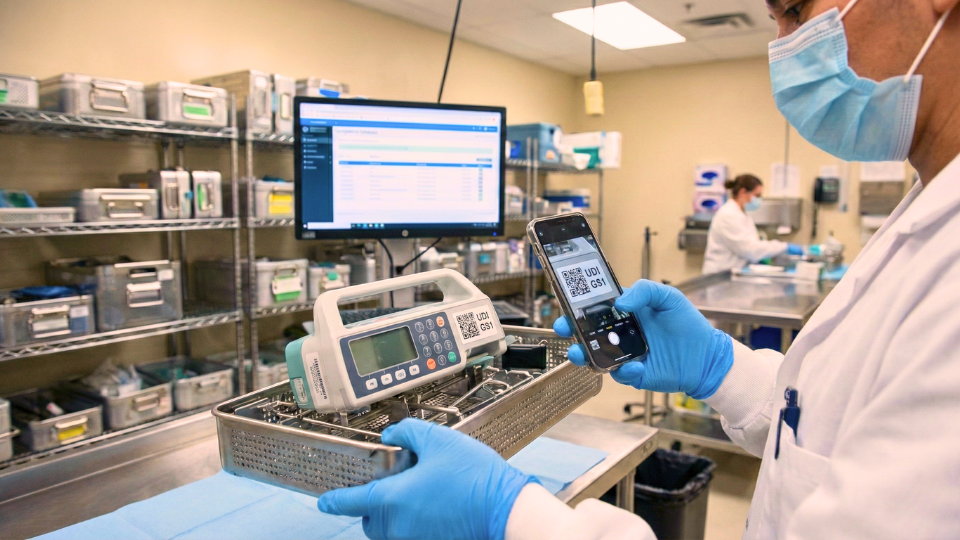
QR Codes help lighten that load. While often seen as simple consumer tools, QR Codes already anchor several critical healthcare regulations, including FDA Unique Device Identification (UDI) requirements and GS1-standard pharmaceutical labeling. And today, their role has evolved beyond convenience; they function as flexible, low-cost digital infrastructure.
In this article, we’ll explore how QR Codes streamline education, operations, patient care, and more across the healthcare ecosystem.
Key use cases of QR Codes in healthcare
What makes QR Codes uniquely powerful across modern healthcare systems is not any single use case, but their ability to act as a connective layer across disparate touchpoints.
With that foundation in place, let’s examine how QR Codes create an impact across key domains of healthcare, from education and workforce readiness to daily operations, to device and medication management.
1. Healthcare education
According to a 2019 study, QR Code adoption in healthcare training clustered around four primary themes: enhancing learner engagement, supporting simulation-based education, delivering just-in-time (JIT) instructional content, and streamlining administrative processes associated with clinical training.
While there were barriers at the time, such as inconsistent technical infrastructure, limited smartphone availability, and resistance in specific clinical settings, the overall perceptions of QR-based training tools among educators and learners were positive.
Notably, many of the study’s identified barriers have since diminished, primarily due to the widespread adoption of smartphones among healthcare workers, the expansion of institutional Wi-Fi coverage, and the increased reliance on digital learning infrastructure since 2020.
Today, QR Codes offer a scalable, compliance-ready infrastructure for modernizing clinical training and medical education at every level.
1.1 High-fidelity training
Embedded directly into textbooks, lab equipment, or simulation rooms, they provide immediate access to high-fidelity instructional assets, such as video demonstrations of procedures, AR-enhanced anatomy models, or competency-based quizzes, without requiring new hardware investments.
1.2 Secured, case-based learning
When paired with secure, password-protected portals, QR Codes can deliver anonymized case files, decision-making simulations, or specialty-specific protocols in a HIPAA-compliant environment, allowing clinicians to practice real-world scenarios with controlled data exposure.
1.3 Centrally updated training content
QR Codes also reduce the operational burden of maintaining current training materials. Instead of reprinting manuals or circulating outdated PDFs, institutions can update a single digital source linked to the same QR Code, ensuring that staff always access the latest clinical guidelines, device instructions, or policy changes.
1.4 Multilingual learning paths
For diverse or multilingual workforces, QR Codes route learners to adaptive modules and translated content tailored to roles and proficiency levels, supporting standardized education across geographically distributed teams.
For example, platforms like Uniqode support multi-language QR Codes for up to 221 different locales.
1.5 Compliance-driven training
When used for mandatory training, QR-linked modules can integrate with audit trails that record completion, timestamp access, and track compliance across departments, providing administrators with a verifiable, centrally managed training ecosystem that meets both internal governance and external regulatory expectations.
2. Device and medicine
Medical device and pharmaceutical safety frameworks increasingly rely on digital identifiers, and QR Codes have become central to that transition.
In the U.S., the Drug Supply Chain Security Act (DSCSA) mandates the use of serialized, unit-level product identifiers to secure the drug supply chain and prevent counterfeit products from entering clinical environments.
Similarly, in India, the Ministry of Health and Family Welfare requires Bar Codes or QR Codes on the packaging of designated drug formulations, enabling end-to-end authentication and traceability under CDSCO oversight.
Beyond these regulatory mandates, QR Codes enable a broader set of high-value applications across both medical devices and pharmaceutical products.
Below are some of the aspects where they create the most operational, clinical, and safety impact.
2.1 Operational clarity
QR Codes affixed to medical devices provide instant access to essential reference materials, including user manuals, operating parameters, safety precautions, maintenance cycles, and troubleshooting workflows.
This enables clinicians and technicians to refresh device knowledge at the moment of use, reducing misuse, procedural delays, and avoidable service calls.
2.2 Compliance and quality assurance
By linking directly to digital checklists, calibration logs, and audit-ready documentation, QR Codes streamline mandatory compliance processes.
Staff can complete device validation steps, record inspections, and update maintenance actions through a single scan, giving administrators real-time visibility into device readiness and regulatory adherence.
2.3 Closed-loop issue reporting
QR Codes offer a direct channel for reporting malfunctions or safety concerns. Clinicians can submit structured issue reports, including photos or brief descriptions, immediately after scanning. Thereby, accelerating service response, improving lifecycle management, and enhancing post-market surveillance for both manufacturers and healthcare systems.
2.4 Expanded drug information
On medication packaging, QR Codes can provide clinicians and patients with verified information on drug composition, dosage guidelines, contraindications, storage requirements, and potential alternatives.
2.5 Medicine traceability and pharmacovigilance
QR-enabled batch data (manufacturing dates, lot numbers, expiry timelines, and storage conditions) support end-to-end traceability across the pharmaceutical supply chain.
This enhances recall accuracy, reduces medication errors, and improves the detection of counterfeit or diverted products—critical priorities for both regulators and hospital systems.
2.6 Stock monitoring
When integrated with manufacturer and distributor systems, QR Codes can offer real-time verification of product authenticity and movement from production to dispensing. This aids inventory management, improves shortage forecasting, and provides safeguards against falsified devices and medications entering care settings.
3. Patient engagement
Clinical outcomes depend not only on medical expertise but also on how effectively patients understand, follow, and participate in their own care. QR Codes provide a low-friction, universally accessible mechanism to close certain communication gaps.
By embedding QR Codes into patient-facing touchpoints, institutions can deliver more precise guidance, improve health literacy, reduce administrative burden, and create secure digital channels for patient–provider interaction without introducing new infrastructure or compromising privacy safeguards.
3.1 Multilingual care instructions
QR Codes enable the instant translation of prescriptions, discharge notes, and care instructions into a patient’s preferred language, reducing misunderstandings, facilitating informed consent, and enhancing adherence in multilingual populations.
3.2 Patient adherence support
QR Codes on prescriptions can connect patients to dosing reminders, adherence apps, refill prompts, and feedback portals.
Once scanned, patients can log their prescribed dosages and receive automated reminders, which improves adherence, reduces missed doses, and supports long-term condition management.
3.3 Condition-specific education
Placed in waiting rooms, patient rooms, or printed materials, QR Codes link directly to verified educational resources on diseases, procedures, prevention, and treatment pathways, helping patients make informed decisions grounded in accurate, institution-approved content.
3.4 Provider transparency
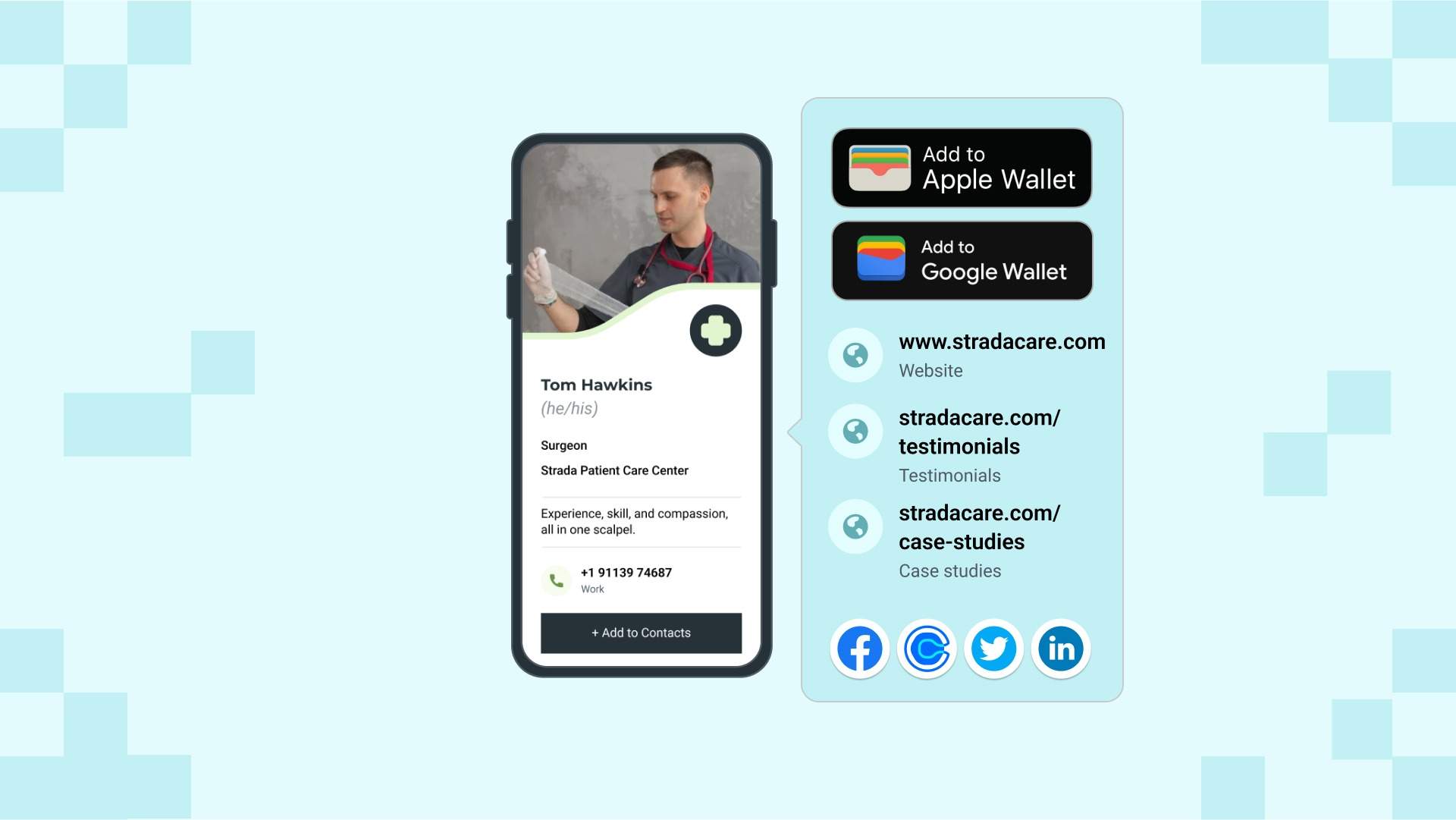
QR Codes on physician badges, consultation rooms, or referral cards can provide patients with access to verified professional profiles, including education, clinical experience, areas of specialization, and success metrics, promoting informed provider selection and reinforcing institutional trust.
3.5 Secure access to health records
With proper authentication, QR Codes can serve as gateways to lab results, imaging reports, medication lists, or ongoing treatment plans. Clinicians can also scan patient-specific QR identifiers from prescriptions or government health apps to retrieve consolidated medical histories in real-time.
3.6 Patient Feedback & Reporting
QR-enabled surveys allow patients to submit satisfaction ratings, symptom updates, or service complaints securely and without paperwork. Providers gain timely insights into care experiences and emerging patient needs, supporting continuous quality improvement.
4. Healthcare operations
While many QR-enabled capabilities, such as real-time information delivery, automated compliance tracking, and digital standardization, have already been demonstrated in earlier sections, their operational impact inside healthcare institutions extends even further.
QR Codes can strengthen daily hospital operations by improving traceability, streamlining administrative processes, and reducing systemic bottlenecks.
4.1 IT asset tracking & maintenance readiness
Just as with medical devices, tagging IT hardware, such as workstations on wheels, diagnostic monitors, or handheld scanners, with QR Codes, facilities teams can instantly view service history, warranty data, downtime logs, and scheduled maintenance tasks.
This reduces service lapses that disrupt clinical workflows and improves overall technology uptime.
4.2 Automated workflow documentation
QR Codes embedded within clinical and operational workflows help automate the recording of treatment steps, equipment usage, and staff compliance activities. This reduces manual paperwork, strengthens auditability, and decreases the likelihood of documentation errors that contribute to safety events or reimbursement challenges.
4.3 Internal communication channels
QR-enabled shortcuts provide rapid access to internal communication tools, including emergency protocols, department announcements, escalation pathways, and staff directories.
This eliminates reliance on distributed emails or printed memos that quickly become outdated.
4.4 Workforce coordination
Hospitals can use QR Codes to communicate shift updates, room reallocations, emergency notifications, or daily operational briefings.
By consolidating operational updates into a centralized, easily accessible QR-linked system, facilities minimize delays and reduce miscommunication across teams.
4.5 Billing, payments & claims support
QR-enabled billing portals allow patients and staff to review itemized statements, make secure payments, upload insurance documentation, and verify claims status. This reduces administrative errors, accelerates revenue cycles, and improves the financial experience for both institutions and patients.
4.6 Discharge & continuity of care
QR Codes included in discharge packets guide patients through medication schedules, follow-up appointments, physical-therapy instructions, dietary recommendations, and remote monitoring tools. This ensures continuity of care after hospital release and helps reduce preventable readmissions.
4.7 Environmental safety & infection Control
QR Codes placed across hospital zones enable staff to verify cleaning cycles, log maintenance tasks, and record incident reports in real-time. This creates timestamped, audit-ready documentation that supports compliance with infection-control standards and accelerates corrective action during inspections or outbreaks.
What HIPAA means for QR Code adoption in healthcare
Data security and regulatory compliance are non-negotiable, whether you’re a hospital network, a government health program, a medical device manufacturer, or a small clinic. Any QR-enabled process that involves patient information must comply with strict federal standards. That’s where HIPAA comes in.
What is HIPAA?
The Health Insurance Portability and Accountability Act (HIPAA), enacted in 1996, is the United States’ foundational regulatory framework for securing Protected Health Information (PHI). It governs how hospitals, insurers, clinical laboratories, public health agencies, and their business associates manage the confidentiality, integrity, and availability of patient data.
The importance of HIPAA today is magnified by several converging pressures:
- Digitization of care delivery: Clinical workflows, patient communication, telemedicine, and remote monitoring are now digital-first, expanding the attack surface for PHI.
- Interoperability mandates: As federal initiatives push for greater data exchange between payers, providers, and health information networks, the risk of PHI exposure increases unless systems are rigorously controlled.
- Rising cybersecurity threats: Healthcare data remains one of the most targeted asset classes for cybercriminals due to its permanence and financial value.
- Regulatory scrutiny: The OCR (Office for Civil Rights) is imposing larger penalties for disclosure lapses, particularly those resulting from inadequate technical safeguards or insufficient access controls.
In this environment, any digital tool used in healthcare, including QR codes, must operate within HIPAA’s strict parameters. That's true across the stack, from the cloud archiving solutions providers use to retain communications, to the QR Code platforms they deploy across clinical and patient-facing workflows.
HIPAA-compliant QR Code solutions for healthcare
Uniqode is a fully HIPAA-compliant enterprise QR Code solutions provider. It enables healthcare institutions to manage QR Code–based workflows involving protected health information (PHI) with the security, auditability, and regulatory assurance required by federal law.
This isn’t just encryption or access control; it’s end-to-end alignment with the administrative, physical, and technical safeguards mandated by HIPAA.
Uniqode is explicitly engineered to support HIPAA-grade security and delivers the following:
1. Secure, auditable QR Code interactions
Uniqode logs every scan, access event, and data transaction with timestamps and attribution, enabling complete audit trails for internal governance, incident response, and regulatory oversight.
This level of traceability ensures that PHI interactions can be monitored, investigated, and validated as required by HIPAA and federal review bodies.
2. Enterprise-grade identity & access management
Through SSO, MFA, role-based access control (RBAC), and IP-restricted access, only verified personnel within authorized networks can view or modify QR-linked information. This prevents unauthorized access and ensures alignment with hospital IT policies, state data-protection rules, and federal compliance requirements.
3. Encrypted, Controlled PHI Exchange
Data transmitted through Uniqode’s QR Codes is encrypted both at rest and in transit. This prevents interception, decoding, or manipulation by third parties, mitigating common risks associated with unsecured QR implementations and ensuring that PHI remains protected throughout its lifecycle.
4. Scalable Deployment Across Clinical, Operational & Patient-Facing Workflows
Uniqode supports secure QR Code use cases across the entire healthcare ecosystem without introducing new vulnerabilities.
This includes:
- Patient intake, discharge, and follow-up
- Medical device and IT asset tracking
- Pharmacy workflows and medication safety
- Emergency room and triage routing
- Staff training, compliance verification, and SOP distribution
- Billing, claims verification, and financial workflows
Each deployment maintains HIPAA-level safeguards while ensuring efficiency, speed, and interoperability.
5. Seamless Integration with Existing Health Systems
Scan logs, metadata, and audit records can be exported directly into EHR platforms, compliance tools, incident-reporting systems, and analytics environments. This preserves institutional workflows, supports cross-department reporting, and ensures traceability without forcing system replacements or custom builds.
6. Proven security across multiple regulatory frameworks
In addition to HIPAA compliance, Uniqode maintains GDPR and SOC 2 Type 1 and Type 2 certifications—providing the multi-framework assurance that government bodies, global health organizations, and large-scale providers require during vendor evaluation and risk assessment.
Frequently Asked Questions
- What is a QR Code for medical information?
A QR Code for medical information is a scannable code that links to digital health data such as patient instructions, medication details, lab results, device manuals, or clinical protocols. Healthcare institutions use these QR Codes to deliver accurate, up-to-date information instantly, reduce paperwork, and improve patient and staff workflows.
- Are QR Codes HIPAA compliant?
QR Codes can be HIPAA compliant, but only if the platform generating and managing them meets HIPAA’s administrative, physical, and technical safeguards. QR Codes themselves are neutral; their compliance depends on how the linked data is stored, accessed, and protected.
Uniqode is a fully HIPAA-compliant QR Code solutions provider, meaning it supports secure, auditable QR Code workflows for PHI with encryption, access controls, and identity management aligned with federal regulations.
- How to make a medical QR Code?
You can create a medical QR Code easily using Uniqode. Start by selecting the type of medical content you want to share, such as patient instructions, intake forms, device manuals, medication details, or clinical training resources. Link the content, generate the QR Code, and customize it for your workflow. Because Uniqode is HIPAA-compliant, all medical QR Codes can be protected with encryption, access controls, audit logs, and password-based Smart Rules to ensure the safe handling of PHI.
- How to verify medicine by QR Code?
Medicine can be verified by scanning the QR Code printed on the packaging. The scan typically reveals batch numbers, manufacturing dates, expiry information, and product authentication data. In regions with serialization laws (like DSCSA in the U.S. or CDSCO requirements in India), QR Codes also help confirm whether a product is genuine, recalled, expired, or part of the official supply chain.