How to Create a QR Code-based Customer Loyalty Program for Retail (without Apps)

What if your loyalty program didn’t require an app, a password, or a long signup flow? With QR Codes, retail brands can turn a single scan at checkout into instant rewards and measurable repeat engagement.
What if your loyalty program could attract more repeat customers without being a complicated process that customers would grow tired of?
Picture this: At the register, a customer scans a tiny sticker on their receipt, taps “join,” and — eight seconds later — gets 50 welcome points and a confirmation SMS. No app download, no passwords, no awkward form-filling. That single scan turned a one-off purchase into the start of a relationship.
Too many loyalty programs bury the action behind downloads and clunky sign-ups. This guide flips that model. Start with the moment that matters (the scan), build a fast mobile experience around it, and stitch the rest.
Read on for an actionable plan to create a customer loyalty program without apps.
Why an app-less customer loyalty program is the way to go
There’s an app for everything. Although this makes many things easier, most of us don’t want to download yet another app and clutter our phone storage. That’s why customers lose interest when they’re asked to download an app just to get a discount coupon. There are other ways to ensure you reach customers, provide good customer value, and earn customer loyalty.
First, let’s look at why brands need a customer loyalty program.
With record-high inflation and increasing competition across the retail space, acquiring new customers is becoming increasingly challenging. That’s where creating a customer loyalty program can give you an edge. Yes, it’s not a mandatory requirement for brands, but there are many benefits that come with going the extra mile and setting a loyalty or rewards program for your customers:
- Drive profit margins by getting repeat customers
- Deliver a memorable customer experience by personalizing
- Stand out in a crowded market by delivering human experiences
- Customer advocates
The freedom to experiment and take more risks with new products or innovation.
At its heart, brand loyalty is all about trust. Loyal customers feel a connection with your brand and what it represents. Your product is no longer just a commodity, just another product on a shelf full of similar ones. You’re not easily replaceable. To achieve this level of trust requires a lot of effort, conscious strategy, measuring impact, and optimizing. The good news? Customer loyalty is no longer a game just for big players. Any business, big or small, can build connections and run a customer loyalty program.
In our opinion, the best way is with QR Codes.
With QR Codes at the centre of your customer loyalty program, you can build a connected customer loyalty program across touchpoints. You can easily engage them with different formats, measure results, and optimize anytime without reprinting assets.
How does a QR Code-based loyalty program work?
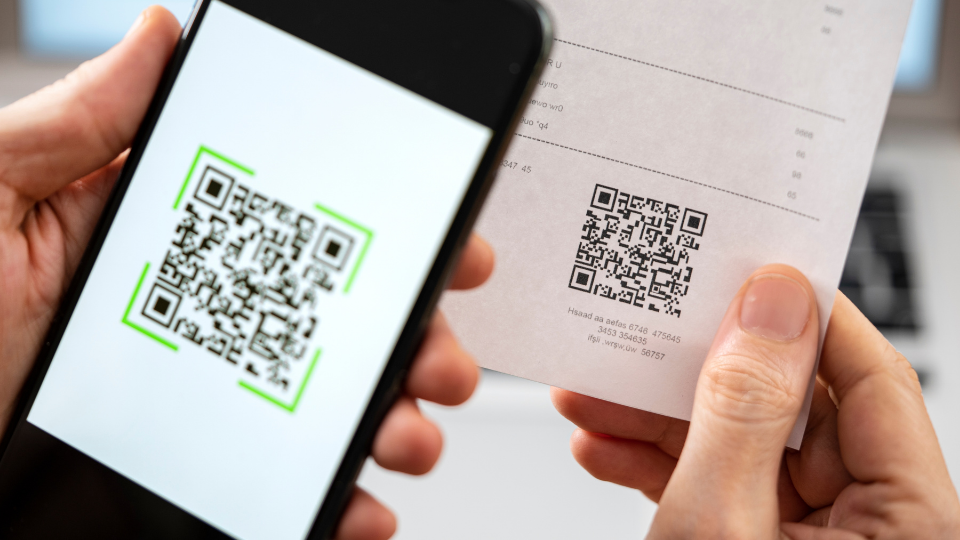
QR Codes are a bridge between physical and digital touchpoints. You can engage customers without sending them long URLs or asking them to download an app. This means that customers can easily access rewards, collect points, and redeem them. Brands can collect customer details, record their loyalty status, and track them. All with a single scan.
Here’s a simple workflow example of how a brand can use QR Codes in their customer loyalty program:
- Customer sees QR Code at the register or on receipt.
- Customer scans → mobile landing page opens.
- Landing page asks for name + phone or email (or lets them continue as guest).
- On submission, the account is created, and initial points are awarded.
- Points are displayed, andthe customer gets a confirmation SMS/email with their balance and next reward.
- Customer redeems when the threshold is reached (show barcode/QR Code to the cashier or redeem online).
What do you need to create a QR Code based loyalty program?
Here are the basic technologies and integrations you would need to start creating a loyalty program:
- A loyalty program software like Smile or Yotpo or build a custom solution
- A QR Code generator such as Uniqode that supports dynamic codes and analytics.
- API/webhooks to validate purchases and update points (prevents gaming)
- Integrations: POS, e-commerce platform, payment gateway, CRM/email tool, SMS gateway.
- Simple admin dashboard for manual adjustments and reporting
9 steps to create a successful loyalty program for retail brands with QR Codes
Here’s a step-by-step guide on how to create a loyalty program strategy to attract and retain loyal customers.
Step 1: Define the goal of your loyalty program
Get crystal clear on what you want it to accomplish. Your goals will ultimately determine which program model you’ll use and the kind of rewards you can offer. Some of the most common and impactful objectives include:
- Boosting repeat purchases and overall sales
- Improving customer retention and increasing lifetime value
- Motivating customers to refer friends and family, and reducing acquisition costs
- Collecting richer customer insights to understand preferences
- Strengthening brand affinity by rewarding loyal behavior
With these insights, you can personalize campaigns, refine your product mix, and tailor deliver experiences.
⚡Pro Tip: Pick one primary KPI (e.g., repeat-purchase rate or member LTV) and one secondary (e.g., signup → 2nd purchase conversion). Avoid trying to optimize everything at once
Step 2: Choose your loyalty program structure
There are mainly four categories of reward systems that retail brands can follow. Each one offers unique ways to engage and retain customers. Points-based programs
- Customers earn points from purchases and actions (social shares, reviews, birthdays, challenges).
- Points can be redeemed for discounts or exclusive rewards.
- Great for increasing engagement and generating user-driven promotion.
Tiered Programs
- Customers move through levels based on spend or activity.
- Higher tiers unlock better perks (e.g., bonus points, free shipping, exclusive access).
- Motivates customers to spend more to reach the next tier.
Paid membership programs
- Customers pay a one-time or recurring fee for premium benefits.
- Offers instant value like free shipping, discounts, or early access.
- Leads to higher loyalty and predictable revenue.
Value-based programs
- A portion of customer purchases goes to a charity or cause.
- Builds emotional connection and strengthens brand values.
- Appeals to customers who prefer socially responsible brands.
Once you’ve chosen a structure, consider what rewards your customers would like the most. These differ for quick-repeat retail (e.g., café, convenience stores) versus considered retail (e.g., apparel, homewares).
- Redeemable points or credit: Convert earned points or cashback into clear, valuable rewards. Common redemption options include discounts on future orders, store credit, free products or shipping, exclusive merchandise, and VIP experiences
- VIP perks for top customers: Reward your highest-value customers with premium benefits such as early access to launches or sales, free or upgraded express shipping, exclusive events or content, and personalized shopping support
- Tiered benefits: Increase reward value as customers advance through tiers. Offer free or discounted express delivery, access to premium or gated content, invitations to product previews, or higher point-earning rates at upper tiers.
⚡Pro Tip: Include cost-per-reward, breakage assumptions, and expected ROI so retail readers can justify the program. Here’s an example statement: “With $5 subscription per month for the loyalty program, customers can get a 10% discount on all orders.”
Step 3: Decide what happens when customers scan the QR Code
Based on the structure of your loyalty program and what reward you offer, you’ll need to create a workflow where the customer is smoothly led through a series of steps that lead them into your reward system. Here are a few specific examples of customer actions triggered by the QR Code scans.
A clothing brand offering point-based programs for discount coupons
When to use: Encourage repeat purchases, increase average order value, and capture customer data after online or in-store sales. Flow steps:
Customer scans QR Code on packaging → a landing page where their details are collected → purchase is verified → points are credited to loyalty account
As points get accumulated, customers can redeem them for a discount coupon for their subsequent purchase.
2. A salon offering a paid loyalty program
When to use: Monetize frequent clients and offer premium perks (priority booking, discounts, freebies, member-only treatments).Flow steps:
Customer scans QR Code on the counter → lands on membership page → chooses tier + pays → account created → perks are activated → customer scans at visit → perks applied
3. A value-based loyalty program supporting a social cause
When to use: Strengthen emotional connection, differentiate the brand, and appeal to customers who prefer socially responsible or purpose-driven companies. Flow steps:
Customer → scan QR → choose/confirm cause → order verified → donation allocated → impact displayed → cumulative impact (optional)
⚡Pro Tip: Use editable redirects so you can change the landing behaviour for a QR Code without swapping prints.
Step 4: Evaluate loyalty software and its implementation
To implement your loyalty strategy, you’ll need to choose loyalty software. Organizations need to decide whether to build a custom solution, purchase an off-the-shelf platform, or adopt a composable, API-first, headless approach.
Some popular tools are Marsello, Smile.io, and Growave. These SaaS-based tools let you create customized loyalty mechanisms, rather than a one-size-fits-all solution. Brands can tailor programs to their specific needs and integrate loyalty functionality into any app or system easily.
This determines how the program will integrate with existing systems, such as CRM, e-commerce, and POS systems. It should also define how data will be collected, tracked, and used to personalize the customer experience.
⚡Pro Tip: Prefer composable/API-first solutions (or vendors with webhooks) so you can connect CRM, SMS, and other integrations.
Step 5: Generate dynamic QR Codes for the program
Once you’ve planned your loyalty program workflow, it’s time to create dynamic QR Codes to enable your strategy.
Dynamic QR Codes work just like any QR Code, but are editable and trackable. They can also store a custom page, digital business cards, and files like documents, audio, videos, and images. You can also track scans.
To generate a dynamic QR Code, you can use a tool like Uniqode. On Uniqode, you can easily signup and start creating QR Codes.
You can edit your QR Codes based on your brand image. Edit the destination URL and add a CTA.
You can also test the scanability before downloading. Then, download them in your preferred format and print them out. Your dynamic QR Codes are ready as the first touchpoint for your customer loyalty program.
⚡Pro Tip: Use Uniqode’s analytics and edit features to run A/B QR Code variants and to compare performance.
Step 6: Design the landing or reward experience
What will customers see when they scan the QR Code? The landing experience is the moment you either convert curiosity into membership — or lose it. Design for speed, clarity, and a single-minded path to the next action.
Here are some common QR-driven loyalty experiences:
- Decide what the scan should open. This can be a:
- Quick sign-up form (email/phone only) to claim points
- Digital punch card that increments on each scan
- Order-verified points claim (reads encoded order id → verifies → credits points)
- Membership payment page for paid tiers
- Donation/impact confirmation for value-based programs
- Reward redemption pass (shows a coupon or scannable barcode)
Design the landing to match the action.
⚡Pro Tip: Deliver value immediately. Show the bonus (50 points / $5) as the hero so users feel rewarded the moment they land.
Step 7: Place QR Codes strategically
Placement matters. Think of QR Codes as the gateway into your loyalty program. If customers don’t notice them or don’t understand the value behind scanning, the program won’t gain traction.
To maximize participation, place QR Codes at high-visibility, high-intent touchpoints across both physical and digital channels.
To know more about where you can place your QR Codes for maximum visibility and best practices, check out this section.
⚡Pro Tip: Pair the QR Code with a benefit-first CTA. For example: “Scan — get 50 pts now”. You can also add a one-line explanation of how it works.
Step 8: Track scan analytics and customer engagement
A major perk about incorporating QR Codes in your loyalty workflow is measurable, real-time visibility into how people discover, join, and use your program. Good tracking turns guesses into decisions. You’ll know which placements convert, which rewards motivate repeat visits, and where friction is losing customers.
Uniqode analytics dashboard – image
- Scan volume — total scans (by placement/campaign).
- Unique scanners — number of distinct customers who scanned.
- Location
- Device type
- Scan → signup conversion
⚡Pro Tip: With Uniqode, you can export campaign performance weekly to compare QR placements and iterate on low-performers.
Step 9: Optimize and update rewards over time
After the rollout of a loyalty program, you need to ensure continuous improvement. This is essential for the program’s long-term success, to maximize engagement and business goals. Some areas you can optimize are customer journeys, customer service, and the general customer experience.
Here are some practical ways you can improve your rewards program over time:
QR Code-specific metrics:
- Use analytics (scan volume, unique scanners and location) to identify which physical/digital touchpoints actually drive sign-ups and value.
- run short post-signup or post-redemption surveys (1–2 questions) to learn why people join, what rewards they value, and what confused them.
- segment members by behaviour (frequency, AOV, scanned SKUs, impact-donors) and test tailored offers (welcome fast-win, VIP perks) — measure conversion and uplift per segment.
- Measure long-term impact. Link scan activity to LTV, retention, and AOV so you can justify changes in reward economics.
⚡Pro Tip: Have a customer feedback loop. Ask one 1–2 question survey after the first redemption and act on common friction.
Where to place QR Codes to promote your customer loyalty program
Weather it’s loyalty programs or any other brand campaigns, success starts with proper discovery. Smart QR Code placement removes friction and turns a curious scan into an instant sign-up or reward. Here are 8 places where you can place QR Codes for maximum reach for your loyalty campaign.
- Product packaging: Perfect for post-purchase engagement. Customers are already interacting with the product, making it a natural moment to join the loyalty program, claim points, or track their impact.
- In-store signage and counters: Place QR Codes near checkout counters, fitting rooms, salon stations, waiting areas, or next to products. Add a short benefit-driven CTA like “Scan to earn rewards” or “Scan to save on your next visit.”
- Receipts and invoices: Printed and digital receipts are prime locations because customers expect to find purchase-related details there. It also makes order verification seamless for point-based programs.
- On menus, table tents, or service cards (restaurants, cafés, salons): This drives engagement while customers wait, increasing scan rates and onboarding.
- Inside unboxing experiences: For e-commerce brands, include QR Codes on thank-you cards, inserts, or inner packaging. This extends the loyalty journey beyond the storefront and into the customer’s home.
- Staff-assisted touchpoints: Train staff to prompt customers. Employee reinforcement significantly boosts adoption rates.
- Email and digital channels: Place QR Codes in order confirmation emails, newsletters, or WhatsApp/SMS messages. This is especially helpful for customers who shop online but redeem rewards in-store.
- Other places: Cover fitting rooms, checkout counters, POS displays, ads, and packaging slips.
Best practices when placing QR Codes
Strategic placement is what transforms a loyalty program from “nice to have” to something customers engage with regularly. The more intentional your placement, the higher your sign-up and repeat engagement rates.
- Keep the value proposition visible: Always pair the QR Code with a short, benefit-first message.
- Ensure accessibility: QR Codes should be printed at the right size and placed at eye level or where the customer naturally pauses.
- Avoid clutter: Give the QR Code enough white space so scanners read it quickly.
- Use dynamic QR Codes: This ensures you can update the underlying content without reprinting materials.
- Measure and iterate: Track which placements deliver the most scans and optimize accordingly.
Examples of brands that are using QR Codes in their Loyalty Strategy
Here are some brands that are using QR Codes to power their customer loyalty and rewards programs.
1. Danone Yoghurt
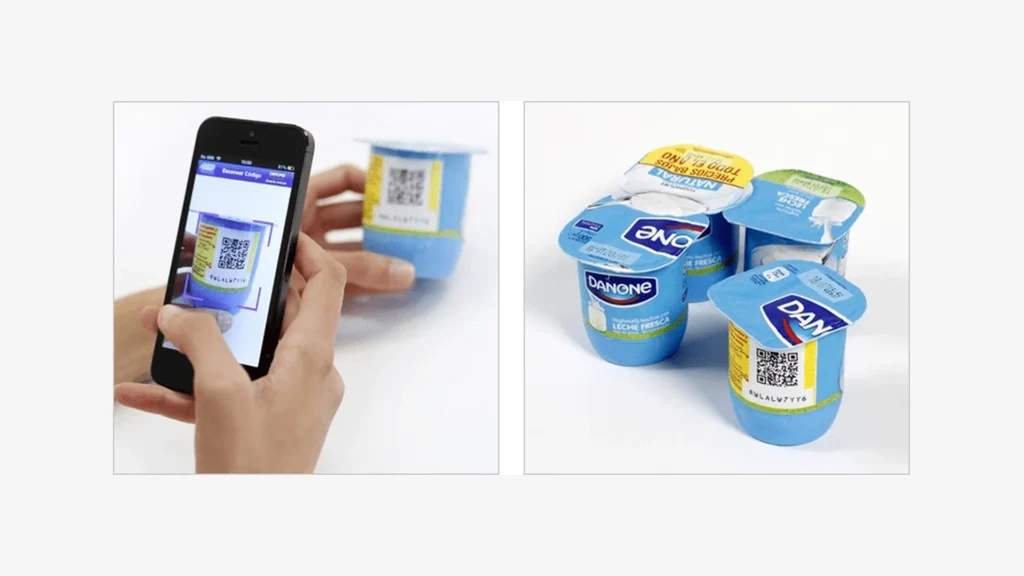
Danone, a yoghurt brand, included QR Codes with their loyalty programs in Spain, encouraging its users to scan the QR Codes on the products as a way to earn points.
Each Danone pack contained a QR Code that allowed consumers to earn up to $50 per month in the form of discount coupons. The dairy giant also launched a multiplatform mobile app that could be quickly downloaded by scanning the QR Code.
This QR Code-based loyalty program was so successful that the app was downloaded 30,000 times in the first three weeks.
Read more: Create a single QR Code for your app on all app stores
Danone claimed that its QR Code-based loyalty program was one of the biggest campaigns in Europe with 60 million QR Codes being generated per month.
For yogurts, the QR Codes are placed on one of the labels whilst for yogurt-based drinks, they are placed on the inside of the cardboard packaging.
Danone created 1,400 QR Codes per minute during the course of this successful loyalty program campaign.
2. McDonald’s
McDonald’s loyalty program works by letting customers earn points on every eligible purchase made at the counter, self-ordering kiosks, McDrive, or McCafé. Before paying, custpmers present a unique QR Code available on their account dashboard for the team or kiosk to scan so the transaction can be linked to your loyalty profile. Once scanned, they earn 10 points for every €1 spent.
They redeem the points by simply show the QR Code associated with that reward at checkout. Scanning it applies the reward to your order and deducts the necessary points.
QR Codes essentially power the entire program. They identify customers as a member, allow them to earn points, and redeem offers. If the QR Code isn’t scanned before payment, the purchase can’t be connected to your account, and points can’t be added later.
3. H&M Loyalty
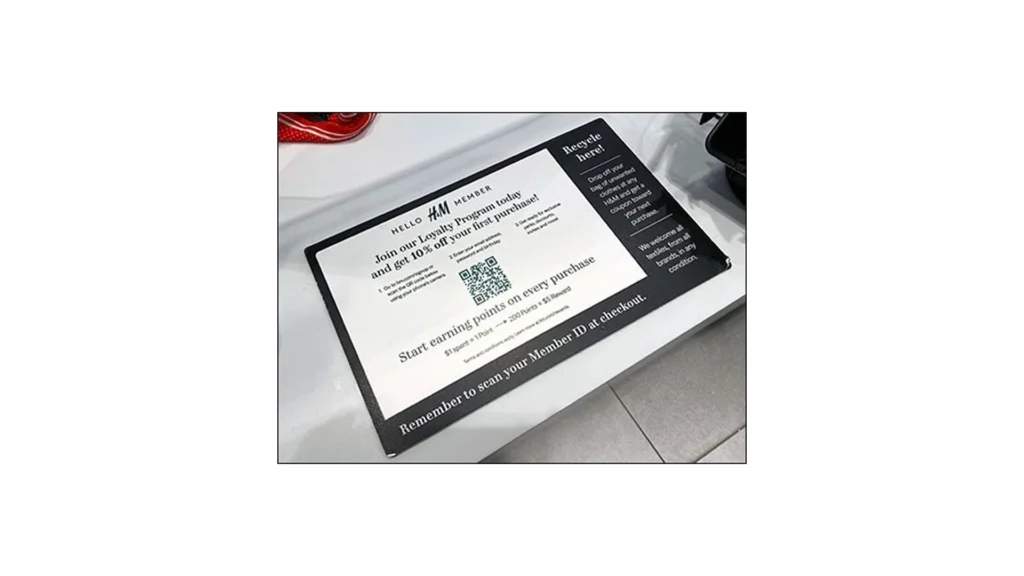
H&M’s loyalty program rewards customers from the moment they sign up. New members receive 10% off their first purchase, making it a valuable benefit right at checkout. Joining is simple: customers visit the signup page or scan the QR code displayed in-store, then enter their email address, password, and birthday.
Once enrolled, customers earn points on every purchase. They get one point for every dollar spent and 200 points unlock a $5 reward that can be used on future shopping.
The QR Code serves as a quick and convenient entry point for customers to join the H&M Loyalty Program. Instead of manually searching for the signup page, customers can simply scan the QR Code with their phone’s camera to be taken directly to the registration form.
4. Walmart
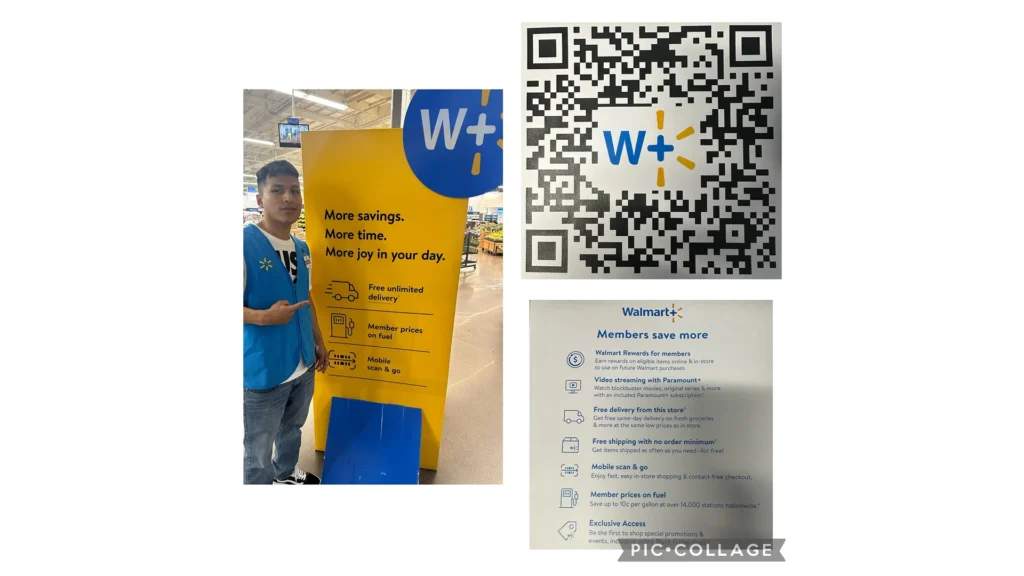
Walmart+ is Walmart’s premium loyalty program that allows customers to earn rewards on eligible purchases. Members can enjoy benefits such as free unlimited delivery, free shipping with no minimum order, member prices on fuel, and exclusive access to special promotions.
Customers can join by simply scanning the in-store QR Code and even try the membership free for 30 days, making it easy to start earning rewards on everyday essentials.
Once enrolled, customers earn Walmart Rewards online and in-store, which can be redeemed on future Walmart purchases.
5. Thorpe Farm Centre
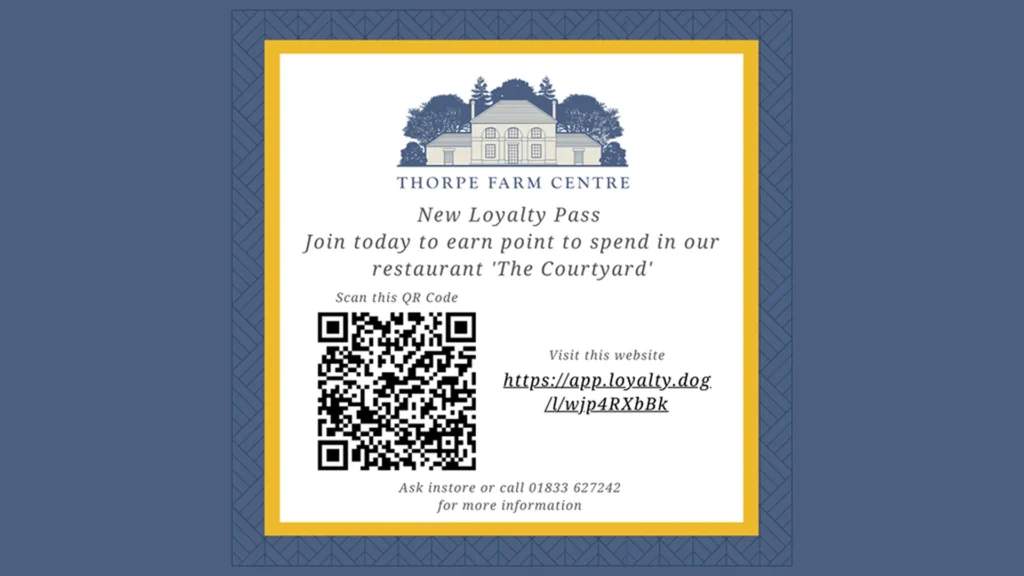
Thorpe Farm Centre, a restaurant and farm shop based in the UK, has a loyalty program that allows customers to earn points on every purchase in their shop and restaurant, redeem those points in the restaurant.
After signing up, each customer receives a unique QR Code that can be scanned during every transaction to accumulate points. Every euro spent equals one point. Points can then be redeemed in the restaurant, with the note that only one reward or offer can be used per transaction.
They have a simple, QR Code based way to track and use their rewards. Customers can get started by scanning the QR Code displayed in-store or visiting the provided link to create an account.
6. Tomskoi pet supply
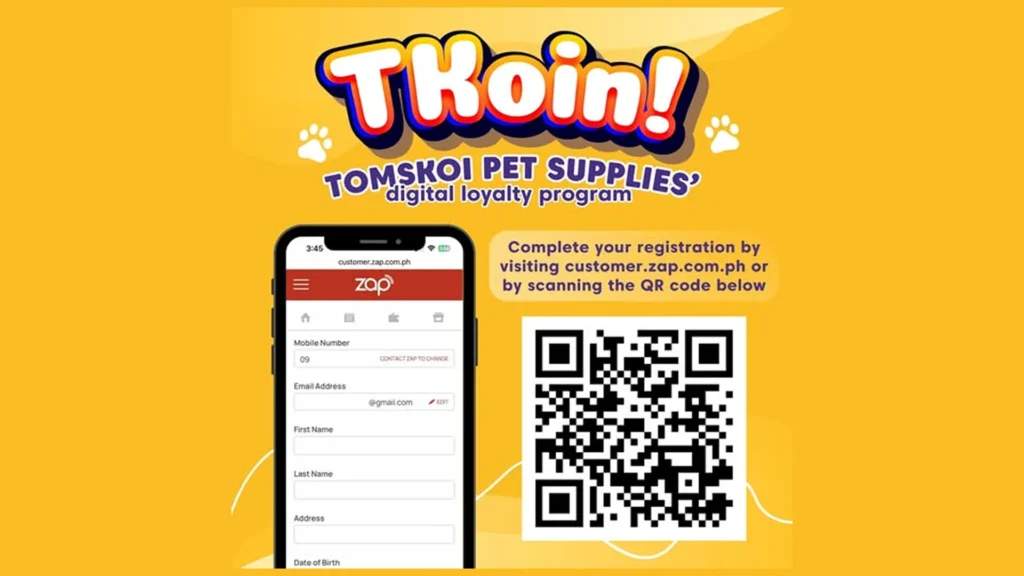
Tomskoi Pet Supplies has introduced TKoins, a digital loyalty program that lets customers earn points on their pet-care purchases, enjoy smooth QR-code–based registration, and unlock sign-up bonuses simply by completing their account. Customers can quickly get started by giving their mobile number to the cashier to begin earning points immediately, then finish their registration later by visiting the provided link or scanning the QR Code.
Once registration is complete, customers just present proof to the cashier to claim their sign-up bonus and continue earning TKoins with every purchase.
Unlock your successful loyalty program with Uniqode
Building a customer loyalty program is about offering a seamless, engaging, and value-driven experience across every customer touchpoint. QR Codes make this possible by removing friction, simplifying enrolment, and giving you measurable insights into how customers actually interact with your program. From instant sign-ups to real-time analytics, QR Codes bridge the gap between physical and digital experiences, allowing brands to build loyalty wherever customers are.
But the real impact comes from how you design, track, and evolve your program over time. With the right workflows, meaningful rewards, and a commitment to continuous optimization, your loyalty program can turn first-time buyers into long-term advocates. This is where Uniqode excels.
Uniqode gives you everything you need to create and manage QR-powered loyalty programs at scale.
If you’re ready to build a flexible, insight-driven loyalty program that customers actually enjoy using, try Uniqode today.
Frequently Asked Questions
- How do customers redeem rewards in a QR Code loyalty program without an app?
Customers redeem rewards by scanning a QR Code with their smartphone camera, which opens a mobile landing page displaying their point balance and available rewards. Once they reach the redemption threshold, they can show a barcode or QR Code to the cashier in-store, or redeem directly online through the mobile-optimized page. The entire process requires zero app downloads and works instantly through any smartphone's native camera.
- What technology stack do I need to launch a QR Code-based customer loyalty program?
To launch a QR Code loyalty program, you need three core components: loyalty program software (like Smile or Yotpo, or a custom solution), a dynamic QR Code generator with analytics capabilities (such as Uniqode), and API/webhook integrations to connect the systems. Dynamic QR Codes are essential because they can be updated unlimited times after printing, allowing you to modify landing pages, track scan analytics, and optimize the customer experience without replacing physical materials.
- How do QR Codes bridge physical and digital touchpoints in retail loyalty programs?
QR Codes act as instant connectors between physical retail spaces and digital experiences, allowing customers to access rewards, collect points, and view their loyalty status with a single scan—no typing URLs or downloading apps required. Brands can place QR Codes on receipts, point-of-sale displays, or product packaging to capture customer data, track engagement across multiple touchpoints, and measure program performance in real-time, all while providing a friction-free mobile experience that works on 100% of modern smartphones.