What Expo West 2026 Taught Us About the Future of CPG (And Why Your Packaging Is at the Center of It)
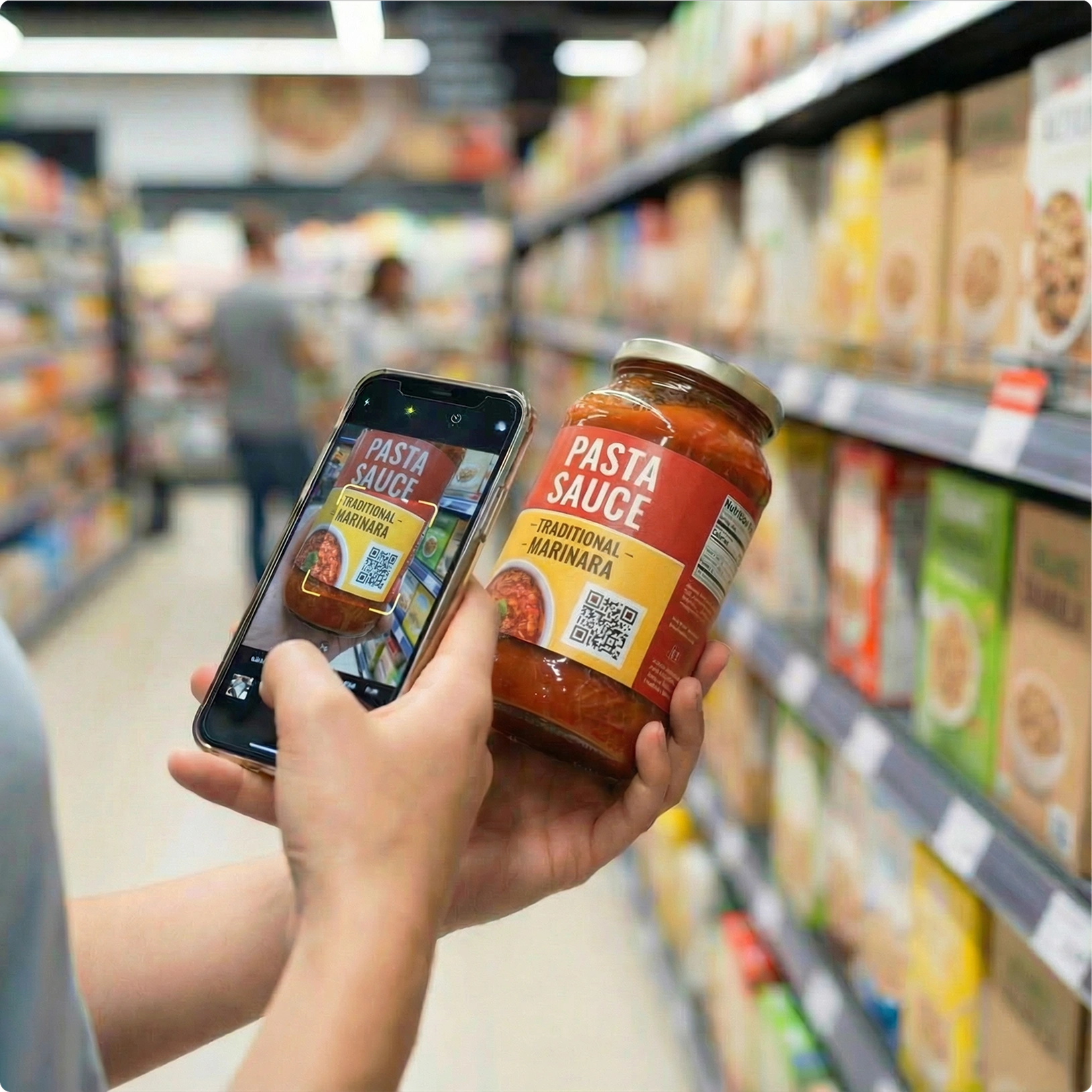
After four days at Natural Products Expo West 2026 walking the show floor, attending sessions, and talking with founders one insight stood out: 70–80% of food and beverage purchase decisions still happen at the shelf. It reinforced what we’ve long believed: packaging isn’t just packaging anymore. With something as simple as a QR code, it can become a powerful channel that connects in-store shoppers to digital experiences and ongoing brand relationships.
We just got back from Anaheim. Feet sore. Notebooks full. Heads buzzing.
Natural Products Expo West 2026 brought together thousands of founders, brand builders, buyers, and industry leaders across four days of sessions, show floor discovery, and honest conversations about what it actually takes to grow a CPG brand right now. We were there — walking the aisles, sitting in the sessions, and paying close attention to what the smartest people in the room kept coming back to.
Here's what we heard. And more importantly, here's what it means for you.
The Shelf Is Still Where Brands Win (or Die)
One statistic that stopped the room during the Rewriting the Retail Media Playbook session: 70–80% of food and beverage purchase decisions are still happening at the shelf. Not on Instagram. Not on Amazon. At the shelf.
Eleanor Hayden, founder and CEO of Veriti, used a phrase that stuck with us: “profound allocation gap.” Brands are dumping budgets into digital retail media while the actual buying decision happens in a store, five feet from the shelf. She wasn’t anti-digital. Her point was that brands keep optimizing the channel where the decision doesn’t happen and ignoring the one where it does.
The insight for emerging brands is actually exciting: you already have a powerful in-store asset that most founders dramatically underestimate. It's your packaging. Every unit on a Sprouts or Whole Foods shelf is a media impression. The question is whether it’s doing anything or just... sitting there
🔵 Uniqode's Take: Put a dynamic QR Code on that package. Now that passive shelf impression becomes a two-way data relationship. Scan data tells you which stores are performing, which markets respond to which offers, and who your most engaged shoppers actually are. That’s shopper intelligence that enterprise CPG companies pay retail media networks millions for. You can start building it with your next production run.
Repeat purchase is the only metric that actually matters
The Building Brands That Shoppers Come Back To session was one of the most honest conversations of the show. Panelists from Frontier Co-op, Nutrabolt, and CHOMPS were refreshingly direct: distribution wins feel good, but they don't tell you if your brand has legs.
"Obsess over repeat, not just distribution," said one panelist. "The clock starts day one."
Another put it simply: "Give shoppers a reason to come back."
The panel's consensus was that repeat purchase doesn't happen by accident — it's engineered. It comes from showing up consistently across every touchpoint, having clear positioning that shoppers can remember and repeat, and finding the moments where loyalty solidifies. For CHOMPS, that's when the product is in a gym bag. For Nutrabolt, it's when their brand becomes part of a daily routine.
🔵 Uniqode's Take: This is where QR codes on packaging stop being a "nice to have" and become a core retention tool. A scan post-purchase is one of the highest-intent moments you'll ever get with a shopper. They bought you. They opened you. They liked you enough to scan. That moment — redirecting them to a loyalty opt-in, a recipe, a story, or a discount on their next order — is how you convert a trial into a routine.
TikTok, Amazon, and in-store are one loop now (and your product is the connective tissue)
The omnichannel session from the VENDO team delivered one of the most clarifying frameworks of the conference. Their core argument: forget the funnel. Think about a loop.
TikTok Shop is driving 3–5x branded search increases on Amazon. Walmart is piloting QR codes on shelf tags that let shoppers order online from the store aisle. Amazon is integrating deeper into Whole Foods. Target has "Target Finds" trending on TikTok. The point: brands that still think in separate channels are losing to brands that think in ecosystems
🔵 Uniqode's Take: Your physical product is the connective tissue of this loop. Every unit is an opportunity to pull an in-store shopper into your digital world — your email list, your loyalty program, your social community. A QR code on your packaging is the bridge. It's how a Sprouts shopper becomes a TikTok follower. How a Whole Foods trial becomes an Amazon Subscribe & Save. How a one-time purchase becomes a relationship you own. Brands that build owned channels now will be able to weather algorithm changes, retailer disruptions, and rising ad costs. The brands that don't are renting their audience from platforms that can change the rules at any time.
Packaging compliance is coming — and it's an opportunity in disguise
The Sustainable Packaging Policy session was, by the presenter's own admission, "a tough slide to look at." Extended Producer Responsibility (EPR) regulations are rolling out across the US “California's SB54” is already in effect, with Oregon, Maine, Colorado, and others following. There are roughly 90 different packaging laws active or in development nationwide.
For small brands, the compliance conversation can feel paralyzing. But here's the reframe that surfaced in the room: the forensic analysis that EPR requires is forcing brands to look at their packaging supply chain in ways they never have before. Brands doing this work are finding savings, light weighting opportunities, and material switches that improve both cost and sustainability positioning “not just compliance”.
🔵 Uniqode's Take: Transparency about your packaging choices is increasingly a brand differentiator. Shoppers at natural retailers like Whole Foods and Sprouts are already asking why brands make the choices they do. A QR code on your packaging is the most elegant way to tell that story — linking to your sustainability sourcing page, your compostability certifications, or your EPR compliance commitment. It doesn't add copy to a crowded label. It opens a door.
The unfair advantage emerging brands already have
Here's the thing big brands don't want you to think about: you're more agile than they are.
No 12-month packaging calendars. No enterprise approval chains that take six weeks. No legacy systems forcing you to rerun last year’s strategy because switching costs are too high. You can decide tonight to add a QR code to your next production run and be looking at scan data by next Friday.
The Inmar Intelligence session drove this point home with an observation about in-store marketing that's easy to overlook: 70–80% of purchase decisions happen at the shelf, but most brands aren't doing anything to influence what happens after that moment. The biggest brands activate loyalty programs, shopper marketing campaigns, and retail media at scale. Emerging brands can achieve the same thing — at a fraction of the cost — when packaging becomes the activation point.
🔵 Uniqode's Take: One QR code. One goal. That's the starting point. Brand experience, loyalty enrollment, cross-sell, first-party data collection — each of these is a single campaign away when you have a connected package. And unlike a big brand locked into a 12-month print cycle, you can test a new offer tonight and see results by morning.
5 things to do this week (before you forget this article)
The best conferences don't produce knowledge — they produce decisions. Here's what we'd recommend:
- Audit your current packaging for missed moments. Is there a QR Code? Where does it go? Is it doing anything measurable? Most brands have a static, un-tracked QR pointing to a homepage. That's a wasted impression.
- Pick one SKU, one goal, one QR. Don't try to do everything at once. Pick your best-selling SKU. Decide whether your priority right now is loyalty enrollment, first-party data capture, or brand storytelling. Build one experience and measure it.
- Start building your owned audience now. Every scan is a potential email. Every email is an asset you own regardless of what happens on TikTok or Amazon. Your list compounds. Retailer algorithms don't.
- Think about your packaging as measurable media. Where are your scans happening? Which zip codes, which retailers, which times of day? This data exists — but only if you're using a platform that tracks it. Scan geography is often the first clue about which retail markets are your strongest.
- Get ahead of EPR with transparency. You don't need to wait for regulations to force the conversation. Use your packaging touchpoint to tell your sustainability story now, when it's a brand asset rather than a compliance checkbox.
The Bottom Line from Expo West 2026
Every major theme from this year's show — repeat purchase, omnichannel integration, in-store media, packaging compliance, shopper loyalty — converges on one truth: the physical package is the most underutilized marketing channel in CPG.
It's already printed. It's already on the shelf. It's already in the shopper's hand. The only question is whether it's working for you or just sitting there.
The brands we saw at Expo West that are winning aren't necessarily the ones with the biggest budgets. They're the ones treating every touchpoint — including the back of the package — as an opportunity to deepen the relationship.
That's a game emerging brands can win.
Uniqode helps CPG brands turn packaging into a measurable, dynamic channel — with QR codes that connect the shelf to your CRM, your loyalty program, and your first-party data strategy. If you're ready to activate your packaging, start here.
Related Posts
How CPG Brands Use QR Codes on Packaging
Louisiana SB 14 Requires QR Codes on Food Packaging
What the FDA’s New Traceability Requirements Mean for CPG Brands
Reduce Customer Support Calls with Product QR Codes: A Complete Guide for Brands
How to Drive App Downloads from Product Packaging Using QR Codes