


.png)


%201.png)

Getting your Audience's Attention Was Never the End Goal
For most of my career, the conversations I've been part of have revolved around one question in various forms: how do we get people to notice us?
Better headlines. Sharper hooks. SEO architectures built to surface the right page at the right moment. Content strategies mapped against every stage of a funnel, then remapped when the funnel changed. I've lived inside that obsession across startups, large enterprises, and almost every content format that's had a moment in the last fifteen years.
Attention is genuinely hard to earn. But somewhere along the way, the industry started treating it as the destination rather than the starting point. And that's where I think we've been leaving real value behind.
The signal that shifted my thinking didn't come from a campaign report. It came from watching how people interact with QR Codes, something I've been close to in my current work and something our research at Uniqode tracks at scale. Across 188 million scans in 2025, a pattern keeps showing up: people don't deliberate before they scan anymore. They just do it. At restaurants, on packaging, on event posters, on hotel room directories. The behavior has become instinctive in a way that took search years to achieve and social even longer.
The channel solved its adoption problem. Nobody in marketing needs to teach the behavior anymore.
The moment marketing consistently underinvests in
And yet, most of the energy in the room still goes toward the front of the interaction: the placement, the creative around the code, the copy that gets someone to lift their phone. The question of what happens after the scan, what the moment of contact actually does for the brand, gets a fraction of the attention.
I noticed a version of this before a trek last year. I'd booked a hostel for a few days before the trek. This was a small, well-run place that turned out to be one of the more genuinely sustainable operations I'd stayed in. No dustbins in the rooms because they'd designed waste out of the stay rather than just managed it. Steel cutlery and plates throughout, no disposables anywhere. The kind of operational commitment that takes actual conviction to maintain at scale.
I found all of this out the morning I checked out, mostly by noticing things and asking. None of it had reached me before I arrived. There was no moment at check-in — no desk card, no simple QR Code linking to their sustainability numbers, their waste diversion stats, what guests could do to contribute — where the story could have landed. The work existed. The communication didn't. I would have chosen that hostel specifically for those reasons. I chose it for price and proximity.
According to Booking.com, 43% of travelers are willing to pay more for accommodation with a sustainable certification. That willingness shows up at the booking stage, before arrival. The sustainability story, in most cases, is told after it.
This pattern shows up well beyond hospitality.
We built an entire discipline around acquisition and significantly underbuilt the infrastructure for what happens at the moment of contact. The scan. The unboxing. The check-in. The first use. These are the moments when a customer's attention is highest, their intent is clearest, and their openness to a brand relationship is at its peak. And they are consistently the moments where marketing has the least to say.
Fifteen years of content experience have taught me that building an audience is the easier half of the problem. The harder, more durable thing to build is a relationship that starts the moment someone crosses from prospect to customer. Most content strategies are architected for the former and improvised for the latter.
The moment of contact is a design decision
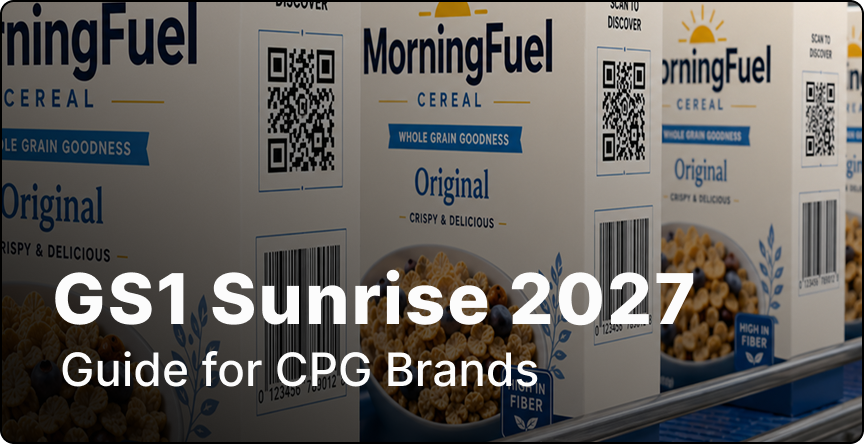
The brands doing this well share one quality: they treat the moment of contact as a deliberate design decision, planned for with the same care as the campaign that earned attention in the first place. A QR Code on a hotel dining table that connects to a local sourcing story is a relationship decision, a choice to give the guest something meaningful at the exact moment they're most likely to receive it. A QR Code on CPG packaging that opens into a personalized experience is an acknowledgment that the purchase opens a conversation the brand can actually continue.
The marketing industry has more surface area, more formats, and more targeting precision than at any point in history. What the industry has built less consistently is the discipline to think carefully about the moment after attention is granted: what happens in that window, what it signals, what it could become.
Scanning has become instinctive. The question has changed. The brands that understand this have moved past how to get people to engage. They're focused on what that engagement should actually do.
That is a much more interesting problem. Most of us are just late to it.
The hospitality teams getting this right, the ones turning the moment of contact into guest trust and direct bookings instead of a footnote, are what we dug into in Sustainability in Hospitality: The Operational Playbook for Hotels.