
Sustainability in Hospitality: The Operational Playbook for Hotels
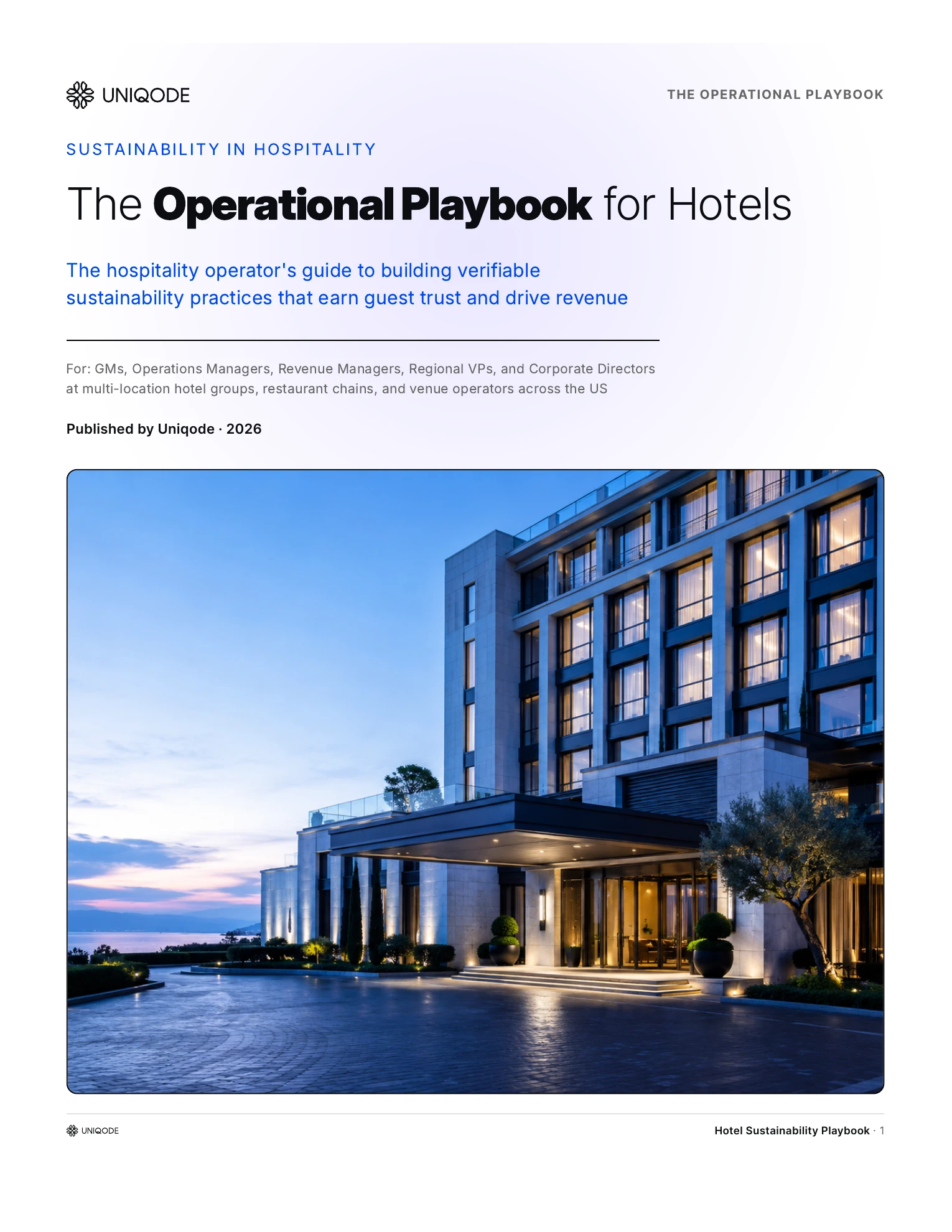
An operational guide to avoiding greenwashing pitfalls, building sustainability measures at any budget, and communicating them in a way that turns eco-conscious travelers into direct bookings.

Sustainability is a booking filter now
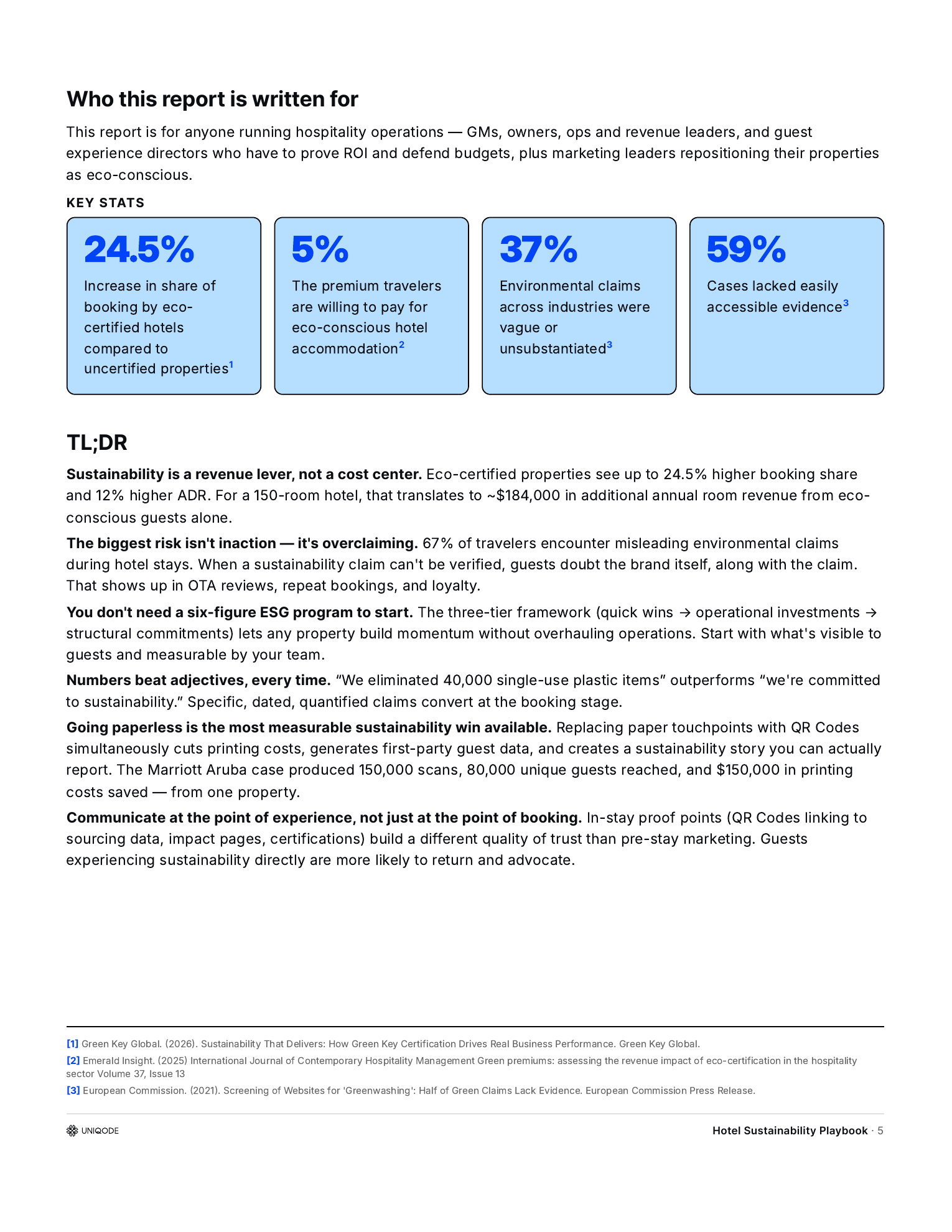
Eco-certified properties see up to a 24.5% increase in booking share. Travelers are paying a 5% rate premium for verified green credentials. The revenue case is not soft — but hotels are responding to it with vague claims, unverifiable language, and sustainability messaging that guests scroll past at the booking stage.
Most operators already have practices worth communicating. The gap is between what is happening on the property and what guests can see before, during, and after their stay which costs hotels in RevPAR, OTA commissions, and repeat stays.
This playbook shows hotel operators how to close the gap: without a six-figure ESG budget, without rebranding, and without overpromising what you have not yet built.
Key Insights
A 150-room property running at 70% occupancy and $200 ADR can add up to $184,000 in incremental annual revenue from the eco-conscious segment alone, even if that segment represents 20% of bookings.
Booking.com discontinued its own Travel Sustainable badge in 2024 after regulators ruled it misleading. Self-assessed sustainability labels are no longer defensible at the platform or property level.
“We are committed to sustainability” doesn't convert anyone. “We eliminated 40,000 single-use plastic items across 18 properties in 2025.” does. This playbook outlines the 4 principles to communicate sustainability meaningfully.
80,000 guests reached, 150,000 scans logged, and an estimated $150,000 recovered from print costs — in one year. Marriott Aruba achieved this across eight restaurants and multiple guest touchpoints. Your property doesn't need eight restaurants to get started. It needs one touchpoint replaced this week.
A 150-room property running at 70% occupancy and $200 ADR can add up to $184,000 in incremental annual revenue from the eco-conscious segment alone, even if that segment represents 20% of bookings.
Booking.com discontinued its own Travel Sustainable badge in 2024 after regulators ruled it misleading. Self-assessed sustainability labels are no longer defensible at the platform or property level.
“We are committed to sustainability” doesn't convert anyone. “We eliminated 40,000 single-use plastic items across 18 properties in 2025.” does. This playbook outlines the 4 principles to communicate sustainability meaningfully.
80,000 guests reached, 150,000 scans logged, and an estimated $150,000 recovered from print costs — in one year. Marriott Aruba achieved this across eight restaurants and multiple guest touchpoints. Your property doesn't need eight restaurants to get started. It needs one touchpoint replaced this week.
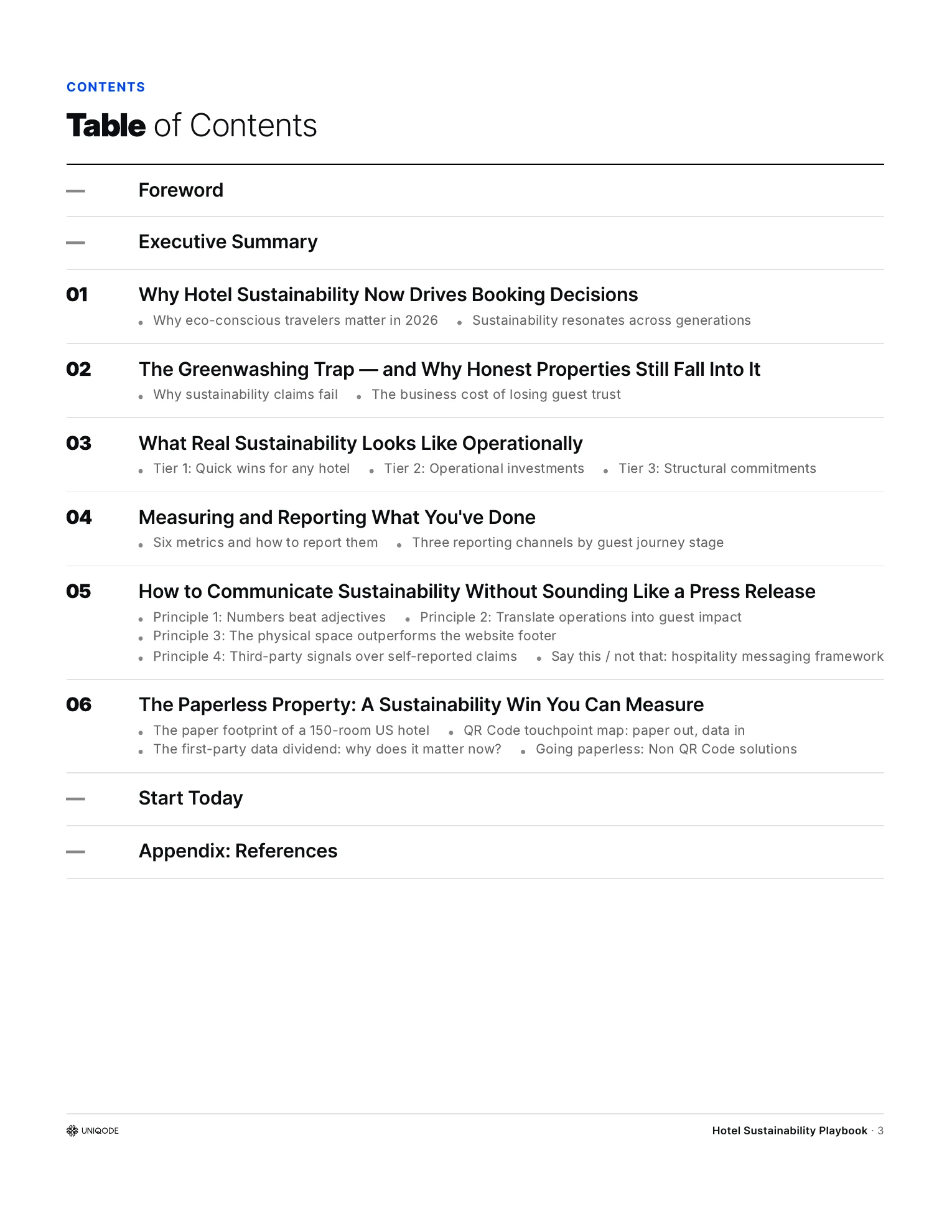
Inside the White Paper
Your sustainability story is already there. Most guests just can't see it.
Uniqode helps multi-property hotel groups replace paper touchpoints with QR Code-powered guest experiences — digital menus, in-room hubs, paperless checkout, and loyalty enrollment, each one generating the first-party behavioral data your OTA never will. Marriott, Hyatt, and Hilton already use it at scale.
See how it works for your properties →