QR Code Scavenger Hunt: How to Create One + 12 Ideas That Actually Work
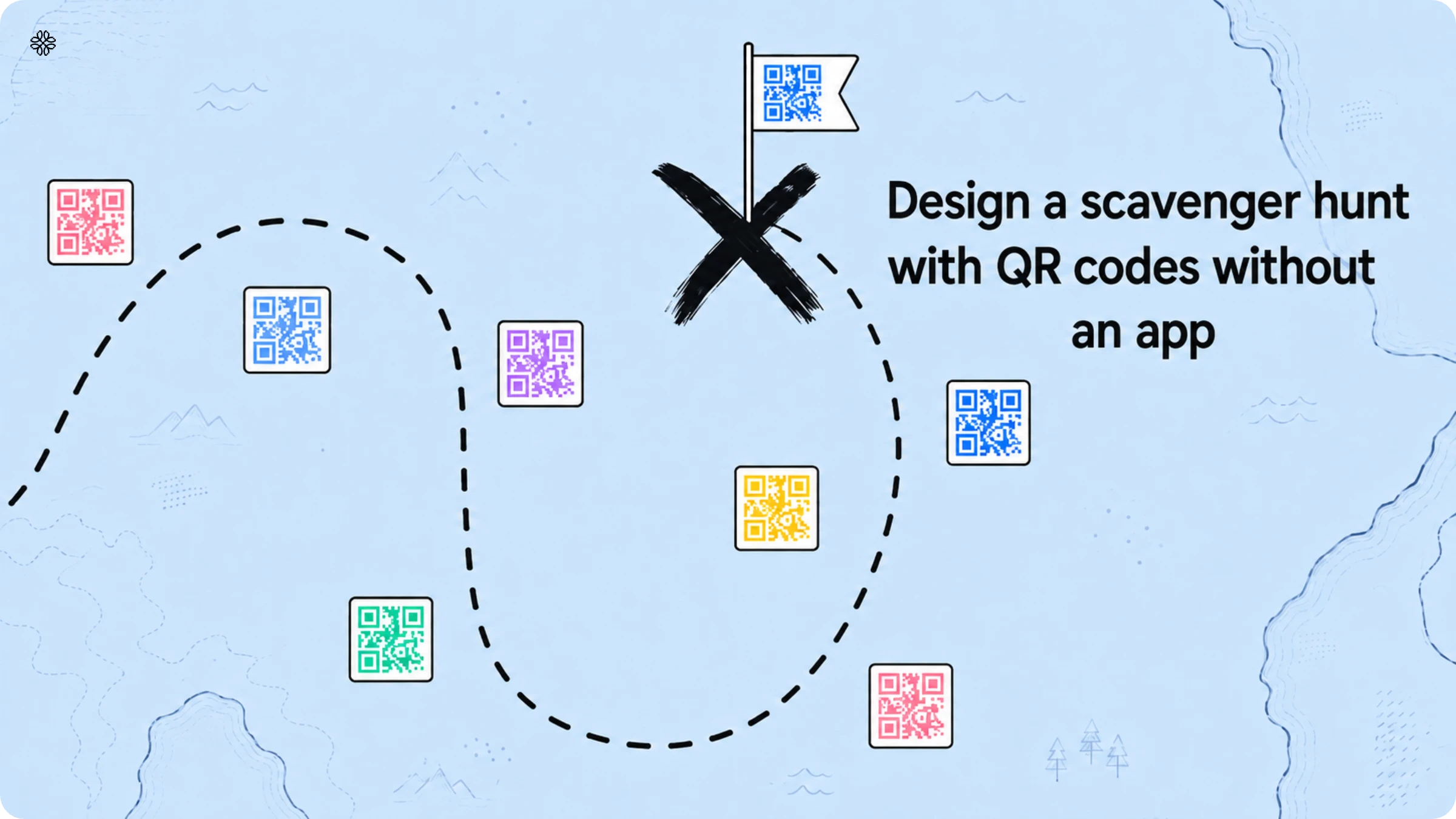
Create a QR Code scavenger hunt that gets people exploring, scanning, and solving. Discover practical ideas, use cases, and examples, plus a step-by-step guide to building your own.
💻 Key takeaways:
- Scavenger hunt QR Codes replace paper clues. Each scan reveals a riddle, video, or challenge guiding players to the next stop
- Used by schools, parties, corporates (team-building, onboarding), and marketing promos (lead capture)
- Turns any physical space into an interactive game checkpoint
- Supports richer clues than paper like video, audio, quizzes, maps
- Dynamic QR Codes let you edit destinations without reprinting
- Built-in analytics track scans, drop-offs, and completions
- Encourages team collaboration rather than one person solving everything
- Can be built two ways: static text codes for offline hunts, or dynamic codes with landing pages for internet-enabled hunts with themes and media challenges
- 12 format ideas include image clues, location-based codes, PDFs, app promos, hidden text, coupon unlocks, corporate hunts, retail discovery, contests, classroom quizzes, and campus/museum tours
- A QR Code can't hold a full game. It links to one hosted online (quiz, AR, spin-wheel, etc.)
- Dynamic QR Codes are what make hunts easy to manage: editable, brandable, and trackable from one dashboard
A QR Code scavenger hunt is an interactive game in which players scan QR Codes placed at different locations to reveal clues, challenges, questions, or directions that guide them toward the next stop or the final goal.
Forget about the old-fashioned printed list of clues. With a QR Code scavenger hunt, each scan becomes a little adventure in itself. One moment you might be solving a riddle, the next you could be watching a video or following a map. Each QR Code unlocks a new challenge or clue, guiding you from one spot to the next until you reach the finish line. It’s a seamless, interactive experience that keeps everyone on their toes.
In this guide, you’ll find everything you need to create your own QR Code scavenger hunt. From picking the right clues and QR Codes to clever ideas you can borrow, we’ll also explore how these hunts work for corporate events, contests, and scoring.
What is a QR Code scavenger hunt?
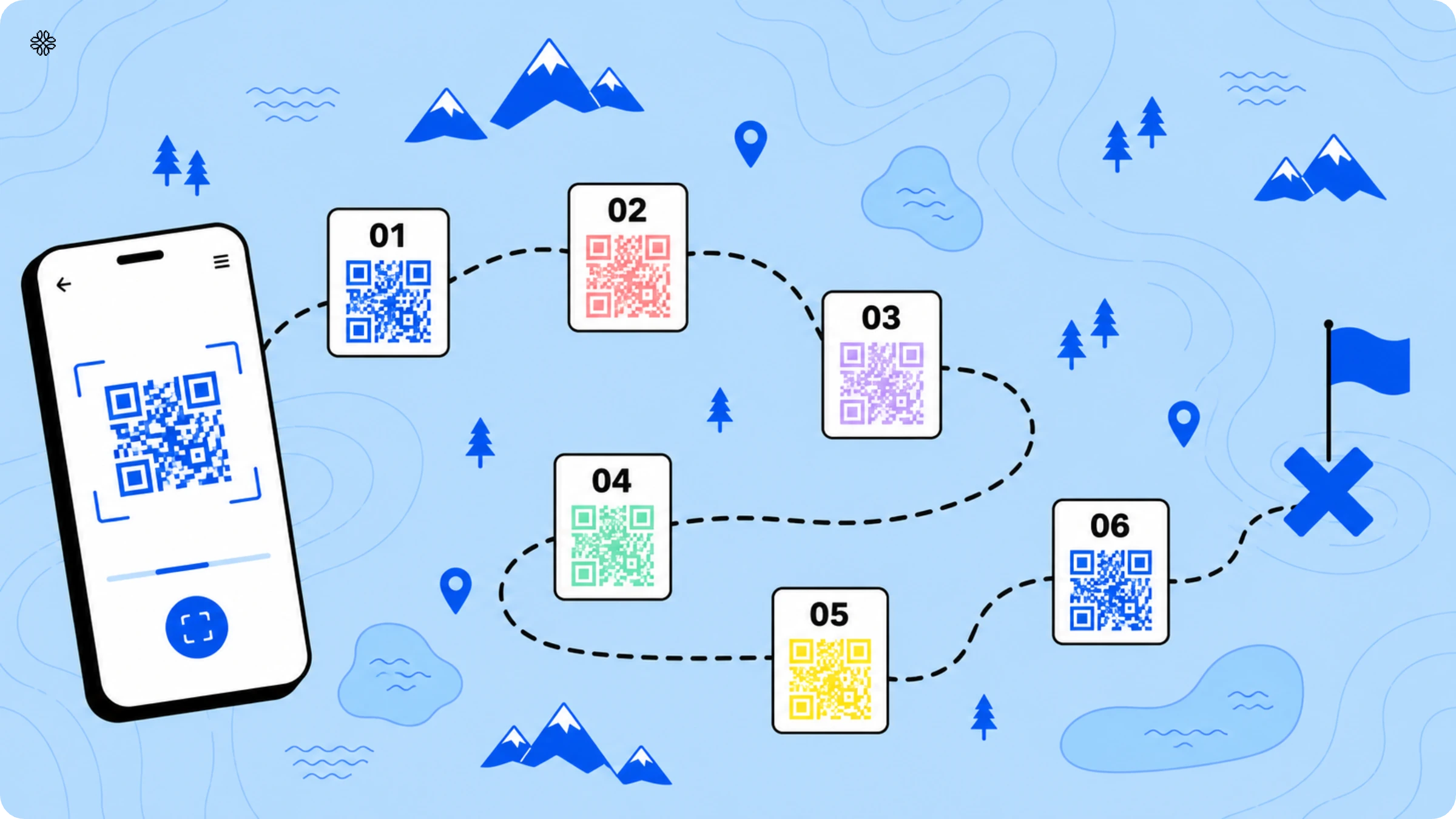
A scavenger hunt using QR Codes is essentially a digital version of a traditional scavenger hunt, wherein you define a list of particular objects that teams have to collect, usually without purchasing them. Creating a scavenger hunt with QR Codes can offer numerous ways to make the game much more exciting, fun, and engaging for the participants.
Who can use QR Code scavenger hunt?
At schools: QR Code scavenger hunt can be a new-age fun activity for teachers and students. It is used to engage students with interesting topics and help them retain their knowledge.
At parties: Scavenger hunts are some of the best party games. QR Codes can be an added feature to up the competition and make the party more eventful and fun.
As a corporate activity: Scavenger hunts at corporate offices help in team-building and creative thinking. It is also a good ice-breaker and a cost-effective way to keep employees engaged. Incorporating an employee rewards program can further motivate participants and add an extra layer of excitement to the hunt. Motivating your employees with gifts, such as personalized trophies, can enhance their experience and encourage even greater participation.
For promotions: QR Scavenger hunts can effectively capture leads, and businesses can remarket to the audience in the future.
Why create a QR Code scavenger hunt?
QR Code scavenger hunts transform ordinary spaces into interactive experiences, all while offering organizers a level of flexibility that traditional paper-based hunts simply cannot match.
So, what makes this format stand out? There are several reasons why QR Code scavenger hunts work so well.
1. Make a physical location interactive
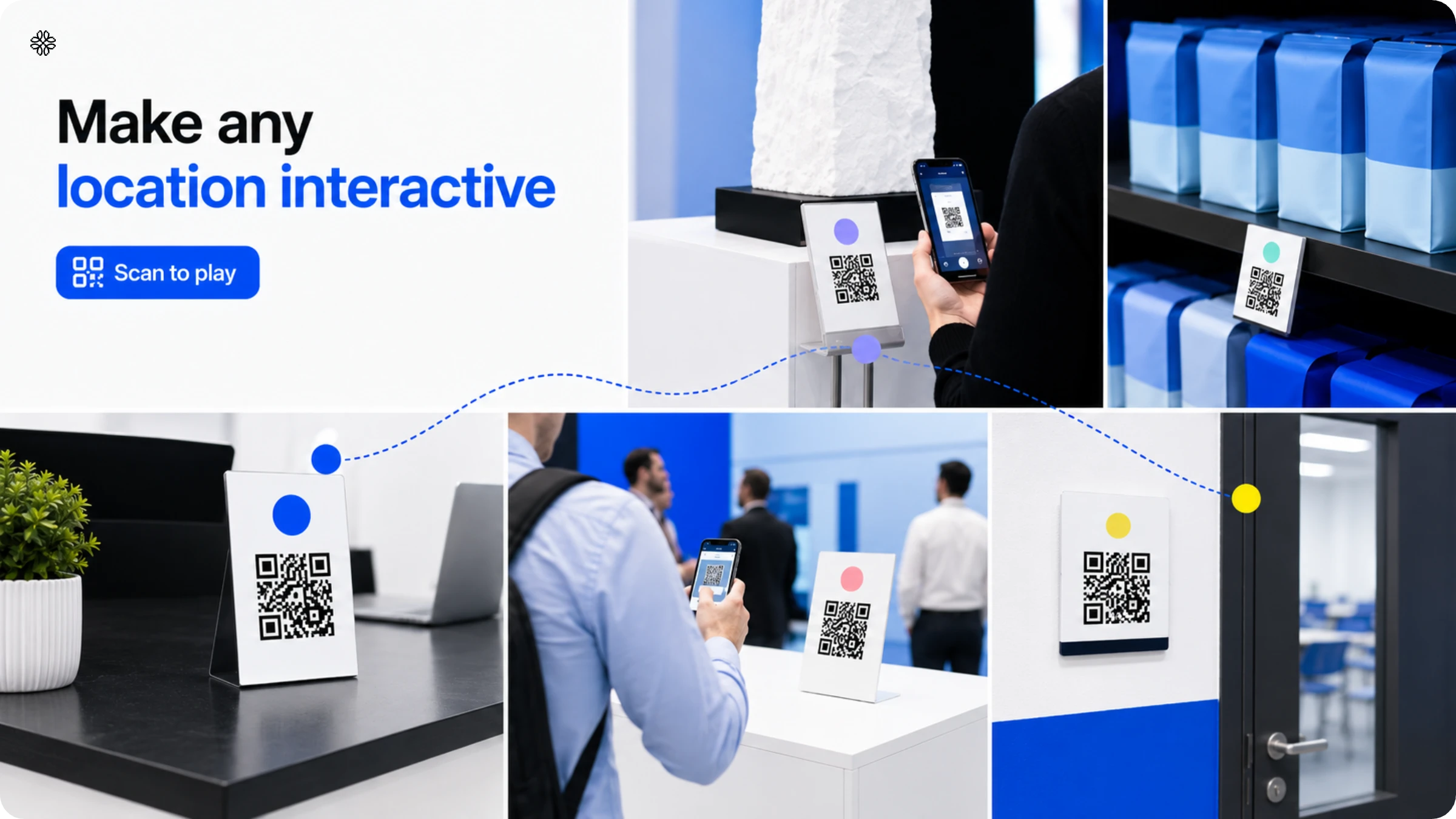
With QR Codes, even the most ordinary spots, like a desk, an exhibit, a product shelf, or a park bench, can be transformed into interactive game checkpoints. Suddenly, a classroom door or a company lobby is not just a space, but part of the adventure. This approach is especially effective when you want exploration to be at the heart of the experience.
2. Use richer clues than paper allows
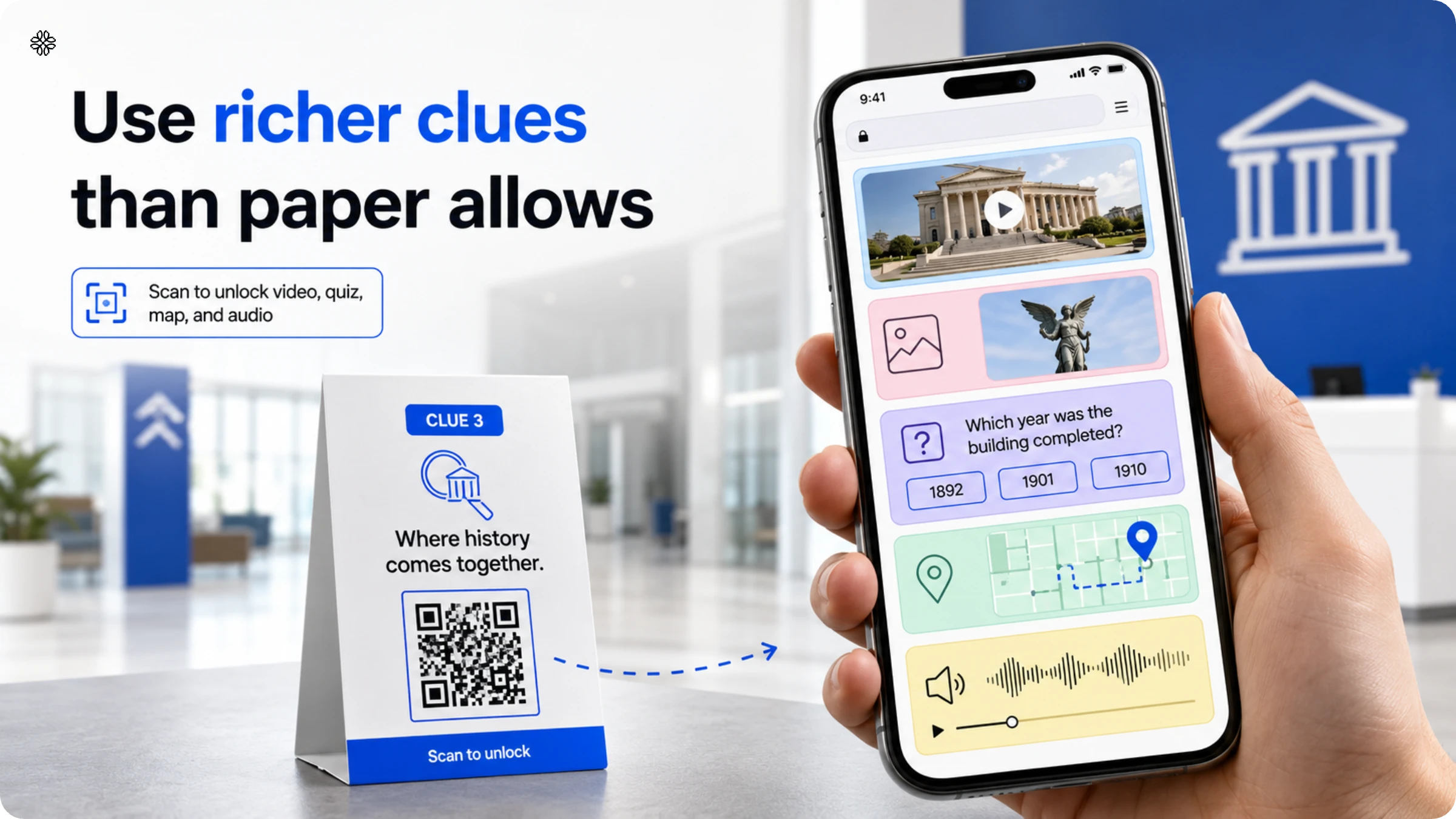
Think of a QR Code as your gateway to a world of digital experiences like videos, images, forms, quizzes, maps, audio, and more, all without cramming everything onto a tiny clue card. No need to squeeze your entire activity onto a sign. Imagine scanning a code and instantly watching a 15-second welcome from the CEO during an onboarding hunt, or diving into an interactive quiz at a museum treasure hunt. When it comes to media like images, audio, or video, linking your QR Code to mobile web content is the smarter choice, rather than trying to pack the files into the code itself.
3. Change clues without reprinting everything
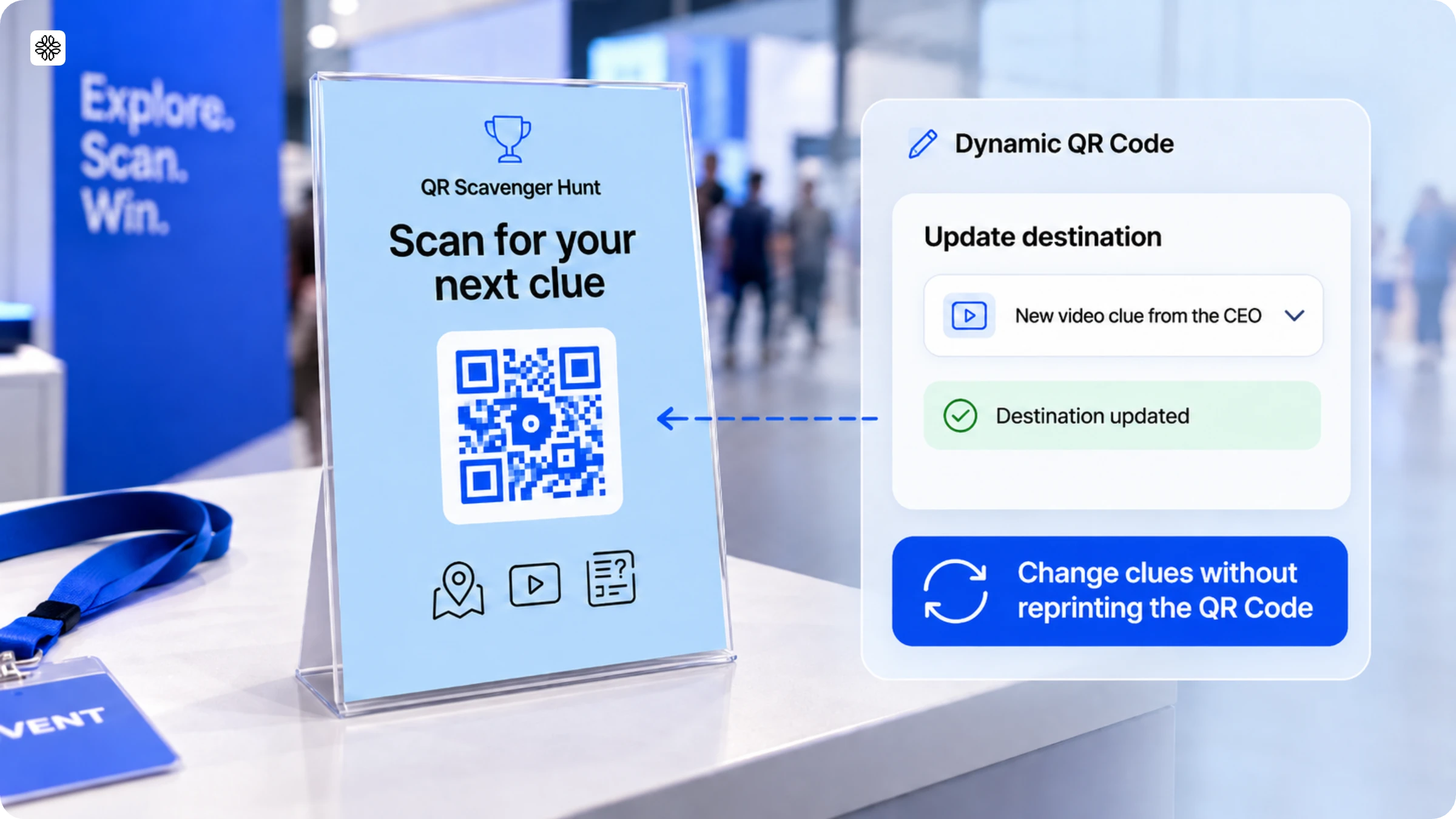
Dynamic QR Codes offer organizers the flexibility to update the digital destination linked to a printed code, all without the hassle of reprinting or replacing the physical QR Code itself.
This simple feature can save you a great deal of trouble in situations such as these:
- A clue turns out to be confusing
- A location suddenly becomes unavailable
- A product sells out
- A speaker cancels
- Weather closes part of a route
- You want to reuse the same signage later
Dynamic QR Codes prove especially valuable for events, marketing campaigns, analytics, frequently changing content, or whenever you are dealing with costly print runs.
4. Track what happens during the hunt
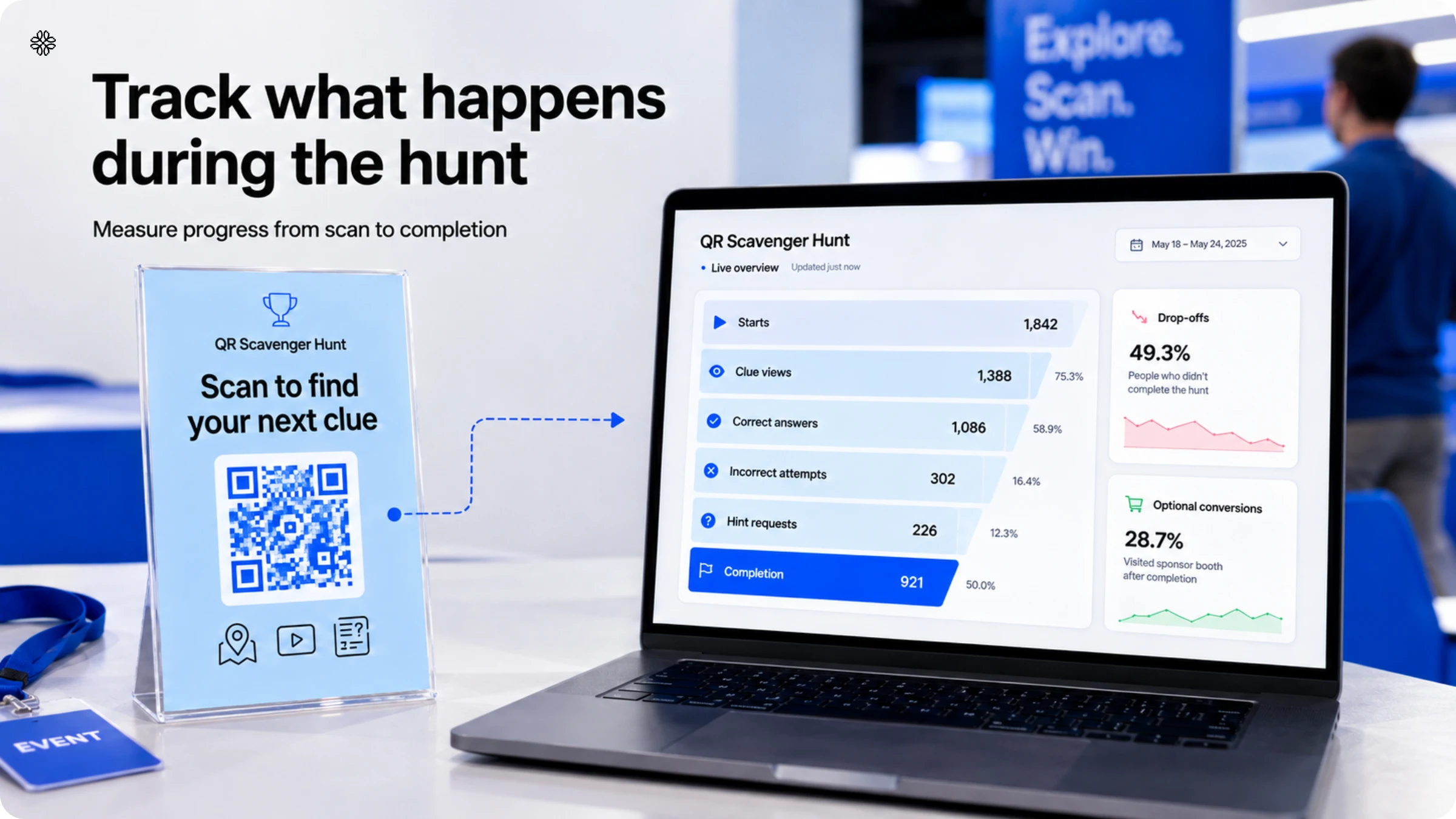
Gone are the days when organizers had to rely solely on anecdotal feedback to understand how participants moved through a scavenger hunt. With dynamic QR codes and QR Code event analytics, you can now track every step of the journey and gain clear insights into participant progress.
Curious about what you can actually measure? Here are some key metrics that can transform your understanding of the event:
- Starts
- Clue views
- Correct answers
- Incorrect attempts
- Hint requests
- Completion
- Drop-offs
- Optional conversions
These insights are especially valuable for corporate, educational, or marketing scavenger hunts, where understanding participant engagement can make all the difference.
5. Make group events more engaging

A thoughtfully planned QR scavenger hunt offers teams a real opportunity to solve, discuss, and discover together. When it comes to team-building, it is best to choose challenges that encourage everyone to pitch in, rather than letting one person take over while the rest simply observe.
How to make a QR Code scavenger hunt?
#1: Creating a QR Code scavenger hunt without internet
Planning a scavenger hunt indoors with a limited network? This version of the QR Code scavenger hunt is for you!
Here’s how it works:
- Make a list of objects that you want teams to find.
- Find the best image to represent them online.
- Start creating Text QR Codes on a QR Code generator.
- Upload the image as a logo.
- Customize the QR Code so that the colors of the logo are fairly similar to the color of the QR Code.
- Generate and test your QR Code.
- Download it.
Make a list of objects that you want teams to find. Here’s a sample template:
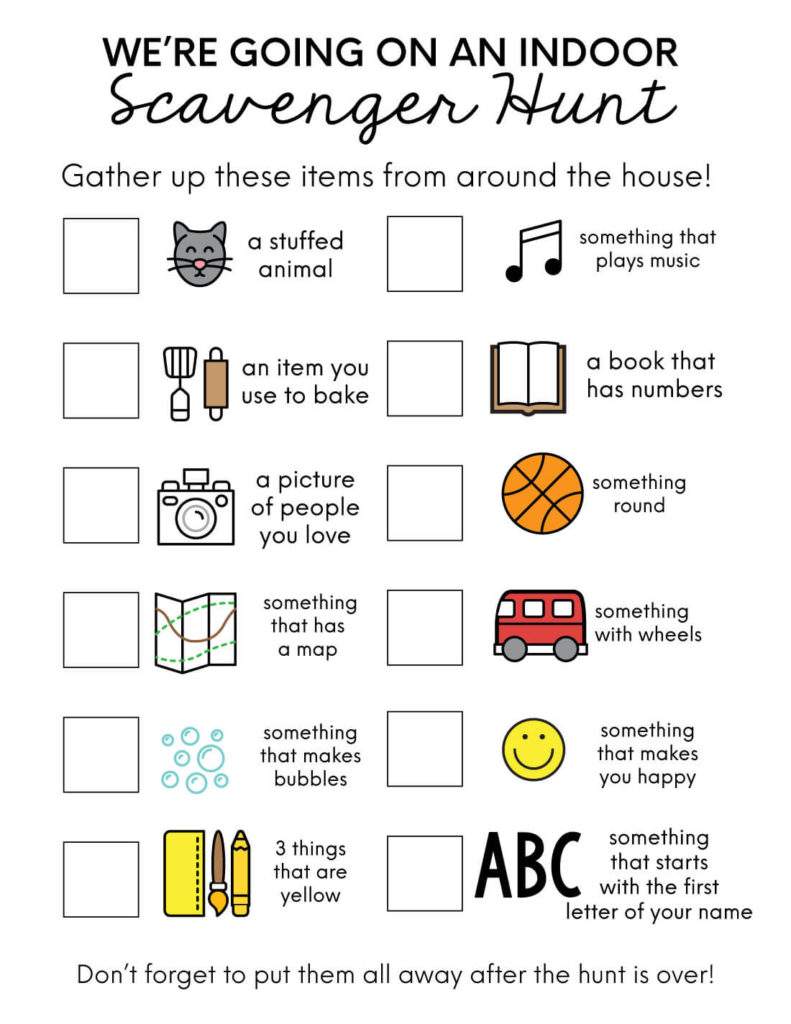
Discuss and brainstorm on topics or themes of the QR Code scavenger hunt. Make a list of questions and word problem solver clues you want the participants to solve.
If you are thinking of a classroom activity or for a specific promotion, you can create a list of clues around the topic you want participants to learn and know more about.
You can even create puzzles for clues with phrases and images.
Related: How to create a free QR Code with image
Create text QR Codes on a QR Code generator
You can add clues to a text QR Code, customize them, and add a logo depending on the type of the clue. You can create a logo using an online logo maker.
To show you how simple this is, let’s take an example.
Say the object you want participants to find is a red ax. Find the best image online and open the generator.
- Choose plain text QR Code from static QR Codes type.
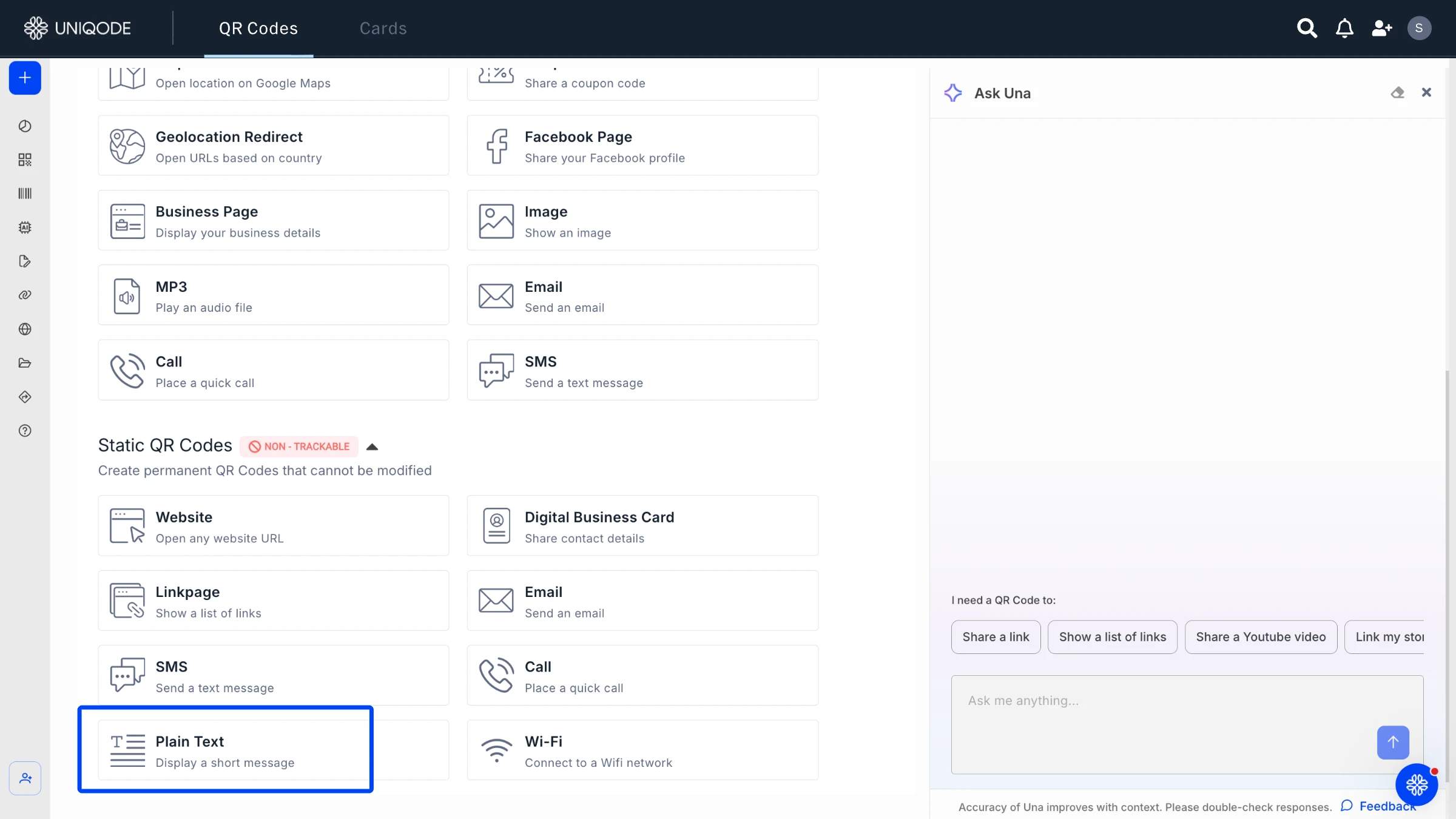
2. Next, type in the next clue for example “Purple Flower”.

3. Upload the image as a logo by clicking on ‘Upload Logo’.
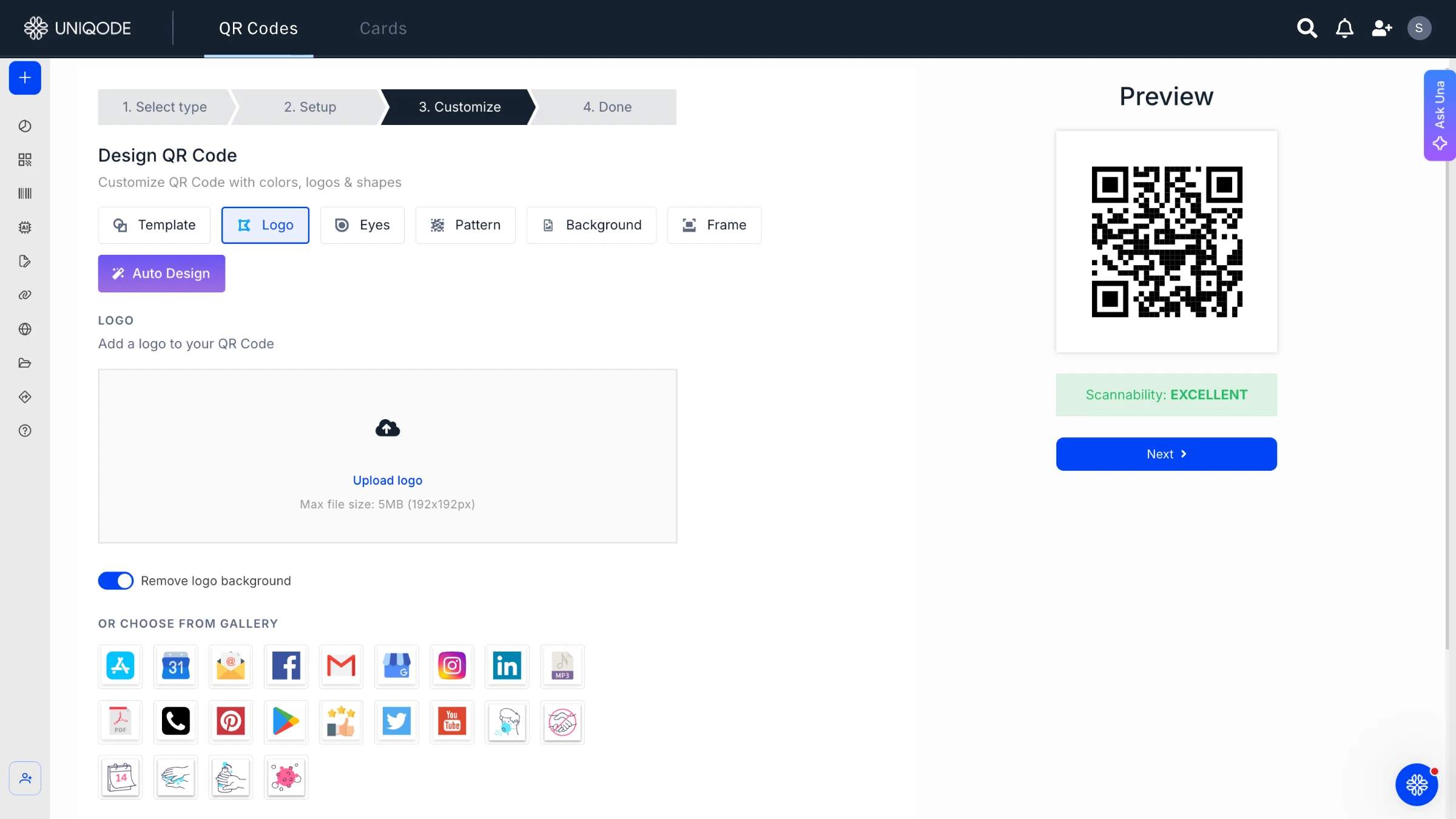
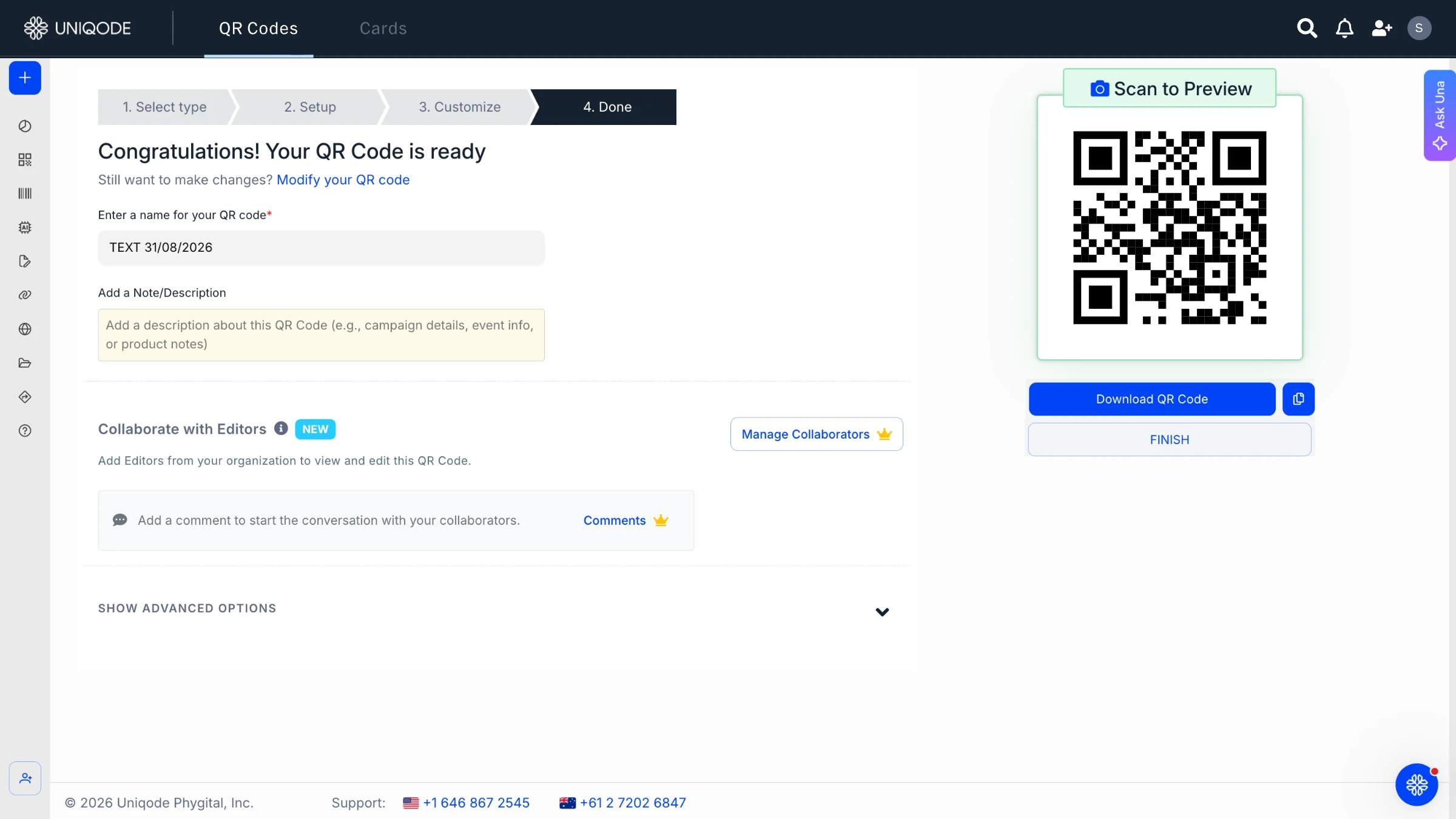
4. Generate and download the QR Code.
How the QR Code Scavenger hunt will work:
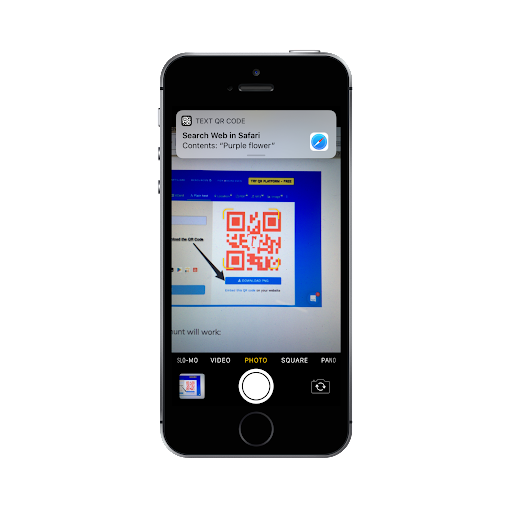
The objective of this scavenger hunt game is to find all the QR Codes. You can create several QR Codes like so and place them strategically in a demarcated area. Since the image of the object is hidden in the QR Code, teams will have to hunt for the QR Code, and the QR Code will reveal the next object that needs to be found.
Each team will just need the latest smartphone. There is no app required at all. All iPhones (iOS 11 and higher) and Android smartphones (Android 8 and higher) are capable of scanning QR Codes natively.
Although, if you already have an app, you can integrate QR Code API with your app to create QR Codes at scale.
Related: How to scan QR Codes
Make the QR Code scavenger hunt game more challenging:
Print up some empty QR Codes to make the game harder. Creating the empty QR Codes would require you to add a special character to the text field. Instead of a clue, just type a dot or a comma.
#2: Creating a digital QR Code scavenger hunt with internet – Make scavenger hunts engaging!
With the internet, QR Code scavenger hunts can be made more exciting, challenging, and engaging. Ensure the scavenger hunt has a theme or storyline, clues, riddles, and challenges, and a variety of indoor and outdoor settings to add in a bit of excitement.
Strong themes give scavenger hunts momentum. A Halloween scavenger hunt works especially well because the narrative is already familiar, clues can follow a storyline, characters, or mission, making each scan feel like progress rather than a task. The result is higher participation and better completion rates, even in larger or public settings.
This works best for large gatherings, corporate events, and even schools.
You can allow players to complete their mission lists via photos, videos, text, and more.
For this QR Code scavenger hunt, you will need to create landing pages.
1. Pick a QR Code generator and then click on ‘Create QR Code’.

RELATED: How to choose the best QR Code generator for your scavenger hunt.
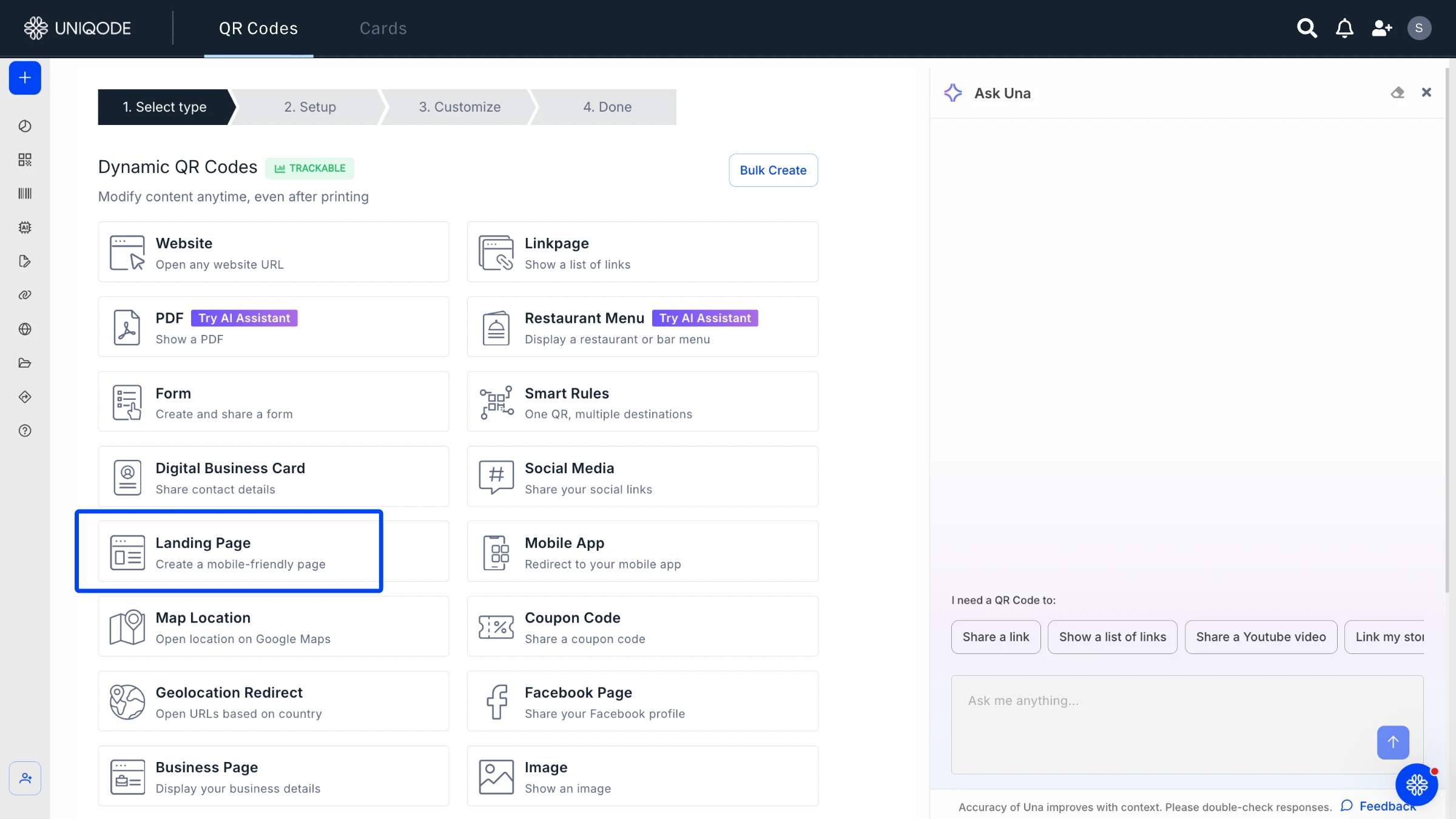
2. Choose ‘Landing Page’.
Note: You need a dynamic QR Code generator to create a landing page within the dashboard and link it to a QR Code.
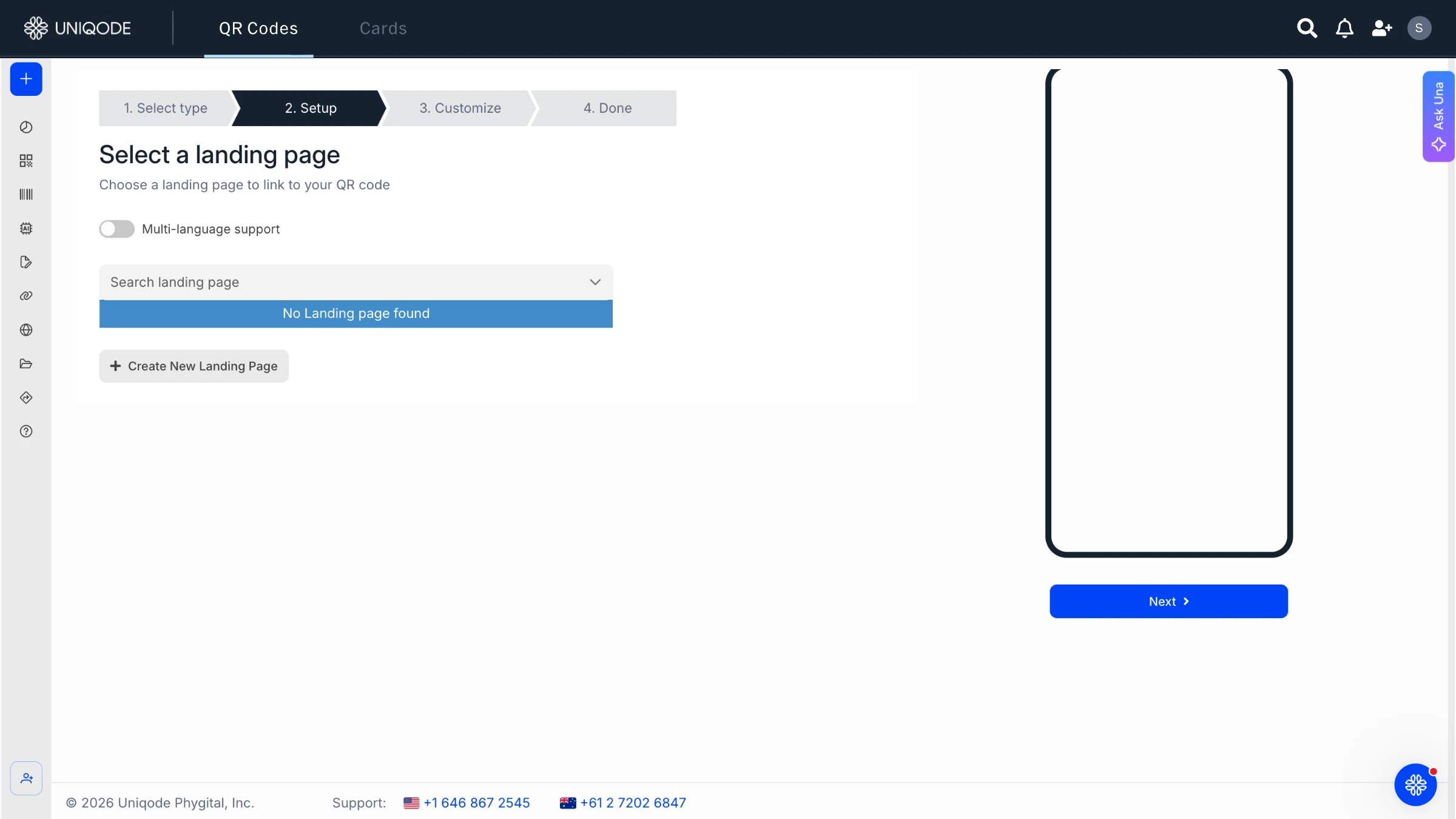
3. Choose or create a new landing page. This is simple to do and doesn’t require any coding. Once you’re done, click on ‘Next’.
RELATED: Landing Page QR Code: Everything you need to know
4. Customize your scavenger hunt QR Code – Change the color and add a logo.
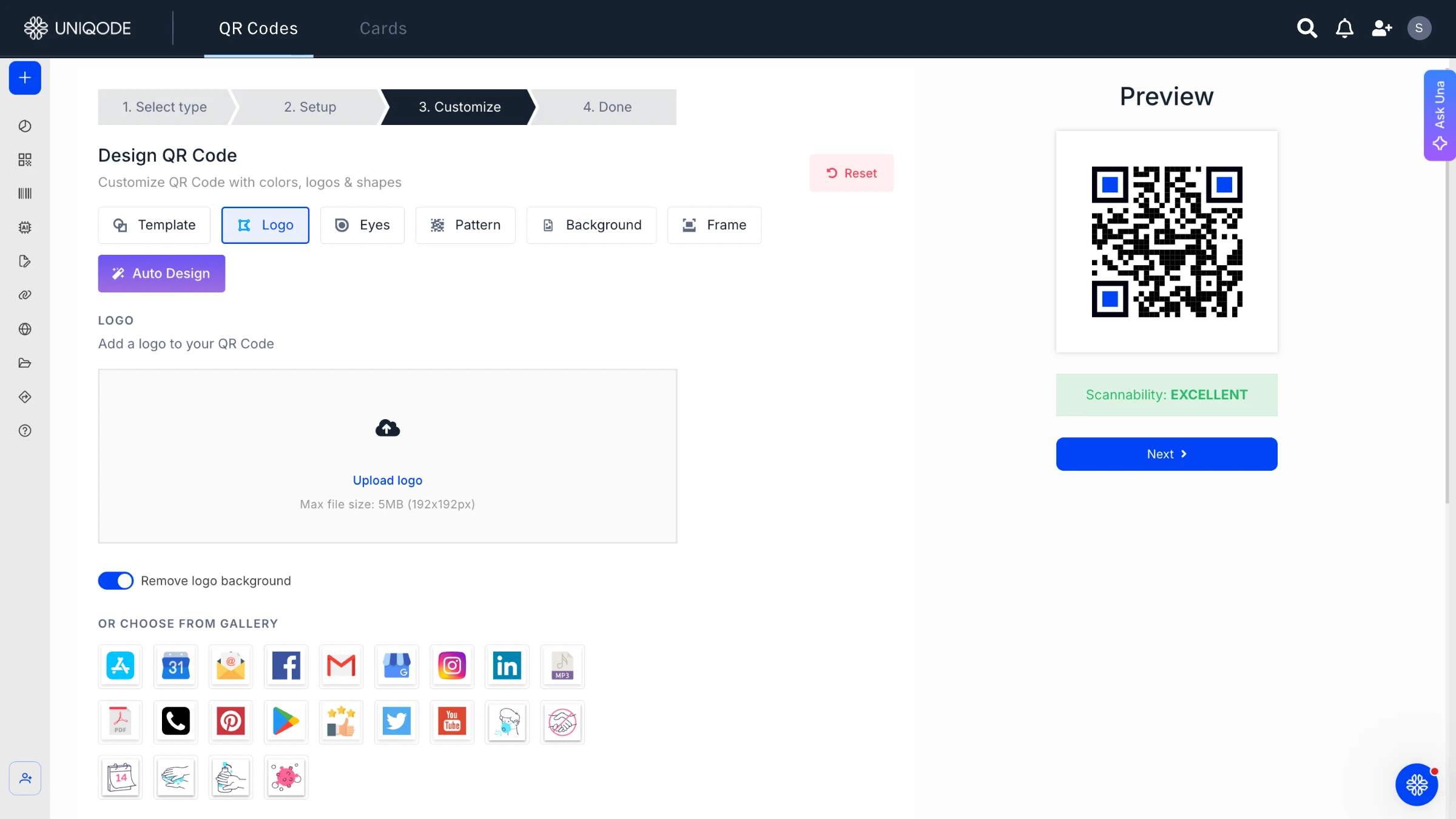
5. Download and deploy the QR Code.
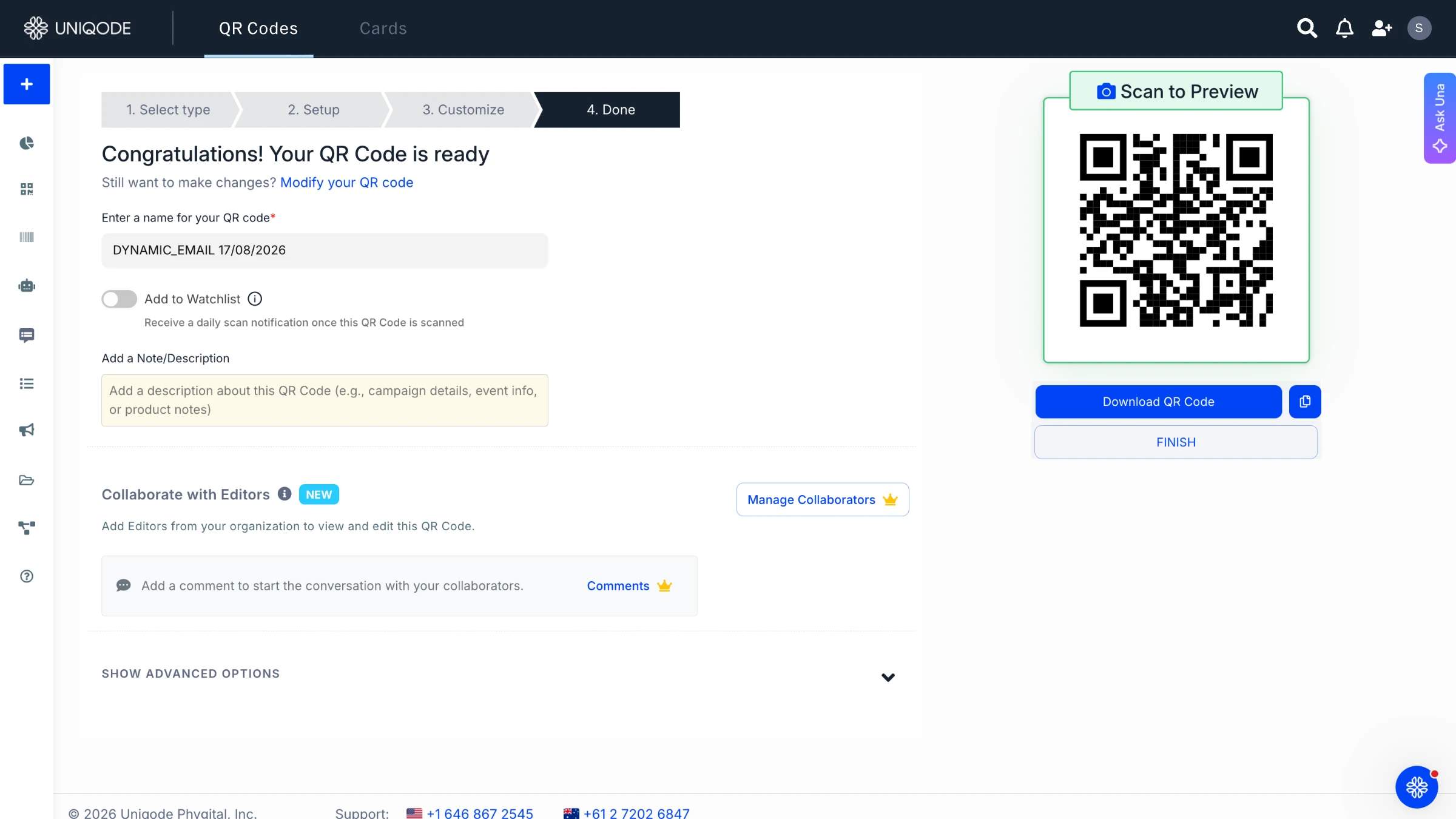
How this QR Code scavenger hunt game will work:
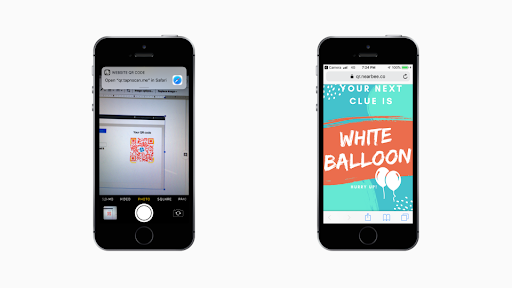
The objective of this QR Code scavenger hunt is to find all the objects mentioned on the landing pages. This makes the game far more interesting and is suitable for larger audiences.
You can tell teams to start from one particular QR Code. Each team will scan the QR Code to know which is the first object they must look for. You can also hide the location of the next QR Code on the first landing page.
Turn up the QR Code scavenger hunt a notch
Just like in Version #1, you can print out some dummy QR Codes. But with this version, you can create a time-based QR Code scavenger hunt.
By using the schedule function in the dynamic QR Code, you can get teams to hunt for a particular clue in a set time. If they fail to do so, you can change the landing page attached to the QR Code to “This clue has been destroyed” and award the team that finds the most number of objects in the shortest amount of time.
Pro tip: Use the best dynamic QR Code Generator to create dynamic QR Codes.
12 QR Code scavenger hunt ideas and examples
The best QR Code scavenger hunt ideas combine physical discovery with digital activities such as riddles, quizzes, media challenges, product discovery, puzzles, and collaborative tasks. Here is a list of 12 ideas to help you create a QR Code scavenger hunt. These QR Codes can be easily created using Uniqode’s intuitive QR Code platform.
1. Hide image clues in a QR Code
You can use image QR Codes to hide clues of an object to be found. You can also place a scavenger item list for participants using an image gallery.
2. Location-based QR scavenger hunt game
Using a location-based QR Code, you can direct participants to different locations of the scavenger hunt to find new clues.
3. PDF-based scavenger hunt
PDF QR Codes can help event organizers provide information on rules and checklist items for participants. They can also hide maps to different locations in PDF QR Codes.
4. Promote app downloads through QR scavenger game
You can use app download QR Codes at events and large-scale scavenger hunts as a part of app promotions. You can introduce online puzzles using apps as tasks within the scavenger hunt.
5. Website QR Code to display company information
Use website/URL QR Codes to help employees explore company information online in a fun and engaging way. You can design a scavenger hunt activity that requires people to scan QR Codes hidden in different places and access the information.
Increase online traffic via URL QR Codes
6. Hidden messages in text QR Codes
Using text QR Codes, you can hide the next steps as messages that can only be accessed upon scanning. Once the person scans the code and follows the next steps, they can be presented with the next text QR Code, and so on to complete the game.
7. Coupon code as secret codes
You can hide secret codes that unlock new clues in the game using coupon code QR Codes.
8. Corporate team-building QR Code scavenger hunt
A corporate QR Code scavenger hunt is a fantastic way to bring employees together, encouraging teamwork as they tackle a series of challenges thoughtfully placed throughout your office, venue, or event space.
Curious about what these challenges might look like? Here are a few ideas to get you started:
- Solve company trivia
- Find a specific meeting room
- Identify an object
- Complete a creative challenge
- Talk to another department
- Solve a logic puzzle
When designing your own corporate scavenger hunt, be sure to assign tasks that play to the strengths of different team members. This way, everyone gets involved and the activity remains balanced, rather than letting the quickest puzzle solver take over.
8. Retail product discovery scavenger hunt with QR Codes
Imagine stepping into a store where shopping turns into an adventure. A retail QR scavenger hunt invites you to explore every corner, uncovering products as you take on digital challenges along the way.
9. QR Code contest
A QR Code contest is a clever way to transform simple scans and completed challenges into valuable entries, points, or even a shot at winning a prize. It is an engaging approach that makes participation both fun and rewarding.
10. Classroom QR Code scavenger hunt
Imagine transforming routine revision, research, or lesson activities into an engaging adventure. A classroom QR Code scavenger hunt does just that, turning learning into a hands-on exploration.
You can incorporate this idea with a variety of subjects, such as:
- Math problems
- Vocabulary
- Historical clues
- Science questions
- Language exercises
- Reading comprehension
Here, students do more than just scan a code. Each clue or question challenges them to apply what they have learned, making progress only as they solve and discover along the way.
11. Campus orientation hunt
A campus QR scavenger hunt helps new students discover important locations while completing orientation activities.
Stations could include:
- Library
- Student services
- Cafeteria
- Sports facilities
- Lecture halls
- Clubs
- Support offices
Many campuses have already embraced QR and location-based activities, finding them effective for helping students get comfortable with their surroundings and connect with peers.
12. Museum QR Code treasure hunt
A museum QR Code treasure hunt invites visitors to explore the exhibits, scanning QR Codes along the way to reveal intriguing clues, fascinating facts, and engaging challenges.
QR Code scavenger hunt use cases: Where can you use one?
QR Code scavenger hunt for teachers and school kids
QR Code scavenger hunt games can be helpful for students of all ages. Here are some of the ways you can use them:
- As an orientation activity for new students showing them essential areas of the school grounds with questions relevant to things, they need to know.
- As a fun revision activity for senior physical education, enabling them to practice their understanding of core concepts in a fun and effective way.
- A brain boost activity inside of the classroom. It makes the students active and refreshes mid-lesson without leaving the room.
Also read: Other innovative ways to make QR Codes for classrooms and use them
QR scavenger hunt ideas for workplaces, companies, and corporate events
- Reward your team with a fun QR Code scavenger hunt as a part of their team building activities. It helps in building bonds and is a great chance to get to know each other.
- Help new hires and freshers become familiar with your office space and the organization by showing off the facility with a QR scavenger hunt.
- Drive people to different locations, exhibits, and vendors in an event or an exhibition via a QR scavenger hunt. Encourage participants to explore different areas of the venue, which they might not usually see.
Scavenger hunt using QR Codes for history lessons
History lessons can turn out boring and monotonous. To encourage students and keep the classroom interactive, teachers can conduct a scavenger hunt within their school premises on history lessons.
Here is how the QR Code scavenger hunt can be conducted:
- Teachers can divide the whole lesson into various questions.
- They can set an end goal of the scavenger hunt as an essay assignment.
- A series of 20 codes are hidden on random objects in different locations around the school.
- Students are put into small teams: each of these teams has at least one person owning a mobile device (e.g. phone, iPod Touch) which could decode the QR Codes
- The team has to find these objects and scan the QR Codes on them. When ‘read’ by the mobile device, each code turned into a quiz question relating to the study topic. Some of these tested (and so consolidated) existing knowledge; some of them required further research to obtain the answer.
- In break times over a two-day period, the teams of students find the objects and codes, copy down the numbered questions as each one was decoded, and then research and record the answers.
- The completed answer sheets were then handed in at the end of the school week and the team with the most correct questions and answers was awarded a prize.
- The following week, the sheets were photocopied and returned to the members of the teams. Each student then uses the new information they had gathered in the scavenger hunt to develop their essay project in more depth.
RELATED: Did you know that teachers use QR Codes to efficiently track attendance? Learn more about this by checking out our detailed guide on how to track attendance with QR Codes.
QR scavenger hunt quiz game
We will learn how to create a more engaging lesson by integrating tech tools to get students prepared for their quizzes.
- The teacher identifies the types of questions and the learning objective behind the quiz. Then create 8-10 open-ended questions from the topic, or a lesson one wants to quiz.
- They can choose a popular indoor place like the basketball court or the gym as the scavenger hunt area.
- The teacher then has to list down the objects and the places that are going to be a part of the scavenger hunt. Write clues on each object and the site for students to find.
- Copy and paste each question into a QR Code generator. Generate text QR Codes in bulk for all the clues and quiz questions.
- Print out the QR Codes and place them on the list of objects that you made earlier.
- Hand over worksheets for students and divide them into different teams
- The team that finds the highest number of objects and gets the highest number of answers for the quiz wins the game.
- After the game, report students back to the classrooms and have discussions on the topic.
Can you put a game in a QR Code?
You can absolutely use a QR Code to launch a game. However, the game itself is typically hosted on a webpage or app, not stored within the QR Code.
This is an important distinction to keep in mind.
A standard QR Code can store simple data like text or a URL. However, if you want to share complex games, videos, images, or interactive experiences, these are best hosted online.
So, rather than attempting to fit an entire game into a QR Code, consider this approach:
QR Code → mobile browser game
For example, the QR Code could open:
- Quiz
- Spin-the-wheel game
- Puzzle
- Memory game
- Trivia
- AR experience
- Treasure map
- Digital scratch card
- Scavenger hunt challenge
This way, you have much more creative freedom, and your QR Code remains simple and easy for anyone to scan.
QR Code scavenger hunt tips and best practices
| Tip | Why it matters | Best practice |
|---|---|---|
| Print QR Codes large enough | Small codes fail to scan at distance or in poor lighting | Minimum 2×2 inches for close-range scans; 8×8 inches or larger for signage viewed from 10+ feet |
| Test every code before the event | A single dead link kills momentum and trust | Scan each code with 2–3 different phone models/OSes the week of the event |
| Use dynamic QR Codes, not static | Destinations can be fixed post-print without reprinting | Point codes to a URL you can edit later, critical if venue changes or a clue needs correction |
| Add clear scan instructions nearby | Not all participants scan QR Codes daily | Include a one-line prompt like "Scan to unlock your next clue" near each code |
| Vary difficulty and placement | Keeps engagement high across skill levels | Mix easy (eye-level, obvious) and hard (hidden, requires searching) placements |
| Track scans in real time | Lets organizers see participation and troubleshoot dead zones | Use built-in scan analytics to spot codes nobody's finding or codes with failed reads |
| Password-protect or geofence sensitive codes | Prevents cheating or off-site scanning | Add password protection or location restrictions on codes tied to final/bonus clues |
| Design for outdoor and low-light conditions | Glare and shadows reduce scan reliability | Use high-contrast (black/white) codes and consider matte lamination to cut glare |
| Build in a fallback | Tech failures shouldn't stall the hunt | Post a short URL or backup code alongside the QR in case scanning fails |
| Personalize with branding/colors | Reinforces event identity and looks more polished | Use custom-branded QR Codes (logo, colors) that still maintain strong scan contrast |
| Sequence clues logically | Prevents shortcuts or hunt-order confusion | Use unique codes per checkpoint; avoid reusing the same code across stations |
| Plan for offline/no-signal zones | Basements, elevators, and remote areas may lack connectivity | Pre-load clue content or test connectivity at every planned station beforehand |
Managing a scavenger hunt can be tricky, especially when you want everything to run smoothly. With Uniqode, you can create dynamic QR Codes that are not only easy to manage and update but also simple to track, all from a single dashboard. Customize each QR Code to reflect your brand, switch up the destination even after printing, and keep an eye on scan activity to see exactly how participants are engaging with your hunt.
Whether you are organizing a customer activation, a team-building session, a conference game, or even a large-scale QR Code contest, Uniqode gives you the flexibility to keep your experience seamless. Change clues or destinations as often as you like, there is no need to reprint Codes each time.
Start your QR Code scavenger hunt with Uniqode and watch as every scan leads participants to the next exciting step.
Frequently Asked Questions
- What is a QR code scavenger hunt and how does it work?
A QR code scavenger hunt is an interactive game where QR codes are strategically placed in different locations, and participants scan them using their smartphones to progress through challenges, solve puzzles, or answer questions. Unlike traditional paper-based hunts, digital QR code hunts can incorporate password-protected codes and multimedia content to create more engaging experiences. These hunts work by having teams collect or find specific objects by following digital clues embedded in QR codes placed throughout the venue.
- What are the best uses for QR code scavenger hunts in corporate team building?
QR code scavenger hunts serve as cost-effective team-building activities that promote creative thinking, improve collaboration, and function as effective ice-breakers in corporate environments. Companies can incorporate employee rewards programs into these hunts to further motivate participants and add competitive elements. These activities are particularly valuable for orientation events and professional engagement, as they require teams to work together to scan codes, solve challenges, and complete tasks in a structured yet entertaining format.
- How do you use QR Codes for scavenger hunts?
Use QR Codes for scavenger hunts by placing them at different stations and linking each one to a clue, challenge, question, video, form, or instructions for reaching the next location. Players scan each code, complete the task, and continue until they reach the final challenge.
- How do I make a QR Code scavenger hunt?
To make a QR Code scavenger hunt, define the objective, map your locations, create the clues, build mobile clue pages, generate a QR Code for each station, print and place them, then test the full experience before launch. Dynamic QR Codes are especially useful when you want editable destinations or scan analytics.
- What is the difference between a QR Code scavenger hunt and a QR Code treasure hunt?
A QR Code scavenger hunt and QR Code treasure hunt use essentially the same mechanics, although treasure hunts usually emphasize a sequence of clues leading to a final prize. Scavenger hunts can be broader and may ask participants to complete independent challenges, find objects, earn points, or visit stations in any order.
- Can businesses create custom corporate scavenger hunts?
Yes, businesses can create custom corporate scavenger hunts for team-building, employee onboarding, conferences, training, company celebrations, product launches, and customer events. Challenges can be customized around company knowledge, teams, products, locations, or event goals.
- Can you run a QR Code contest with a scavenger hunt?
Yes, a QR Code contest can award points, rewards, or prize-draw eligibility when participants find Codes and successfully complete challenges. Keep the scoring simple and avoid making speed the dominant factor when the hunt happens in a physical public space.
- Do players need an app for a QR scavenger hunt?
Most QR Code scavenger hunts do not require a dedicated app because modern smartphones can scan QR Codes using the standard camera. A mobile webpage is usually sufficient unless the experience requires advanced offline functionality, GPS, AR, or other app-specific capabilities.
- How many QR Codes should I use for a scavenger hunt?
Around 8 to 15 QR Codes is a practical starting point for a typical scavenger hunt. Short children's hunts may use 4 to 8, while longer corporate or adult experiences may use 15 to 30 depending on the duration and difficulty.
- How can I prevent people from cheating in a QR Code treasure hunt?
Prevent basic cheating by linking the QR Code to a station page rather than embedding the answer directly inside the Code. For competitive hunts, validate answers on the server and use team or session progress to control which clues players can access.
- What makes a good QR Code scavenger hunt?
A good QR Code scavenger hunt has a clear objective, varied but fair challenges, reliable Codes, logical routes, progressive hints, accessible alternatives, and a satisfying final challenge. The technology should support the experience rather than become the experience itself.
About the Author
Content Marketing Manager