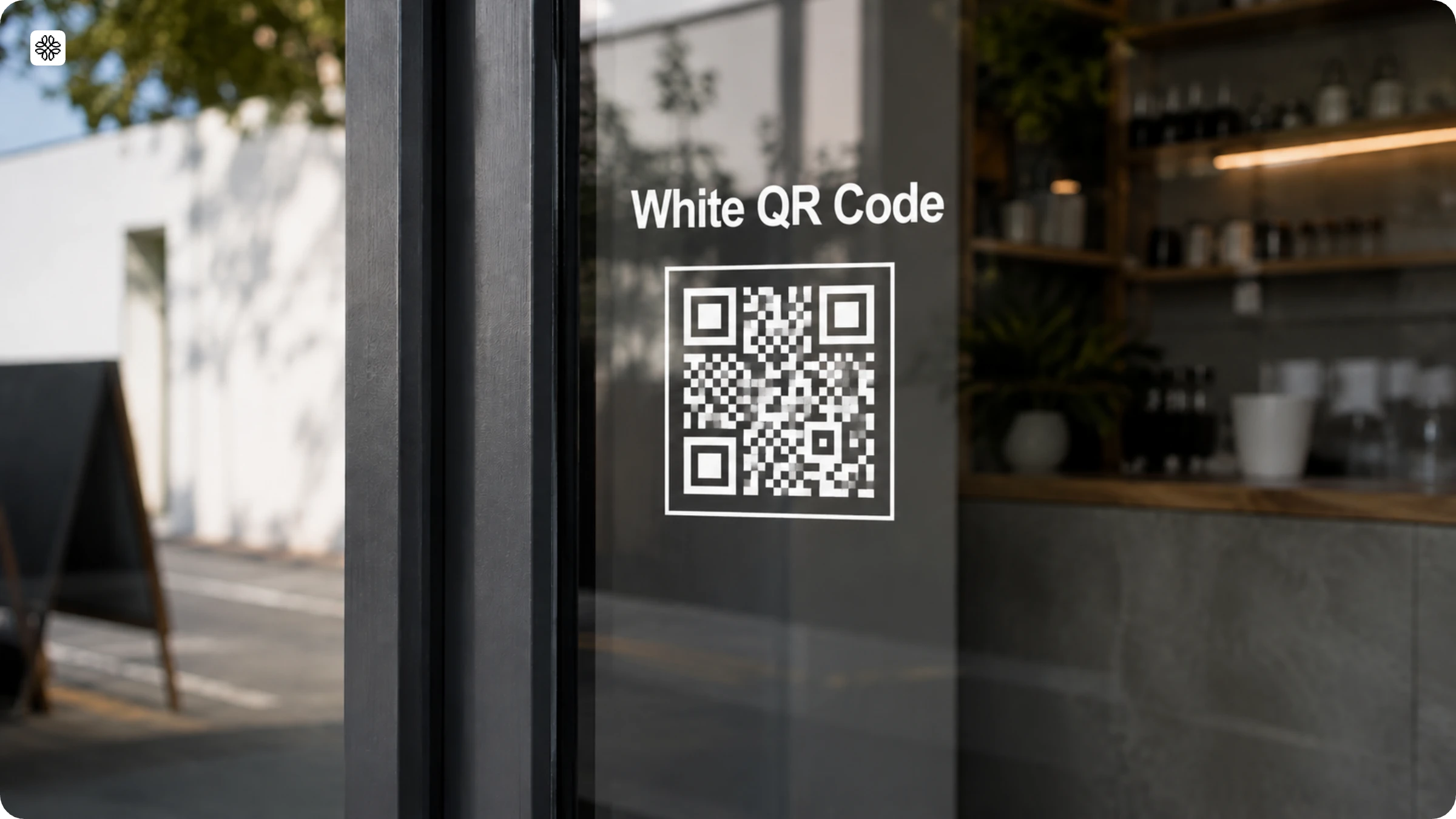
QR Code with a Background Image: How to Create One That Still Scans
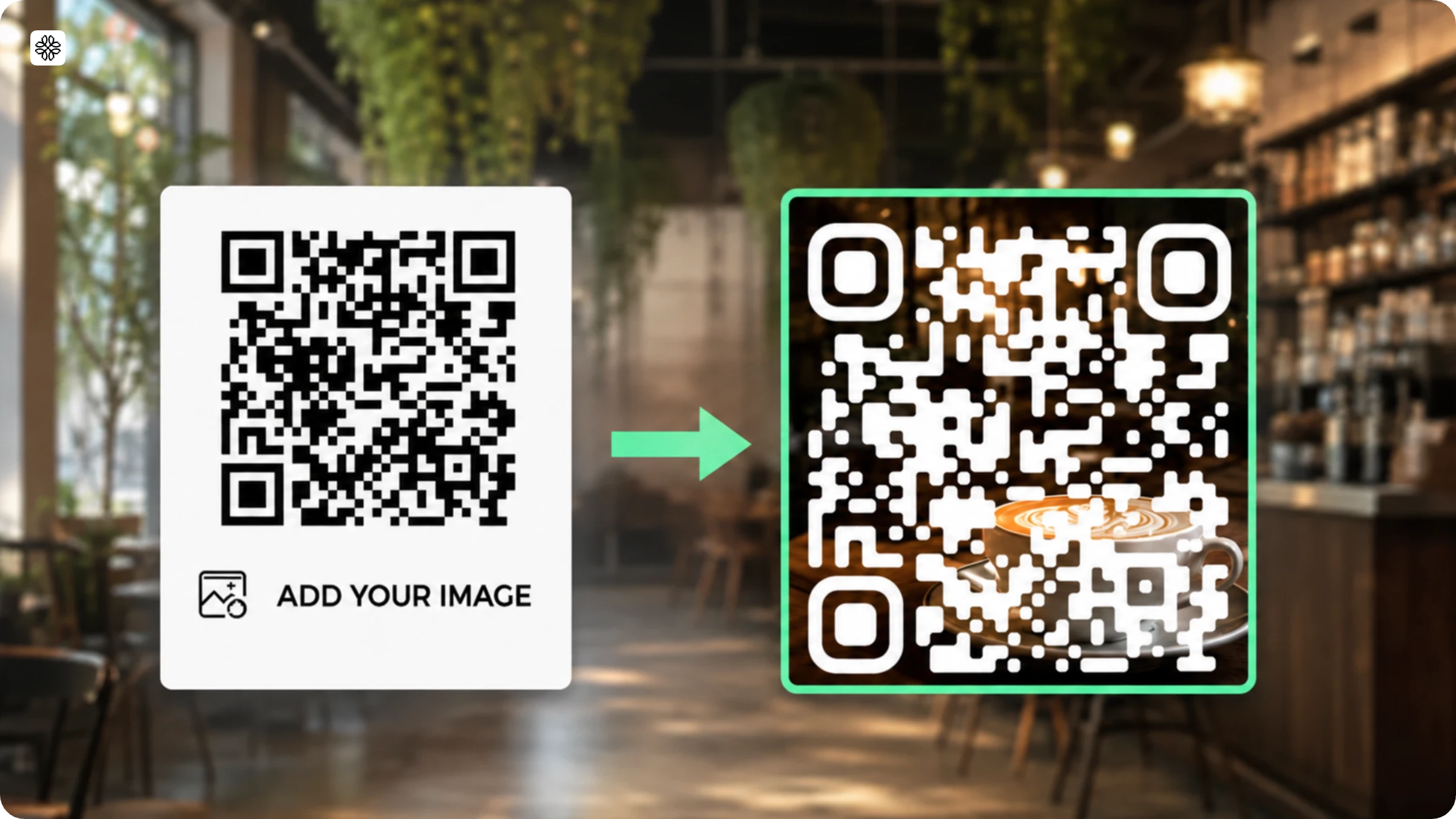
Exploring ways to add background to your QR Codes? Read this four-step guide to create QR Codes with background without compromising scannability and visual appeal.
Brief overview
- A QR Code with a background image places a picture behind or around the code's modules instead of a plain white field. Used by marketing teams, event hosts, and couples to make a code look designed rather than pasted on.
- One design choice threatens three scan requirements at once: contrast, the quiet zone, and the finder patterns
- Two numbers keep it scannable: a 3:1 contrast ratio (7:1–10:1 for outdoor/low-light use) and error correction Level Q or H.
- Build one in 4 steps in Uniqode: pick a campaign type, add the destination, upload the image under "Background → Image" with error correction set first, then test-scan and download.
- Five specs to check before printing: contrast ratio, error correction, quiet zone (4+ modules of margin), size (width ≥ scanning distance ÷ 10), and export format (SVG or high-res PNG, never JPEG).
- The most common failure shows up after printing, not before: a design that scans fine on a screen can drop below a usable contrast ratio on paper, so a physical test scan before the full print run is non-negotiable.
A QR Code with a background image is a code where an image sits behind or around the module, the small dots that make up the scannable pattern, instead of the usual plain white field. At first glance, this design choice seems harmless, but it is actually riskier than it appears. A background image can reduce contrast, eat into the quiet zone, and blur the finder patterns all at once. By comparison, adding a logo or changing the color typically affects only one of these scan requirements at a time.
There are just two numbers you need to remember to keep your QR Code safe: a contrast ratio of at least 3:1 between the dots and the background, and an error correction level of Q or H. This way, your code remains scannable even if part of it overlaps a busy section of the image. In the rest of this guide, you will find step-by-step instructions for building a QR Code with a background image in Uniqode, the key design specifications, the most common mistake that causes codes to fail after printing, and clear answers to the questions people ask most about this format.
What is a QR Code with a background image?
A QR Code with a background image is a QR Code that has an image placed behind or around its modules instead of the plain white background most codes use by default. The picture sits beneath the pattern of dark and light squares that scanners read, or it wraps around the code, adding a creative touch.
But here’s the catch: adding a background image can disrupt three key things a scanner needs to read your QR Code. First, it can reduce the contrast between the code and its background. Second, it can eat into the quiet zone, the clear space that helps scanners spot the code. Third, it can blur the three large corner squares, known as finder patterns, which guide the scanner to the starting point.
Where do teams use QR Codes with background images
Marketing teams, event organizers, and couples planning weddings use background-image QR Codes to make the code look intentional, not just added at the last minute. In each case, the code is matched with images that reflect the campaign or event’s visual style.
1. On marketing collateral
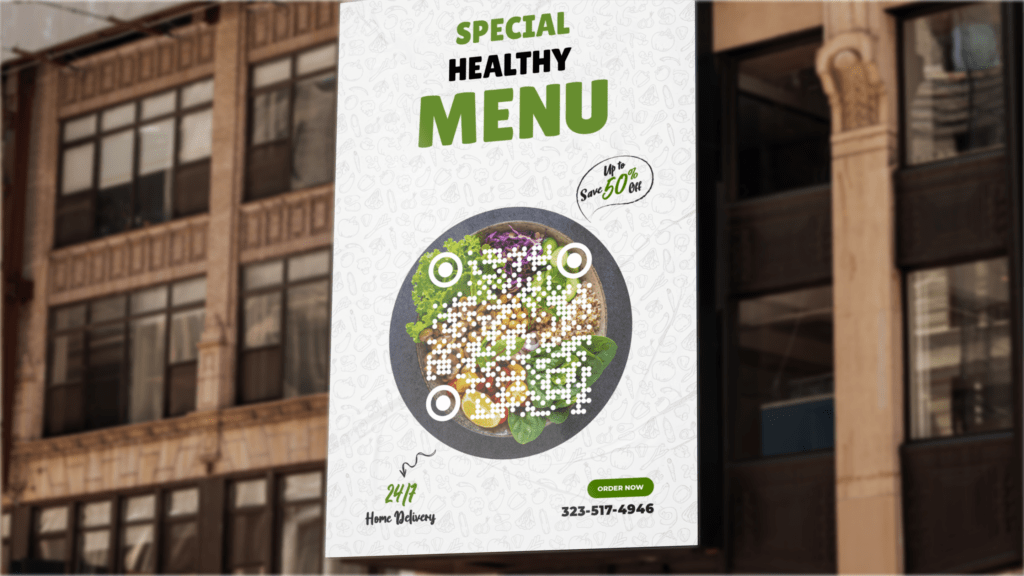
Background-image QR Codes are a clever way for marketing teams to embed a campaign’s visual identity directly into the code. Imagine you are running a summer sale at your retail store. Instead of a plain QR Code, you can design one with a vibrant beach-themed background that instantly catches the eye. When customers spot this on your store posters and scan it, they are taken straight to your campaign website.
Alternatively, try using your brand logo as the background for your QR Code. This not only reinforces your brand identity but also makes it easier for your audience to remember you each time they scan the code.
2. In events and exhibits
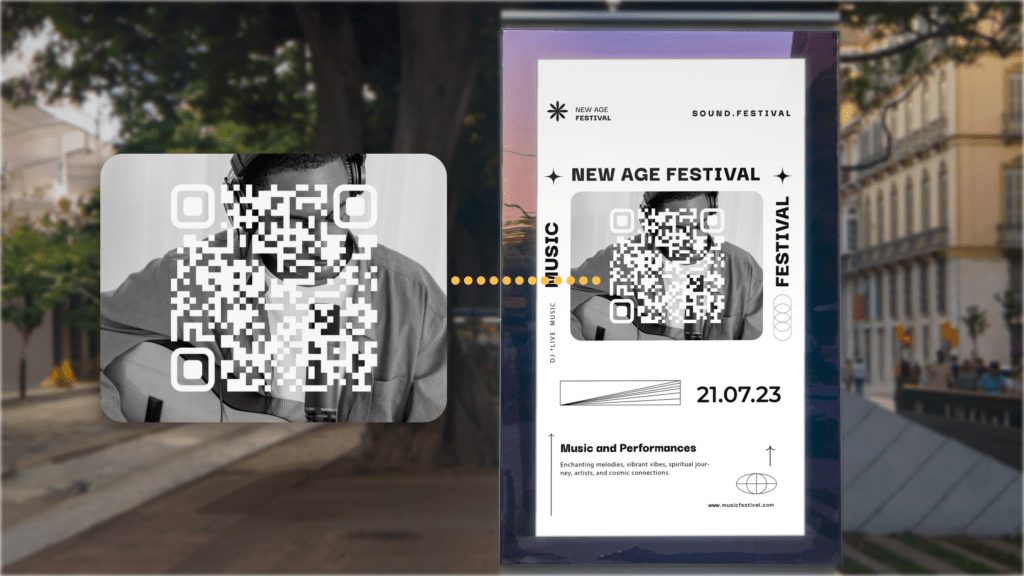
Bringing an event’s visual theme to life is all about the details. Have you ever thought of using a background-image QR Code on your tickets, invites, or signage? By incorporating textures, patterns, or artwork from your event’s theme as the QR Code’s backdrop, you not only make each piece look cohesive but also add a touch of sophistication that guests will notice.
Exhibitions are all about making connections, and here’s a clever idea: create a unique QR Code for each artist, using their image as the background. This way, visitors instantly know which code belongs to which exhibit, and with a quick scan, they can dive deeper into the artist’s story and the artwork on display. It’s a simple touch that makes the experience both seamless and memorable.
3. As wedding QR Codes
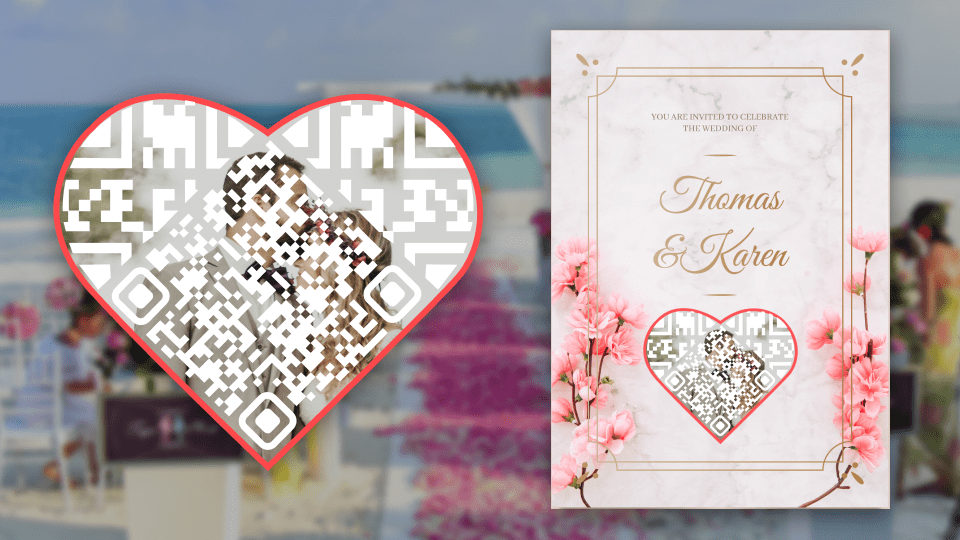
Couples can add a personal touch to their wedding by using QR Codes with background images on seating charts and invitations. You might use a photo of the couple or an image featuring their initials as the background for the QR Code.
You can also adjust the color of the QR Code pattern so it stands out against the background and matches the wedding colors.
How to create a QR Code with a background image
Creating a QR Code with a background image is easier than you might think. Log in, select your campaign type, add your destination content, and then let your creativity shine by customizing the design with your chosen background image. Once you are happy with the look, just download your finished code. Remember, only dynamic QR Codes allow you to add a background image, while static codes keep their original design from the moment they are created.
Step 1: Log-in to the dashboard and choose a campaign type
Open the Uniqode dashboard, click "+CREATE," then "QR Codes." Sign up for a free trial first if you don't already have dashboard access, since you'll need it to upload your own image as a background. Choose the campaign type based on the content you want to convert into a QR Code. An event host, for example, can convert an RSVP website into a QR Code for guests to scan and register.
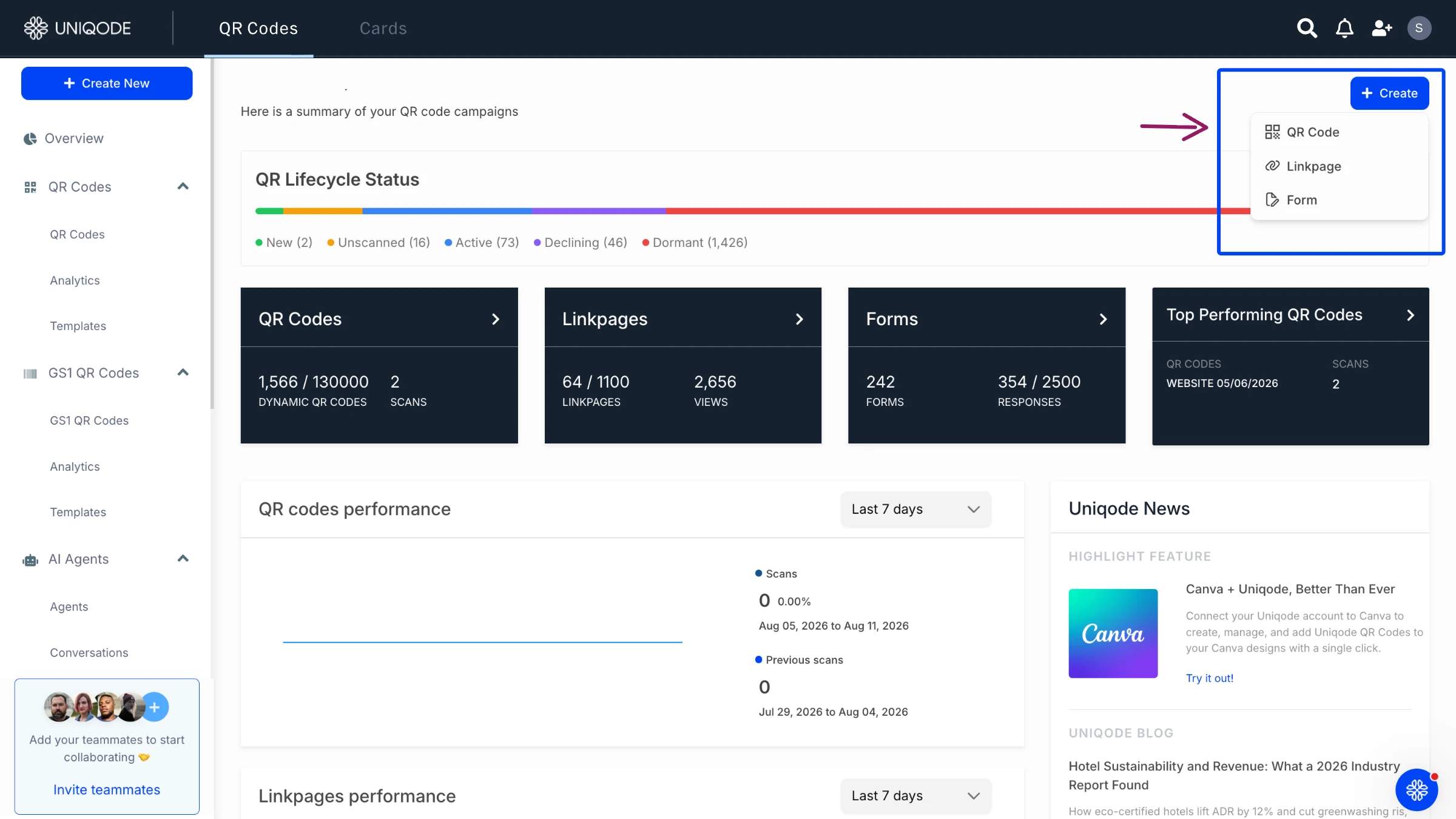
Step 2: Add or upload the destination content

Enter the destination (a website URL, for a Website QR Code) and click "Next."
Step 3: Customize the QR Code with a background image
Click "Background," then choose "Image" under Select Background, and upload the image you want behind your code. Set error correction to Level Q or Level H before you upload the image, not after, since the extra recovery capacity is what keeps the pattern readable once part of it sits over a busy section of the photo. Uniqode's Custom backgrounds feature layers your QR Code's modules on top of the uploaded image directly in the dashboard, so you're not flattening the two into a single image file yourself.

A higher-transparency background image makes the image less visually prominent and easier to keep scannable. You can also customize the shape and color of the eyes, the pattern and color of the dots, and add a frame with a call-to-action. Skip adding a logo at the center when a background image is already in place, since the two together can crowd the code and hurt clarity.
💡Pro tip:
if you're building more than one background-image code for the same campaign, say a wedding QR Code and a matching thank-you-card QR Code, save the first design as a template so the second takes 30 seconds instead of a rebuild from scratch.
Step 4: Download the QR Code with the background image

Run a test scan with your phone before you download anything. If the test scan works, download the code in PNG, PDF, EPS, JPG, or SVG. Choose the format based on where the code is going: PNG works for brochures, websites, and email where you won't resize the code; SVG or EPS holds up at large sizes, like digital screens or billboards.
Design tips for a scannable background-image QR Code
Five numeric specs keep a background-image QR Code scannable: contrast ratio, error correction level, quiet zone, size relative to scanning distance, and export file format. Each one addresses a different way a background image can degrade a scan, and none of them are optional once an image sits behind the pattern.
1. Contrast ratio

Always keep the QR Code’s modules dark and the background light. This simple rule makes a world of difference. Experts agree that you need at least a 3:1 contrast ratio for your QR Code to scan properly, but aiming for 7:1 or even 10:1 is best, especially if your code will be used outdoors or in dim lighting. Watch out for background images with mid-tone colors, as these can quietly reduce the contrast and make scanning unreliable. If you prefer a solid color background over a photo, check out our guide to QR Codes with colored backgrounds for combinations that work well in print.
2. Error correction level

QR Codes have four error correction levels, each able to recover a certain amount of damaged or hidden data. Level L recovers 7%, Level M recovers 15%, Level Q recovers 25%, and Level H recovers 30%. If you use a background image or logo, choose Level Q or H. These higher levels help scanners read the code correctly, even when the background changes in brightness or detail.
3. Quiet zone

Always ensure there is a clear, uninterrupted border, at least 4 modules wide, on every side of your QR Code. Think of this margin, known as the quiet zone, as the breathing space your code needs for scanners to read it accurately. If a background image creeps into this area and you skip the plain border, you are almost guaranteed to run into scan failures.
4. Sizing

Here’s a simple rule of thumb for sizing your QR Code: make sure its width is at least one-tenth of the intended scanning distance. For example, if you expect people to scan the code from a meter away, aim for a width of at least 10 centimeters. If your QR Code sits on a table tent and will be scanned from just 30 centimeters, you can go smaller. Remember, making a background-image code too small only adds to the challenges, as scanners will struggle to pick out the pattern from the image behind it.
5. File format

Export your QR Code as an SVG or a high-resolution PNG. Avoid using JPEG, since its compression blurs the sharp edges between the dots that scanners need, and this problem gets worse with larger prints. For help with export settings that keep those edges crisp, check out our PNG QR Code guide.
Common mistakes to avoid while adding a background image to a QR Code
The most common mistakes with background-image QR Codes all trace back to skipping one of the five specs above before the design goes to print. Six mistakes account for most of the scan failures in this format.
- Running the background image into the quiet zone leaves no plain margin for a scanner to isolate the code, and this is the single most-cited mistake across QR design resources.
- Placing the code over a busy or low-contrast section of the image drops the effective contrast ratio even when the image looks fine everywhere else.
- Skipping the error-correction bump leaves a background-image code with almost no buffer at Level L or M, so a scanner has nothing to fall back on if any part reads unclear.
- Switching to a light-on-dark color scheme may look stylish, but it can noticeably reduce scan reliability compared to the standard dark-on-light pattern. Most scanners are designed to read dark modules on a lighter background, so sticking to this convention is a safer bet.
- Exporting your code as a JPEG for print can blur the module edges with compression artifacts, making it harder for scanners to read. This issue only gets worse with larger print sizes, such as posters or banners.
- Approving the design from a screen only, then printing without a physical test scan, sets up the exact failure the next section covers, because a screen self-corrects brightness and contrast in ways paper and print inks never do.
Best practices to create a QR Code with a background image
Here are some tips to remember when creating and using your QR Code with a background image:
| ✅What to do | ⁉️ How to do |
|---|---|
| 🌄Ensure high contrast | Ensure a high contrast between the QR Code pattern and the background image to maintain scannability. Also, ensure the printing material is contrasting and doesn’t camouflage with the QR Code or its background. |
| 😵💫Avoid complex backgrounds | Keep the background image simple and uncluttered. Overly complex or detailed backgrounds can make scanning the custom QR Code harder. |
| 😵Avoid overlapping or using multiple elements on the QR Code | Don’t place elements or graphics over the QR Code with a background image, such as a logo. It can interfere with the QR Code pattern and eyes and make the scannability poor. |
| 🔲Use square background image | Ensure that the QR Code background image is square. This will help align the image background and maintain a visually balanced design. |
| 📏Maintain the aspect ratio | When you resize, as a general guideline, ensure your QR Code with a background is at least 1cm X 1cm. You can also refer to our QR Code sizing guide for your use case. |
| ◽Leave white space | Maintain white space surrounding the QR Code with a background image to make it easy to spot and scan. |
Create visually stunning QR Codes with background images with Uniqode
Adding an image and customizing the QR Code pattern to ensure high scannability is easy when using the Uniqode dashboard.
With a real-time preview and scannability score, you can easily make highly personalized QR Codes with a background image. No need to worry about creating an unscannable QR Code.
Uniqode is a secure SOC® 2Type 2certified and GDPR-compliant platform, which means we are committed to protecting customer data end-to-end.
Wondering how to add an image background to your QR Code? Get started by creating one below 👇

Frequently Asked Questions
- Can you add a background image to a QR code without affecting scannability?
Yes, you can add a background image to a QR code while maintaining scannability by using contrasting colors between the QR code pattern and background, or by increasing the background image transparency. Dynamic QR codes allow you to customize the background, pattern colors, eye shapes, and frames with calls-to-action while preserving the code's scanning functionality.
- Where are QR codes with background images most effective for marketing?
QR codes with background images are most effective on marketing collateral like posters and flyers, at events and exhibitions for differentiation, and in personalized applications like wedding invitations. Retail stores can use campaign-specific imagery such as beach-themed backgrounds for summer sales, while exhibitions can use individual artist photos as backgrounds to help visitors distinguish between different exhibits.
- Do dynamic QR codes support background image customization?
Yes, you can add a background image to any dynamic QR code, which also allows you to update the destination content unlimited times after printing without changing the QR code itself. Dynamic QR codes provide superior customization options compared to static codes, including the ability to add background images, modify pattern colors, change eye shapes, and incorporate brand logos for enhanced visual appeal.
- Can you use a logo as a QR code background for brand recognition?
Yes, you can use your brand logo as the background image of a QR code to enhance brand recall among your target audience. When adding a logo as a background, you should ensure proper contrast by customizing the pattern and eye colors of the QR code, and consider adjusting the logo's transparency to maintain optimal scannability while achieving the desired branding effect.
- How do you add a background image to a QR Code?
Here’s how to add a background image to a QR Code:
- Sign-up or log-in to the Uniqode dashboard
- Click “+CREATE” and then “QR Codes”
- Choose any campaign type based on your use case and add the necessary details
- In the “customize” step, select “Background” and then select “Image”
- Upload the image and customize the QR Code patterns and eyes if needed to improve scannability
- Download the QR Code in any format of your choice
About the Author
Ektha is a QR code expert with years of research and analysis into the evolution of QR codes. Having written over 70 in-depth articles on QR technology, she has developed a comprehensive understanding of how QR codes are transforming industries. Her insights, including The State of QR Report, have been featured in leading publications. With a passion for simplifying complex topics and providing actionable strategies, Ektha helps businesses leverage QR codes to enhance their 'phygital' connections.
Related Posts

How to Design a QR Code: Best Practices, Mistakes to Avoid, and Real Examples
High Resolution QR Code : Ensure Clarity and Scannability
Vector QR Codes Explained: SVG vs EPS, DPI, and Print-Ready Setup
How to Add a QR Code Border (and Keep It Scannable)

QR Code Frames: How to Add One (Step-Wise Guide and Free Templates)