
QR Codes for Manufacturing: How to Create, Use & Track (with Examples)
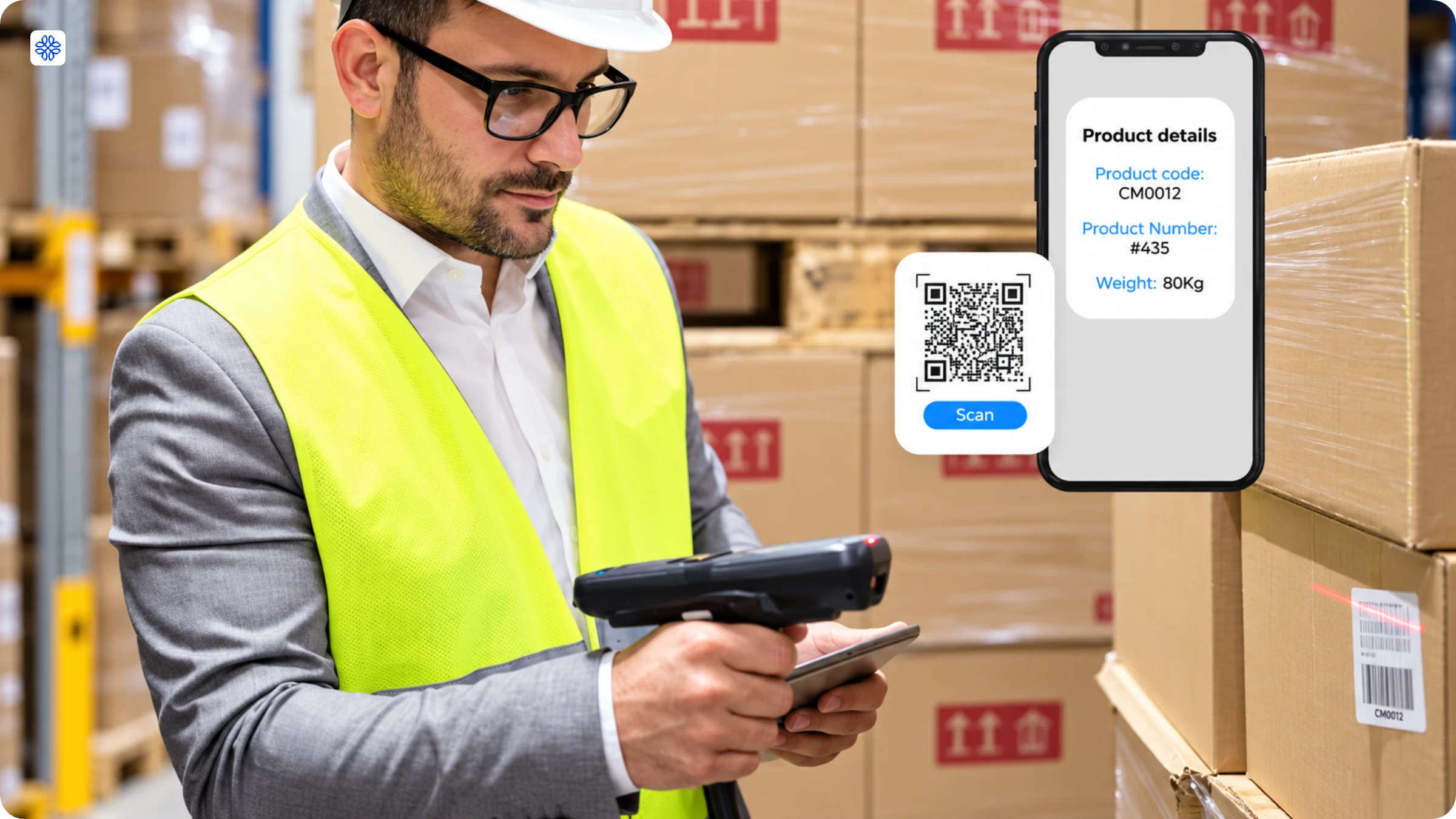
Take your slow and tedious manual processes and give them a spin by creating a QR Code for manufacturing. Move, track, and manage operations faster on the factory floor. Get an edge over your competitors with dynamic QR Codes.
A QR Code for manufacturing turns a scan into a lookup. Point a phone at a pallet, or a piece of equipment, and the work order, spec sheet, or maintenance log tied to it comes up on the screen, no digging through a shared drive, no calling the floor supervisor for a serial number.
In this guide, you will find a step-by-step approach to creating QR Codes for manufacturing, discover which types are truly practical on the shop floor, and see how industry leaders like GE, Toyota, and Procter & Gamble have successfully integrated them into their production processes.
What is a QR Code for manufacturing?
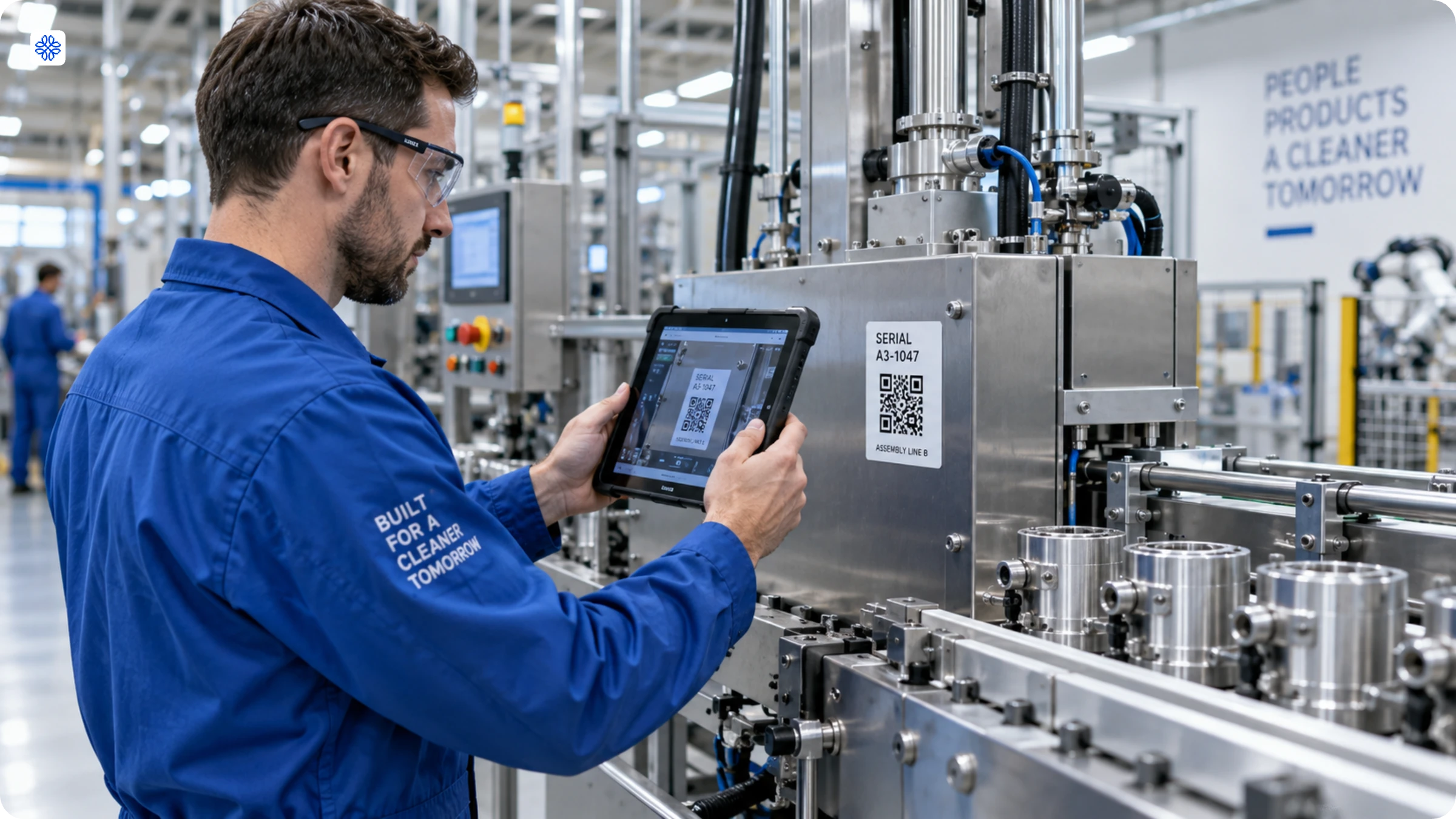
In manufacturing, QR Codes act as two-dimensional barcodes that contain data that QR Code scanners or mobile devices can scan. QR Codes for manufacturing bring more efficiency, traceability, data management, and quality control to the table.
If you’re in the manufacturing or an allied industry, you can use QR Codes for a host of operations, including:
- Inventory management
- Logistics
- Supply chain management
- Asset management
- Product packaging, and more.
Benefits of QR Codes in manufacturing
QR Codes are a game-changer for manufacturing. They bridge the gap between shop-floor activity and the information your systems capture, eliminating the need for manual data entry and paper trails. With just a quick scan, updates happen instantly. Let’s take a closer look at how this shift makes a real difference.
Fewer manual entry errors
Whenever someone types in a serial number, batch code, or quantity by hand, mistakes can happen. Scanning reads the exact value from the code, so you do not have to worry about misreading the label or making a typo.
Real-time visibility across the floor
Imagine receiving status updates the instant a scan occurs, rather than waiting for the next shift report. Supervisors can now check the location of a batch, see if a machine needs servicing, or find out how much stock remains in a bin, all without the need to walk the floor or make a single call.
Faster audits and recalls
If each unit’s history is tracked with a scan log instead of paperwork, you can trace a batch through production and distribution in minutes, not days. That can mean recalling 400 units instead of 40,000.
Lower reprinting and documentation costs
With a dynamic QR Code, you can update the destination in a snap, no need to reprint the label. Imagine changing a spec sheet, work instruction, or compliance document, all without having to lift a finger to replace the thousands of labels already out on the floor.
Easier audit trails for compliance
Scan logs offer you a ready-made, timestamped record of who accessed what and when. This is precisely the kind of information that ISO, FDA, or customer audits typically demand. The best part? These records are generated automatically, so you are not left scrambling to piece together paperwork after the fact.
How to create a QR Code for manufacturing?
You can easily create a QR Code for manufacturing using Uniqode’s QR Code generator.
💡 Note: To create a QR Code for manufacturing, you’ll need features that dynamic QR Codes offer. Sign up for a free trial to create and manage dynamic QR Codes. No credit cards needed.
Step 1: Sign-in to the Uniqode dashboard
After logging in, click +Create.
Choose the QR Code option.

Step 2: Choose your preferred campaign type
Select the campaign type based on your use case.

💡 Note: Different types of QR Codes aid you in different aspects of the manufacturing process.
Here are some examples below:
| QR Code type | Use case |
|---|---|
| URL | URL QR Codes can link to product information, quality and compliance documentation, training resources, inventory and stock databases, equipment and maintenance checklists, etc. |
| Create PDF QR Codes for instruction manuals, equipment maintenance logs, compliance certificates, quality and inspection checklists, training materials, etc. | |
| Document | Create document QR Codes for unique serial numbers on product labels, batch numbers, production dates, work orders or job tickets, safety procedures, emergency protocols, etc. |
| Website | Create website QR Codes for product specifications, usage, safety guidelines, customer reviews, customer support resources such as FAQs, ordering and reordering portals, company information, etc. |
| Form | Create form QR Codes for customer or team member feedback forms, quality inspection forms, maintenance request forms, supplier information forms, team member evaluation forms, incident reporting forms, etc. |
| Location | Create location QR Codes for inspection stations, workstations, or training stations. |
| Image | Create image QR Codes for product images, serial number images, visual work instructions, safety signage images, etc. |
| Video | Create video QR Codes for training and instructional videos, product demos, quality and inspection procedure videos, maintenance and troubleshooting guides, supplier and vendor communication, etc. |
| Audio | Create audio QR Codes for equipment operation instructions, safety alerts, announcements, audio training guides, audio descriptions of inventory items, etc. |
| Mobile app | Create app download QR Codes for managing and controlling orders in real-time, conducting quality checks, ensuring regular maintenance of your equipment, etc. |
Choose a QR Code type from the list on the Uniqode dashboard based on your specific use case.
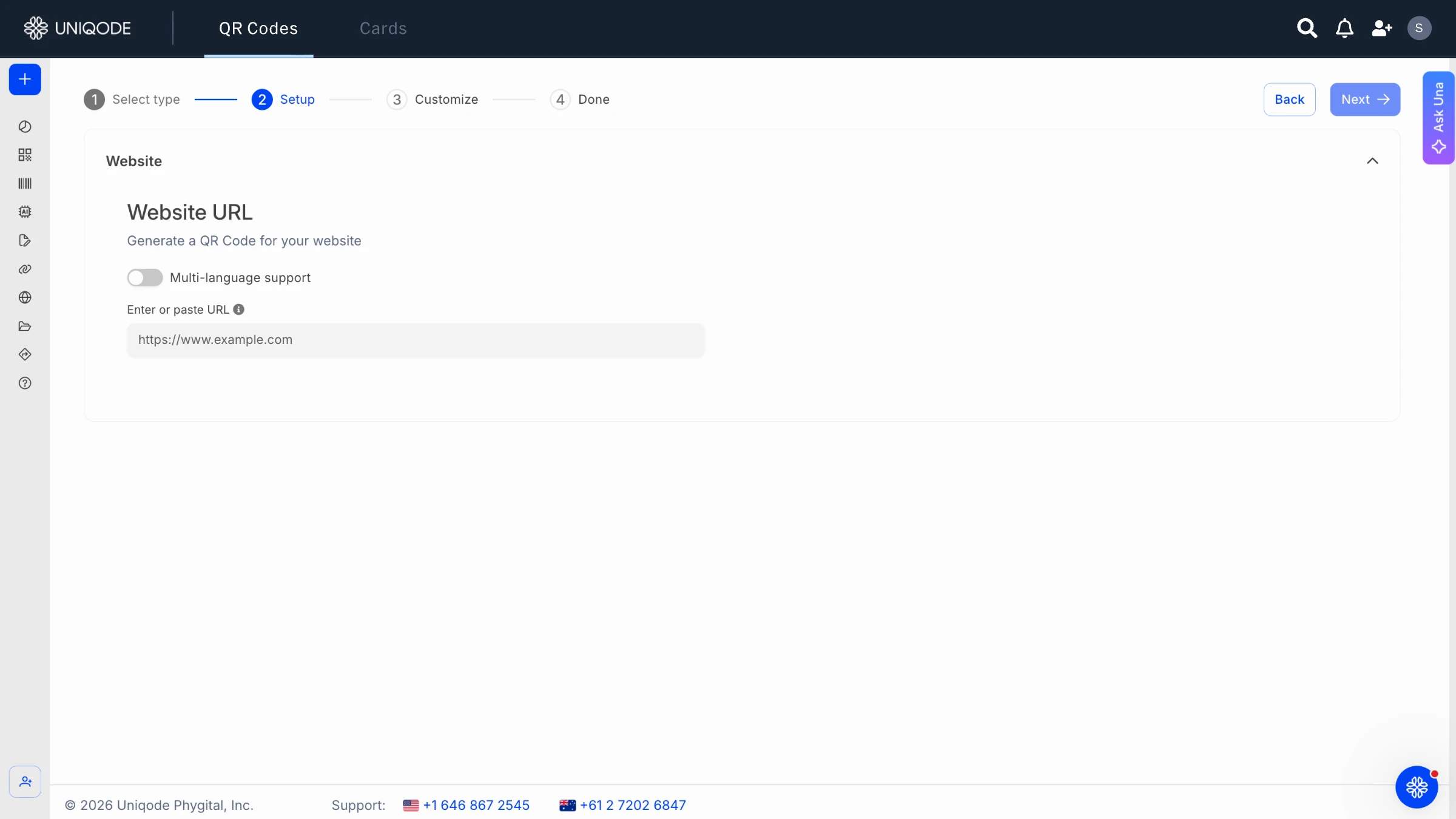
For our example, we’re going ahead with a Website QR Code.
Copy the URL to the landing page, document, or website you want to share. Paste it in the white box below Enter URL.
Click NEXT once done.
Step 3: Customize your manufacturing QR Code
Customize your QR Code to your preferences.
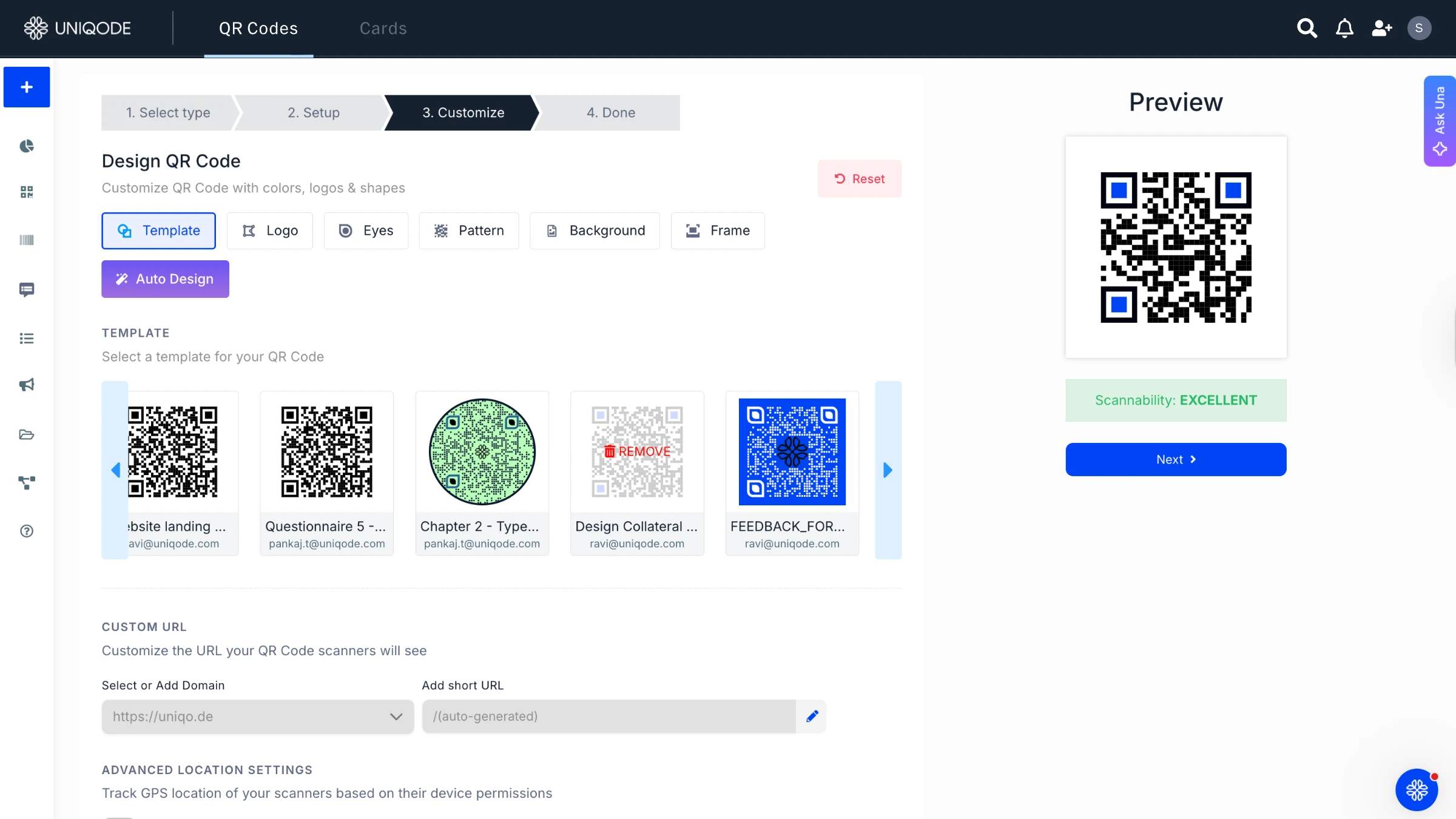
Adding colors makes your QR Codes easily visible.
You can also tweak different sections of your QR Code, such as:
- Templates
- Frames
- Pattern
- Eyes
- Background
Step 4: Download the QR Code in your desired format
Once you’re satisfied with the QR Code design, download your QR Code.

Different QR Code formats can be helpful in different use cases in the manufacturing industry. For example, if you scan QR Codes on product labels, choosing a JPG format will help more.
Note: Store and track your QR Codes easily with a trackable QR Code. The Uniqode dashboard lets you monitor specific metrics, such as the number of scans, time of scans, location and device data, campaign performance, etc. Additionally, you can customize the data (such as individual or combined metrics) you want to see and export to share with your team members.
Want to access deeper QR Code insights? Track your QR Codes with Google Analytics. This will help you dive into advanced customer user behavior and demographics and device usage data.
How to use QR Codes for inventory management in manufacturing
Inventory management in manufacturing gets a smart upgrade with QR Codes. Start by generating a unique code for every SKU, batch, or pallet. Instead of sticking to static labels, link each code to live stock data. Now, every time an item is picked, moved, or shipped, a quick scan instantly updates your records. This way, your system always reflects what is happening on the floor, without waiting for the next manual audit.
Assign a QR Code at the SKU, batch, or pallet level
Before you print a single label, take a moment to consider how detailed your tracking needs to be. If you’re dealing with high-volume stock that rarely varies, a single SKU code will do the trick. But when it comes to tracing defects or pinpointing issues to a particular production run or supplier lot, batch-level codes are well worth the extra effort. For warehouse or yard management, where bulk movement is the norm, pallet-level codes are your best bet, letting you manage large quantities without getting bogged down in the details.\
Link each code to live data, not a static label
If your QR Code only shows a product name, you are simply creating signage, not managing inventory. Instead, link your code to a live record that displays essential details like current stock, reorder thresholds, supplier lot numbers, and storage locations. This way, every scan gives you up-to-date information, and you never have to worry about relabeling.
Scan at every handoff point, not just at receiving
Most manufacturers already scan inventory when it arrives. The problem usually comes up after that, like when stock moves from receiving to the floor, then to a staging area, and finally to shipping. If you scan QR Codes at each step, you get a full record of where everything goes, not just a single update from when the pallet first showed up.
Feed scans into your inventory or ERP system
If your scan opens a webpage, it can help someone manually check stock. However, when a scan updates your inventory or ERP system directly, it becomes a real asset for your business. The key is to channel scan data straight into the system that already manages your stock levels. This way, your QR Code acts as a seamless input, eliminating the need for separate records and extra reconciliation.
Reconcile stock with a scan-based cycle count
Say goodbye to the old clipboard method and switch to a scan-based system. Simply walk the floor, scan each code, and let the system do the heavy lifting by flagging any mismatches instantly. No more scribbling down counts or waiting days to key in numbers, only to discover errors that slipped in along the way.
3 creative examples of QR Codes for manufacturing
1. GE uses QR Codes for equipment maintenance and servicing

General Electric (GE) prints QR Codes that can be used as stickers for machines and equipment. On the plant floor, users can scan the QR Code to access vital information, such as equipment maintenance and servicing details. This can help operators reduce their downtime, and managers monitor trends.
2. Toyota simplifies its supply chain management with QR Codes

Toyota is an example of the efficient use of QR Codes in the automobile industry. The automobile giant uses QR Codes for inventory management and logistics optimization. Attaching QR Codes to bins, pallets, and containers helps track the movement of the assets within the production facility along the supply chain.
3. Procter & Gamble (P&G) maintains quality control with QR Codes

By adding QR Codes to packaging materials in its manufacturing plants, P&G ensures strict adherence to quality assurance standards. The QR Codes contain information such as batch numbers, specifications, and manufacturing dates, enabling inspectors and customers to verify the product’s authenticity.
QR Codes in manufacturing: key use cases
In manufacturing, QR Codes are the bridge between the physical and digital worlds. Whether it is a product, a work order, or a piece of equipment, each can be linked to a live digital record with a simple scan. On the shop floor, you will find QR codes working hard in several key areas: production tracking, quality control, asset maintenance, supply chain traceability, and safety compliance.
1.QR Code production tracking
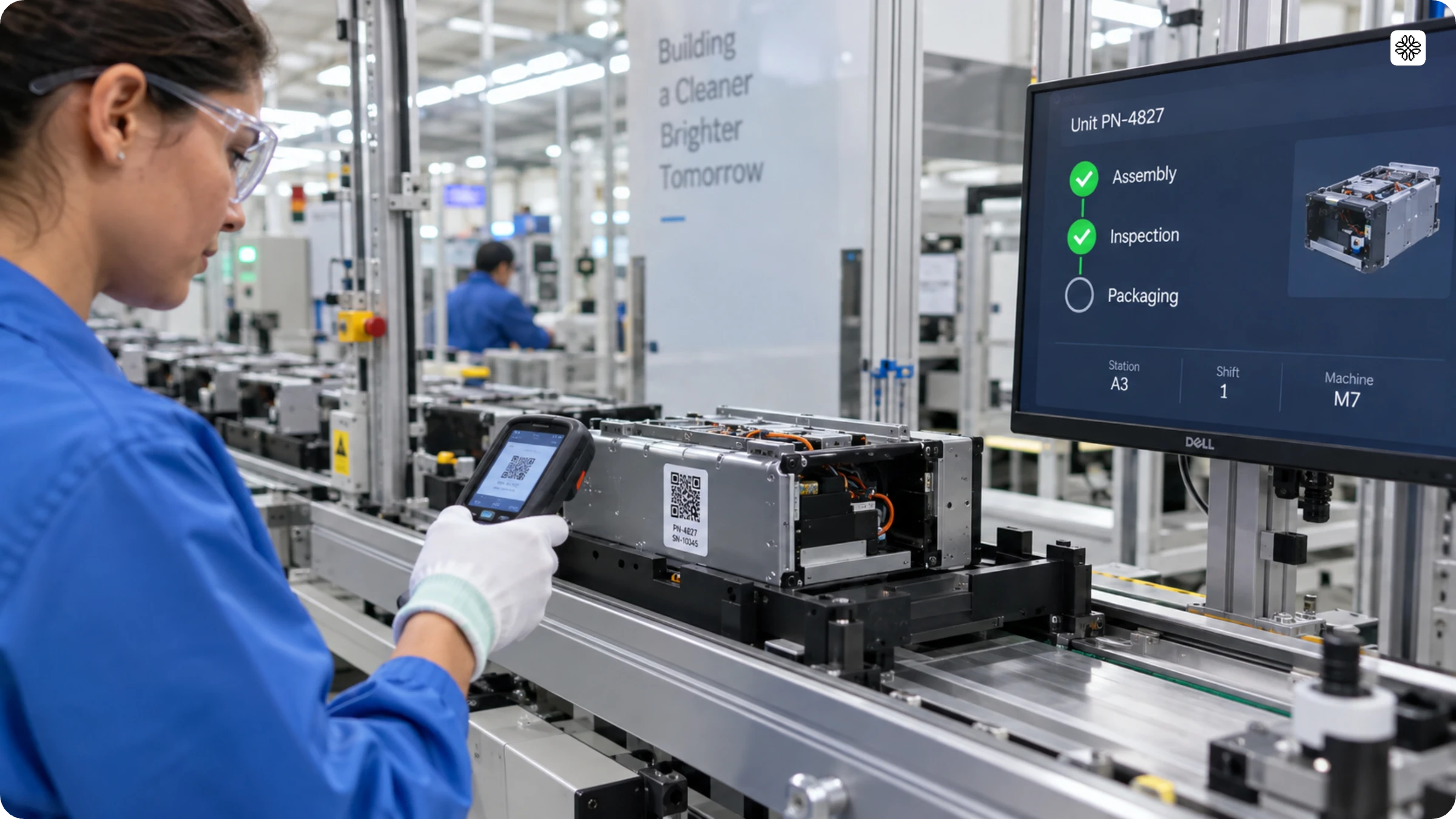
Production tracking with QR Codes is a game-changer for modern manufacturing. By assigning a unique code to each unit or batch right at the start, and updating its record at every stage, be it assembly, inspection, or packaging, you gain complete visibility into the process. Anyone can scan the code to pinpoint exactly where that unit is; there’s no need to walk the floor searching for answers. This system also makes root-cause analysis straightforward. If a defect appears later on, the scan history reveals precisely which station, shift, and machine handled that unit.
2. Quality control and inspection
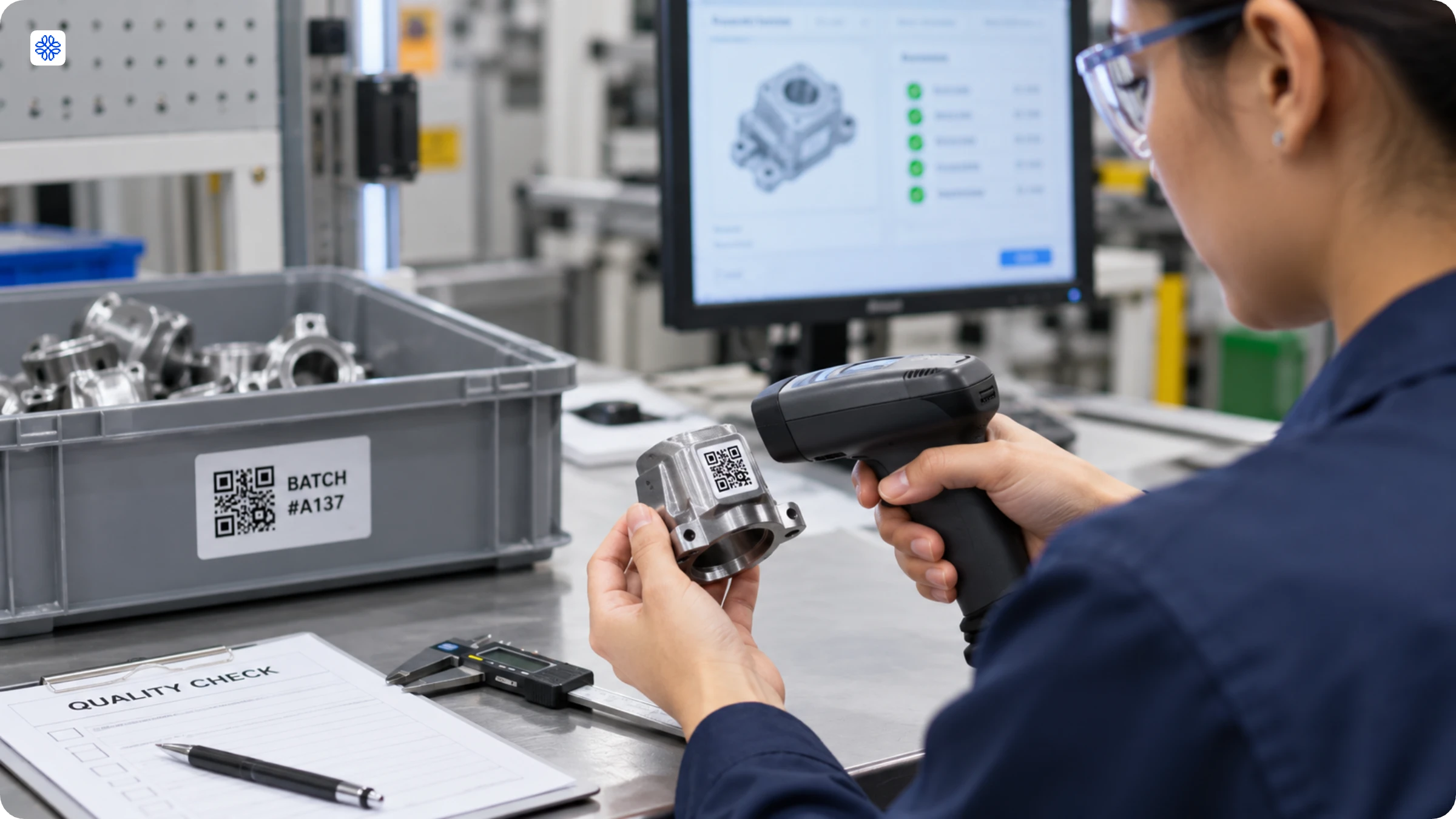
At every checkpoint, inspectors scan a code to instantly access the spec sheet, tolerance range, or inspection checklist for each part. Once the inspection is done, they log a pass or fail result right there, creating a digital audit trail. Should a batch fail further down the line, you can easily track which checkpoints it passed and who signed off at each stage. No more second-guessing paper forms or wondering if they were filled out correctly.
3. Asset and equipment maintenance
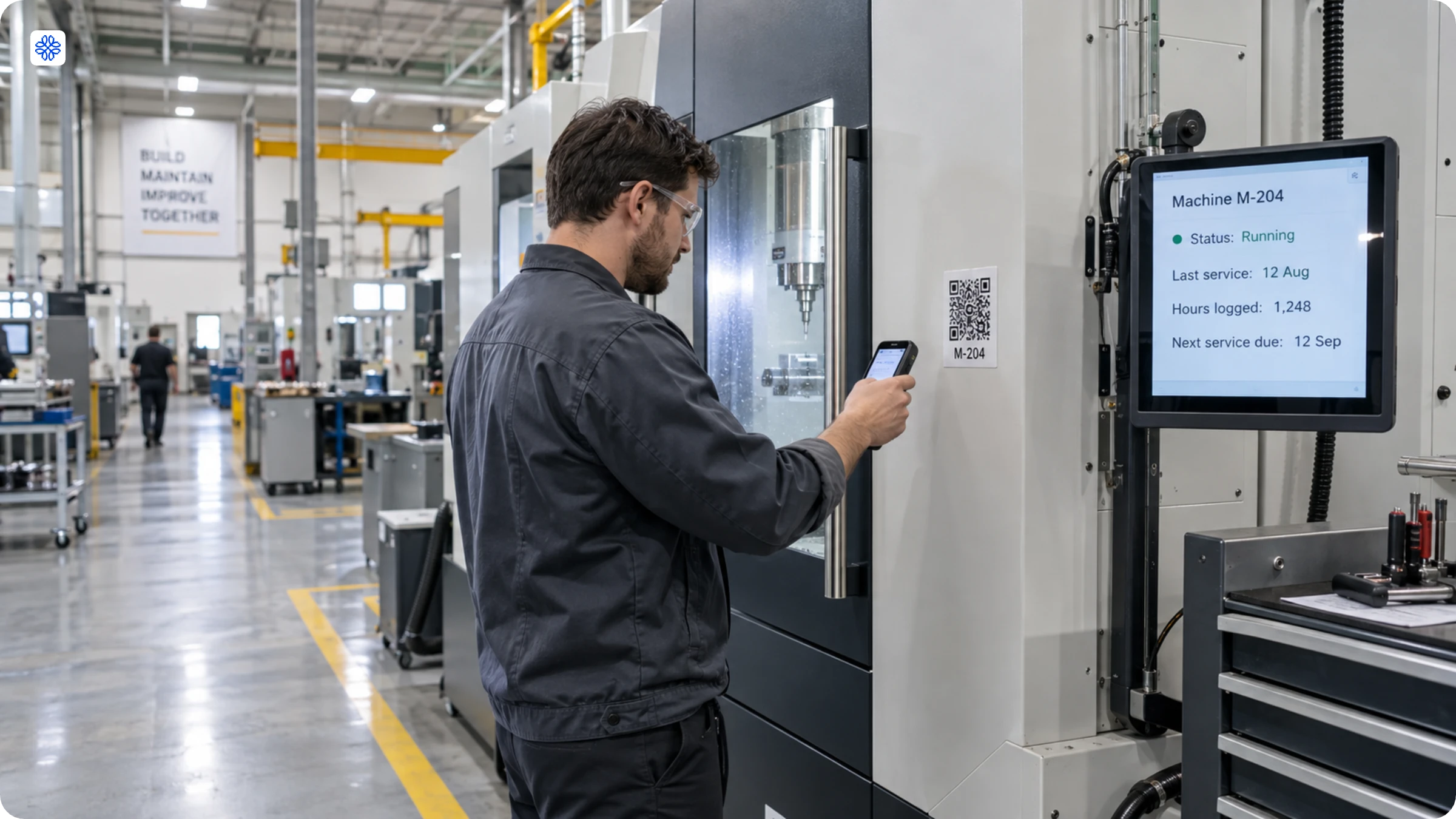
Imagine walking up to a machine and, with a quick scan of a QR Code, instantly accessing its maintenance history, service manual, and current status. No more flipping through binders or searching shared drives for the right document. Some manufacturers take this a step further: technicians scan the code at the start of each shift to log machine hours or condition, making it easy to schedule the next service before issues arise.
4. Supply chain and logistics traceability
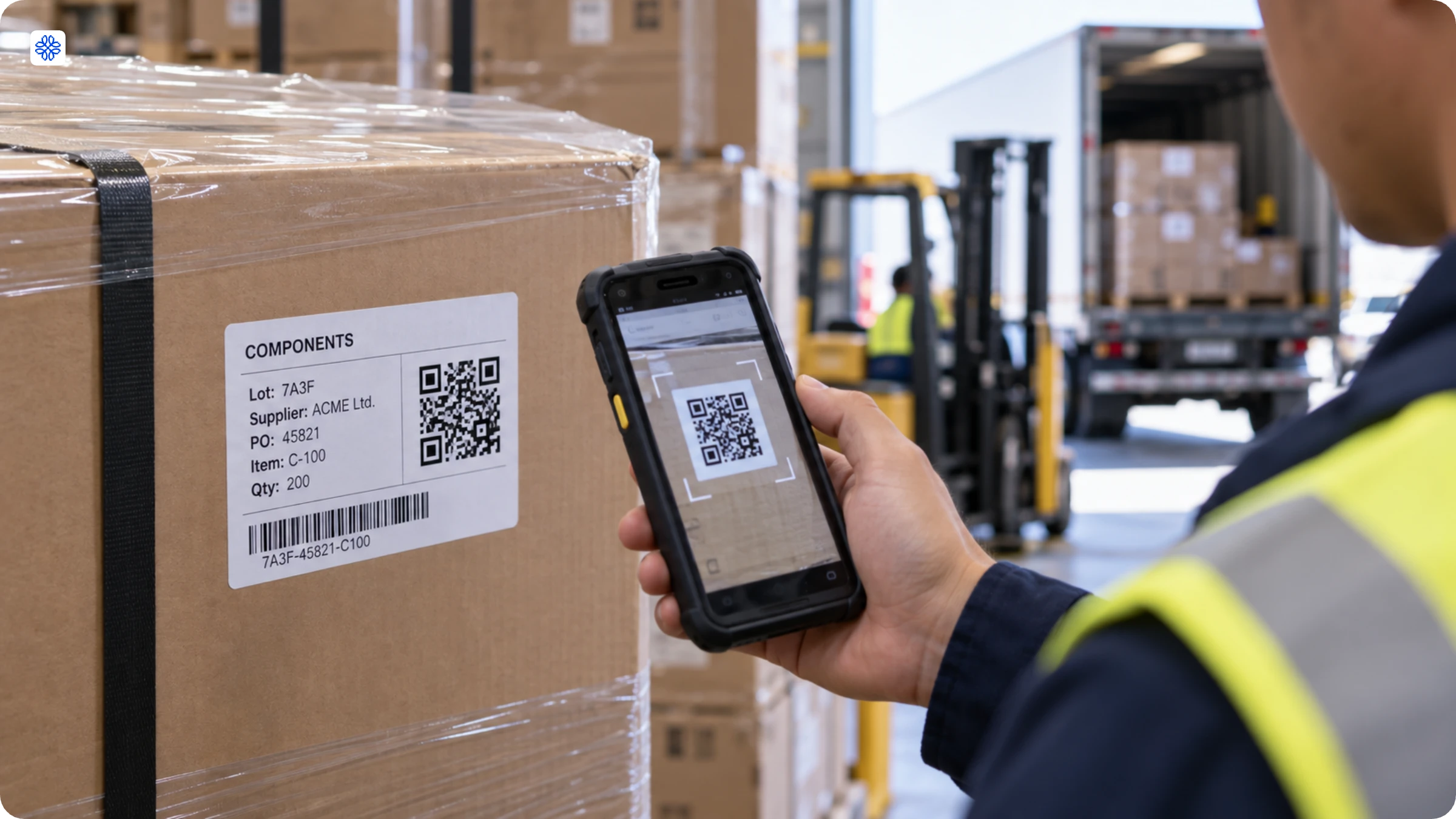
Ever wondered how manufacturers keep track of every single item, from the moment it enters the factory to the time it reaches the customer? It all comes down to the codes on raw materials, components, and finished goods. These codes reveal the item’s entire journey: the supplier it came from, the lot it belongs to, the truck that carried it, and finally, the customer who received it. This level of traceability is what transforms a recall from a massive plant-wide shutdown into a precise, targeted action that affects only the specific batch in question.
5. Safety and compliance
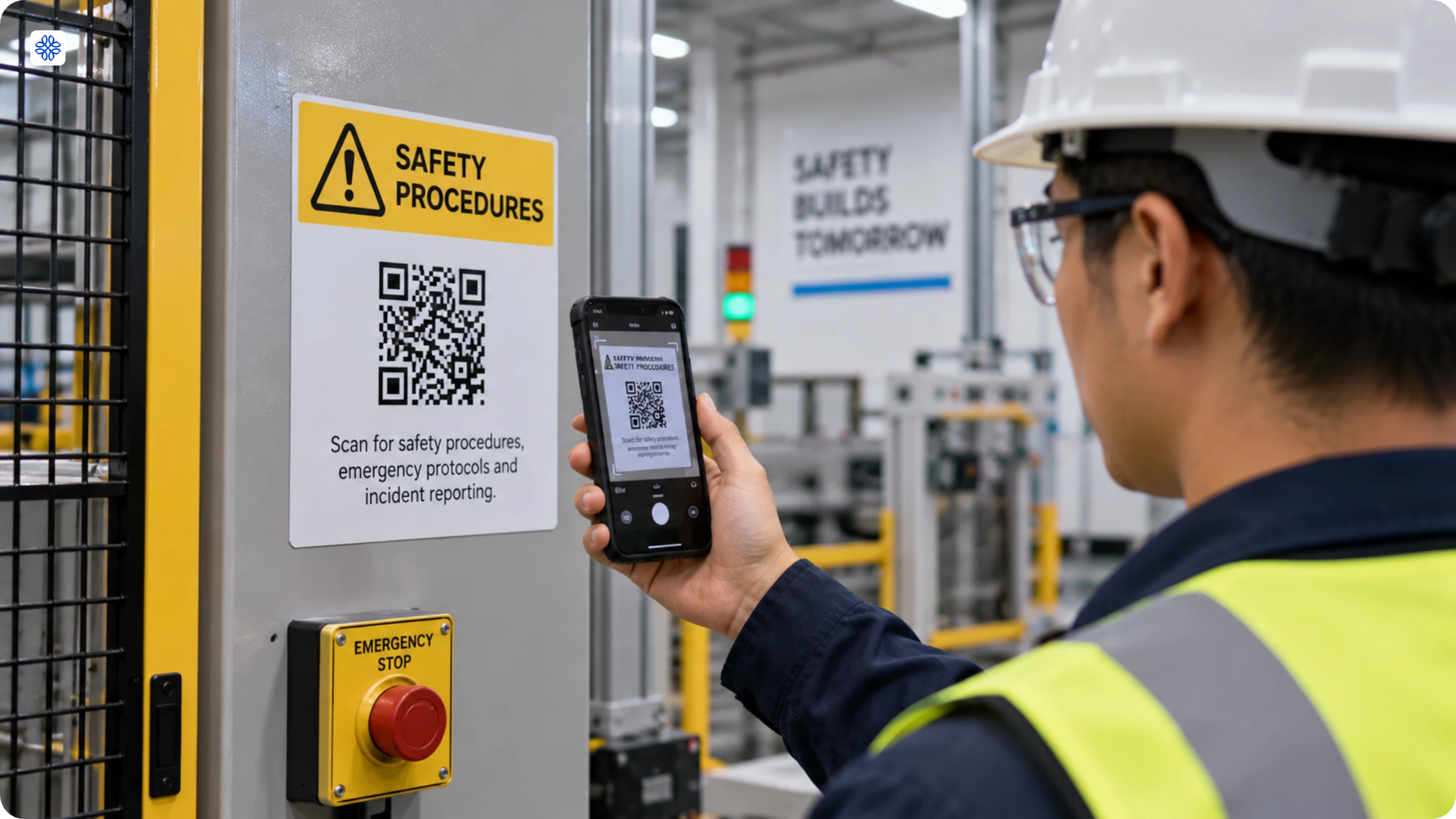
Codes placed at machines, exits, and hazard zones link to safety procedures, emergency protocols, or incident reporting forms. Instead of searching for a safety manual tucked away elsewhere, a worker scans the code on the spot. This not only provides immediate guidance but also logs that the information was accessed, which is crucial when an auditor wants proof that safety resources were truly available on the floor.
QR Codes vs. barcodes in manufacturing
QR Codes can hold more data and are more durable than traditional 1D barcodes. However, barcodes are still useful in certain manufacturing situations. The best option depends on what you need to track and how much information you want to include.
| Factor | QR Codes | Barcodes |
|---|---|---|
| Data capacity | Stores hundreds of characters: batch number, supplier, spec links, timestamps | Stores a short numeric or alphanumeric string, usually just an ID |
| Damage tolerance | Built-in error correction can recover data even with up to 30% of the code obscured or damaged | A scratch or smudge across the lines often makes the whole code unreadable |
| Scanning flexibility | Reads from a phone camera at almost any angle | Usually needs a dedicated laser scanner and a straight-on angle |
| Updating information | Dynamic QR Codes can point to a new destination without reprinting | The code itself is the data. Any change means a new label |
| Equipment cost | Any smartphone can scan one, no dedicated hardware required | Requires laser or CCD scanners, which have to be maintained and replaced |
| Best fit | Tracking that needs context: batch data, compliance docs, maintenance history | Simple, high-volume, single-value tracking on legacy systems already built around barcodes |
Best practices for QR Codes in manufacturing
When it comes to QR Codes in manufacturing, dynamic codes are your best bet. With these, you never have to worry about reprinting labels every time the information changes. The trick is to design your entire setup, like materials, placement, and error correction, based on the real-world conditions your codes will encounter on the shop floor.
| Best practice | What to do | Why it matters |
|---|---|---|
| Choose dynamic over static QR Codes | Use codes that point to a destination instead of encoding the data directly | You can update a spec sheet, work instruction, or supplier detail without touching a single label already in circulation |
| Pick materials rated for the environment | Use direct part marking, laminated labels, or engraved plates suited to heat, moisture, or abrasion | A code printed on standard paper won't survive grease near a welding station or repeated handling on the floor |
| Set a high error correction level | Configure codes to tolerate obscured or damaged sections | Dust, grease, and scuffs are normal wear on a factory floor, not exceptions, and a higher error correction level keeps codes scannable through it |
| Standardize size and placement | Set a minimum size based on typical scanning distance, and place codes at a consistent height across similar equipment or storage areas | A code that's too small to scan from a normal distance, or blocked by a forklift, doesn't get used no matter how well it's designed |
| Connect scans to a real system | Route scan data into your inventory, ERP, or quality system instead of just opening a webpage | A code that writes to a live system is what changes how the floor actually operates, not just what a worker can look up |
| Train the floor team on when and how to scan | Build scanning into existing steps (receiving, handoffs, inspection checkpoints) rather than treating it as an extra task | The best QR Code setup fails if scanning isn't consistent, and it's more likely to be consistent when it's part of the normal workflow |
Sharpen your manufacturing operations with dynamic QR Codes
Once you start using QR Codes for manufacturing, you’ll notice the need for certain features.
For example, what if your employees know only a specific language? Or what if you need to produce your QR Codes in large quantities?
In times like these, you realize the need for a reliable QR Code generator such as Uniqode that offers additional features to common ones.
With Uniqode’s dynamic QR Code generator, you can:
- Create QR Codes for manufacturing in multilingual formats. This means employees can choose to consume the information present in the QR Codes in their own preferred language.
- Create manufacturing QR Codes in bulk and save time. Print an entire batch of QR Codes in one go.
- Set error correction levels for your QR Codes to ensure data protection. You can still retrieve the data even if the QR Code gets damaged somehow with wear and tear.
- Ensure your data is protected with enterprise security. Since Uniqode is GDPR compliant and SOC® 2 Type 2 certified, you can rest assured with your data.
Match your operations with business-level QR Code support. Start your free trial today 👇

Frequently Asked Questions
- How do I track inventory with my QR Code?
You can efficiently manage your stocks by tracking your inventory with manufacturing QR Codes. To do this, you need to:
- Choose a QR Code generator
- Generate manufacturing QR Codes for each product in your inventory
- Print and attach the QR Codes to the respective items
- Scan the QR Codes to track your inventory
- (Optional) Integrate your QR Code generator with inventory management software for real-time inventory management
- How are QR Codes used in manufacturing?
QR Codes are widely used in manufacturing for various purposes, including inventory management, product tracking, quality control, supply chain management, product traceability, and maintenance.
- What is QR Code production tracking?
QR Code production tracking is the practice of attaching a code to a unit or batch and updating its status at each stage of production, so its location and history in the process are visible from a single scan instead of a manual status check. It's most useful for root-cause analysis: if a defect appears, the scan history shows exactly which station and shift produced it.
- Are QR Codes durable enough for a factory floor?
Yes, QR Codes are durable for a factory floor when they're printed or marked for the environment. Direct part marking, laminated labels, and engraved plates hold up to heat, grease, and repeated handling far better than a standard paper label, and a high error correction level lets the code still scan even if part of it gets damaged.
- Can QR Codes replace barcodes in manufacturing?
In most cases, yes, QR Codes can do everything a 1D barcode does and hold more data on top of it. The exception is facilities running legacy scanning hardware built specifically for barcodes, where a full switch means replacing scanners, not just labels.
- How do you scan QR Codes in manufacturing efficiently?
Efficient scanning of QR Codes in manufacturing usually means using a smartphone or handheld scanner at each handoff point (receiving, production stages, shipping) rather than only at the start and end of a process. Placing codes at a consistent height and size across similar equipment also cuts down on the time workers spend searching for them.
- How much data can a QR Code hold for manufacturing use?
A QR Code can hold several hundred characters, enough for a batch number, supplier ID, production date, and a link to a full spec sheet or compliance document, all in a single scan. In practice, most manufacturing QR Codes are kept short and point to a live record rather than encoding everything directly, since a live link can be updated without reprinting.
- What's the difference between static and dynamic QR Codes on the factory floor?
A static QR Code's data is fixed at printing and can't be changed without a new label. A dynamic QR code points to a destination that can be updated at any time, so a spec sheet, work instruction, or supplier detail can change without reprinting a single code already on the floor.
About the Author
Shashank - Enthusiastic about marketing and improving the ROI of businesses.
Related Posts
QR Code Asset Management: How It Works, Benefits & Setup Guide

How to Create a QR Code for Attendance Tracking (3 Simple Steps)

QR Codes in Supply Chain Management: Benefits, Uses & Best Practices

QR Code Registration: How It Works, Use Cases & How to Create One

QR Code Check-In: How to Build a System That Works Past the First Event