GS1 QR Codes Demystified: A Complete Guide to GS1 Digital Link
A GS1 QR Code does different work for brands, retailers, shoppers, and compliance teams, all from the same scan. Learn what a GS1 QR Code actually is, how GS1 Digital Link works inside it, and what changes on your packaging before Sunrise 2027.
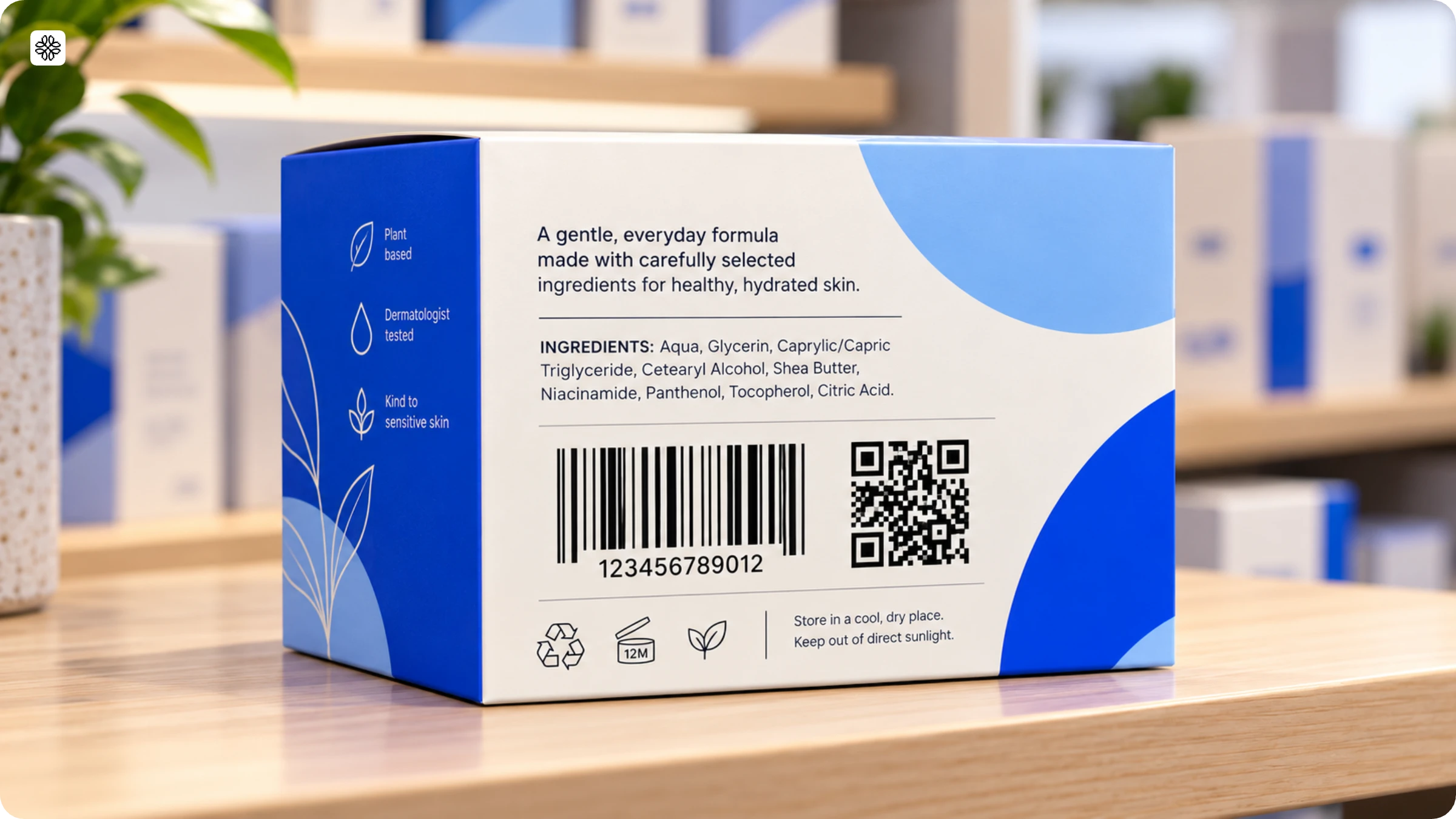
For decades, UPC (Universal Product Code) and EAN (European Article Number) barcodes have done one job well: identify a product at checkout. But they cannot carry batch, expiry, or serial data, and they do not contain a web address. Retailers, brands, and shoppers now need more from the space a barcode occupies.
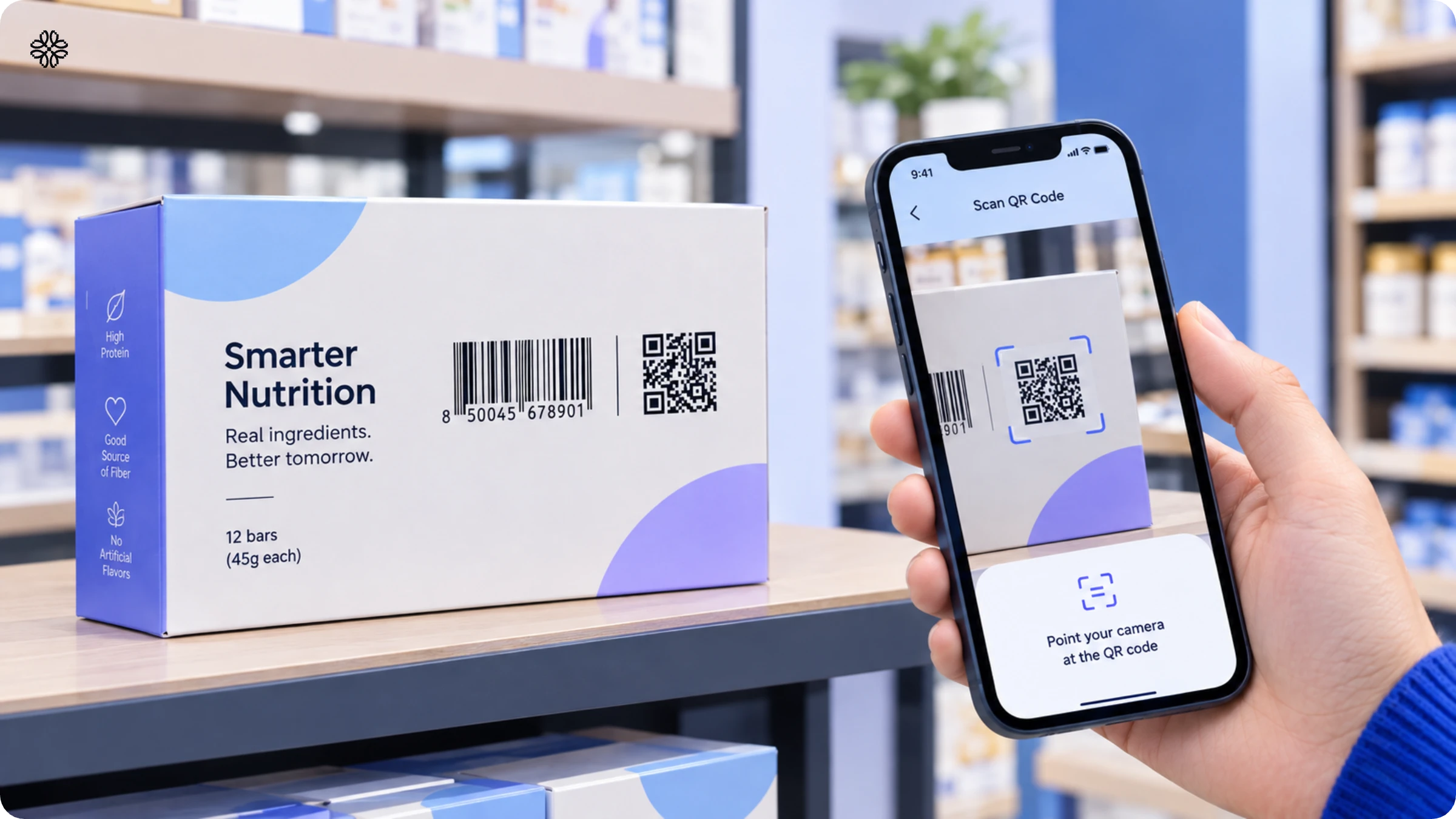
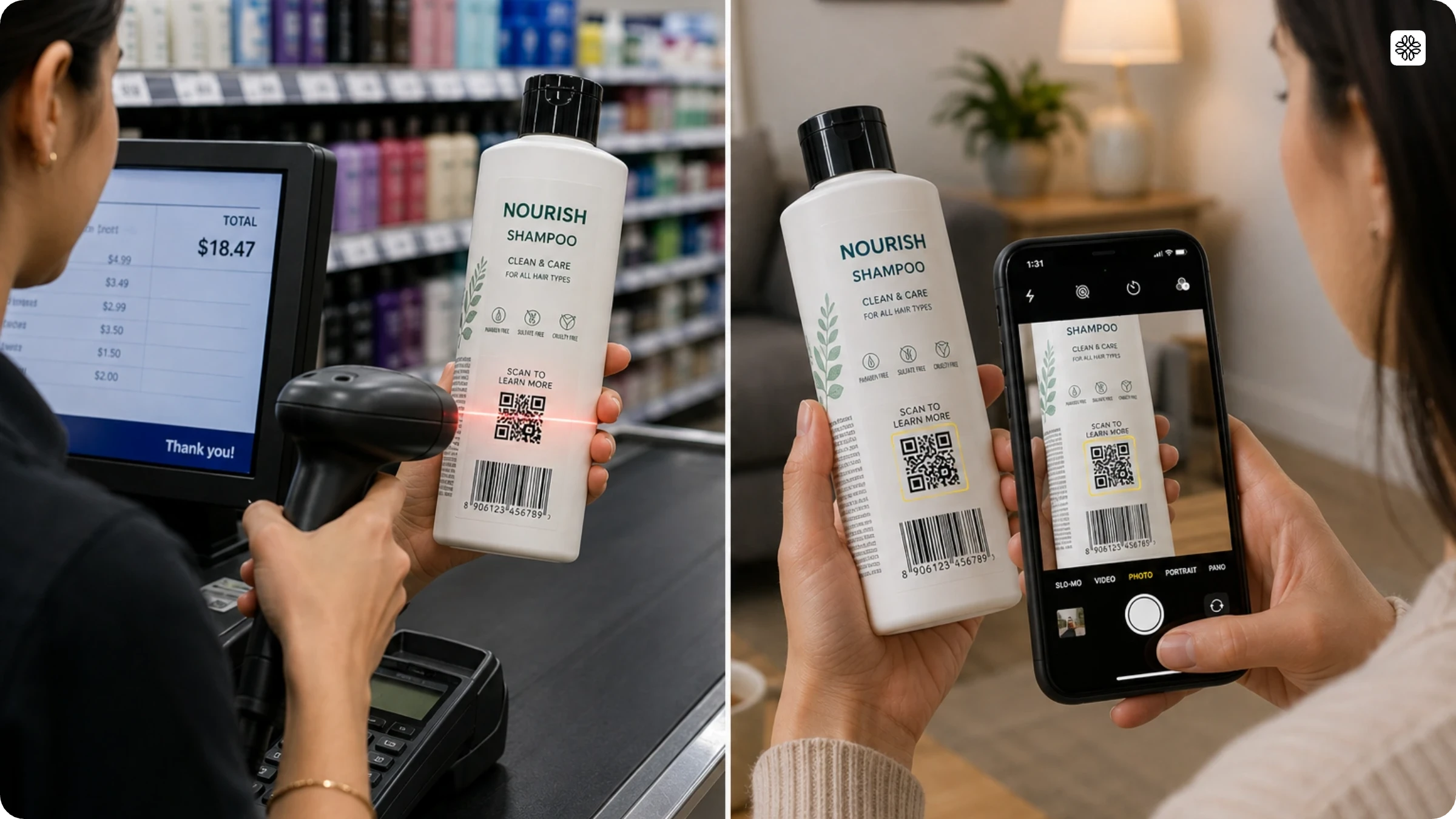
A GS1 QR Code is one way to make that transition. It places the product’s GTIN inside a web address. At checkout, compatible systems use the GTIN to identify the product. On a phone, the same QR Code opens product information for the shopper.
GS1 Sunrise 2027 asks retailers to make point-of-sale systems capable of processing GS1-approved 2D barcodes by the end of 2027. This is not a legal mandate, and UPC barcodes will not disappear overnight. But packaging teams need to start preparing for retailer requirements before their next artwork cycle.
Preparing for Sunrise 2027 starts with understanding what a GS1 QR Code is and how a GS1 QR Code differs from the barcode already on the pack.
Key Takeaways
- A GS1 QR Code places a product's GTIN inside a web address, so the same QR Code that identifies a product at checkout can also open information for a shopper on their phone.
- It isn't a legal mandate. GS1 Sunrise 2027 asks retailers to have checkout systems ready for 2D barcodes by the end of 2027, but the UPC or EAN a brand already has doesn't disappear.
- One 2D barcode is added at the next natural artwork cycle. Nothing about a brand's existing GTIN, UPC, or retailer relationships changes.
- A GS1 QR Code can encode more than an identifier, such as batch, serial, or expiry data, which supports targeted recalls, traceability, and compliance needs like the EU's Digital Product Passport.
- Getting ready means deciding what data to encode and what the QR Code should open for a shopper before the next print run, ideally on a platform built to generate GS1 Digital Link QR Codes correctly and at scale.
What is a GS1 QR Code?
A GS1 QR Code is a two-dimensional barcode built to GS1's own standards that connects physical product packaging to a webpage, while also carrying rich supply chain and consumer data.
GS1 is the non-profit organization behind that standard. It has administered UPC and EAN barcodes across more than 150 countries for over 50 years, and it now extends that same identification system into QR Codes.
Physically, a GS1 QR Code is still an ordinary QR Code symbol under ISO/IEC 18004, the same specification every QR Code follows. GS1 has defined a strict format for the data printed inside a standard QR Code, using the same symbol shape and scanning technology every QR Code already uses. That's what lets brands adopt the format with the same 2D image scanners many retailers already run at checkout for coupons and loyalty codes, so a store network can read compliant QR Codes without new hardware.
GS1 QR Code vs. a regular QR Code
A regular QR Code usually contains a destination URL. A GS1 QR Code contains a structured web address that includes a GS1 product identifier, letting compatible systems identify the product as well as open online content.
For example, a regular campaign QR Code might open a page like brandname.com/summer-promo. A GS1 QR Code instead opens a structured web address like https://id.brandname.com/01/00012345678905, built to the GS1 Digital Link standard so a GS1-aware system can parse the GTIN directly out of the URL.
| Regular QR Code | GS1 QR Code | |
|---|---|---|
| Content | Contains any URL a business chooses, like a website or product page | Contains a GS1 Digital Link URI, built in a specific, mandatory syntax |
| Who uses it | Primarily used by the marketing team for engagement and campaigns | Used by both the marketing team and the team managing GTIN master data |
| How it's created | Any URL can be pasted into a QR Code generator to create one | Must follow GS1's Digital Link syntax exactly, or the QR Code won't be recognized as GS1-compliant |
| GS1 data | Doesn't inherently contain GS1 identification keys or data | Always contains a GTIN, and optionally other GS1 keys like batch or serial number |
| Changing content | Can serve different content through redirections or logic-based rules like Linkpage | Can serve different content by updating what the QR Code links to, a more advanced setup built specifically for GS1 keys, though it isn't mandatory |
| At checkout | Unscannable at point-of-sale without a GTIN present | Scannable at point-of-sale like a standard barcode, to retrieve the GTIN |
| Internet requirement | Requires an internet connection to open any destination | Doesn't require internet to retrieve the GTIN itself, but does require it to open the linked destination |
The QR Code's identifier stays the same. Only the page it opens can change based on the device used for scanning. A brand can update the webpage a GS1 QR Code opens for a consumer, swapping in new recipe content or a recall notice, without touching the GTIN or the batch number a retailer's system reads at checkout. The GS1-defined identity stays fixed for the life of the print run, while the page the QR Code opens can change as often as a brand needs it to.
A UPC is one way of printing a GTIN so a laser scanner can read it. The GTIN is the number; the UPC is the symbol. A GS1 QR Code prints that same GTIN as a different symbol, one a phone camera can also read. Outside North America, the equivalent linear symbol is an EAN-13 rather than a UPC, a 13-digit barcode used across most of Europe, Asia, and Latin America, still encoding a GTIN underneath. A GS1 QR Code works identically whether a brand's existing linear barcode is a 12-digit UPC or a 13-digit EAN. The Digital Link syntax pads both into the same 14-digit GTIN structure before building the URL. Our guide to product codes explains how UPC, EAN, and GTIN relate.
GS1 QR Code vs. GS1 DataMatrix vs. GS1-128 vs. UPC/EAN
Of UPC/EAN, GS1-128, GS1 DataMatrix, and GS1 QR Code, only the GS1 QR Code reads reliably on a phone and can carry batch or expiry data at the same time. UPC and EAN identify a product but hold nothing else. GS1-128 and GS1 DataMatrix can hold batch and expiry data too, but neither one opens reliably on a shopper's phone the way a QR Code does. That combination, phone-readable and data-rich, is what makes the GS1 QR Code the format Sunrise 2027 is built around.
| Format | Reads on a phone | Holds supply-chain data (batch, expiry) | Does it replace UPC/EAN? |
|---|---|---|---|
| UPC/EAN | No | No | This is the baseline format. Nothing replaces it during Sunrise 2027. |
| GS1-128 | No | Yes | No. Linear and supply-chain only; it complements the UPC rather than replacing it. |
| GS1 DataMatrix | Not reliably | Yes | No. Common in healthcare and industrial supply chains, but not built for a shopper's or a customer's phone. |
| GS1 QR Code | Yes | Yes, in specific applications | No. It sits alongside the UPC during dual-marking; retailers plan to read both. |
GS1 Sunrise 2027: what's changing and when
GS1 Sunrise 2027 is a global industry initiative asking retailers to have their point-of-sale systems ready to scan 2D barcodes, including GS1 QR Codes, by the end of 2027. It doesn't replace the GTIN or retire the UPC. It adds a second, richer symbol alongside the barcode already on a product, and sets a shared date for retail checkout systems to be able to read it.
The initiative exists because retail data needs outgrew what a 1D barcode can hold. A UPC or EAN carries a GTIN alone. Every other detail like price, promotions, and recall status has to live in a database the barcode number points to indirectly. A 2D barcode carries that context directly in the scan, which is what pilots covering 48 countries, representing roughly 88% of global GDP, are testing at the point of sale now, ahead of the industry's 2027 target for broad POS readiness.
What actually changes for a brand
At the next suitable artwork cycle, a brand needs to decide what data the 2D barcode will carry and whether the symbol will stay the same across a product or vary by batch or unit. The UPC, the GTIN, and the retailer relationships built on both continue exactly as they are today. Packaging gains a second symbol, and nothing else about a brand's product identity moves, including no new GTIN or SKU (stock-keeping unit) registration.
A quick starting checklist:
- Confirm the GTIN already on file matches what will print on the new symbol
- Decide what to encode: GTIN only, or also batch, serial, or expiry data
- Decide what the QR Code should open for a shopper before it goes to print
- Time the change to the next natural artwork cycle, not a fixed date in 2027
Get the full GS1 QR Code readiness checklist →
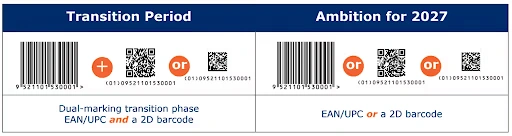
Dual-marking during the transition
GS1 recommends dual-marking through the transition: a product carries both the linear barcode and the 2D barcode, both encoding the same GTIN. That keeps the product sellable in every store, including ones whose checkout systems aren't ready for 2D yet. Retiring the linear barcode entirely is a later decision, timed to scanner readiness across a brand's retail footprint.
GS1 Digital Link, explained
A QR Code is the carrier. GS1 Digital Link is the addressing standard that decides what that carrier means: a domain, a GTIN, and optional attributes like batch number or expiry date, structured so a GS1-aware system parses them the same way every time.
Anatomy of a GS1 Digital Link
Take a 12-digit UPC of 012345678905. Padded to 14 digits and wrapped in Digital Link syntax, it becomes https://id.brandname.com/01/00012345678905/10/L4821?17=270630. id.brandname.com is the brand's own subdomain, so the scan lands on infrastructure the brand controls. 01 is the Application Identifier marking a GTIN. 00012345678905 is that GTIN, padded with two leading zeros. The optional 10 marks a batch or lot number, here L4821, which turns a recall into something targeted instead of a blanket withdrawal. The optional 17=270630 is an expiry date in YYMMDD order. Get that date order wrong, and a scanner reads a good product as expired at the till.
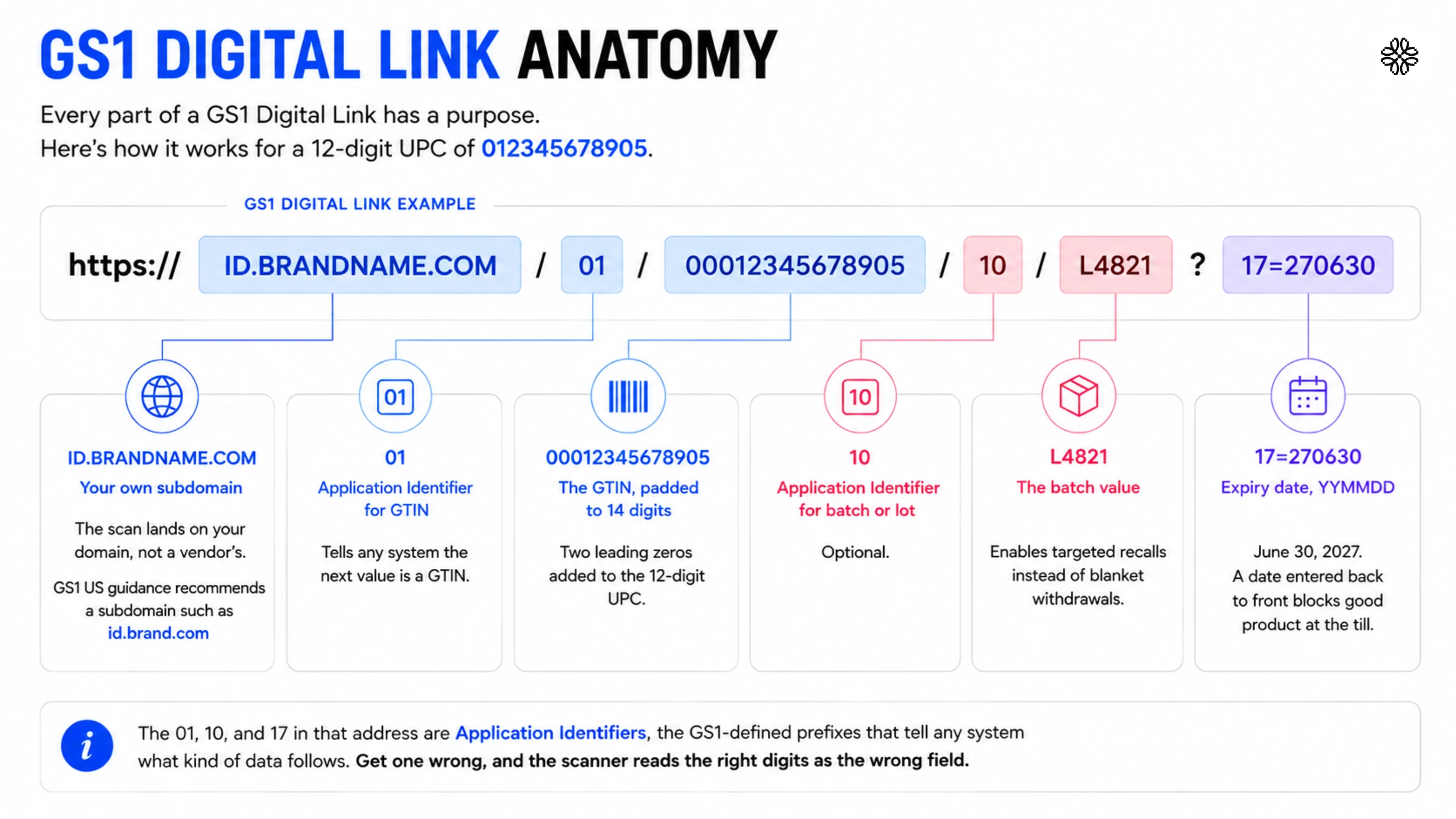
GS1 Digital Link splits these into two tiers, and the difference matters for how a QR Code gets built. The GTIN is the primary identification key. Every GS1 QR Code needs exactly one. Batch number and serial number are key qualifiers, which sit in the URL's path (like the 10/L4821 above) because they narrow down which specific unit is being identified. Expiry date and net weight are data attributes instead, appearing after a ? as a query parameter rather than in the path, because they describe the identified item without narrowing which one it is.
Benefits of the GS1 QR Code
A GS1 QR Code can identify a product at checkout and open product information on a smartphone. The practical benefit depends on who's scanning it and which systems support the data encoded inside.
For brands
- Update product information without reprinting the QR Code. When the linked page is managed through a suitable platform, a reformulation, a new certification, or a recall notice can go live without touching the packaging itself.
- Show different content by market or language. One printed QR Code can open different information depending on where or how it's scanned, instead of printing a separate QR Code for every region.
- Support targeted recalls instead of blanket withdrawals. Encoding a batch or lot number lets a brand isolate the exact affected units. Flippa K, a Stockholm-based womenswear brand, used this to add farm-to-retail traceability to its wool garments.
For retailers
- Keep checkout at the same speed. A GS1 QR Code identifies a product at the till the same way a UPC does, so adopting it doesn't slow down a scan.
- Use the same QR Code for inventory, not just checkout. Because the identifier is standardized, the QR Code that rings up a sale can also feed stock and reorder systems without a separate data pipeline.
For consumers
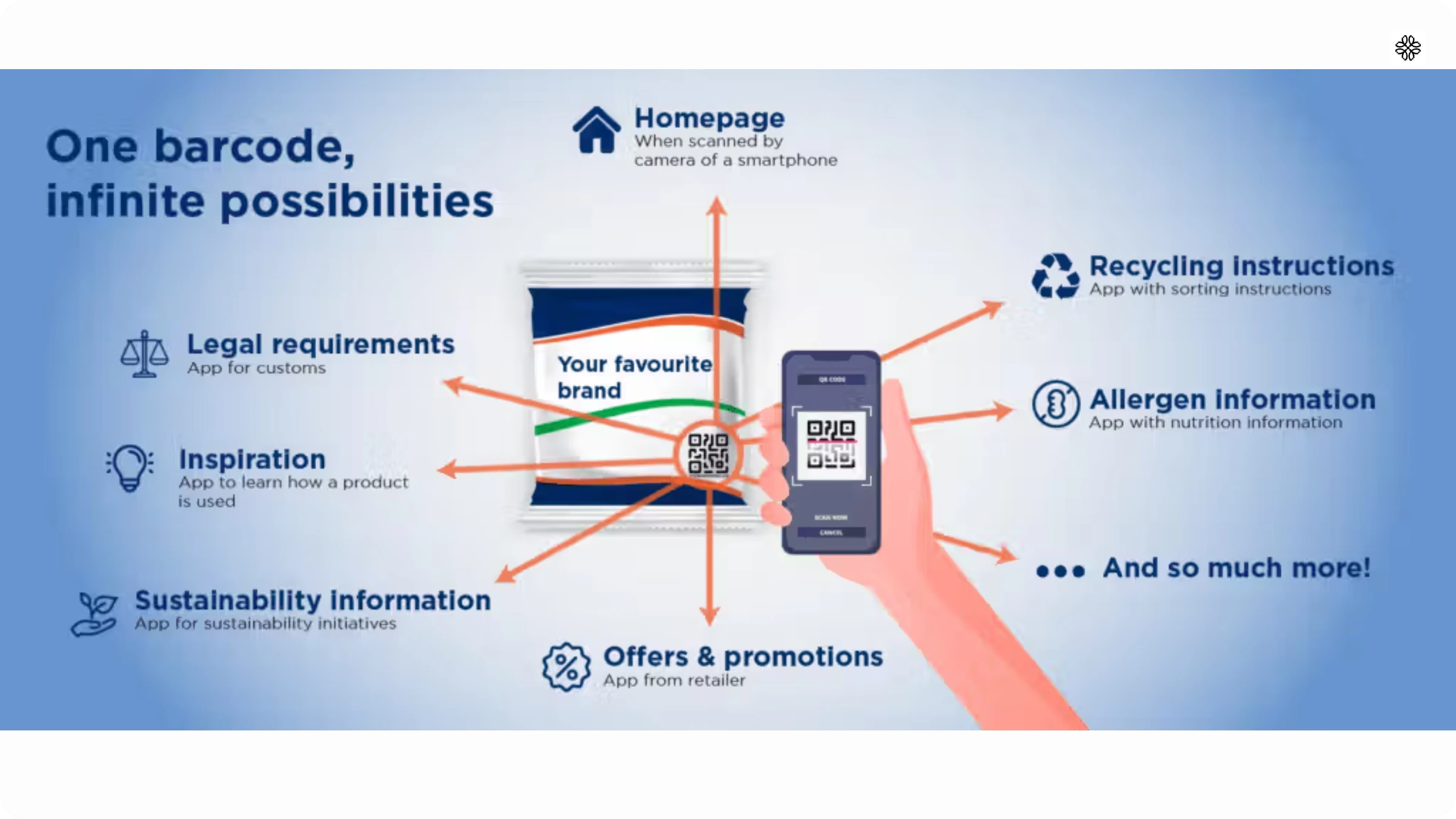
- Check ingredients or allergens the label doesn't have room for. A scan can open the full ingredient list, sourcing detail, or allergen information a package can't print in full.
- Read recycling or disposal instructions specific to that product. Rather than a generic recycling symbol, the linked page can give exact material and disposal guidance.
- Confirm sourcing or authenticity claims directly. The same batch or serial data that supports a recall also lets a shopper verify a claim instead of taking a label's word for it.
For compliance
- Carry regulatory content without a packaging redesign. A GS1 QR Code can open nutrition, allergen, or sustainability detail that label-approval cycles make impractical to print directly on pack.
- Get a head start on requirements like the EU's Digital Product Passport. DPP rules are starting to mandate structured, scannable product data for categories like batteries and textiles, and the GS1 Digital Link structure is already built to carry that kind of data.
- Meet serialization rules already common in food and pharma. The same batch, serial, and expiry data a Digital Link carries lines up with traceability requirements that exist independently of the EU's DPP.
What else can brands do once the GS1 QR Code is on pack?
Once the GS1 QR Code is on pack, a brand can change what each scan shows, invite shoppers into a loyalty program, and see how people use it. The QR Code keeps carrying the GTIN for checkout, and the page behind it does the rest.
- Build a content page for each product. A food brand can link each product to its own recipe page, and a skincare brand can link to a routine built around that product. PepsiCo put a GS1 Digital Link 2D barcode on Starry, the rebrand of Sierra Mist, and one scan opens nutrition facts, allergens, ingredients, and sustainability features. Tesco has said its new QR Codes could later unlock recipe ideas, competitions, and other content linked to specific products.
- Change the page by season or neighborhood. A brand can send shoppers to a holiday recipe in December and a grilling guide in July without reprinting the pack. Location works the same way: several brands are piloting ZIP code-level recycling information.
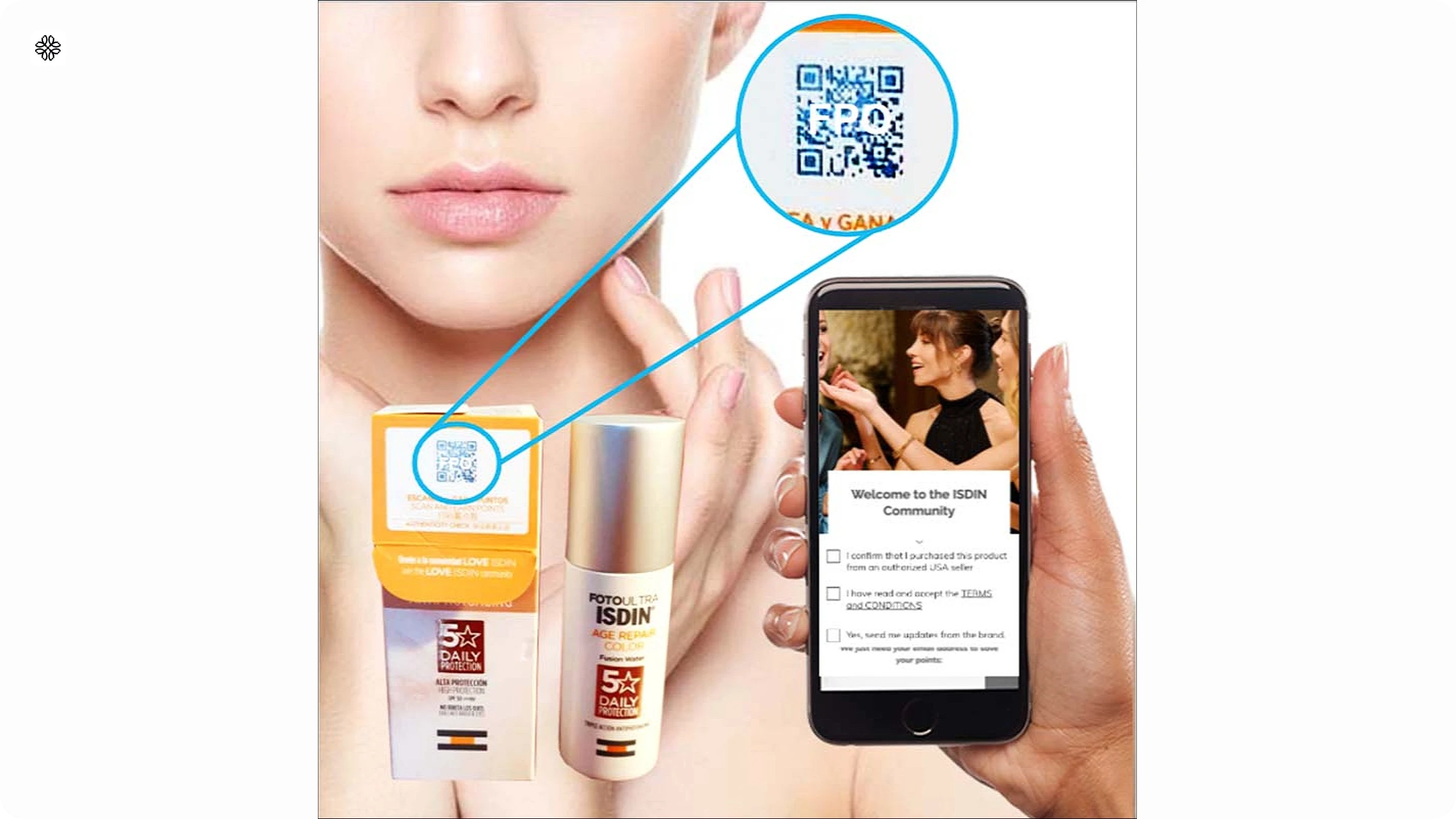
- Invite shoppers into a loyalty program. The page behind the scan can offer points, samples, or exclusive offers in exchange for an email address or phone number. A brand that sells through retailers then learns who is buying. ISDIN rewards shoppers with points for scanning a QR Code on its products through its Love ISDIN program.
- Track what shoppers do after they scan. Scan counts by product, location, and time show which pages earn visits, so a brand can rewrite the ones that underperform.
How Uniqode helps brands get GS1-ready
Uniqode is a GS1 US Solution Partner, listed at the Executive tier on GS1 US's Solution Partner Finder.
Create GS1 QR Codes at scale
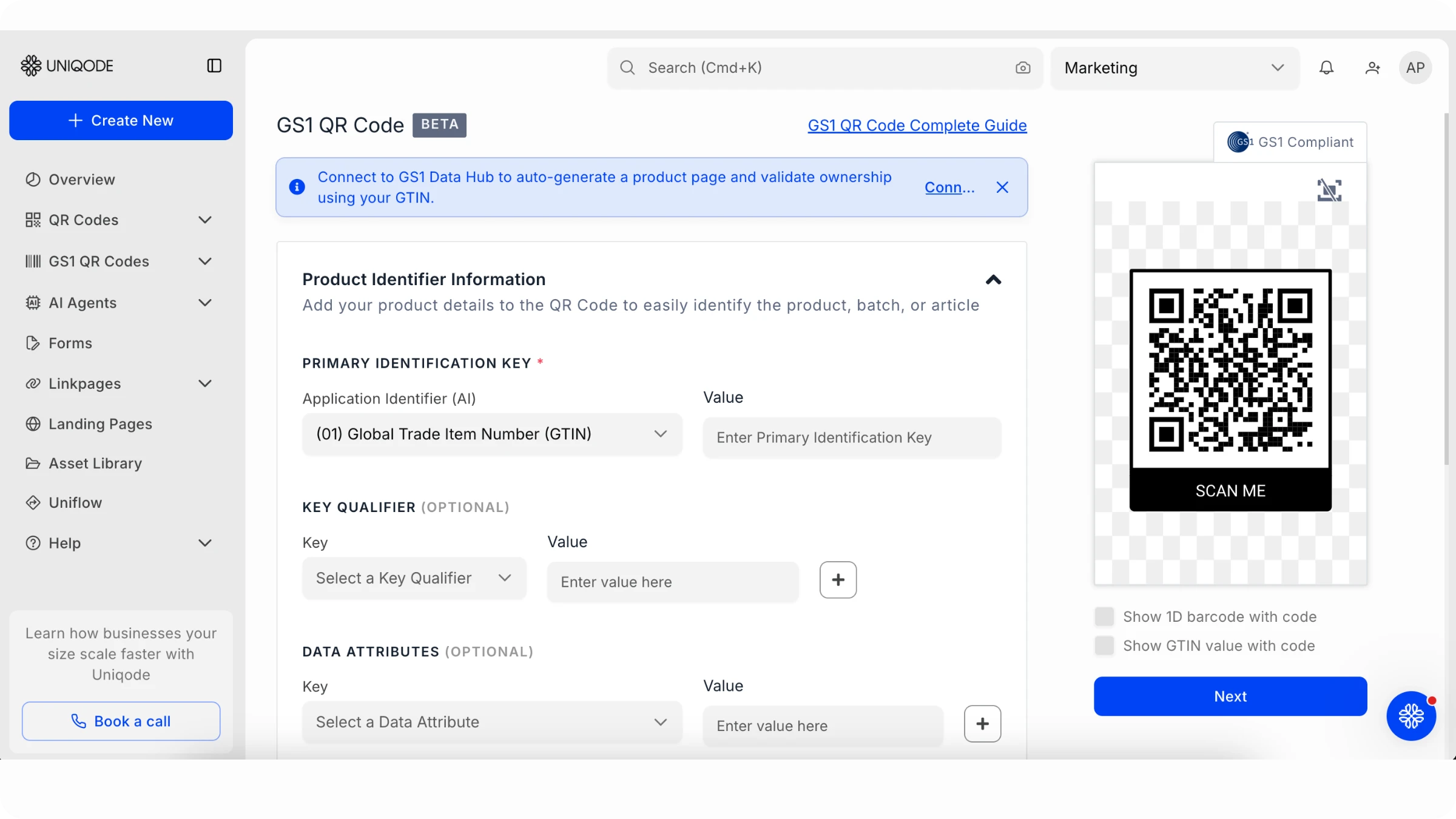
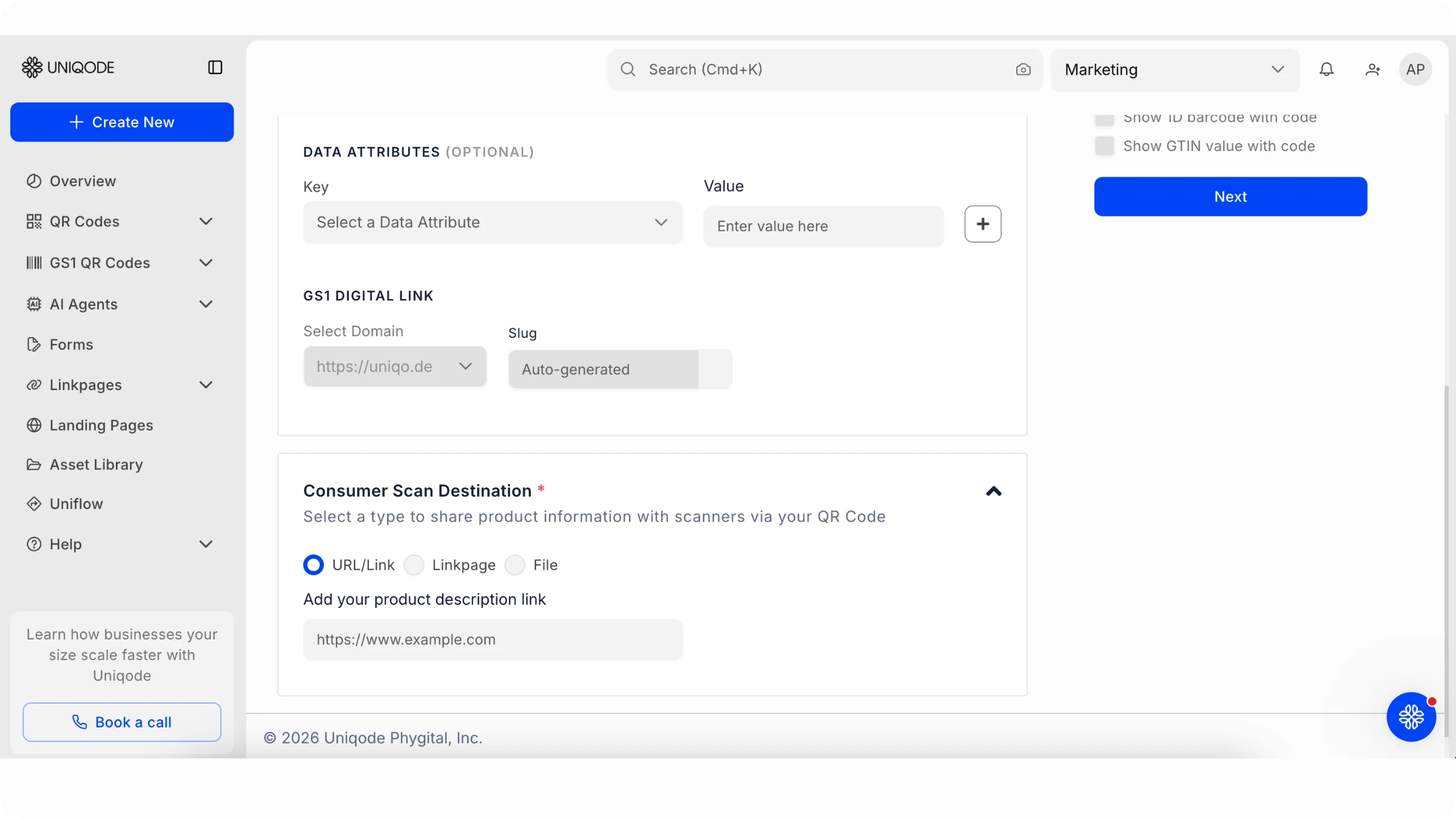
Uniqode generates GS1 QR Codes directly from a GTIN list, building the required identifiers automatically instead of relying on manual entry per product.
Keep product links under brand control
Every QR Code opens on the brand's own subdomain rather than a shared vendor domain, so a scan lands on infrastructure the brand controls. Because the linked page isn't fixed at print time, a recall notice, an updated ingredients page, or new market-specific content can go live after the QR Code is already printed and on shelf, with nothing to reprint.
Give each team the right level of access
Packaging, marketing, and operations teams often work from the same live QR Codes. Role-based permissions control who can view, edit, or repoint a product's QR Code, so a live SKU doesn't get changed by accident.
Measure QR Code engagement
Every scan is tracked, so a brand can see how often a QR Code is scanned, where, and on what kind of device; information a static, hardcoded QR Code has no way to report.
Planning a GS1 QR Code rollout?
A GS1 QR Code rollout involves decisions about product data, printing, scanner testing, web destinations, and ownership after launch.
The free GS1 QR Code ebook gives a step-by-step checklist for planning and managing each stage.
Start building a compliant GS1 QR Code from a GTIN list with a free Uniqode trial.
Frequently Asked Questions
- Is GS1 Sunrise 2027 mandatory?
GS1 Sunrise 2027 is an industry initiative from a standards body, not legislation or a legal requirement, so there's no legal fine for missing it. Retailers set their own commercial deadlines regardless: at GS1 Connect, Dillard's named 2D as something it will ask suppliers for, and named Walmart as a retailer likely to follow. Waiting for a mandate that doesn't exist just means a retailer decides the timeline instead.
- What does GS1 stand for?
GS1 is the non-profit standards organization that administers UPC, EAN, and GS1 Digital Link barcodes worldwide. It sets syntax and structure for brands to adopt on their own timeline, with no membership or fee required just to read or scan a compliant code.
- Is a GS1 QR Code the same as a regular QR Code?
A GS1 QR Code is a specialized two-dimensional square barcode structured according to GS1 General Specifications that connects physical product packaging to the web and holds rich supply chain and consumer data, unlike a regular QR Code, which can open any link a business chooses with no required structure.
- Will GS1 QR Codes replace UPC and EAN barcodes in 2027?
GS1 QR Codes are being added alongside UPC and EAN barcodes, not replacing them. GS1 recommends dual-marking through the transition, where a product carries both the linear barcode and the 2D barcode, so the UPC or EAN stays in place.
- Do I need a GTIN to create a GS1 QR Code?
A GTIN is required to create a GS1 QR Code, since it's the product identifier the entire Digital Link is built around. A brand without one yet can buy individual GTINs from GS1 US for a handful of products, or license a GS1 Company Prefix to generate GTINs as its catalog grows.
- Does adding a GS1 QR Code require a new GTIN?
Adding a GS1 QR Code doesn't require a new GTIN, since the QR Code encodes the GTIN a brand already uses on its existing barcode. Adding the 2D symbol only requires building the QR Code correctly around the identifier already in use.
- Does every product variant need a different GS1 QR Code?
Each product variant needs its own GS1 QR Code if it has a different GTIN, which it should for genuinely different products, like a different size or flavor. Units within the same variant can share one QR Code unless a brand is also encoding batch or serial data, in which case each batch needs its own.
- Can one GS1 QR Code work for both retail POS and consumer scans?
One printed GS1 QR Code can satisfy a retailer's GTIN lookup at checkout and open a consumer destination on a phone scan, both from the same print run, because the two use cases read different parts of the same QR Code.
- Does a checkout system need internet access to read a GS1 QR Code?
A checkout system doesn't need internet access to identify the product, since a GS1 QR Code carries the GTIN directly in the QR Code and a compatible scanner reads it offline the same way it reads a UPC. Internet access is only needed to open the linked webpage for a shopper.
- Can every checkout scanner read a GS1 QR Code today?
Not every checkout scanner can read a GS1 QR Code today. Many registers already use scanners capable of it, but some point-of-sale systems still need a software update to recognize GS1 Digital Link syntax instead of a flat barcode number, which is the gap GS1 Sunrise 2027 asks retailers to close by the end of 2027.
- Can shoppers scan a GS1 QR Code with an app?
A GS1 QR Code scans the same way any QR Code does, with a phone's native camera or any QR Code scanning app, so no special app is required.
- What information can a GS1 QR Code contain?
A GS1 QR Code contains a GTIN at minimum, and can also carry optional data like a batch or lot number, a serial number, and an expiry date, depending on what a brand chooses to encode.
- Can product information change after the GS1 QR Code is printed?
The linked page a GS1 QR Code opens can change after it's printed, even though the GTIN and any batch or serial data stay fixed once the QR Code goes to print.
- Can an existing marketing QR Code be converted into a GS1 QR Code?
An existing marketing QR Code can't be converted just by editing its destination, since a GS1 QR Code needs a GTIN built into the QR Code's underlying address in GS1's required format, meaning a marketing QR Code that only points to a URL needs to be replaced with a new QR Code built to that structure.
- Should brands use a GS1 QR Code or GS1 DataMatrix?
The choice between a GS1 QR Code and GS1 DataMatrix depends on where the QR Code needs to be scanned: a GS1 QR Code is the better choice for consumer-facing products since it reads reliably on a phone, while GS1 DataMatrix is more common in healthcare and industrial settings where space is limited, and consumer phone scanning isn't the priority.
About the Author
Architaa is a Content Marketer at Uniqode, where she explores how QR Codes, Digital Business Cards, and phygital experiences are reshaping the way brands connect with their audiences. She transforms complex marketing trends and technologies into clear, actionable insights that help businesses strengthen engagement and build lasting connections with their customers. Outside of work, Architaa is most likely lost in a novel, following every ball of a cricket match, or binging her favorite shows.