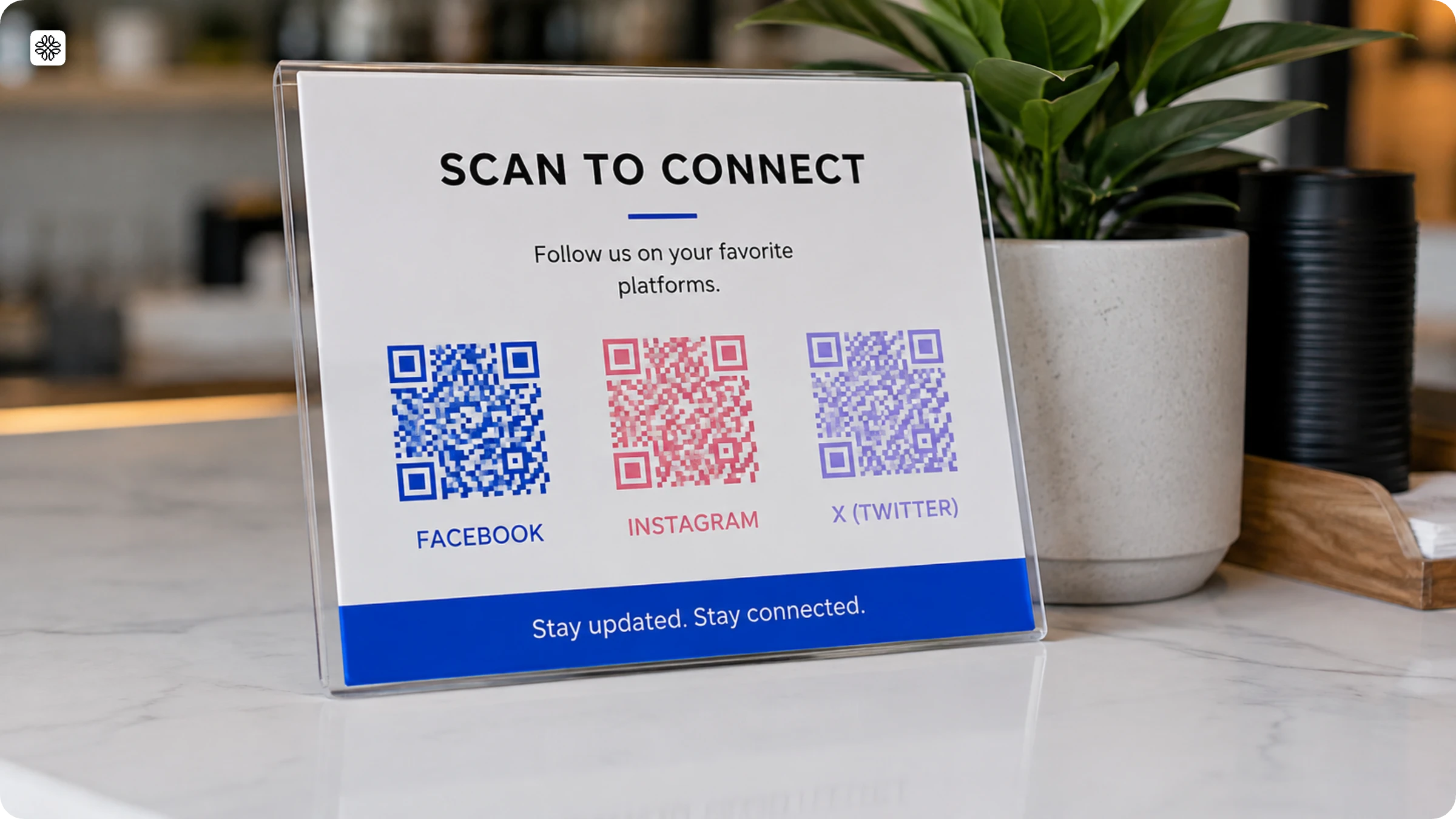
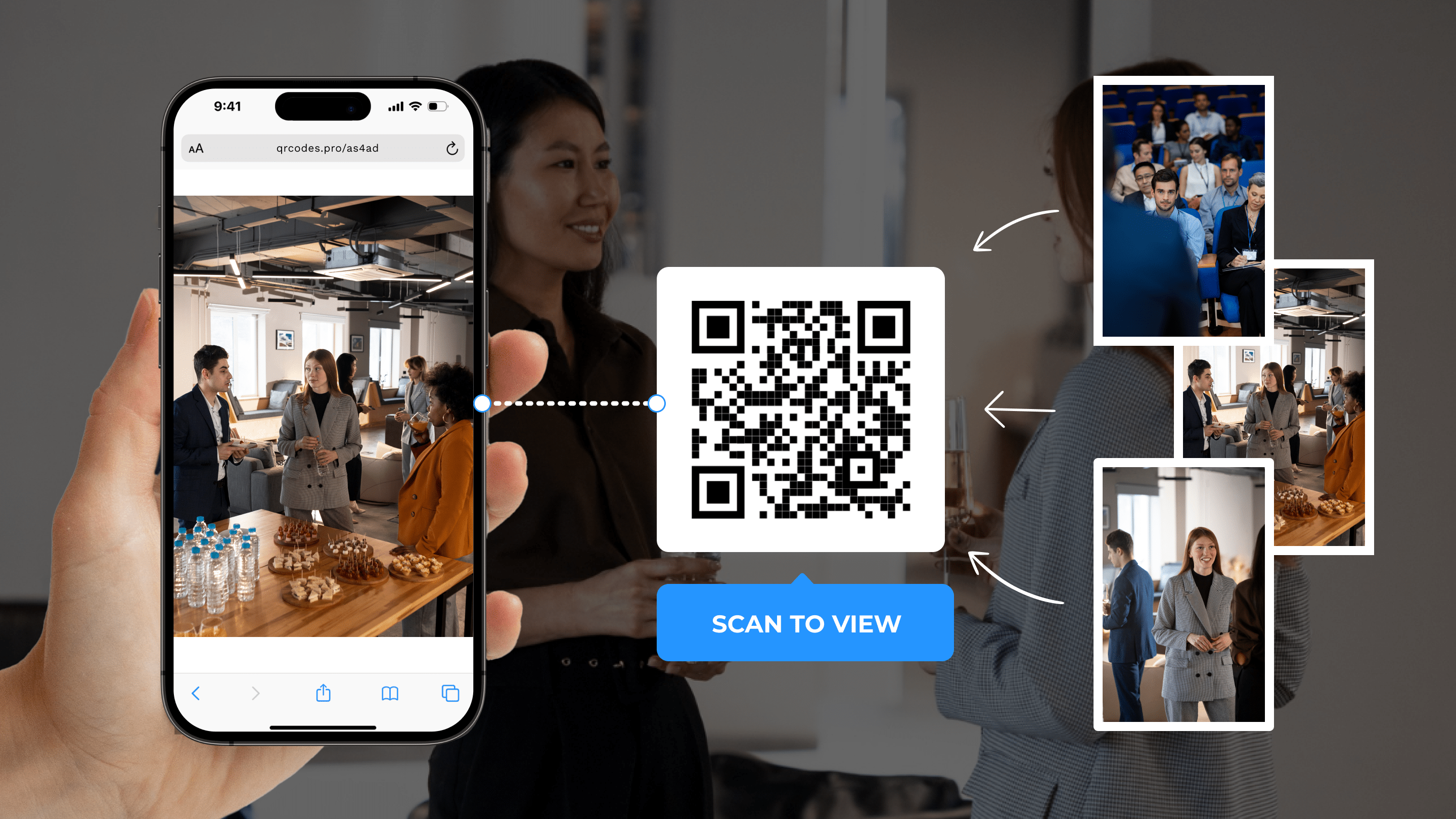
What’s an easier way to share photos than ordinary, long URLs and printed photo albums? QR Codes for photo sharing. Learn how to access them with a simple scan, password protect and edit the photos that you share anytime.
You have images on your device or in the cloud, and you need people to access them without typing a long, messy URL. But sending links over email gets chaotic. A photo-sharing QR Code gives you a single, scannable shortcut that opens your album instantly. This guide covers how to create one, which URLs to use for each platform, and where to deploy it.
To create a QR Code for photo sharing, grab the shareable link from your photo platform, paste it into a QR Code generator like Uniqode, customize it, and download. This guide covers platform-specific URLs, customization tips, and the best places to deploy your QR Code.
What is a photo QR Code?
A photo QR Code is a scannable code linked to an online photo album or gallery. When someone scans a photo QR Code with their phone camera, it opens the album directly, no app download or URL needed. It works by encoding a shareable link from platforms like Google Photos, iCloud, or Dropbox into a scannable format.
With a dynamic QR Code, you can update the linked album without reprinting the code. Think of it as a shortcut to your photos that works on print, screens, and signage alike.
How to convert an image into a QR Code
You can create a photo QR Code in under five minutes using Uniqode. If you want to share a single image, upload it directly as the QR Code type. If you want to share a full album, paste the shareable link from Google Photos, iCloud, or Dropbox and generate a dynamic QR Code. Below are five steps to create a QR Code for photo sharing.
Step 1: Sign in to Uniqode
Create a free account on Uniqode with your email ID. This takes less than two minutes. From your dashboard, click +Create and choose QR Code.
Step 2: Select QR Code type
You will find different QR Code types. If you want to share a single photo, select Image as the QR Code type.
Step 3: Upload the image or paste the URL
Upload the image you want to create a QR Code for. Paste the link to your album on the cloud platform or hosting site where your photos are stored. This URL will be the destination the QR Code points to, making your album accessible instantly.
Step 4: Customize your QR Code
You can customize the QR Code with your logo and choose a pattern, background, and frame to match your brand identity. You can also choose from the pre-made templates available.
⚡Pro tip: Include a short CTA text under the QR Code (for example, "Scan to view this event's photos"). This helps you get more scans that convert.
Step 5: Download and test
Your QR Code is ready. Download it in the format that best suits your needs: PNG for social media, PDF for print materials, or SVG if you need to resize it later. Test a quick scan with your phone, then deploy it on invitations, ad posters, post-event cards, or other materials.
Other methods to convert photos to QR Codes
Here are two other methods to create QR Codes to share photos.
- Cloud album: Create a shared Google Photos or Dropbox album, enable "anyone with the link can view and add," then generate a QR Code pointing to that URL.
- Casual group sharing: A WhatsApp group or thread where guests upload photos directly, sometimes paired with a QR Code linking to the chat or a pinned album.
While these methods are simple and have fewer steps, there are some disadvantages to them:
- Permission-toggle resets. The "anyone with the link can add" setting is not permanent. An app update, an owner adjusting sharing defaults, or a co-owner changing a preference can silently flip it to view-only or private. The QR code still scans. It still opens. It just stops accepting uploads. This is discovered only after the event, when a host opens the album expecting 400 photos from 150 guests and finds 40, with no record of who tried and failed.
- Storage quota caps. Free-tier Google Photos, Dropbox, and iCloud accounts have hard ceilings. Once hit mid-event, new uploads silently reject. There is no visual change to the QR code, no error message on the album page, nothing. Multi-day events, weddings with 100 or more guests, and anyone reusing a personal storage account are most exposed.
- Compression loss. Photos forwarded through WhatsApp or Messenger are automatically recompressed, sometimes with significant quality loss. Guests believe they have shared a photo. What lands in the collection is a degraded copy, a failure nobody notices until the printing order or album reveal.
If guests only need to view photos you already have, a free Image or Website QR Code is enough. If guests need to upload their own photos, any QR Code tool, like Uniqode , is only as reliable as the destination service's permission settings.
Top use cases of image QR Codes
Whether you are a marketer, photographer, retailer, or event organizer, using QR Codes to share images can help you solve distribution challenges.
1. Marketing events

You can use QR Codes at events to instantly deliver curated event photos to attendees. Start by picking gallery-ready shots and uploading them as a curated album. Then generate a dynamic QR Code (set expiry if needed) and print it on welcome signage, table cards, event decor, or on digital collaterals. You can also include the same QR Code in your post-event recap emails to extend engagement and encourage re-shares.
For events where guests should also contribute their own photos, pair the QR code with a platform like GuestPix to handle uploads, then update the Uniqode QR code destination to the compiled album once it is ready.
2. Product packaging
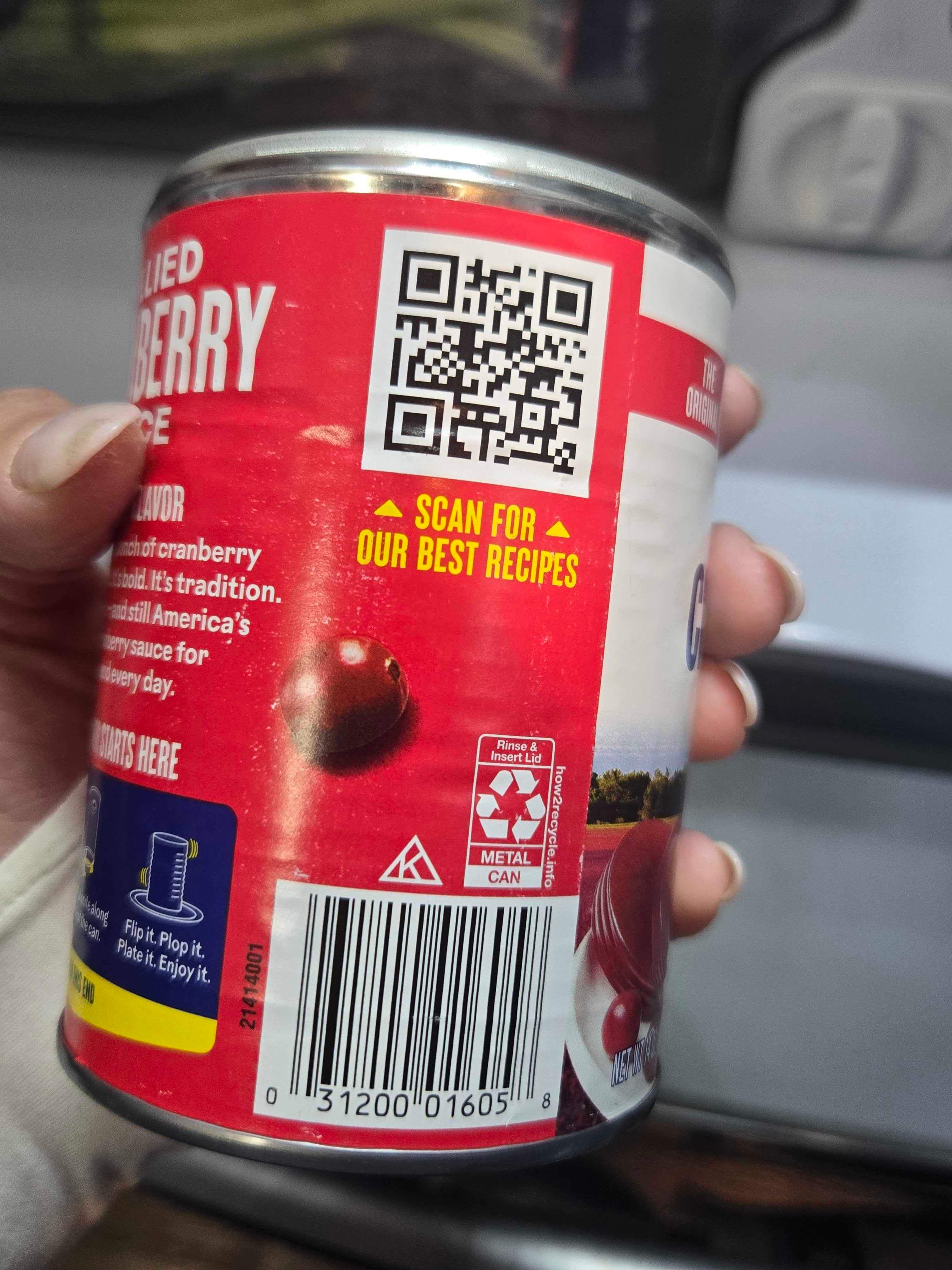
QR Codes can turn static product packaging and in-store displays into shoppable, visual galleries. First, build an online gallery featuring lifestyle images, close-ups, and product demos using your CMS, Shopify, or any hosted page. Then, create a dynamic QR Code that links to this gallery so you can refresh images or seasonal collections without reprinting materials.
You can then add the QR Code to product packaging, tags, and displays, and track scans to identify which product lines and placements drive the most engagement. QR Codes are a great way to share photo galleries with customers. Here is a CTA example you can add to the material to get more scans: "Scan to see more product photos" or "See this product in action."
⚡Pro tip: Use Uniqode's QR Code analytics to see which products and placements get the most scans and conversions. This helps you understand what shoppers respond to, so you can replicate the winners and retire the low-performing ones.
3. Wedding photographers
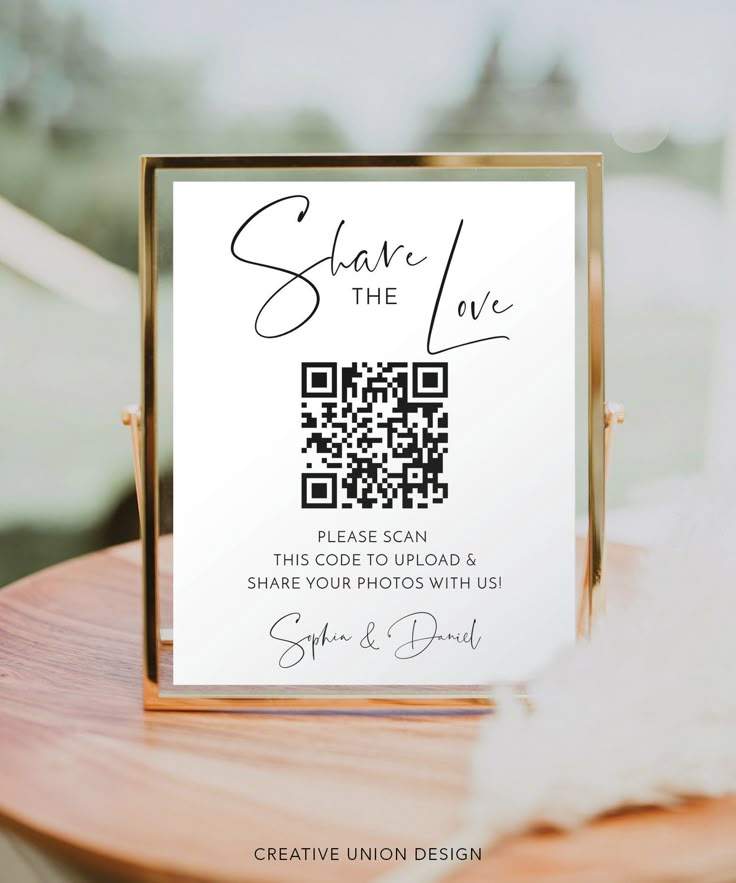
QR Codes can be used to share teasers and full galleries to couples and guests with zero email friction. For example, curate a 20-photo "teaser set" within 24 hours of the event and link it via a dynamic QR Code. A quick teaser QR Code builds excitement and reduces client follow-up. They will feel cared for and are more likely to buy add-ons. Here is an example of a CTA you can include: "Scan for your 24-hour teaser. Full album inside."
Another way to go about this is to add QR Codes to the physical album's last page or printed table cards that lead to the complete gallery and accompanying video clips. You can also offer a QR Code that lets clients download high-resolution files, photo albums, or request prints instantly. QR Codes are also helpful to maintain shared photo albums.
→Related: QR Code for wedding photos
⚡Pro tip: Do not forget privacy and access control. Add a password to your QR Code landing page. This protects the couple's images and makes it easy to give secure access to family and friends without sending separate links.
4. Realtors
Deliver property photos, virtual tours, and floor plans to buyers and brokers immediately from signage. You can upload staged property photos and a walkthrough video to a role-based landing page designed separately for buyers and brokers. Generate a dynamic QR Code that automatically directs users to the right page, then place it on brochures, window signs, and property flyers.
Link the QR Code to downloadable resources such as floor plans or disclosures to help onsite viewers. With a compelling CTA such as "Scan for a virtual tour and downloadable floorplan," you can get prospects to view your listings. See how other agents are using real estate QR Codes for listings.
5. Tourism and travel experiences
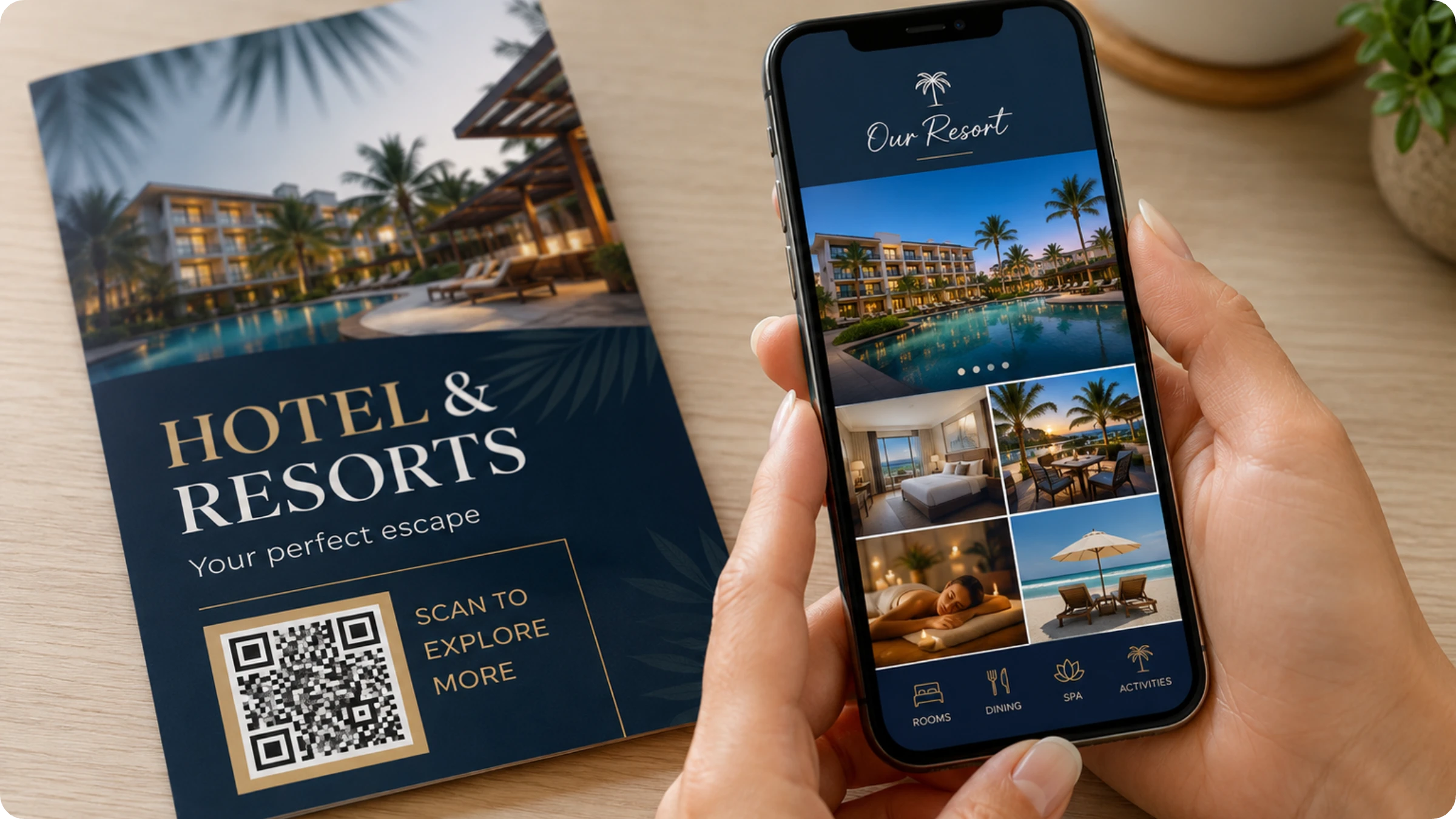
Sharing trip photos and highlighting scenic spots is now easier with QR Codes. As tour and resort operators, you can curate an album of experience highlights or guest photos taken during tours or stays. Add QR Codes to signboards, ticket stubs, notice boards, or souvenir booklets linking to the gallery. With dynamic QR Codes, you can add new photos for repeat tours or activities.
Add a CTA to your materials, such as "Scan to see what your diving experience looks like," so that customers are inspired to scan. For more on QR Codes in hospitality, see our industry guide.
⚡Pro tip: Offer a branded gallery download or "share your moment" CTA to collect user-generated content and testimonials.
Best practices for QR Codes used for photo sharing
Using QR Codes the right way can help you increase visibility of your photos, protect privacy, and create more efficient workflows. Here are the best practices you can follow to make the most of QR Codes for photo sharing.
1. Design and Placement
Use at least 2 x 2 cm on business cards and 4 x 4 cm for posters or signage. For outdoor or long-distance placement, increase the size further to ensure the code is scannable from the expected viewing distance.
Always test printed codes with several phone cameras and scanning apps before printing in bulk. Confirm readability from expected viewing angles, not just straight on.
Place QR Codes where people naturally pause, such as entrances, tables, or checkout points. Avoid shiny or patterned surfaces that interfere with scanning. Better visibility and testing lead to higher scan rates and smoother engagement.
2. Content management
Use dynamic QR Codes if you need to update galleries or track performance. They allow you to change the destination link at any time and view analytics, making them ideal for marketers running multiple campaigns. Static QR Codes are fine for permanent or one-time galleries where updates are not needed.
Host galleries on HTTPS pages. For public campaigns, use open access. For private ones, add simple gatekeeping, such as a password or a brief access form.
Keep galleries lightweight by using thumbnails or small image grids instead of large single-image files. This ensures faster mobile loading and a smoother experience for anyone scanning on the go. Using the right QR Code type and maintaining clean hosting ensures easy updates, faster loading, and practical analytics.
3. Security and privacy
Always get consent if photos include identifiable people. Keep simple records of permissions so you have a clear trail if questions arise later.
For private or time-sensitive galleries, use expiry dates or short-lived links so content is not available indefinitely. This is especially important for corporate events, private shoots, or any situation where the audience is limited.
Use revocable or password-protected links for private albums. This way, you can manage access without changing the printed QR Codes, which saves time and avoids reprinting costs. Thoughtful privacy management protects users, maintains brand trust, and avoids compliance risks.
4. Enterprise and workflow considerations
Ensure that QR Code designs, landing pages, and CTAs adhere to your brand's visual and voice guidelines. Consistency across touchpoints reinforces trust and makes campaigns easier to manage at scale.
Define roles for creating, approving, and updating galleries, ideally within your digital asset management tool or project workflow. This is possible on a QR Code platform like Uniqode, where teams can collaborate without stepping on each other's work.
Use QR Code analytics to identify which campaigns, events, or regions drive the most scans. Uniqode's scan analytics show total scans, device type, location, and scan time, so you can see not just that people scanned, but where and when.
Photo sharing made easy with Uniqode
QR Codes make photo sharing fast, consistent, and easy to manage, no matter where your images live.
With Uniqode, you can create dynamic QR Codes that link to albums, switch out content as needed, and track how and where people engage. This gives you a single, flexible system for sharing teasers, full galleries, client deliverables, or event recaps without sending multiple links or chasing follow-ups.
If photo sharing is part of your workflow, sign up for a 14-day trial of Uniqode.
Frequently Asked Questions
- Can I track how many people scan my photo sharing QR code?
Yes, dynamic QR codes from platforms like Uniqode provide comprehensive scan analytics without collecting personal data. You can track the total number of scans, geographic locations by city and country, device types (iOS vs Android), and time stamps of when scans occurred. This data helps you measure engagement at events and optimize QR code placement for maximum reach.
- What file formats should I download my QR code in for printing vs digital use?
Download PNG format (300 DPI minimum) for social media and digital displays, PDF format for professional print materials like invitations and signage, and SVG (vector format) when you need to resize the QR code for different applications without quality loss. SVG files can scale infinitely without pixelation, making them ideal for both business card sizes and large banner prints from the same source file.
- Are QR Code generators safe for photo sharing?
Yes, platforms like Uniqode prioritize security and privacy. We use secure protocols (such as HTTPS) to protect your data during the creation process and often include safeguards to prevent unauthorized editing or tampering of your QR Codes.
- Can you make a QR Code for a shared photo album?
Yes, after you create a shared album using Google Photos or iCloud, or any other tool, you can use the URL and create a QR Code.
- Copy the URL of the shared album
- Log in to the Uniqode dashboard and choose Website as the QR Code type.
- Paste the URL of the shared album
- Customize and download the QR Code
- Do viewers need to install app to view photos shared via QR Codes?
No, most QR Code photo sharing platforms work through mobile browsers, so guests can scan and view or upload photos without downloading any app. You can use it to share multiple photos with an online gallery.
- Can QR Codes be used for live photo slideshows during events?
Absolutely. QR Code can link to dynamic galleries that update in real time, allowing you to display a live slideshow on screens.
- What's the best way to share event photos with guests?
QR Codes are the best for image photo sharing. Create one QR Code per album, print it on event signage, or include it in post-event thank-you emails for seamless guest access.
- What are the limits on image count and file size when using QR Code-to-gallery generators?
Limits depend on the platform you use. Most QR Code generators allow one image per QR Code. To upload multiple images, you can use the Website QR Code. By adding a link, scanners can view the photos.