What Is a GTIN? How to Get and Manage One
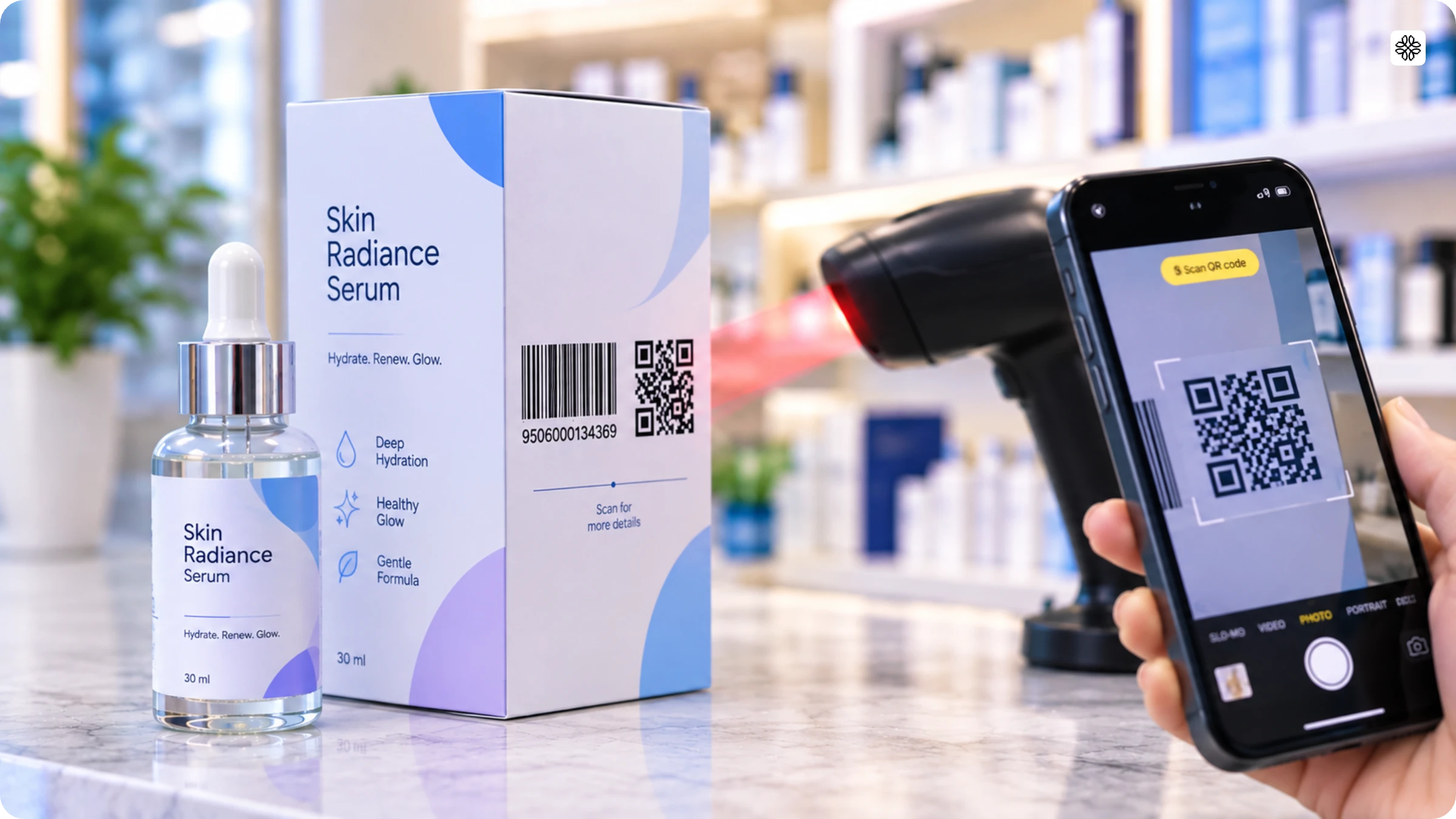
A GTIN is the number behind every product barcode. This guide shows how a GTIN is built, how to license one from GS1 as a single GTIN or a company prefix, what GS1 charges, how to verify and manage your GTINs, and how the same number goes into a GS1 QR Code.
What is a GTIN and how is it built?
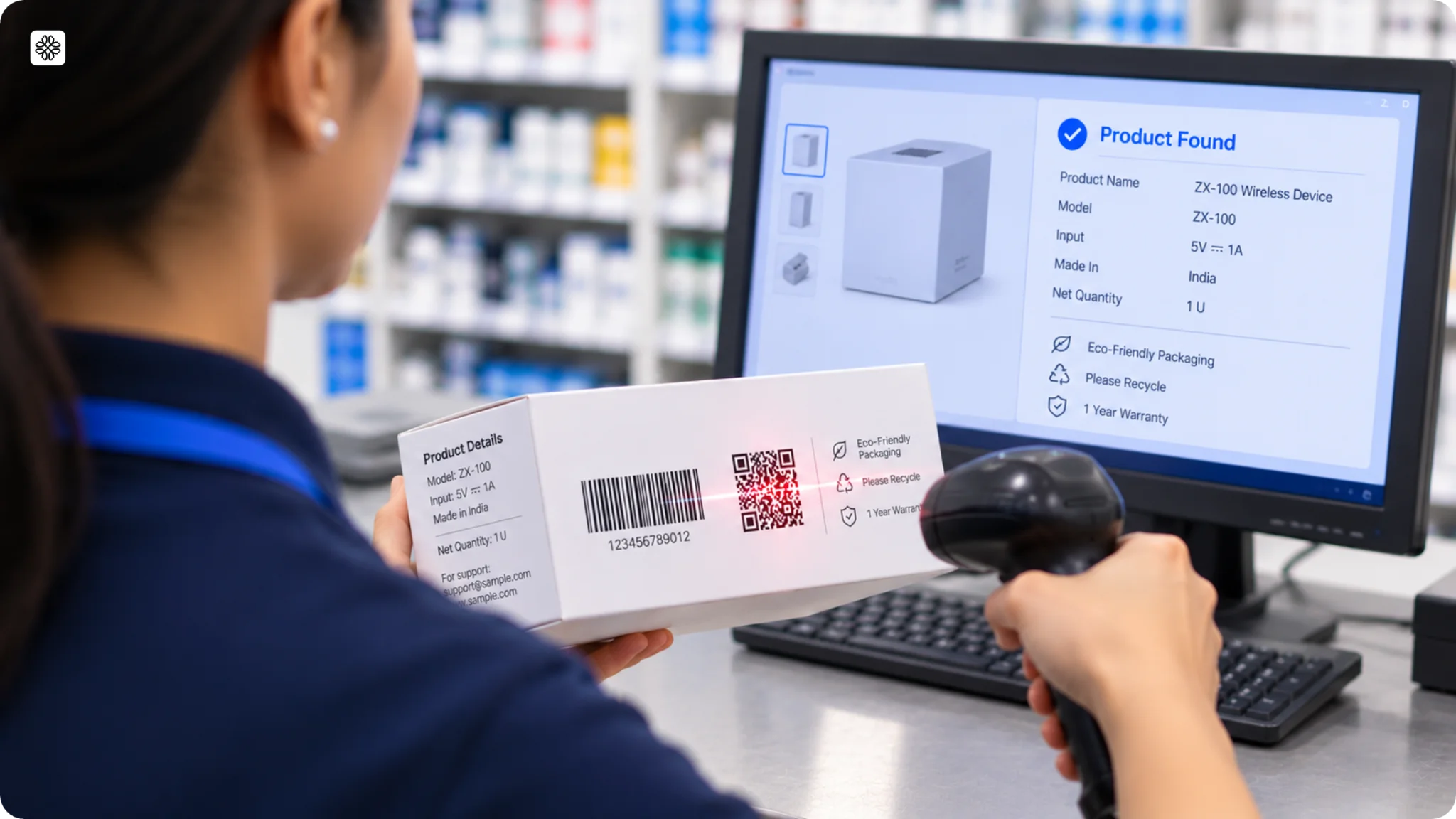
A GTIN (Global Trade Item Number) is a globally unique number that identifies one product or packaging level. A barcode is the symbol that carries a GTIN so scanners can read it. A GTIN can print as a 1D barcode (UPC or EAN) or a 2D barcode (GS1 QR Code). Checkouts scan the GTIN, and online marketplaces use it to match a listing to one exact product. GS1, the global standards organization, licenses GTINs to companies.
A skincare brand with 12 products in three sizes each needs 36 GTINs. Every size of every product is a separate trade item with its own GTIN. A 1 oz serum and a 2 oz serum carry different GTINs. A gift set that bundles both needs a third.
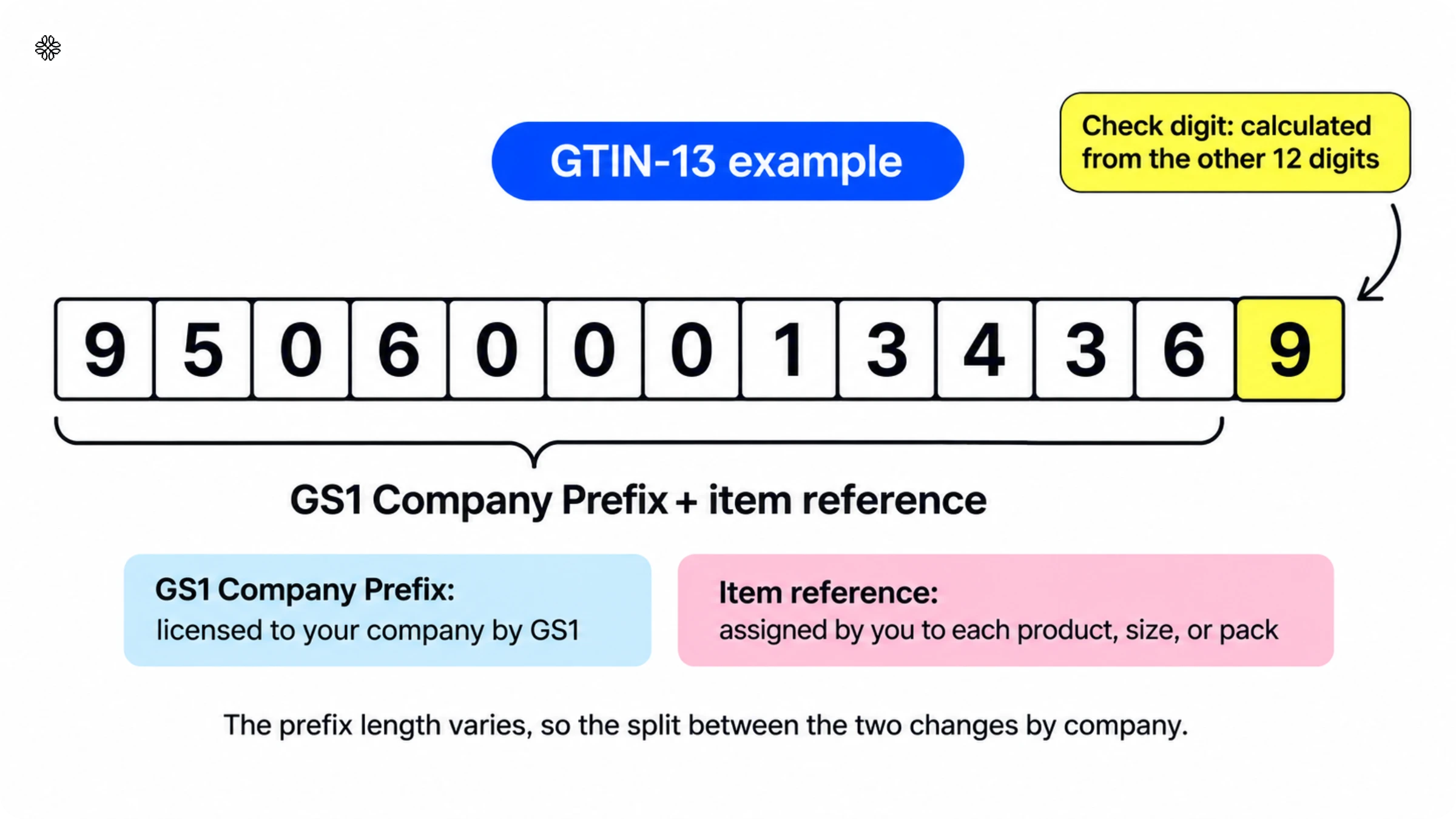
Every GTIN is built from a GS1 Company Prefix, an item reference, and a check digit.
- The GS1 Company Prefix is the number GS1 licenses to your company, and it identifies you as the brand owner.
- The item reference is the number you assign to each product, size, or pack.
- The check digit is the last digit, calculated from the other digits to catch typing and scanning mistakes.
For example, in GTIN-13, 9506000134369, the final 9 is the check digit.
GTINs come in four formats: GTIN-8, GTIN-12, GTIN-13, and GTIN-14. The 12-digit GTIN-12 prints as a UPC-A barcode, and the 13-digit GTIN-13 prints as an EAN-13.
Not sure which format your packaging uses?
Read our guide to product codes for how GTIN, UPC, and EAN differ.
How to get GTINs for your products
GS1 is the only organization that issues GTINs, and you license them through your country's GS1 member organization. In the US, that organization is GS1 US. You can license single GTINs or a GS1 Company Prefix, depending on how many products you sell.
Step 1: Count which products need a GTIN
Start with your product list, because every size, flavor, color, and pack quantity needs its own GTIN. Add one GTIN for each gift set or bundle. Cases and multipacks that you sell or ship as a unit need their own GTINs too.
⚡Pro tip: Check your packaging first. A UPC or EAN that GS1 licensed to your company is already a GTIN. A product with a GS1-licensed UPC or EAN needs no new GTIN.
Step 2: Choose single GTINs or a GS1 Company Prefix
Buy single GTINs if you have a few products and no plans to grow. License a GS1 Company Prefix if you have many variants or expect growth.
| Your situation | Your route |
|---|---|
| You sell a handful of products and plan no new ones | Single GTINs |
| You sell many sizes, flavors, or colors, or plan new launches | GS1 Company Prefix |
| You need to number cases, pallets, or locations | GS1 Company Prefix |
What a GS1 Company Prefix gives you
A GS1 Company Prefix gives you a block of GTINs to assign yourself. On GS1 US, capacity runs from 10 to 100,000 products, and the tier you choose sets the price. A single GTIN identifies one retail product, while a prefix also numbers cases, pallets, mixed cases, coupons, and locations. A GS1 US prefix comes with a Global Location Number (GLN) for your company. You can create more GLNs for stores, warehouses, and departments.
What a GS1 barcode costs
In the US, a single GS1 US GTIN costs $30 with no renewal fee. A GS1 Company Prefix starts at $250, plus a $50 annual renewal. A GS1 US prefix license renews every year and cannot be refunded. Prefix tiers run up to 100,000 products at $10,500 up front and $2,100 a year. Outside the US, your country's GS1 member organization sets its own prices. GS1 UK, for example, bases membership fees on annual turnover and the number of GTINs you need.
GS1 US pricing, checked November 2026
| Number of GTINs you need | Initial fee | Annual renewal |
|---|---|---|
| One single GTIN | $30 | $0 |
| Up to 10 | $250 | $50 |
| Up to 100 | $750 | $150 |
| Up to 1,000 | $2,500 | $500 |
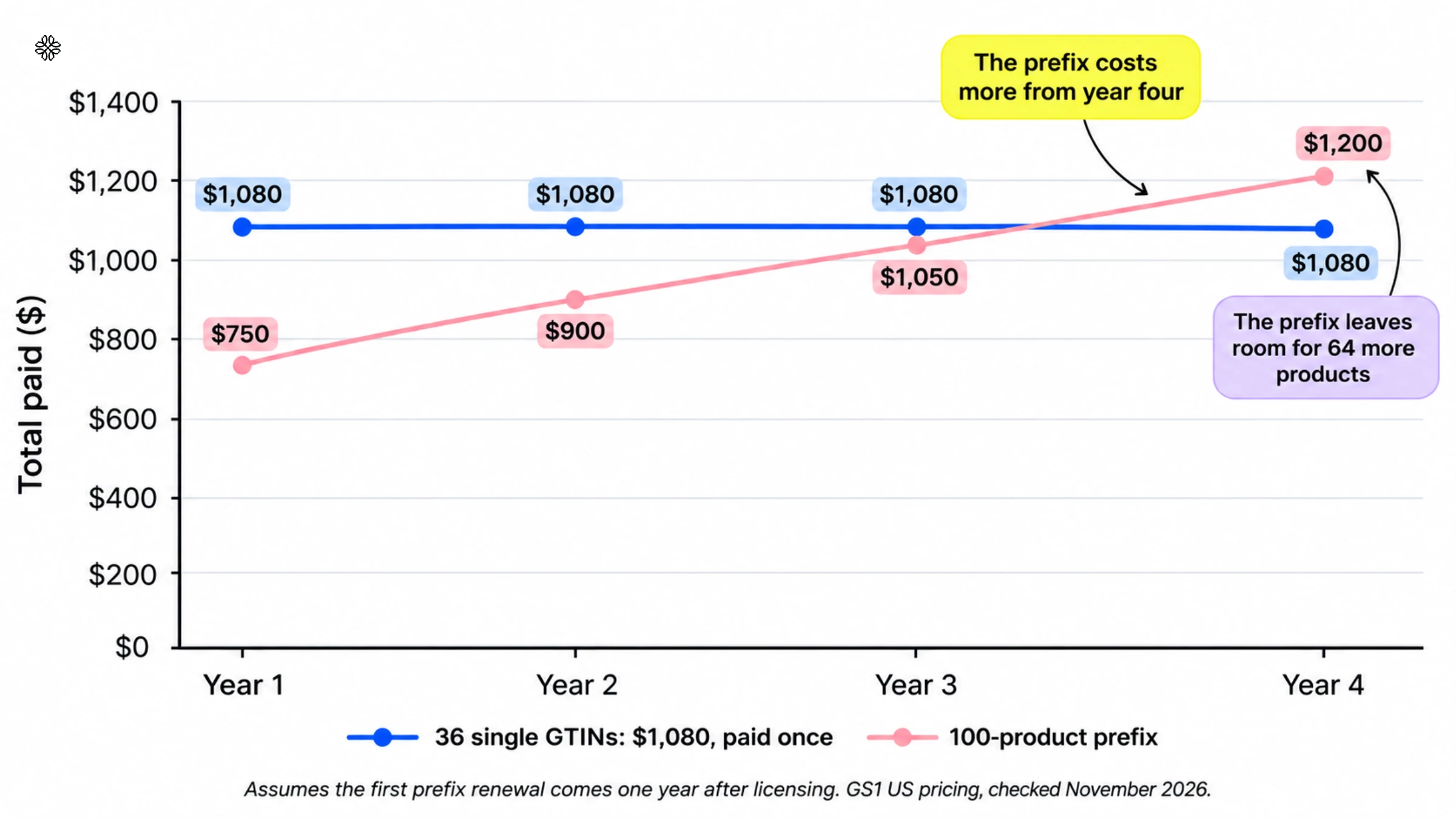
Total amount paid for 36 GTINs, by year
| Year | 36 single GTINs | 100-product prefix |
|---|---|---|
| 1 | $1,080 | $750 |
| 2 | $1,080 | $900 |
| 3 | $1,080 | $1,050 |
| 4 | $1,080 | $1,200 |
Assumes the first prefix renewal comes one year after you license the prefix.
- A 100-product prefix costs less than 36 single GTINs through year three and $120 more by year four.
- A 100-product prefix leaves room for 64 more products, which would cost $1,920 as single GTINs.
- A brand with 100 products pays $3,000 for single GTINs and $1,200 over four years for a prefix.
Step 3: License your GTINs and assign them to products
With your GTIN count and prefix route settled, license your GTINs in the GS1 store for your country. In the US, you check out in the GS1 US online store and enter your business details. If you license a prefix, you create each GTIN yourself in GS1 US Data Hub, a free online tool. You can then download your barcode artwork.
⚡Pro tip: Do not expect a QR Code platform to issue GTINs. Some brands ask us whether a platform and GS1 are the same company. Others ask whether we can create their UPCs. A QR Code platform builds GS1 QR Codes from GTINs you already hold, so license your GTINs from GS1 first.
Protect your GTINs: Verify ownership and keep your license active
Only a GTIN that GS1 licensed to your company is registered to you. Retailers and marketplaces check who owns a GTIN. A GTIN from any source other than GS1 puts your listings at risk.
Verify who owns a GTIN
Verified by GS1 shows which company a GTIN is licensed to. GS1 reports that more than 20 leading marketplaces check seller GTINs with it every day. Anyone can search it for free, up to 30 times a day. A search shows whether a GTIN is valid, whether it is licensed, and who holds the license. If a GTIN is not in the database, the search says so.
GS1 UK says a GTIN bought from a reseller still belongs to the original company, not to you. Only a licensed GS1 member organization can issue a GTIN and guarantee that it is unique.
⚡Pro tip: Check any GTIN you did not license yourself in Verified by GS1 before you print it. A number tied to another company can mean rejected listings or relabeled packs.
Keep your license active
You keep the right to use your GTINs only while your license stays active. If you stop paying GS1 fees, such as a prefix renewal, you lose the right to use the related GTINs.
Manage GTINs across markets and a growing catalog
Each GTIN is associated with one product in every market. Managing GTINs means tracking what you have assigned and never changing what a GTIN identifies.
Keep one register
Keep one register that lists every GTIN, the product and pack it identifies, and the person who owns it. In the US, GS1 US Data Hub can store product information next to each GTIN.
You can never reuse a GTIN once you assign it to a product. A changed product often needs a new GTIN.
A consumer-goods brand we spoke with sells about 150 products and regularly drops and adds 20 to 30 SKUs. Each new SKU needs its own GTIN, and each dropped SKU leaves a GTIN that must stay retired.
Selling in more than one country
A GTIN licensed by any GS1 member organization is valid worldwide. You do not need a second GTIN to sell the same product in another country. The GS1 Prefix at the start of a GTIN shows which GS1 member organization issued it. The GS1 Prefix says nothing about where the product was made. A company can license from one GS1 member organization, then make and sell its products anywhere.
GS1 US says US retailers updated their systems to read both UPC and EAN barcodes. An EAN barcode from another country can therefore scan at a US checkout. Confirm each retailer's labeling rules before you ship.
How to use your GTIN in a GS1 QR Code
A GS1 QR Code carries your existing GTIN as 14 digits inside a web address. Checkout scanners read the GTIN directly from a GS1 QR Code. A GS1 QR Code also takes shoppers who scan it with a phone to a landing page you choose. GS1's Sunrise 2027 initiative moves retail checkouts from 1D UPC barcodes to 2D barcodes such as QR Codes.
With Uniqode, you enter your GTIN and your landing page link. Uniqode then builds the GS1 Digital Link, the web address inside the GS1 QR Code. For bulk GS1 QR Code creation, Uniqode also checks that you own each GTIN through GS1 US Data Hub. Follow our implementation guide for the step-by-step rollout. Bring your GTIN list and your next print date. The Uniqode team will plan your first GS1 QR Codes with you.
Frequently Asked Questions
- Is a GTIN the same as a barcode?
No, a GTIN is the product's number, and a barcode is the scannable symbol that holds that number. One GTIN can appear as a UPC, an EAN, or a GS1 QR Code.
- Are GTIN and GS1 the same thing?
No, GS1 is the organization that sets barcode standards, and a GTIN is a number it licenses to companies. GS1 also licenses other numbers, such as the Global Location Number.
- How long is a GS1 Company Prefix?
A GS1 Company Prefix is four to 12 digits long, according to the GS1 General Specifications. A shorter prefix leaves more digits for item references, so it can number more products. The length you license depends on how many GTINs you need.
- Can I use a GTIN issued in another country?
Yes, a GTIN licensed by any GS1 member organization is valid in every country where you sell. A GTIN works across borders only if it is licensed to your company, not bought from a reseller.
- Can you tell where a product was made from its GTIN?
No, a GTIN does not show where a product was made. The first digits of a GTIN show which GS1 member organization issued the prefix. Country of origin appears on the label or in the product data.
- If I already own my barcodes, do I pay GS1 again to create GS1 QR Codes on a QR Code platform?
You pay GS1 only for your GTINs, and the platform that creates your GS1 QR Codes bills you separately. A GS1 QR Code reuses your existing GTINs, so creating one needs no new GTIN license. A single GS1 US GTIN never renews, and a GS1 Company Prefix renews every year.
About the Author
Architaa is a Content Marketer at Uniqode, where she explores how QR Codes, Digital Business Cards, and phygital experiences are reshaping the way brands connect with their audiences. She transforms complex marketing trends and technologies into clear, actionable insights that help businesses strengthen engagement and build lasting connections with their customers. Outside of work, Architaa is most likely lost in a novel, following every ball of a cricket match, or binging her favorite shows.
Related Posts
GS1 QR Codes Demystified: A Complete Guide to GS1 Digital Link
What Is a Product Code? GTIN vs UPC vs EAN Explained
What Is a 2D Barcode? Types, Uses, and GS1 Formats
1D vs 2D Barcodes: What Changes for Your Packaging