1D vs 2D Barcodes: What Changes for Your Packaging
A UPC carries a product code, and a 2D barcode adds batch, expiry, and web data. Learn why both codes share the pack and what changes when you add one.
What is the difference between 1D and 2D barcodes?
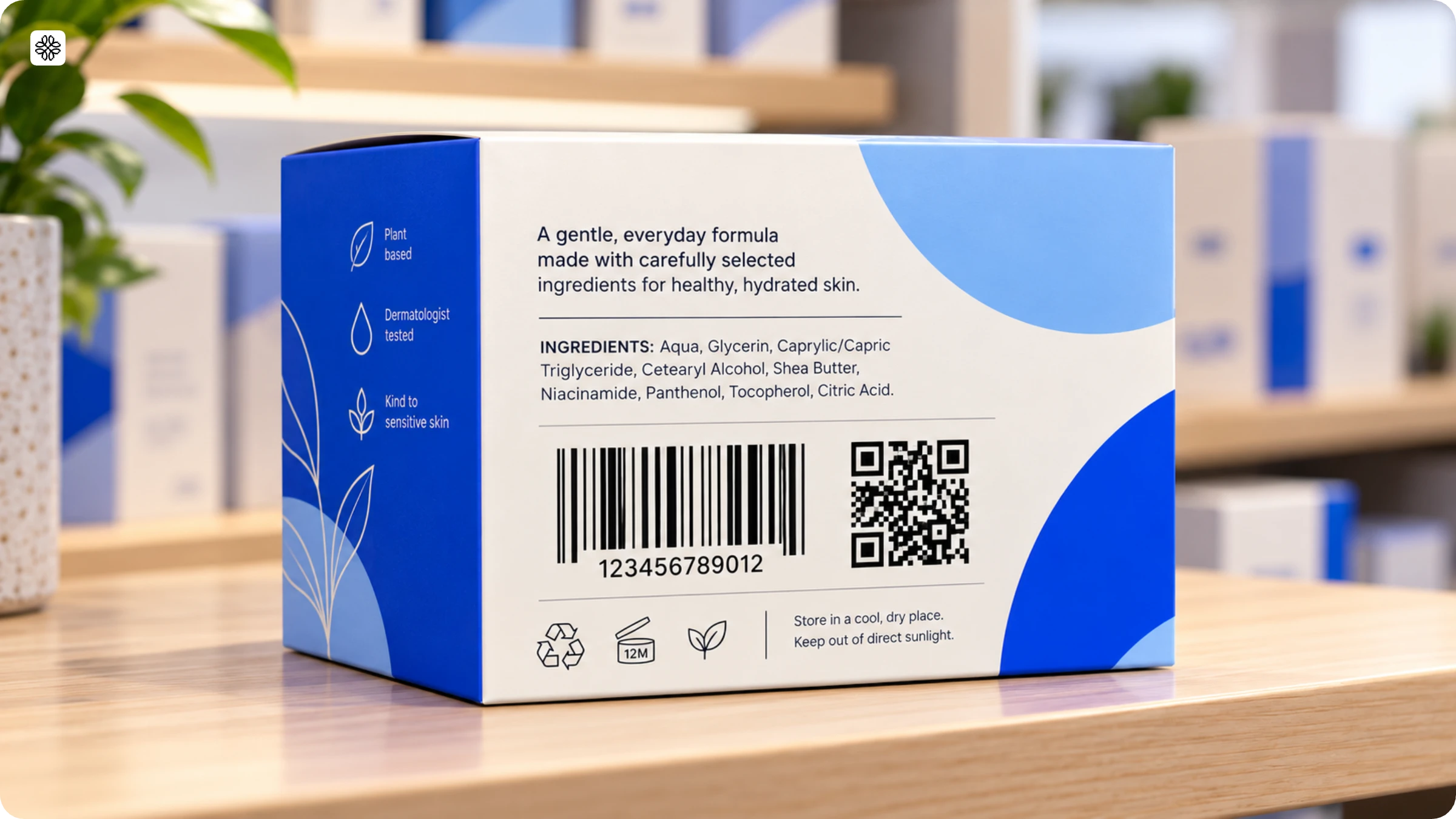
A Universal Product Code (UPC) is a 1D barcode that carries only a product code, while a 2D barcode carries that number plus data such as batch, expiry, or a web link. That product code is the Global Trade Item Number (GTIN), an identifier defined by GS1, the standards organization behind the UPC.
The difference between 1D and 2D barcodes comes down to what the symbol carries and which scanner reads it. A 1D barcode encodes data in one row of bars and spaces. A 2D barcode encodes data across both a horizontal and a vertical axis.
UPC and EAN (European Article Number) are the 1D symbols printed on retail packs. The table compares them with a GS1 2D barcode on the five points that affect packaging.
| Feature | UPC or EAN (1D) | GS1 2D barcode |
|---|---|---|
| What it carries | The GTIN only, which is 12 digits in a UPC-A or 13 in an EAN-13 | The GTIN plus a batch or lot number, expiry date, serial number, or web link |
| Data that changes by batch | No. A UPC holds only static data. | Yes. Batch, lot, expiry, and serial data can differ on every pack. |
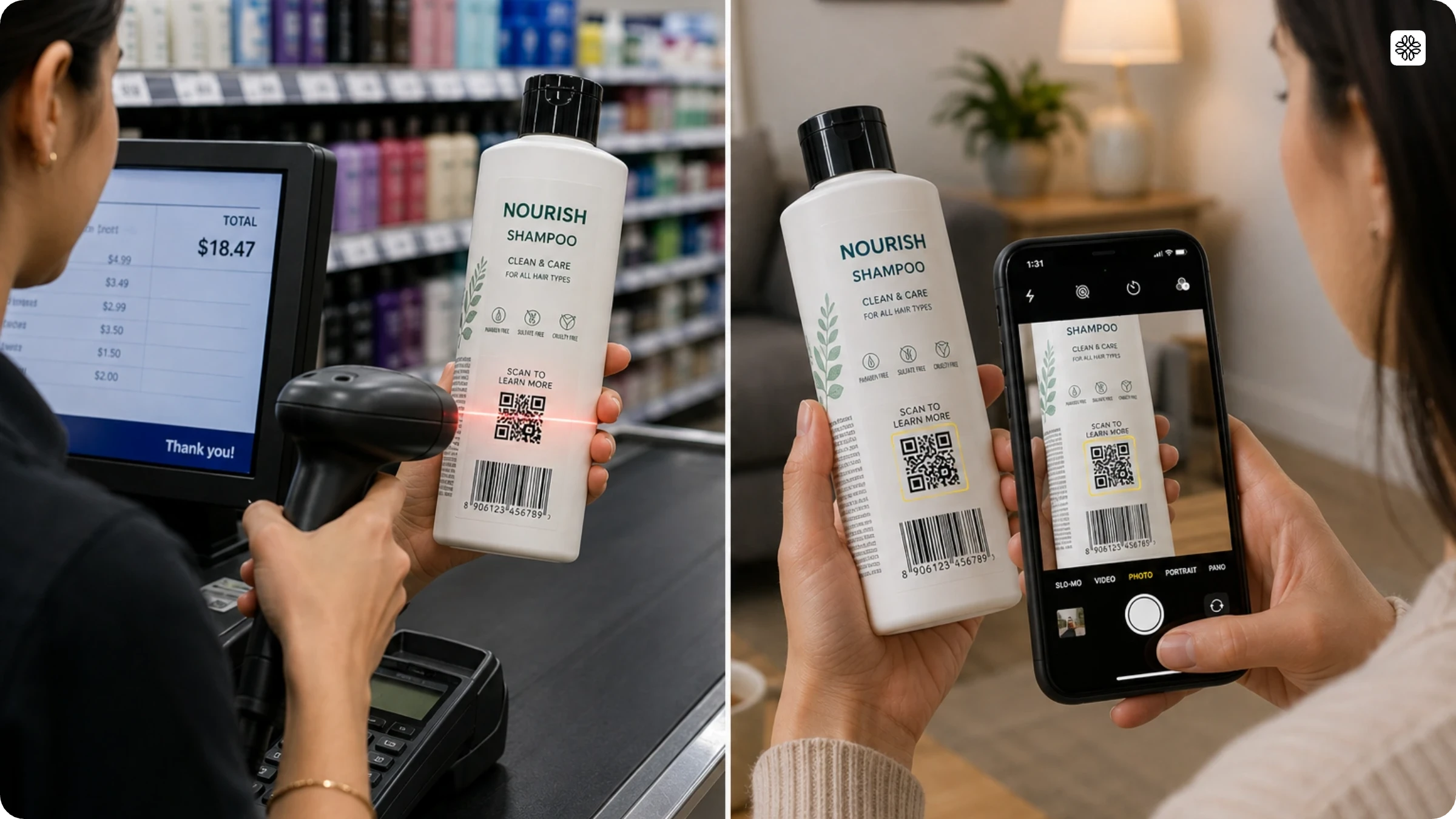
| Scanner that reads it | A laser scanner or an imager | An imager (a camera-based scanner) only |
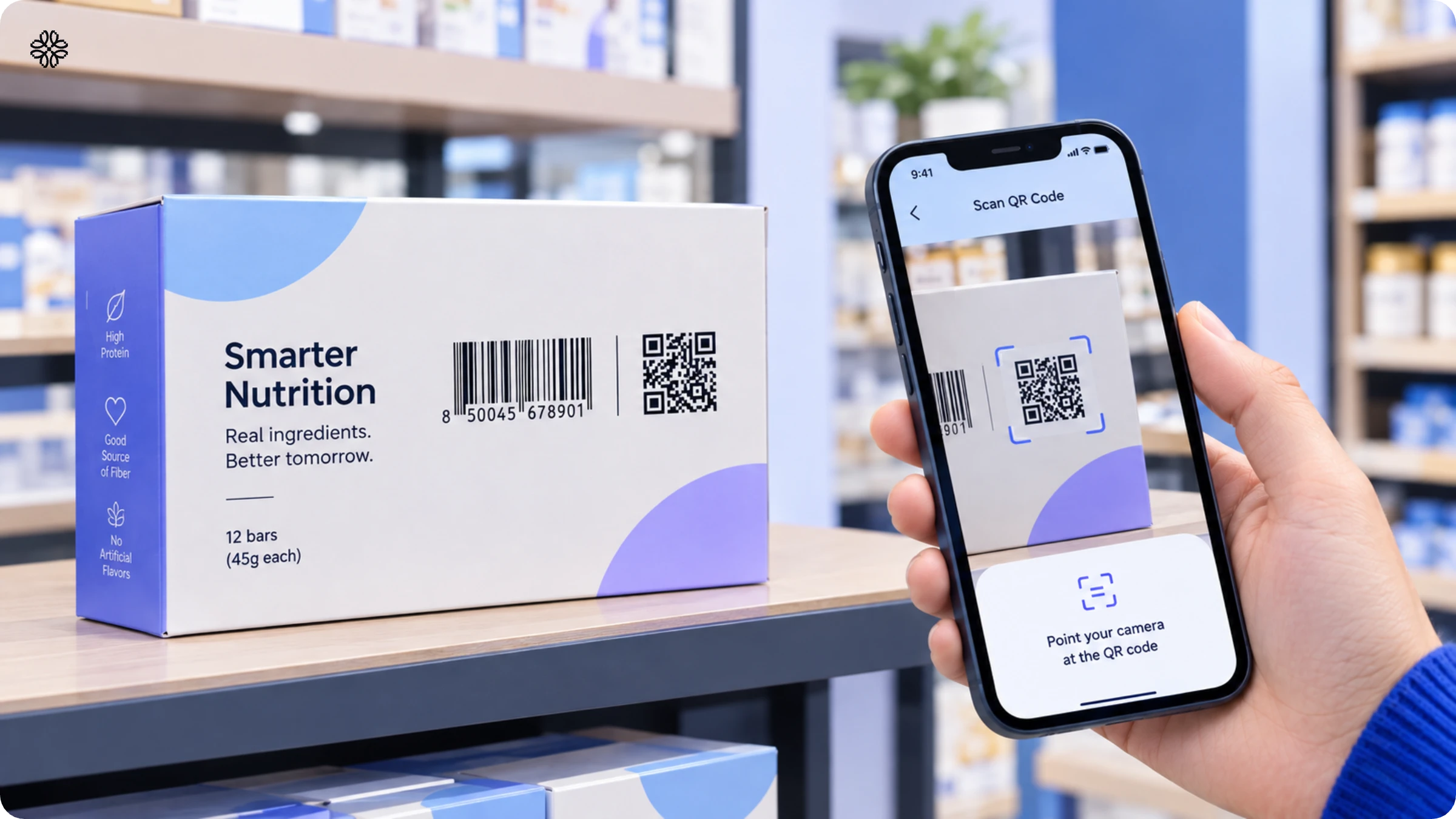
| Opens a link from a phone camera | No. The default camera app does not read a UPC. | Yes for a GS1 QR Code. A GS1 DataMatrix needs an app. |
| Error correction | None | Built-in error correction, which rebuilds data from a damaged symbol |
Key takeaways
- A UPC is a 1D barcode that carries only a GTIN, while a GS1 2D barcode carries the GTIN plus batch, expiry, serial number, or a web link.
- A laser scanner reads a UPC but cannot read a 2D barcode, and an imager reads both.
- A 2D barcode has built-in error correction, and a UPC has none.
- GS1 says linear barcodes will coexist with 2D barcodes for as long as brands have use for them.
Should you replace the UPC with a 2D barcode or print both?
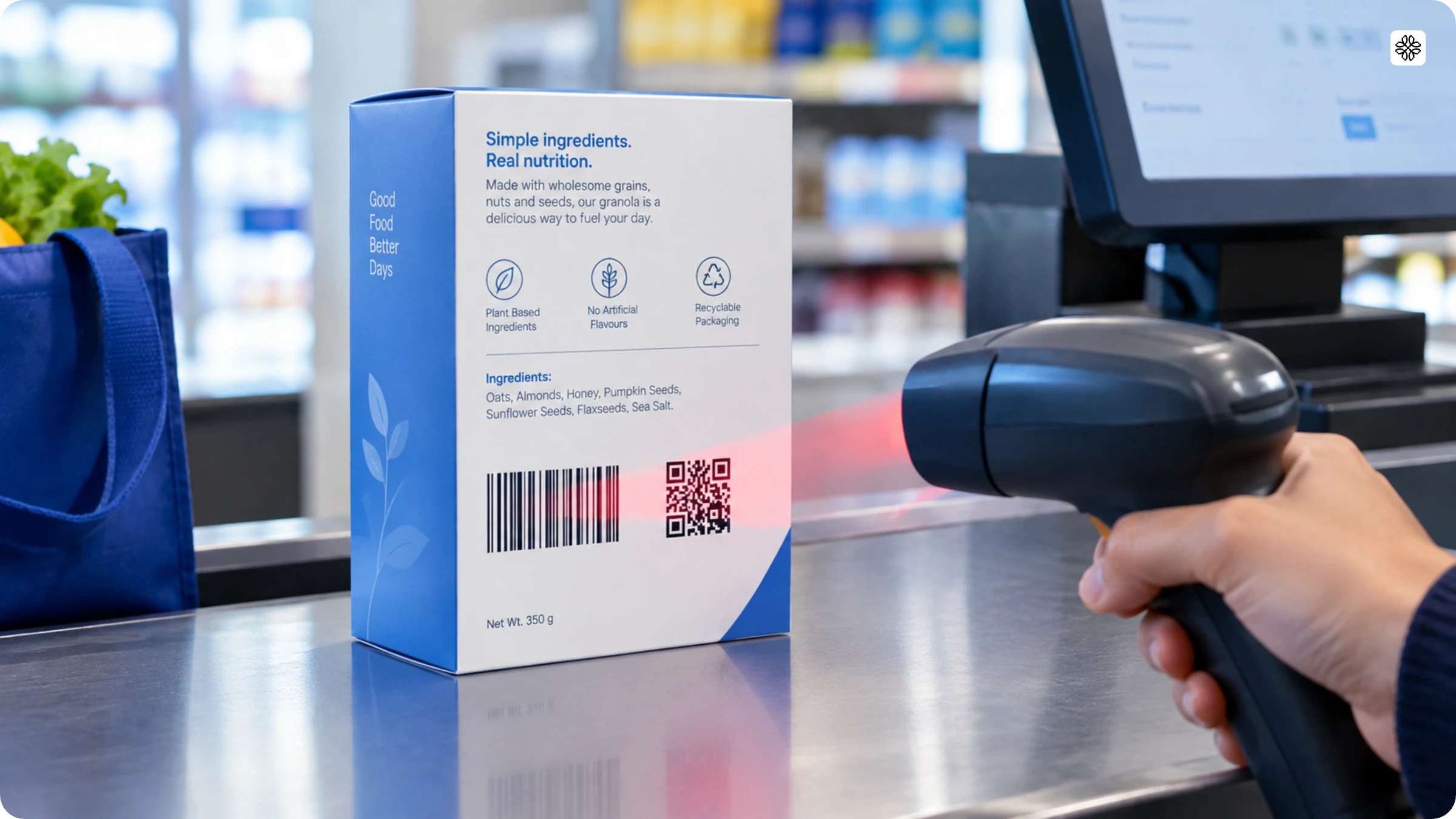
Brands should print both the UPC and a 2D barcode on the same pack for now. Printing both codes is called dual-marking. Not every store’s checkout can read 2D barcodes yet, so the UPC keeps the product scannable everywhere. GS1 says any product that carries a retail 2D barcode needs a linear barcode beside it until about 90% of point-of-sale (POS) scanning solutions can read GS1-compliant 2D barcodes and capture the GTIN.
Why are stores adding 2D scanning?
Stores add 2D scanning because a 2D barcode carries batch numbers, expiry dates, and serial numbers that a UPC cannot hold. GS1 lists five uses for that data: traceability, supply chain visibility, recall readiness, waste prevention, and consumer engagement.
An expiry date in the barcode lets a POS system block the sale of an out-of-date product. The same date supports automatic markdowns. A batch number supports targeted recalls. A GS1 QR Code also opens product information on a shopper’s phone.
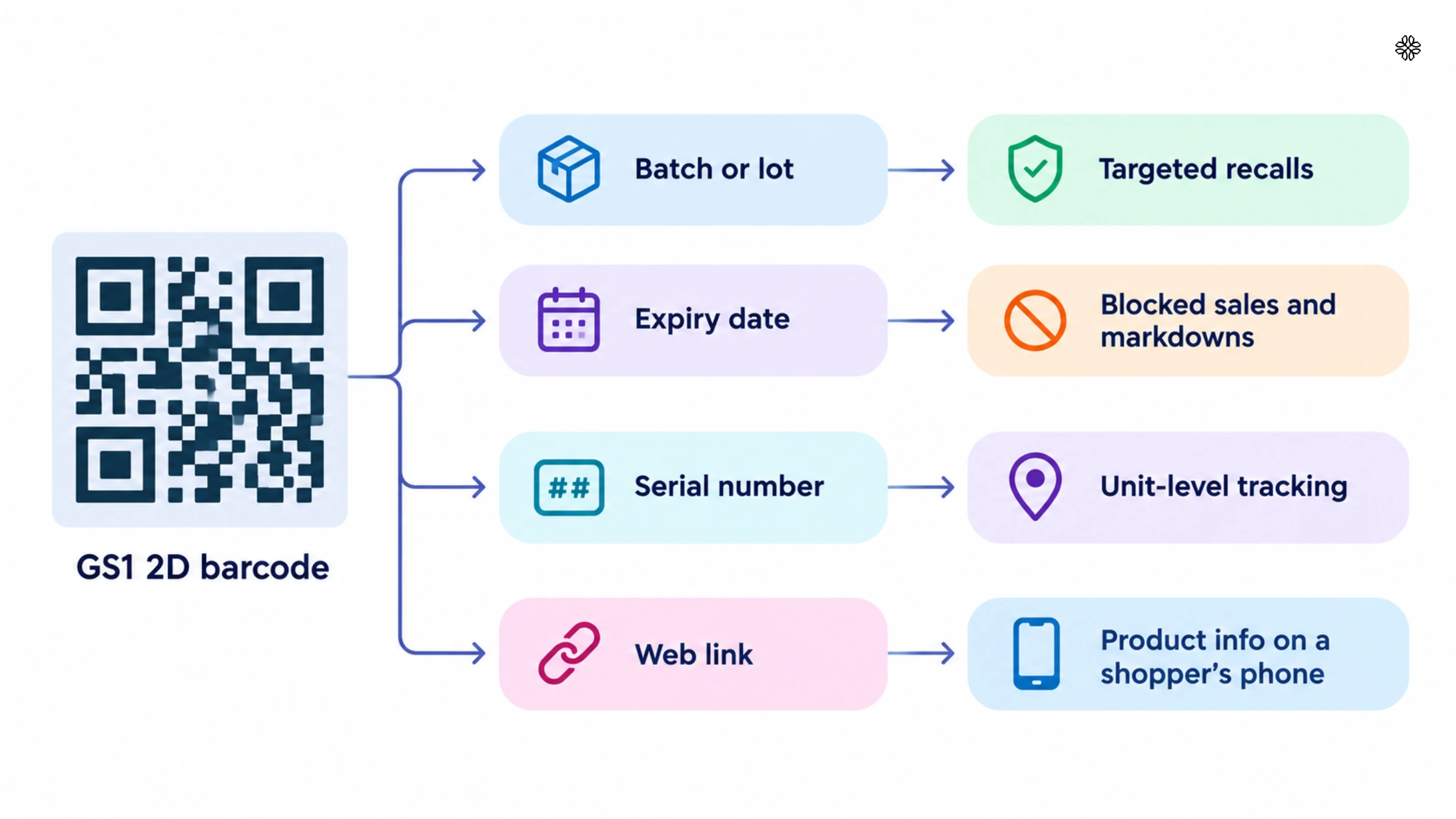
GS1 Sunrise 2027 is the industry initiative that asks retailers to make POS systems read and process the GTIN from both linear and 2D barcodes by the end of 2027.
Want to know more about Sunrise 2027?
Do you need to add a 2D barcode now?
Yes, plan to add a 2D barcode at your next artwork refresh. Retailers are setting their own supplier requirements, so waiting for a GS1 deadline leaves the timing to them.
| Reason to add a 2D barcode | Data the 2D barcode carries |
|---|---|
| Traceability and recalls | Batch or lot number, serial number |
| Safety, such as blocking expired or recalled product | Batch or lot number, serial number, expiry date |
| Inventory and waste prevention | Expiry or best-before date |
| Consumer engagement | A GS1 Digital Link web address |
What changes on your packaging when you add a 2D barcode?
Adding a 2D barcode changes three things on the packaging: where the symbol sits, when it prints, and which number it carries.
Where does the 2D barcode go?
The 2D barcode goes within 50 mm (1.97 inches) of the center of the UPC, with its quiet zone inside that distance. A quiet zone is the empty margin around a barcode that lets a scanner find the symbol. Independent testing for GS1 found that a 2D barcode must sit within that distance to hold checkout at the target speed of 40 to 70 items per minute.
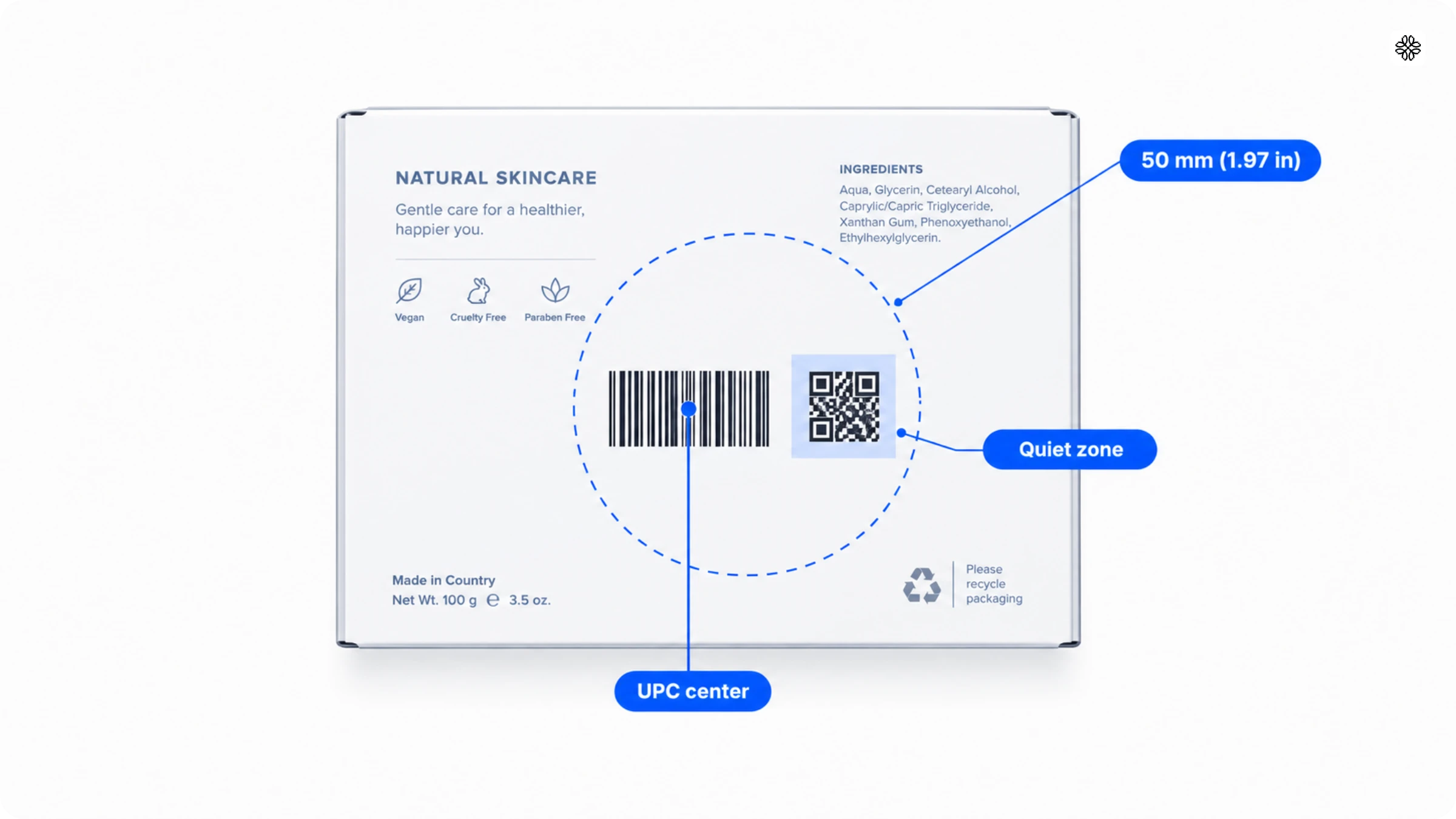
A 2D barcode placed too close to the UPC creates a different problem. Schnuck Markets, the retailer that piloted Coca-Cola’s Topo Chico 2D barcode, found in lab testing that UPC barcodes stopped reading, according to Healthcare Packaging. The report traces the failures to manufacturers printing QR Codes too close to the UPC. The checkout system then confused the two codes. At self-checkout, a 2D code that stays in view after a scan can charge a shopper twice.
When does the 2D barcode print?
The print time depends on the data the 2D barcode carries. A UPC encodes the GTIN, which stays the same on every unit, so packaging suppliers print the UPC ahead of time as part of the pack design. A 2D barcode that carries a batch number or expiry date changes with each production run, so the plant prints it on the packaging line. A 2D barcode that carries only the GTIN holds static data, so it prints with the rest of the artwork.
Which number does the 2D barcode carry?
A 2D barcode carries the same product code as the UPC, i.e., a GTIN padded with leading zeros to make it 14 digits.
How Uniqode helps with GS1 2D barcodes
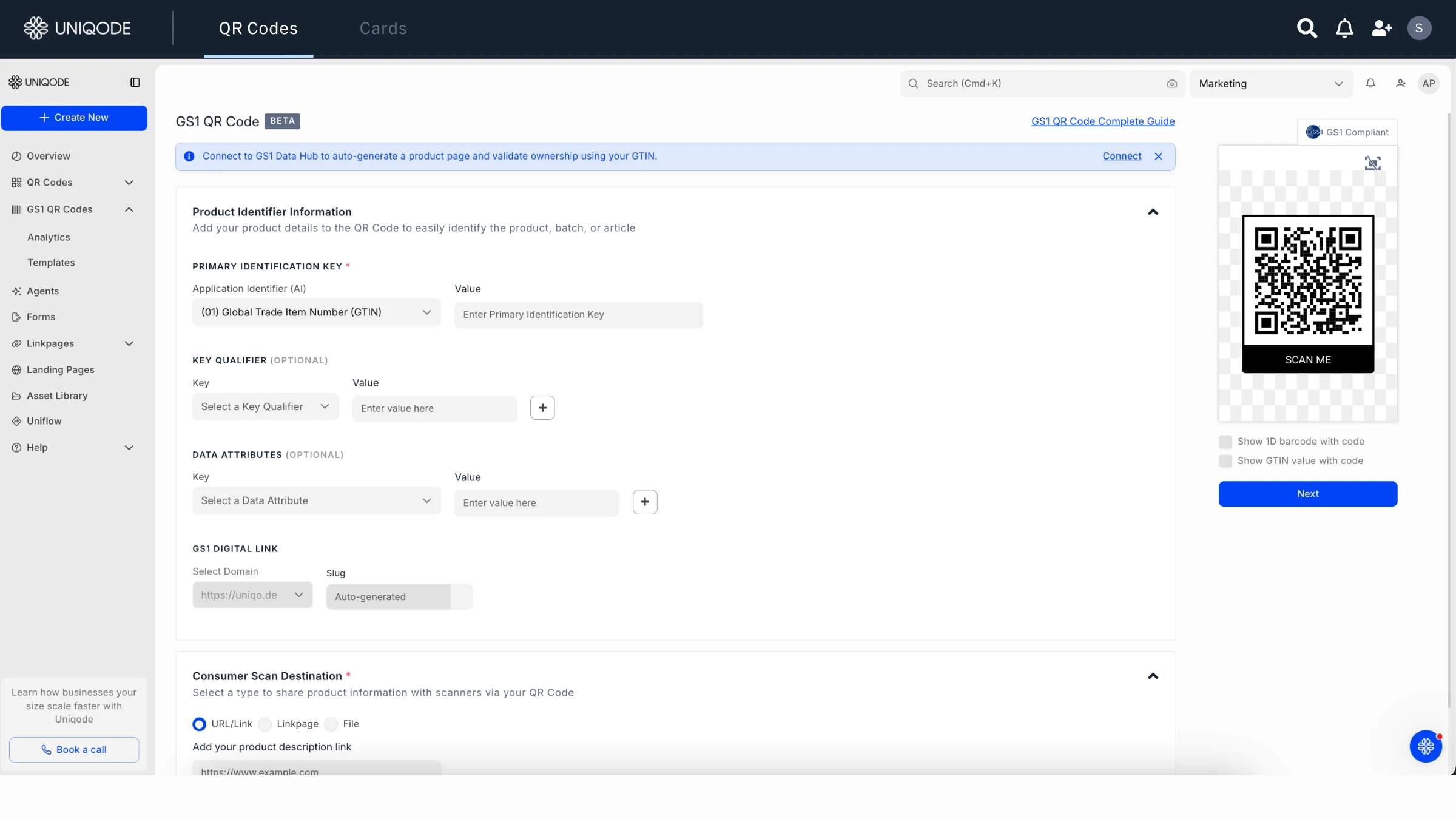
Uniqode is a GS1 US Executive Solution Partner. Brands generate GS1 QR Codes directly from a GTIN list, and Uniqode builds each code natively, including the 14-digit GTIN padding and the expiry date format. The destination page of a printed GS1 QR Code updates without reprinting the packaging. Smart Rules send each shopper to a different page based on location, device, time, or scan history. Uniqode helps brands track every scan by SKU, store, and time.
Frequently Asked Questions
- Can a 2D scanner read a UPC?
Yes. A 2D scanner, also called an imager, is an image-based scanner that reads both 1D barcodes such as a UPC and 2D barcodes. A UPC works on a laser scanner or an imager, so a store that upgrades to imagers keeps scanning every UPC.
- Can an old laser scanner read a QR Code on a package?
No. A laser scanner reads only linear barcodes, so it cannot read a QR Code. A store with laser scanners must upgrade to imagers before it can scan a 2D barcode at checkout.
- Can a phone scan a UPC?
A smart-device app can read a UPC, but a phone’s default camera app does not open one. A GS1 QR Code, which stores a GTIN inside a web address, opens in the default camera app and takes the shopper to a web page.
- Does a 2D barcode carry the same number as a UPC?
Yes. A GS1 2D barcode carries the same GTIN as the UPC, so the product keeps its number. The 2D barcode stores a 12-digit UPC GTIN as 14 digits, with two leading zeros added.
- Does a 2D barcode slow checkout?
No, when the 2D barcode sits within 50 mm of the UPC. GS1 reports that testing, pilots, and implementations show that 2D barcodes with additional data cause no delays at the point of sale.
About the Author
Architaa is a Content Marketer at Uniqode, where she explores how QR Codes, Digital Business Cards, and phygital experiences are reshaping the way brands connect with their audiences. She transforms complex marketing trends and technologies into clear, actionable insights that help businesses strengthen engagement and build lasting connections with their customers. Outside of work, Architaa is most likely lost in a novel, following every ball of a cricket match, or binging her favorite shows.