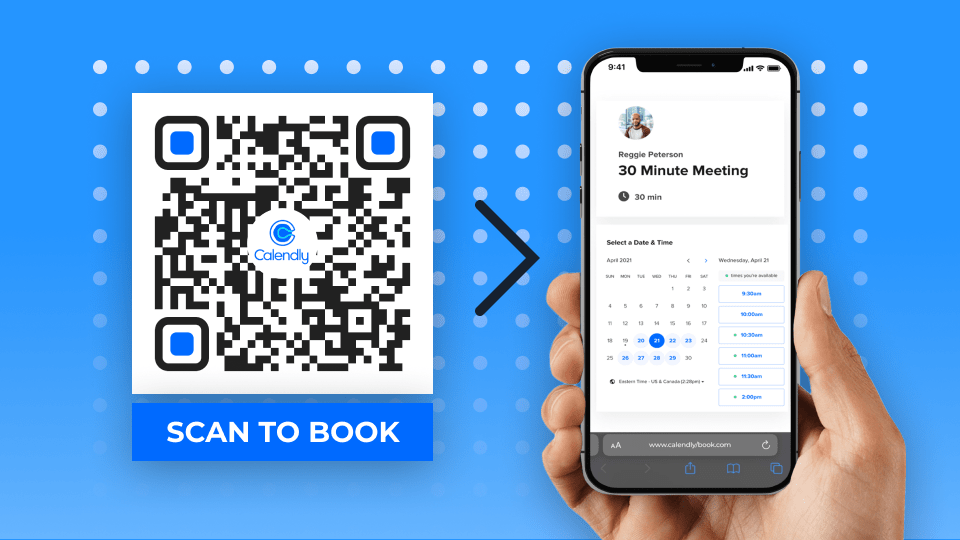
How To Boost Your Bookings with Airbnb QR Codes in 2026
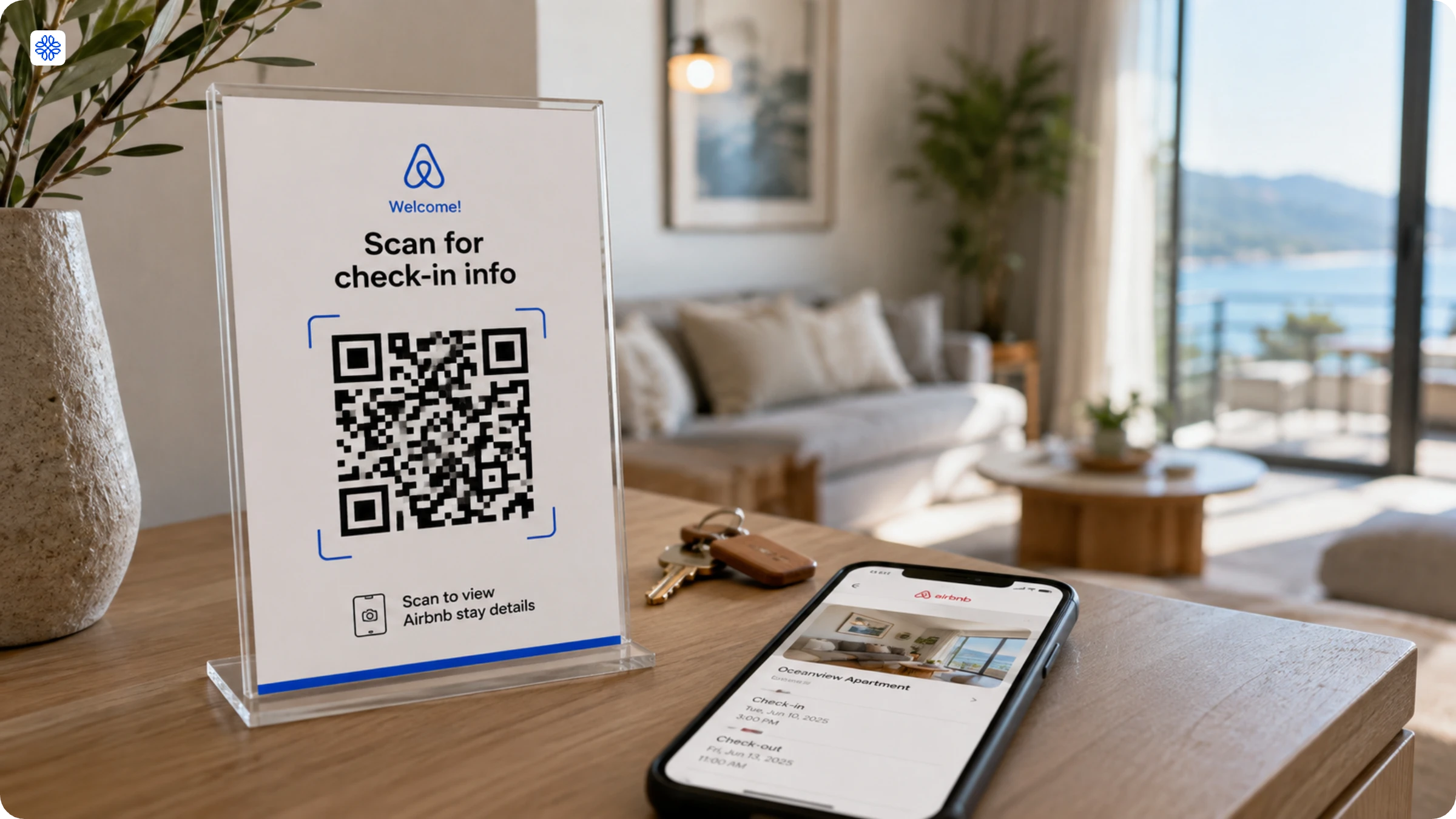
An Airbnb QR Code turns a single scan into WiFi access, house rules, check-in details, or a review request, cutting out the same guest questions every stay. This guide covers a five-step setup, exactly where Airbnb allows QR Codes and where it doesn't, and the one security habit most hosts skip. Set it up once, and every future guest gets the benefit.
An Airbnb QR Code is a scannable code that links a spot in or around a rental to the exact information a guest needs: the WiFi password, house rules, check-in instructions, or a review link. For hosts, this means fewer repetitive questions and a smoother check-in process. In this guide from Uniqode, you will discover nine practical ways to use QR Codes, a straightforward five-step setup, Airbnb’s specific guidelines on QR Codes in listings, and the one security habit that most hosts tend to overlook.
What is an Airbnb QR Code?
An Airbnb QR Code turns a physical spot in or around the rental, a countertop, a welcome sign, a door, into a scannable shortcut to digital information: the WiFi password, the house rules, a link to leave a review. No more guests squinting at tiny print or hosts spelling out long passwords over text. The result? Contactless delivery, effortless convenience, and a guest experience that is refreshingly paper-free.
Why do hosts love Airbnb QR Codes? Simple. One scan does the work of a dozen repetitive tasks. No more texting the WiFi password, explaining how to use the coffee machine for the fifth time this week, or answering the classic 'where’s a good coffee shop?' from scratch every stay. As per Uniqode's State of QR Codes 2026 report, based on 188 million scans across nearly 800,000 QR Codes, 71% of consumers say QR Codes are genuinely helpful in daily life, and 75% scan primarily to find information. For a host, that translates directly: a guest who scans a code at the door already expects something useful on the other side, not a dead link.
How to use QR Codes at your Airbnb?
Airbnb QR Codes can help you boost bookings, promote your Airbnb listing, enhance guest experience, and streamline operations.
1. To boost bookings
The most obvious and effective way to use QR Codes for your short-term rental business is to create a QR Code for the listing page itself.
You can then use this Airbnb QR Code in multiple ways and on several channels to promote your accommodation. Above is an example of an Airbnb QR Code on a postcard.
2. Use it on business cards and flyers
Having your Airbnb listing QR Code handy means adding it to several print collaterals like your business cards. You can then pass it on at travel and tourism events or via flyers at local cafes and tourist hangouts.
You can also use them for special promotions to share seasonal discounts and offers on social media or at local cafes and restaurants. Reward prospects with unique souvenirs to boost engagement.
3. For Airbnb address signs
An interesting new concept: You can get your Airbnb QR Code engraved and added to your address plaque, which links to the Airbnb listing. This helps discovery and can be a fun and interactive way to tell passersby about your rental property and spread word-of-mouth.
4. Use Airbnb QR Codes as a house manual
You can share a digital manual for your Airbnb via a QR Code for better communication between you (host) and guests.
House manuals also help clearly define house rules, relay emergency information, and how-tos about appliances, features, etc.
Washing machines, cappuccino makers, ovens, geysers, etc., are all good places to use a QR Code and make it easy for guests to navigate.
5. Use it as travel guides
A great way to enhance the guest experience is by providing a digital travel guide via QR Code. These guides (could be in PDFs) can provide insider tips, recommendations, cultural insights, and information about local events.
See how a Superhost supplements their guests with multi-purpose guides. According to the owner of San Diego-based Ken & Mario:
“We offer our guests a complete portable series of travel books, brochures, and menus of local attractions and restaurants. We also are always on the lookout for discount coupons that might save our guests some money during their stay. And we point them to places off the beaten path, too, that might be of interest based on our conversations about their likes and dislikes.”
A QR Code is a great way to put all this information in an easy-to-consume way for your guests. No need to print guides that are hard to maintain—especially if you manage multiple properties.
6. Share WiFi details
The first thing many guests prefer after settling in an Airbnb is connecting to the WiFi. You can avoid the hassle of them texting you for the username, password, and use a Wifi QR Code instead.
With a WiFi QR Code, guests can easily connect to your internet with a simple scan. This uninterrupted experience, in what could be the first touchpoint, will earn you brownie points regarding guest experience.
How to create an Airbnb QR Code
💻 Before you proceed… Sign up for a 14-day free trial on Uniqode to create Airbnb QR Codes and experiment with QR Code types, designs, and more. No credit cards needed.
Step 1: Log-in to Uniqode’s dashboard

Click ”+CREATE” and then “QR Codes” from the dropdown.
Step 2: Choose the QR Code campaign type and add the details
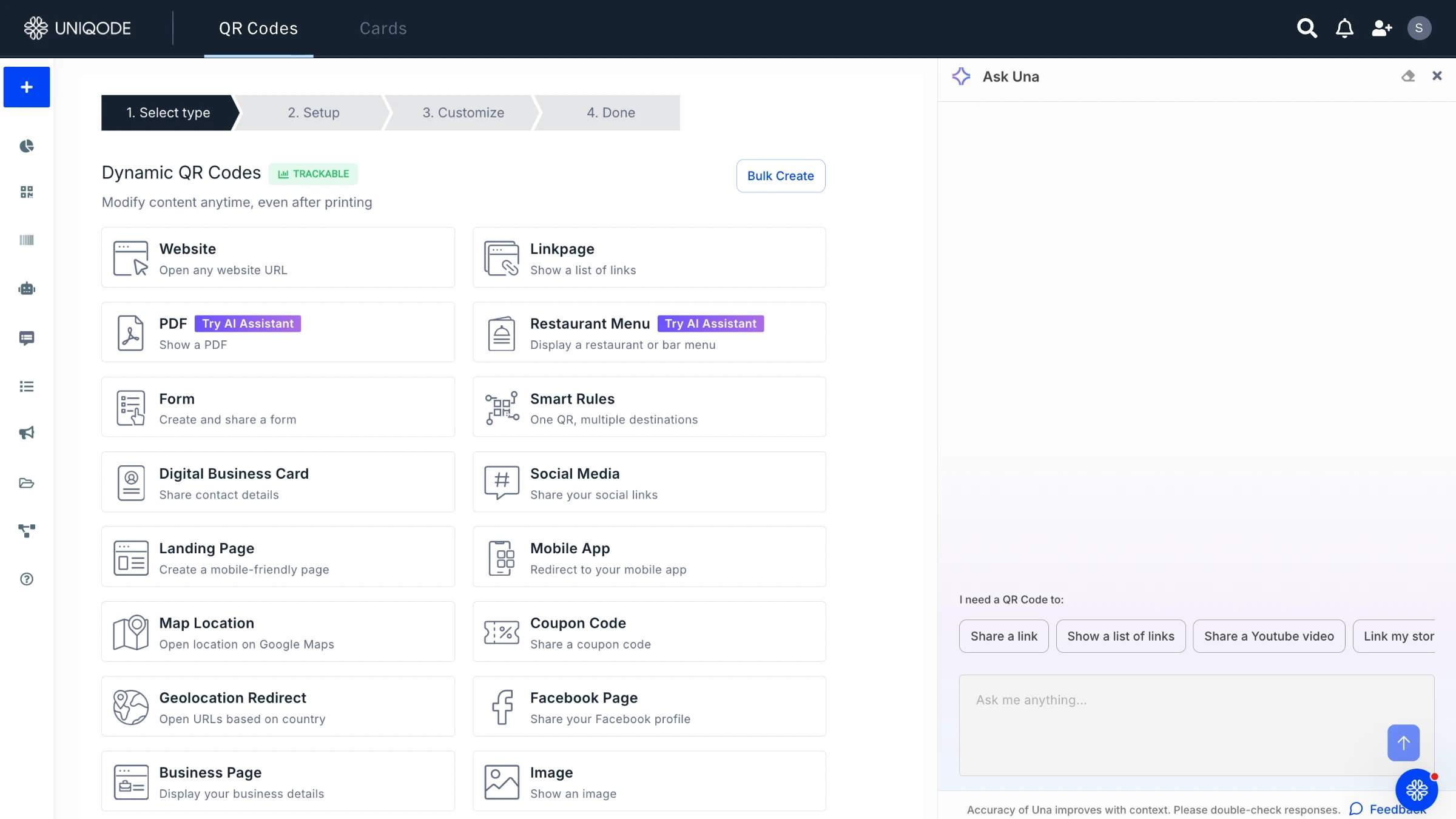
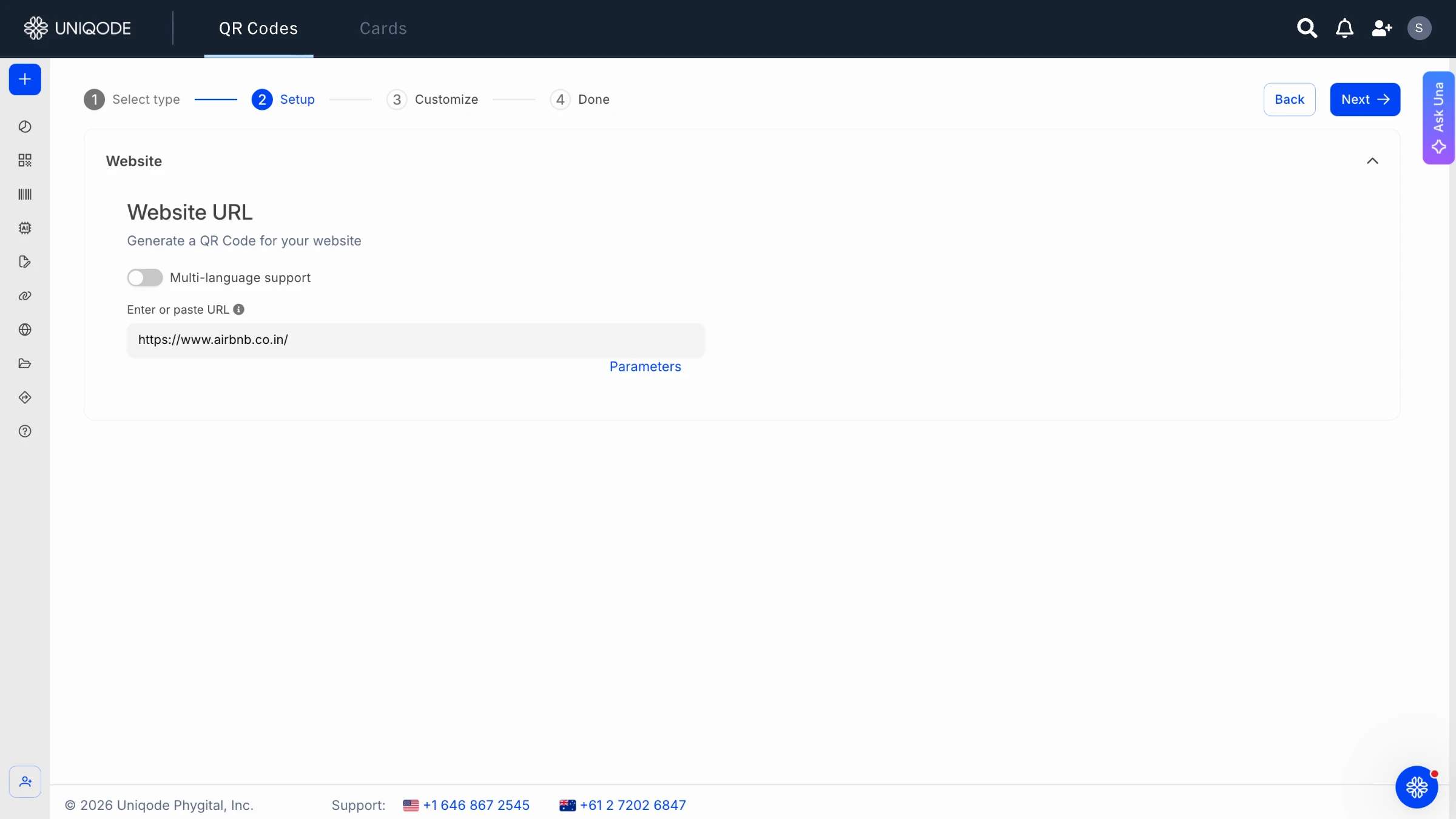
There are several types of Airbnb QR Codes you can create, from WiFi to travel guide QR Codes. In this case, we will demonstrate a QR Code for your Airbnb listing.
Copy the link of the Airbnb listing
Go to your listing page and click on “Share”. Click “Copy link”. On the dashboard, paste the link of your Airbnb listing.
Step 3: Customize your QR Code
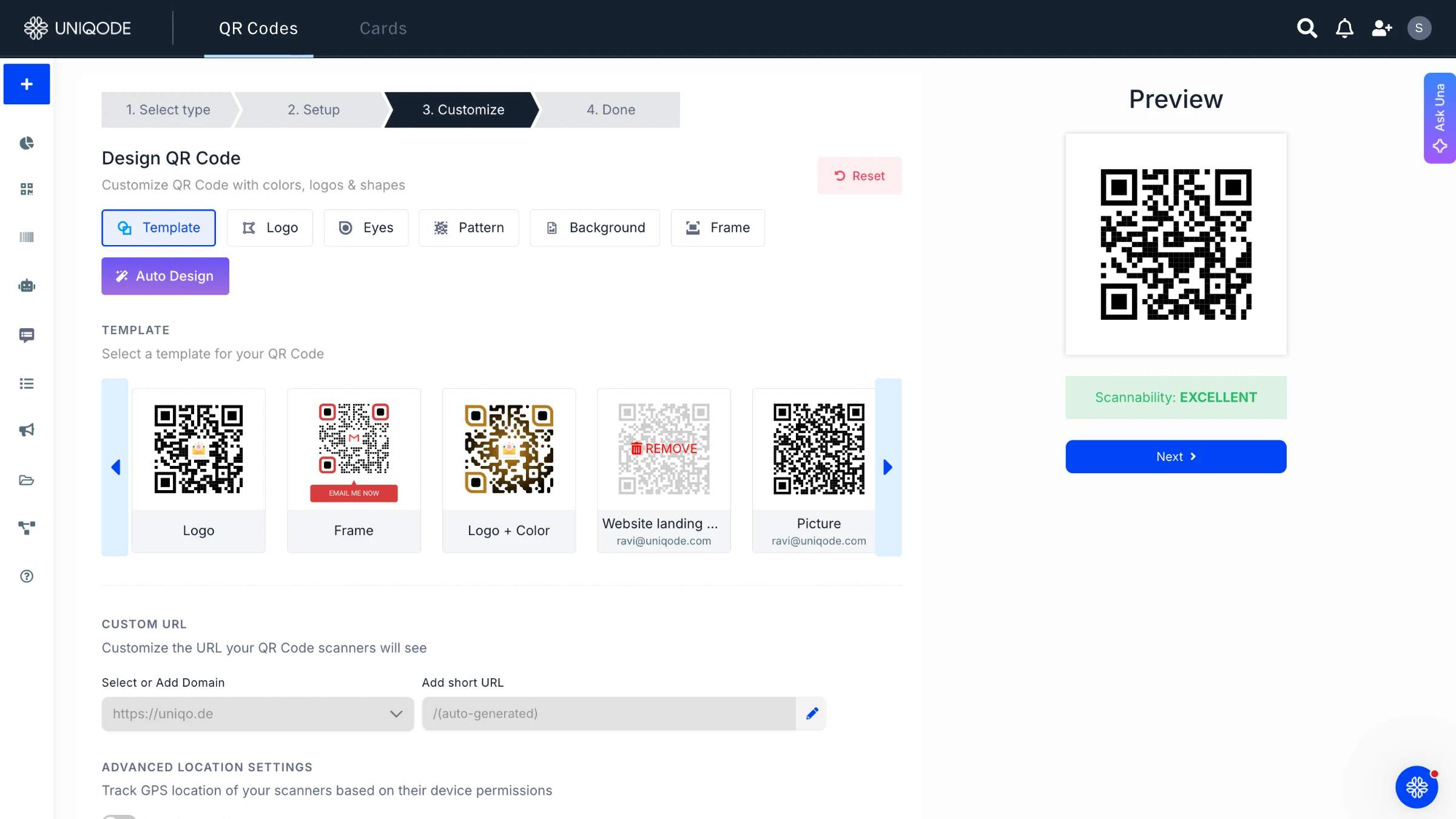
Why opt for a boring black-and-white QR Code when you can:
1. Change the QR Code color
2. Add an image
3. Alter the QR Code shape to circle
4. Change the background color
5. Add a CTA such as “Scan for queries” or “Ask the host”
These customizations allow your QR Code to stand out and act like a visual call to action.
Click “Next”.
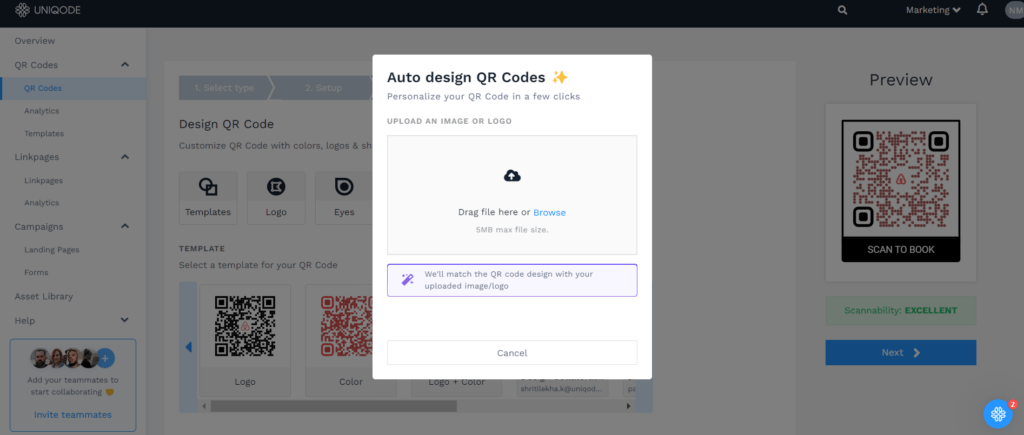
⚡ What’s new at Uniqode ? Use the autodesign feature to personalize your QR Codes easily. Choose a reference image and get autodesigned QR Codes based on the reference.
Step 4: Save, download, and share your QR Code
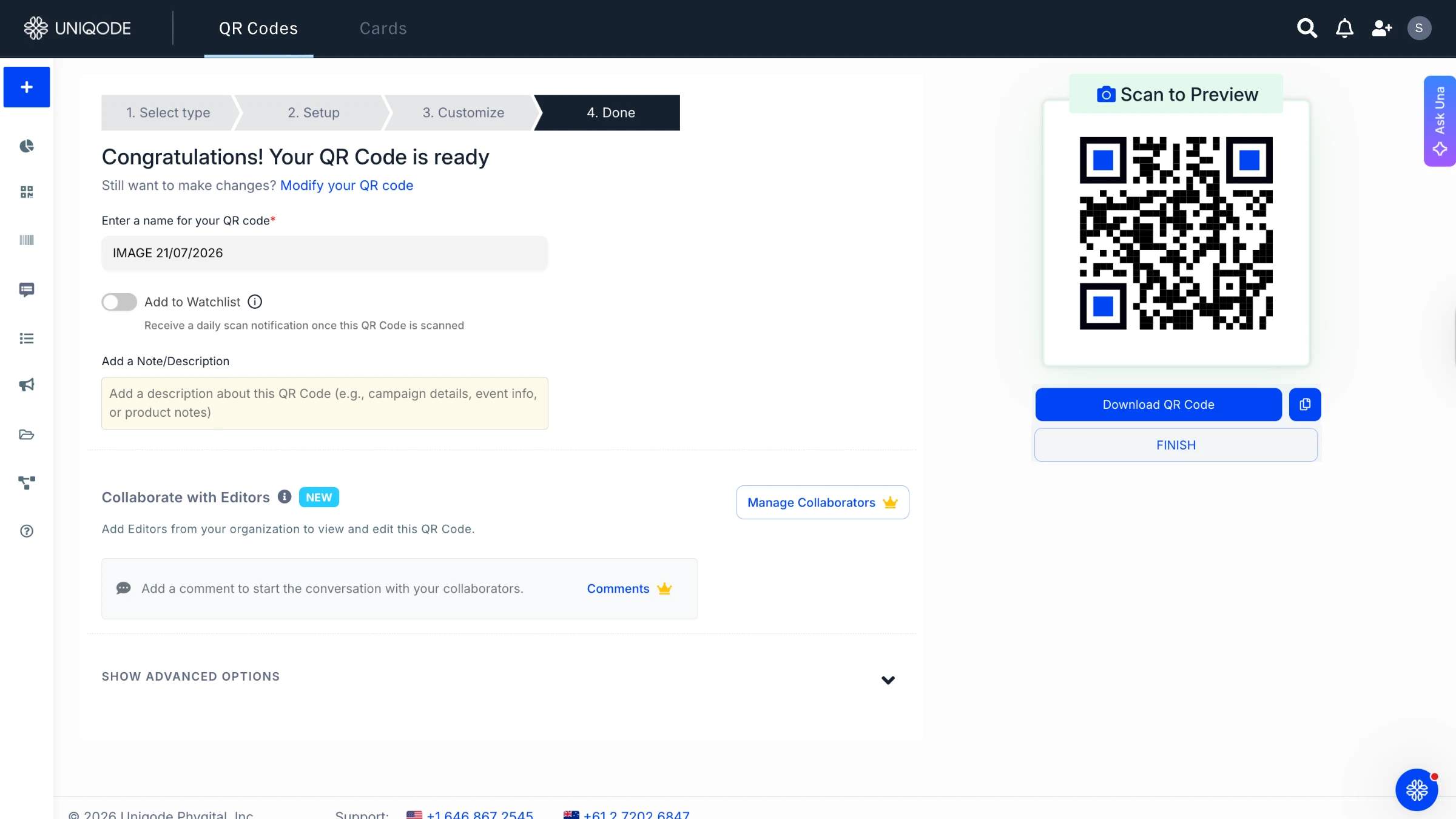
Your personalized QR Code is ready to download. You can download your Airbnb QR Code in JPG, PNG, EPS, SVG, or PDF formats.
3 ways QR Codes can boost your Airbnb bookings
Airbnb QR Codes can help ensure a smooth and personalized experience for your guests. This ensures higher customer satisfaction, thus resulting in higher bookings:
1. Show, don’t tell: use virtual tour QR Code
Online studies have shown that 51% of leisure travelers and 68% of business travelers find hotel videos helpful when booking online.
Displaying videos on your website and social media can increase conversions up to 80%. These are significant numbers when it comes to Airbnbs, too.
Make it easy for your guests to virtually view your property before they book with a simple QR Code scan. You can do so with a QR Code for virtual tours and share it on your Airbnb listing
2. Get more (good) reviews for more bookings: Review QR Codes
A staggering 75% of guests check reviews before booking an Airbnb. This makes garnering reviews extremely important. Moreover, if you’re vying for that Superhost spot, you should know that the higher the number of reviews, the higher the chance your Airbnb will appear in the top search results.
Not only do you need to get many reviews, but good reviews directly impact the number of bookings, too. Besides Airbnb, Google reviews can also impact bookings significantly.
You can use the QR Codes at different touchpoints, such as terrace, table tent cards, garden, etc., to get the reviews rolling. The convenient and interactive nature of review QR Codes makes them a magnet for reviews.
3. Understand trends better: Survey QR Codes
Reviews and feedback are one thing, but survey QR Codes go a step further and help you understand what your guests and travelers want from you.
Take the example of Port Washington, a small town in Wisconsin that placed QR Codes all over the city, including hotels and Airbnb. The goal was to survey travel trends to prepare them for the upcoming tourism season.
As an Airbnb host, this is your cue to use surveys as a tool to unravel what your guests think about the place. You can use the data to modify your offering or identify any gaps (if any). Survey QR Codes make it easy to share surveys from different locations.
Airbnb QR Code real-world examples
Let us look at five real-world Airbnb QR Code examples that demonstrate how these elements work seamlessly together. From a welcome card and a WiFi card to an appliance sticker and even two standout cases from a town and a Superhost, each one illustrates the practical impact of these solutions.
Welcome card
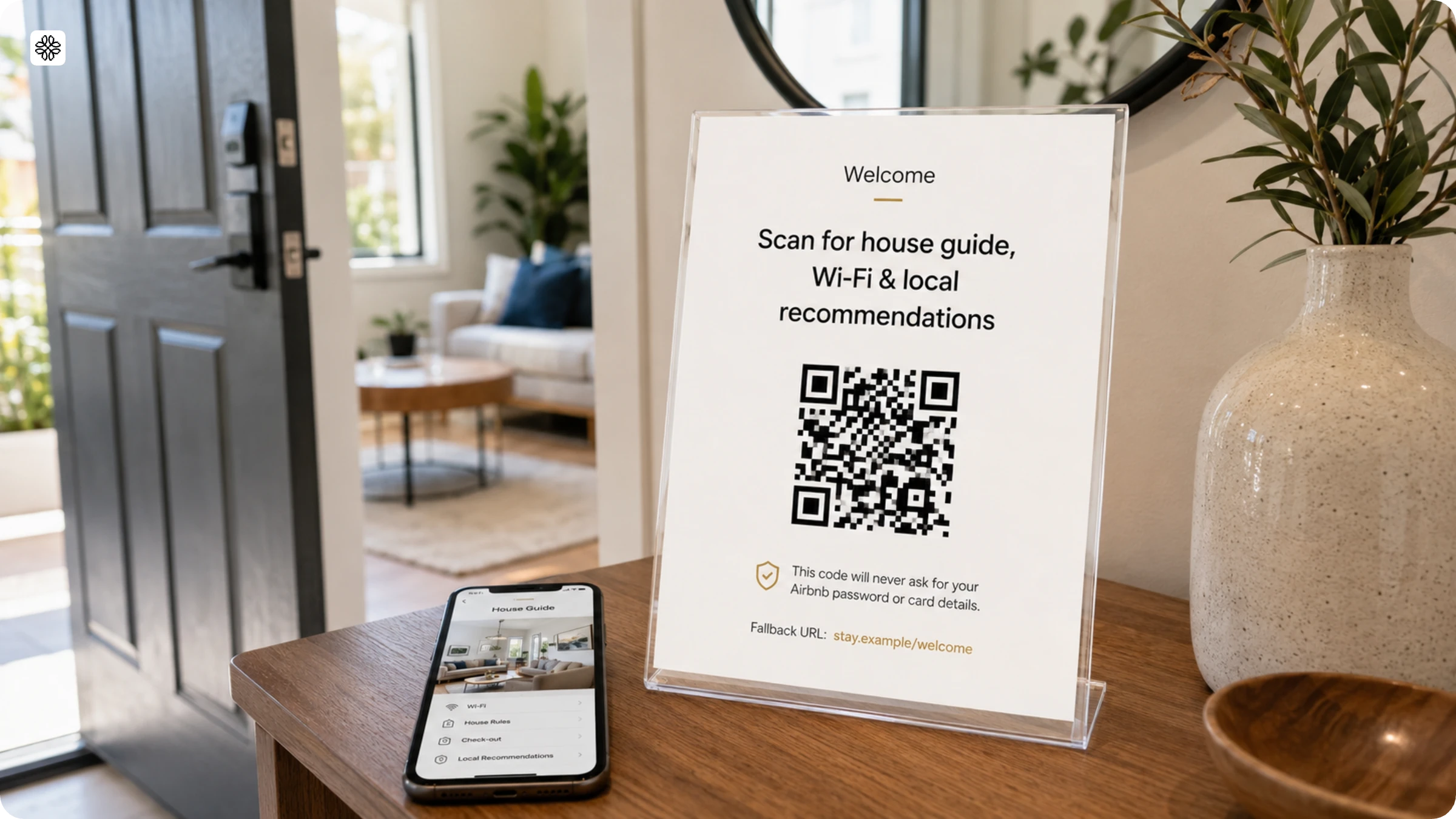
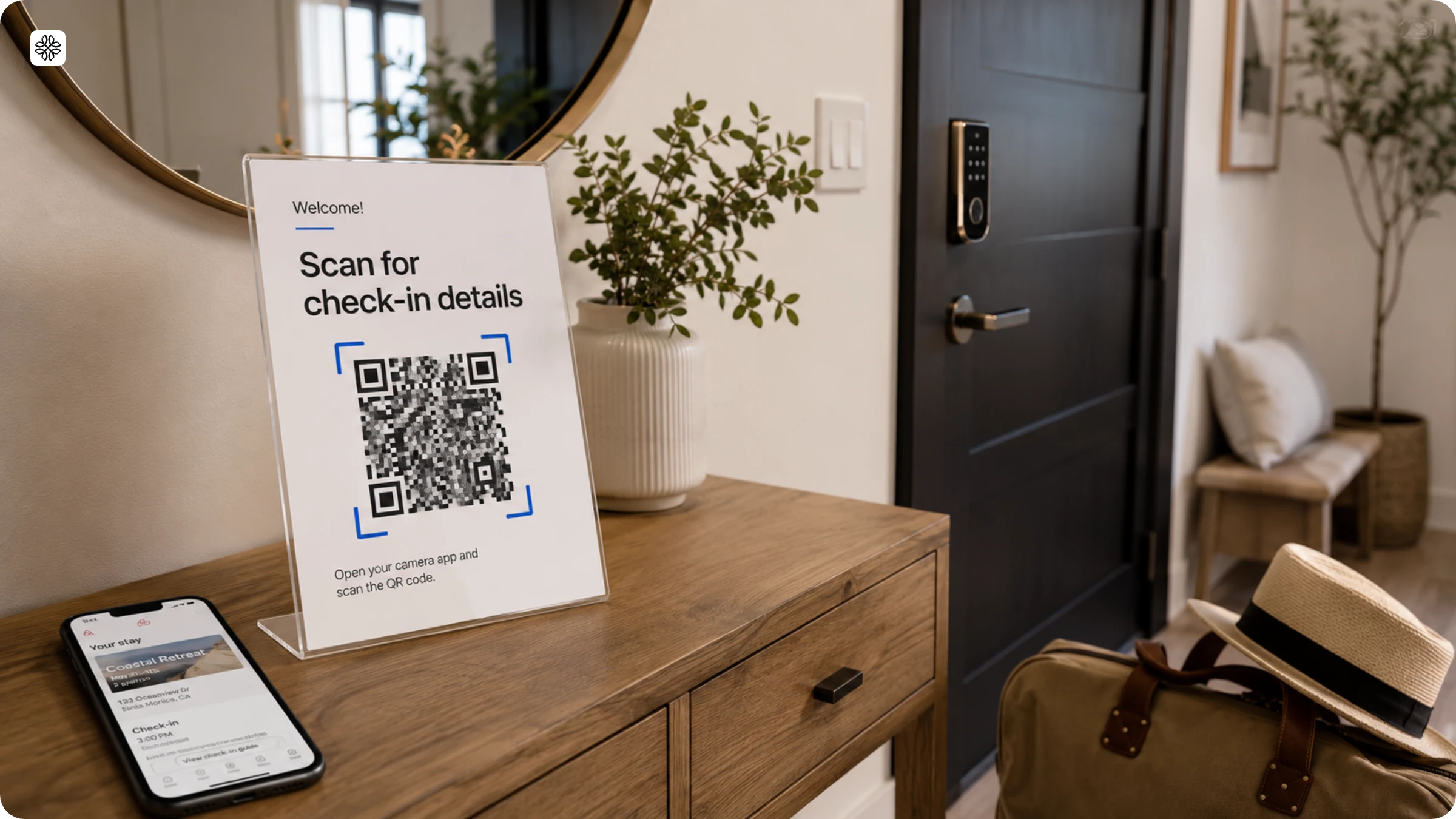
The welcome card by the door is perhaps the most familiar use of an Airbnb QR Code. Typically, it invites guests to scan for the house guide, WiFi details, and local recommendations, with a clear note that the code will never request an Airbnb password or card details. There is also a fallback URL for added convenience.
WiFi card
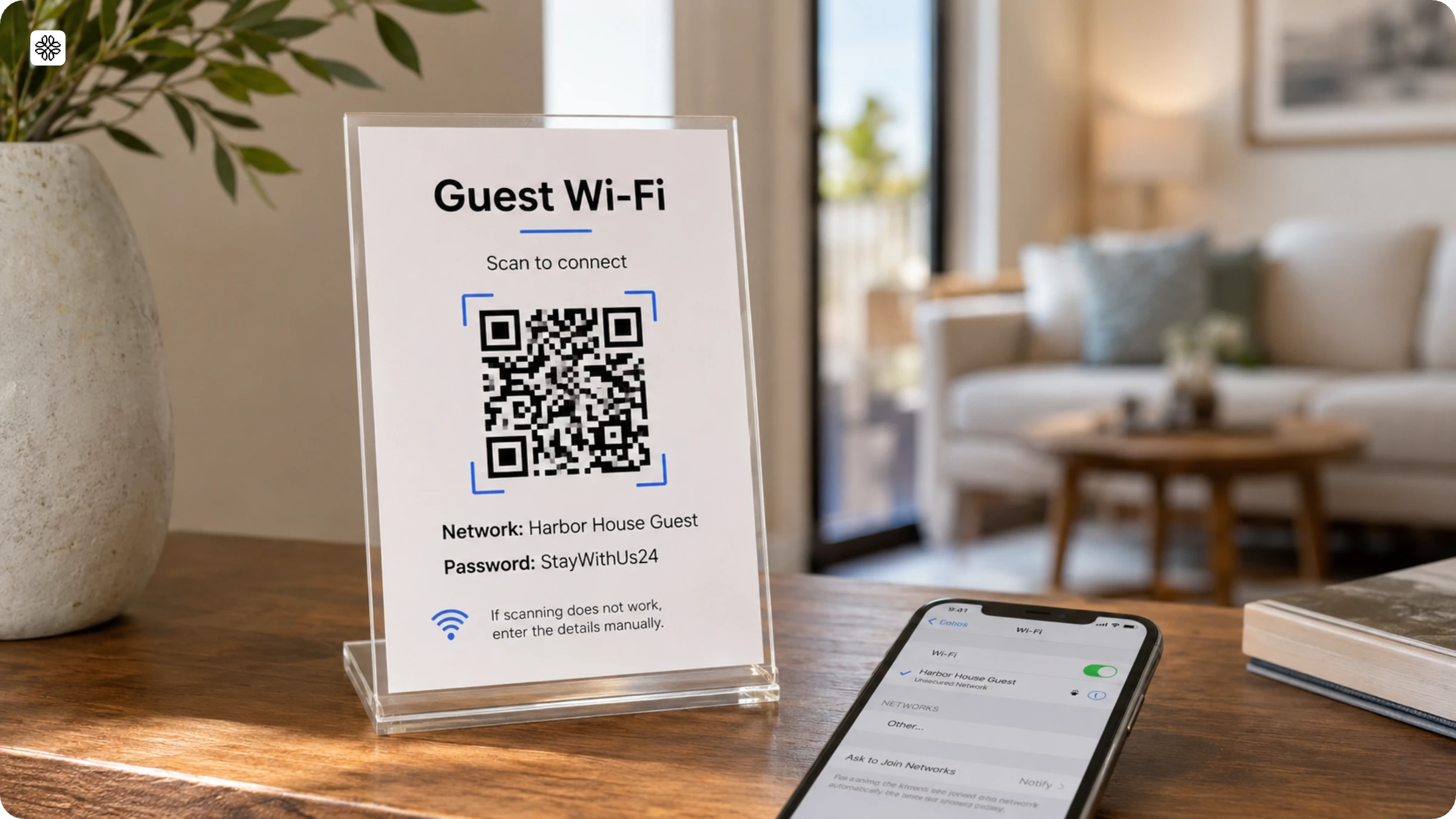
A WiFi card is another thoughtful touch. Here, the network name and password are clearly printed next to the WiFi QR Code, allowing guests to enter the details manually if scanning does not work right away.
Appliance sticker
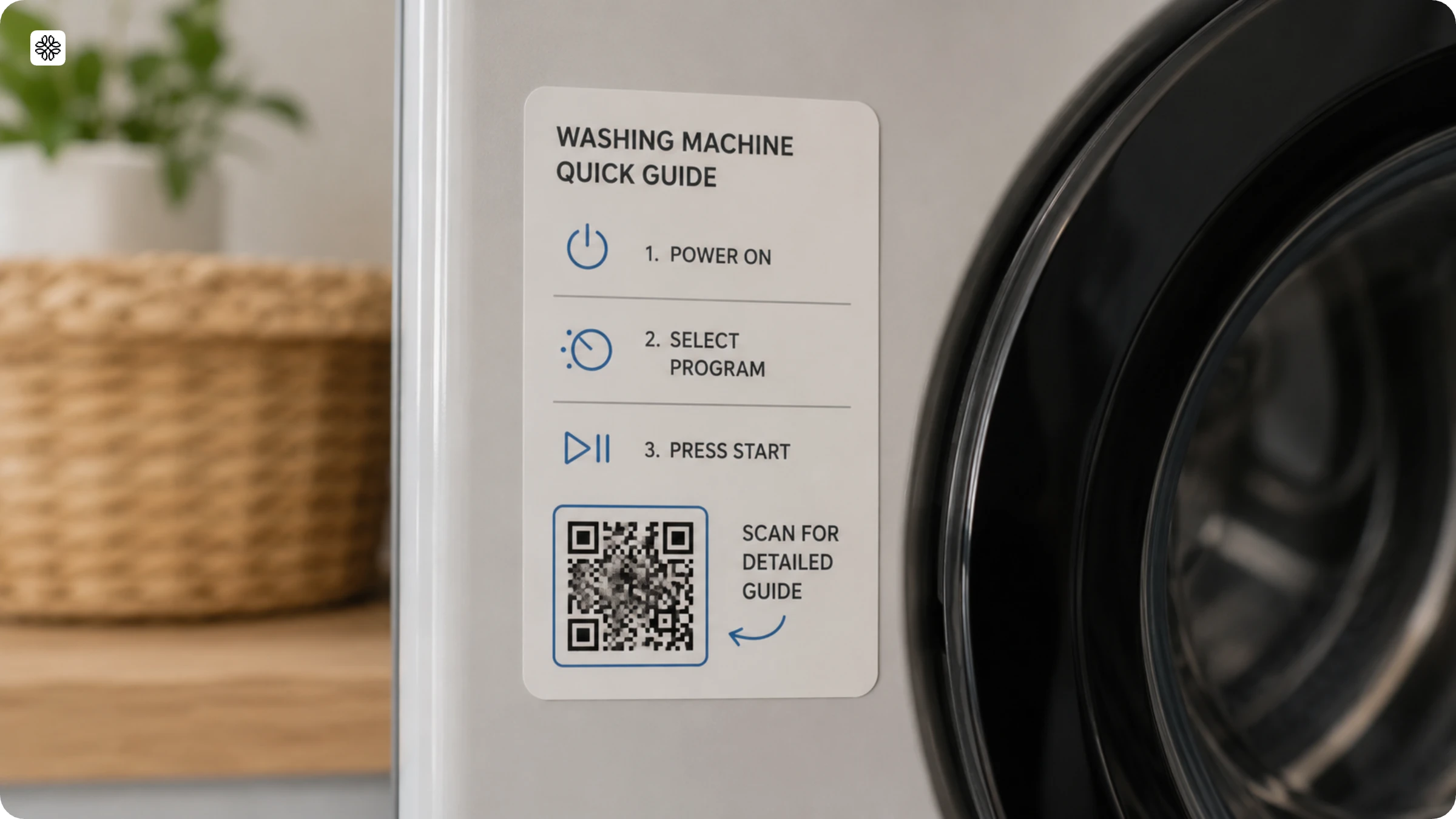
For appliances like washing machines or coffee makers, a simple sticker can make all the difference. By pairing a few printed steps with a QR Code that links to a detailed illustrated guide, hosts can make even the most complex control panels easy to use.
Contactless check-in with an Airbnb QR Code
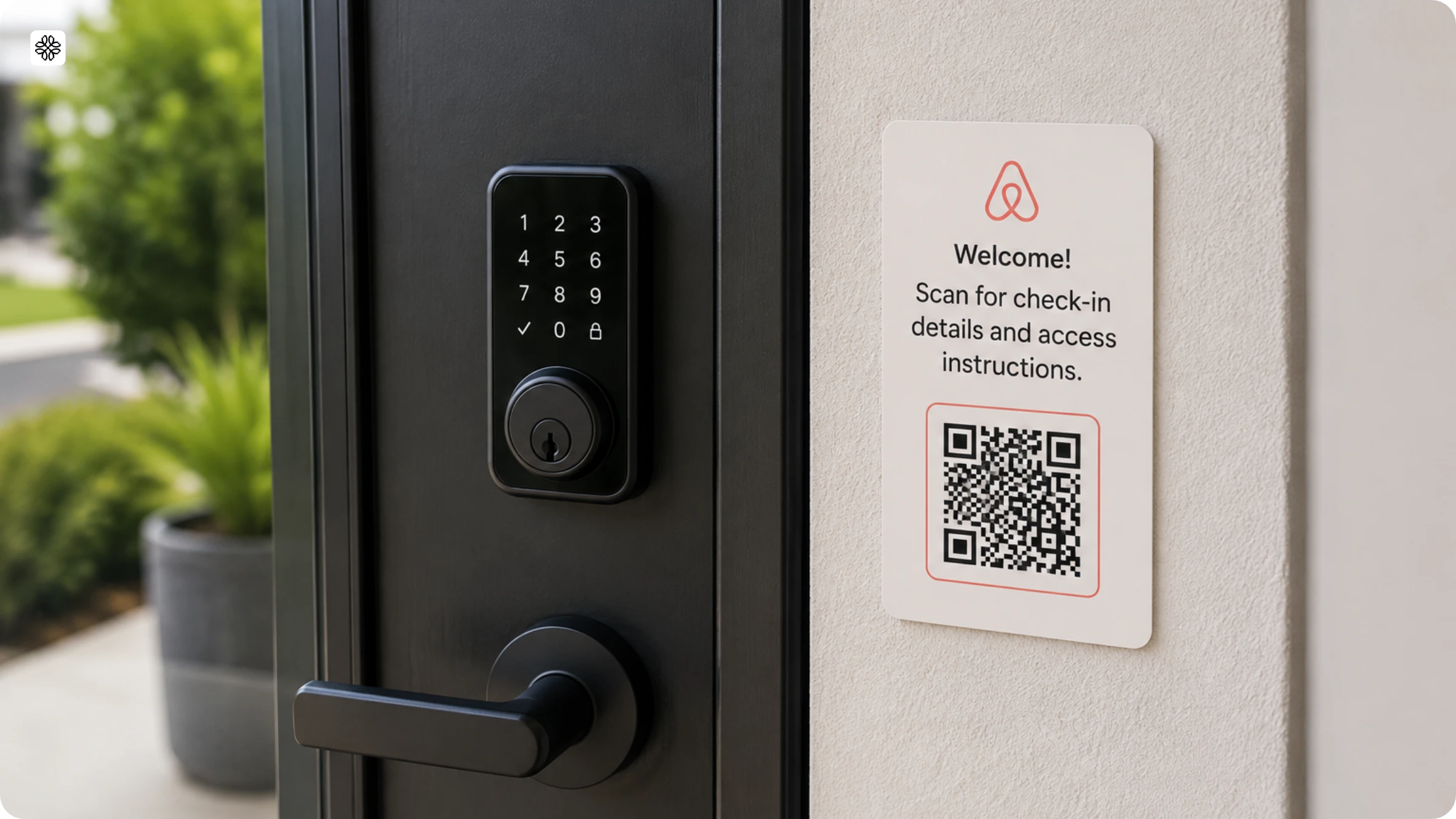
A QR Code is a handy tool for contactless check-in at an Airbnb, but it is not the check-in method itself. The actual way you access the property is through a smart lock, keypad, or lockbox, and not the QR Code.
A code placed at the door does what a QR Code excels at: it provides entry instructions, a warm welcome message, and, with the right setup (discussed above), even the door code, all with a single scan. For a deeper dive into setting this up, Uniqode's guide to QR Codes for check-in is a helpful resource.
Where QR Codes are, and aren't, allowed in Airbnbs
Airbnb does not have a specific policy dedicated to QR Codes. Instead, its restrictions are more focused, and everything else generally falls into a few clear categories.
- Airbnb restricts the use of off-platform video links within listing photos. This means you cannot include a QR Code or any link in your photos or description that directs guests to video content outside Airbnb, as the platform views this as an attempt to bypass its booking system.
- The arrival guide already time-gates check-in details. It withholds detailed check-in instructions until 48 hours before check-in, which is exactly why a QR Code should never be the only route to that information.
- Guidebooks, on the other hand, are intended to be public resources. Airbnb allows hosts to preview, print, and share these guidebooks outside the platform, so using a QR Code that links directly to a public guidebook is one of the simplest and safest ways to provide information.
The idea that 'QR Codes are banned on Airbnb' is a misconception. In reality, Airbnb’s Content Policy only restricts superimposed logos, links, or company names that advertise businesses unrelated to the listing. Most often, this applies to QR Codes in photos that direct users to off-platform videos or booking pages.
QR Codes placed inside your property are not subject to these restrictions. When a guest who has already booked scans a code for WiFi, house rules, check-in instructions, or to leave a review, there is no risk of violating Airbnb’s content guidelines.
The key takeaway is simple: if you include a QR Code in your listing photos, limit it to information about the listing or reservation details. For WiFi, guidebooks, or review requests, reserve those QR Codes for use inside your property, where Airbnb’s restrictions do not apply.
Prohibited uses of Airbnb QR Codes
There are three ways an Airbnb QR Code can create real policy or safety risks, but the good news is that each one can be easily avoided with a smarter design choice.
- First, consider a payment QR Code. Airbnb’s Off-Platform and Fee Transparency Policy is clear: all reservations and mandatory fees must go through Airbnb. Off-platform payment requests are a policy violation, except for a few specific cases like certain software-connected hosts, hotels, or legally required taxes. So, if you see a sign that says "Scan here to pay your host," that’s exactly the kind of QR Code to steer clear of. Any optional charges should be handled in the Resolution Center, right on Airbnb, not hidden behind a QR Code that links to a personal payment app.
- A door or lockbox code printed into a public-facing QR Code. Airbnb already time-gates that information for a reason: it's sensitive, and it needs to change between guests. A static QR Code with a fixed entry code defeats that model the moment the second guest checks in.
- Finally, beware of a review-manipulation funnel. Airbnb gives both guests and hosts a 14-day window to leave a review, and it strictly prohibits any attempt to coordinate, incentivize, or pressure guests about what they write. If a checkout QR Code sends unhappy guests to a private form but directs happy guests straight to Airbnb, it is designed to suppress negative feedback. This is a clear violation, and any guest who notices the split will see it for what it is.
QR Code security for hosts and guests
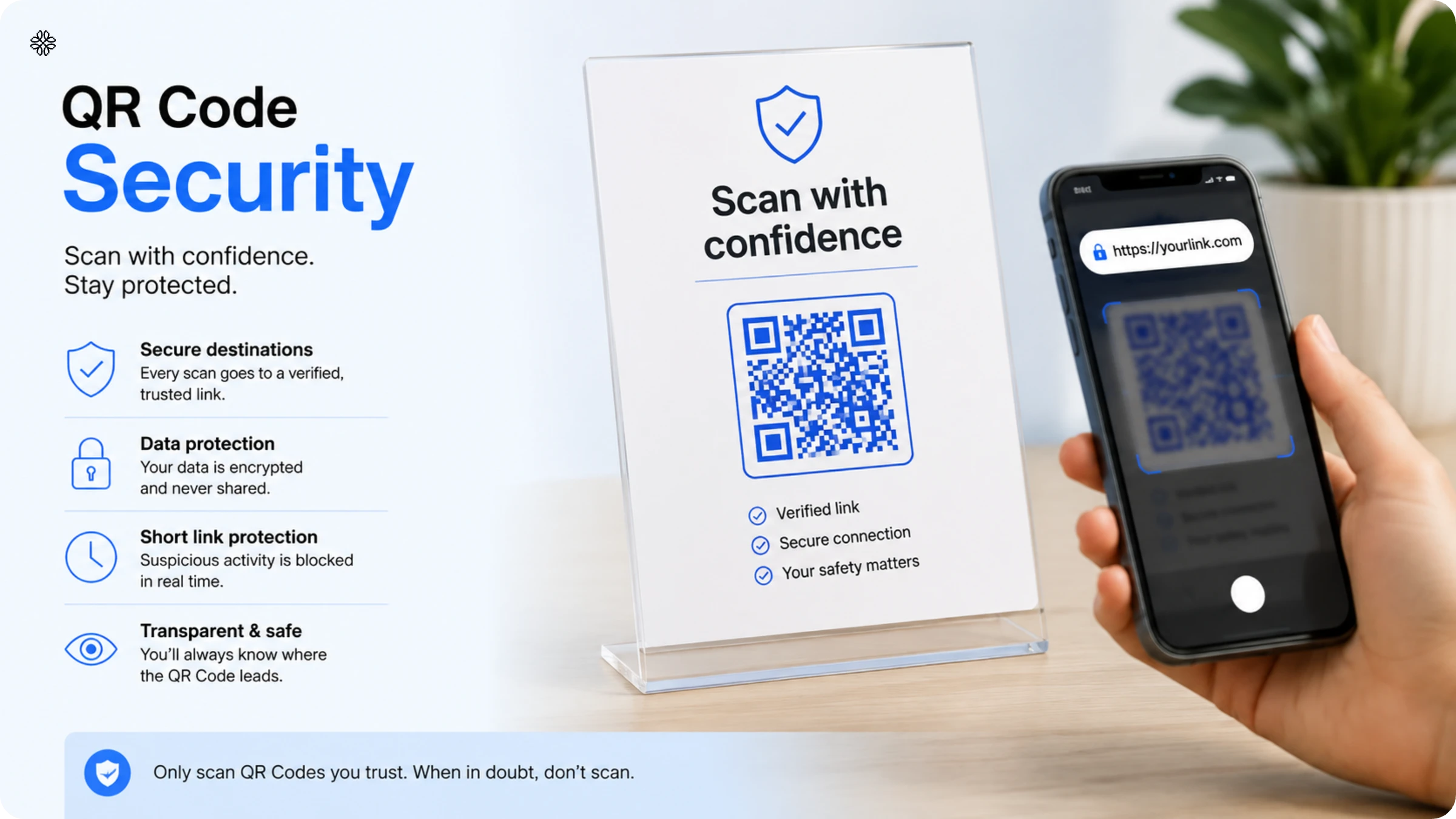
Leaving a QR Code unchanged after a guest departs is more than a minor oversight; it is a genuine security concern. If a guest or anyone who happened to snap a photo retains access to that code, they hold a key to a property they should no longer be able to enter.
Guests face their own set of risks as well. It is not uncommon for scammers to replace a genuine QR Code with a fraudulent one, redirecting unsuspecting guests to fake payment pages or data-harvesting sites, a tactic known as QR Code phishing, or quishing. Uniqode’s guide to QR Code phishing and quishing offers practical tips for spotting these threats. Interestingly, Uniqode’s State of QR Codes 2026 report reveals that 58% of consumers feel confident scanning QR Codes, and 26% trust them more than they did a year ago. However, this trust is only as strong as the reliability of the code guests encounter.
Quishing is not the only physical risk to keep in mind. Something as simple as a sticker placed over a legitimate QR Code can be surprisingly effective, precisely because guests trust the signage inside a property they have already chosen. Make it a habit to inspect every printed code during turnover for any signs of tampering, and ensure the domain it links to is set to auto-renew.
This is exactly the exposure a dynamic QR Code closes. Instead of printing an entry code directly onto a sign, point the code at a page that requires a password, one reset for every new guest, the same way a host would change a lockbox code. Uniqode supports password protection on any dynamic QR Code (minimum six characters), and every destination gets scanned automatically for malware and phishing before a guest ever sees it, with anomaly detection flagging anything that looks like unusual scan activity on a code. Uniqode is SOC 2 Type II certified and GDPR compliant as well.
Best practices for Airbnb QR Codes
The best practices for an Airbnb QR Code are: leave the quiet zone alone, print the destination domain next to the code, test the finished product on real devices, fold the code into turnover checks, and never let critical information depend on a scan working. A code that works flawlessly on your laptop might let you down once it is laminated and placed in a dim hallway. These five steps help bridge that gap.
- Never crowd the quiet zone. DENSO WAVE, the original creator of the QR Code standard, recommends a clear margin of four modules (the tiny squares forming the code) on every side. If you add decorative borders, cut too close when laminating, or place the code on a busy background, you risk making it unscannable. The simplest fix is to use a generator that automatically preserves this margin, even when you add a logo or brand colors. That way, you do not have to worry about double-checking every customized code.
- Always print the destination domain right beside the code. When a guest sees stay.example.com on the sign and the same address in their phone’s preview, they have a simple way to spot a swapped or malicious code. If there is no visible destination, your guest has nothing to verify.
- Do not skip testing the finished product. Before you put up a laminated, mounted, or engraved QR Code, scan it yourself on both an iPhone and an Android, from the distance a guest would stand, in both daylight and low light. Glare from lamination, reflections from acrylic, and even worn ink can all interfere with scanning, even if the code appears perfectly on your screen as a PNG.
- Make the QR Code part of your turnover routine. During a walkthrough, whether you are the host or the cleaner, take a moment to check for stickers covering the code, defaced signs, or codes that have been moved. It is as important as checking linens or amenities.
- Always provide a text fallback for every code, and never let essential information depend on a scan. Fire safety instructions, emergency contacts, and entry details must be accessible to guests with a dead phone battery, no signal, or a visual impairment. On your physical sign, print the key details in plain text right next to the code so guests can read them without scanning.
Your Airbnb QR Code checklist
For your convenience, we’ve compiled a ready-to-use checklist, which also links to tutorials and how-tos for creating QR Codes.
| QR Code type | Benefits | How to/Template |
|---|---|---|
| Airbnb listing | Ease of distribution across digital and physical channels | Tutorial |
| Virtual tour | Attracts attention as videos are an engaging format | Step-by-step guide |
| Check-in | Contactless and convenient | Step-by-step guide |
| WiFi credentials | Convenient to share and secure | Step-by-step guide |
| House manual | Clear instructions about amenities including how to use equipment, etc. Can be easily updated when needed Looks more professional and enhances the guest’s experience | Template |
| Travel guide | Help guests plan itineraries better Digital nature ensures on-the-go ease | Template |
| Review | Helps capture more reviews across various platforms Easier to scan than type a URL Airbnb boosts listings with more reviews higher up in search results | Step-by-step guide |
| Eases communication between host and guest Provides immediate assistance | Step-by-step guide |
Why create Airbnb QR Codes with Uniqode
If you want to boost your bookings with Airbnb QR Codes, you need a trusted partner. Uniqode offers an easy, customizable, and safe way to generate QR Codes for various purposes.
✅ Easy to use: Uniqode requires no coding or technical knowledge. Anyone can create and deploy a QR Code within minutes of logging in.
✅ Customizable: Just like your Airbnb, your QR Code, too, can be made appealing and attractive. Uniqode allows you to change the color, alter the shape, and add relevant images to your Airbnb QR Code.
✅ Secure: Uniqode is rated #1 on G2 and is SOC®2 Type 2 certified and GDPR-compliant. This means that it does not compromise your or your guests’ data privacy.
Make your Airbnb experience even more convenient with Uniqode so that you can focus on what matters most—creating a warm and welcoming environment for your guests.
Curious to try it out? Start creating your first Airbnb QR Codes here👇
Frequently Asked Questions
- How do I get a QR Code for Airbnb?
Creating a QR Code for your Airbnb listing is very simple:
Sign-up with a reliable QR Code generator like Uniqode
Log-in to the dashboard and select the type of QR Code you wish to create
Choose “website” and paste the URL of your Airbnb listing
Follow the steps to customize your QR Code, if needed
Save and download the QR Code in the desired format and share!
- What is a QR Code for guest feedback?
While Airbnb does not provide a specific QR Code for guest feedback, hosts can create custom QR Codes to encourage guests to leave feedback. Here’s a general guide on creating a QR Code for guest feedback:
1. Sign up with Uniqode’s QR Code Generator
2. Select feedback link
3. Insert the link and customize QR Code
4. Download or print QR Code in the format of your choice
You can then share the digital QR Code or print it out and place it in a visible location in your Airbnb property.
- What is a QR Code for check-in?
A QR Code for digital check-in is a convenient and contactless method for guests to access information or complete the check-in process electronically. Using a QR Code digital check-in will streamline the check-in process, reduce physical contact, and provide a modern and efficient experience for your guests.
- Can I put a QR Code in my Airbnb listing photos?
Yes you can put a QR Code in your Airbnb listing photos, as long as it doesn't link to off-platform video or booking content. A code that links to the listing page itself or basic reservation information is fine. A code that routes a viewer to a video hosted outside Airbnb risks running into the platform's content rules.
- Should I use a static or dynamic QR Code for my Airbnb?
Use a dynamic QR Code for anything tied to a specific guest's stay: WiFi passwords, entry codes, local recommendations. A static code only makes sense for a destination that genuinely never changes, like a permanent link to the Airbnb listing itself.
- Is it safe to scan a QR Code at an Airbnb?
Yes it is safe to scan a QR Code at an Airbnb, when the code comes from the host and hasn't been tampered with. Watch for a sticker placed over an existing code, a code in an unexpected spot like a parking sign, or one that asks for payment information immediately after scanning. Those are the classic signs of a swapped, malicious code.
- Can I use the same QR Code for multiple Airbnb listings?
You can use the same QR Code for multiple Airbnb listings only if every listing shares the exact same destination, which is rare. Each property needs its own code so a guest at one listing never lands on information for a different one. Duplicating a working code's design and settings, then swapping the destination, is faster than building a new one from scratch.
- What size should an Airbnb QR Code be printed?
An Airbnb QR Code needs to be printed at a minimum of 2 by 2 inches (5 by 5 centimeters) so it scans reliably from arm's length. Use dark ink on a light background for contrast, and laminate or mount the code in high-traffic spots so it survives repeated handling.
- How do I find my Airbnb listing URL?
To find your Airbnb listing URL, open the listing in a browser, click "Share," then "Copy link" to grab the URL directly. On the Airbnb app, the same "Share" option copies the link to the clipboard, ready to paste into a QR Code generator.
- How do I get a QR Code for booking?
To get a QR Code for booking, copy the Airbnb listing's URL from the "Share" button, paste it into a QR Code generator as a website QR Code, then download and print it. Scanning it takes a guest straight to the booking page, no typing required.
- What is an Airbnb QR Code used for?
The main uses of Airbnb QR Codes fall into two groups: marketing (turning the listing itself into a scannable link for postcards, business cards, and signage) and in-stay convenience (WiFi, house manuals, local guides, and review requests). Every use case in this guide falls into one of those two categories.
- Why do Airbnb hosts use QR Codes?
Hosts use Airbnb QR Codes to replace a repeated manual task with a single scan: texting the WiFi password, re-explaining an appliance, or fielding the same local-recommendation question from every guest. The time saved compounds across each new booking.
About the Author
Shashank - Enthusiastic about marketing and improving the ROI of businesses.