Vaccination QR Codes: Digital Passports, Vials, and Certificates to Kickstart the Vaccination Drive
With the COVID-19 vaccination being rolled out across the globe, governments and establishments are assigning vaccination QR Codes for passports, certificates, and more. Read this blog post to know how various countries are using vaccination QR Codes and why they are the right fit!

In response to the deadly SARS-Cov-2 pandemic, scientists and governments worldwide have devised vaccines that are gradually being rolled out in countries like the UK, USA, and India, to name a few.
Although most governments have data repositories, they are primarily paper records, and they are not sufficient. So, how can governments keep track of vaccine drives, grant access to travelers, and authenticate the vaccine vial?
Vaccination QR Codes.

Several companies and technology groups have begun developing apps and systems to check against themselves, creating digital health credentials or vaccination QR Codes. But, what exactly are vaccination QR Codes?
What is a vaccination QR Code and a vaccination passport QR Code?
Most COVID-19 vaccines are leveraging technologies such as barcodes and QR Codes, which weren’t used mainly in clinical care previously.
Vaccination QR Code
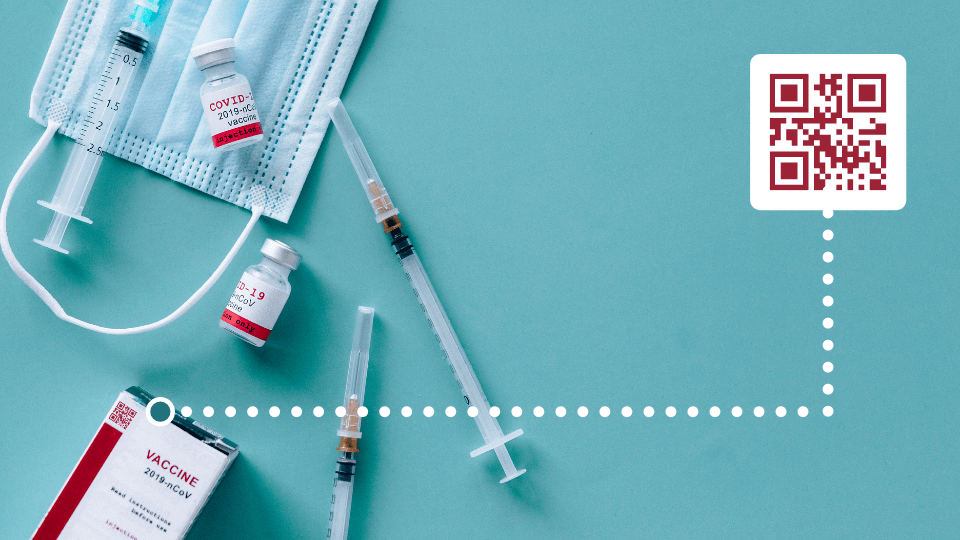
Vaccination QR Codes are QR Codes embedded on vaccination vials or secondary packaging of the vials to track the vaccine’s chain supply and verify its authenticity.
Several governments worldwide have authorized the usage of vaccination QR Codes after each dose is administered to its citizens as a part of its vaccination drive for easy traceability.
Vaccination passport QR Code
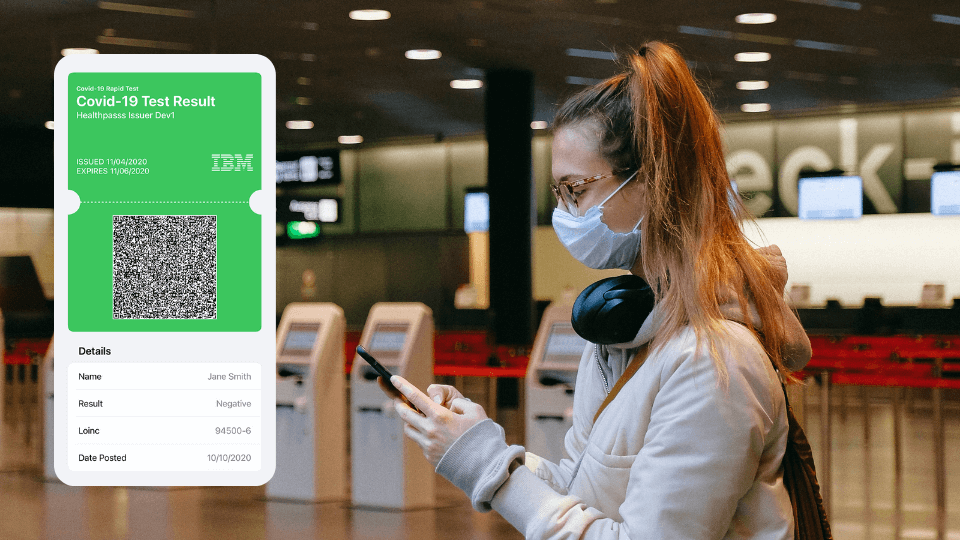
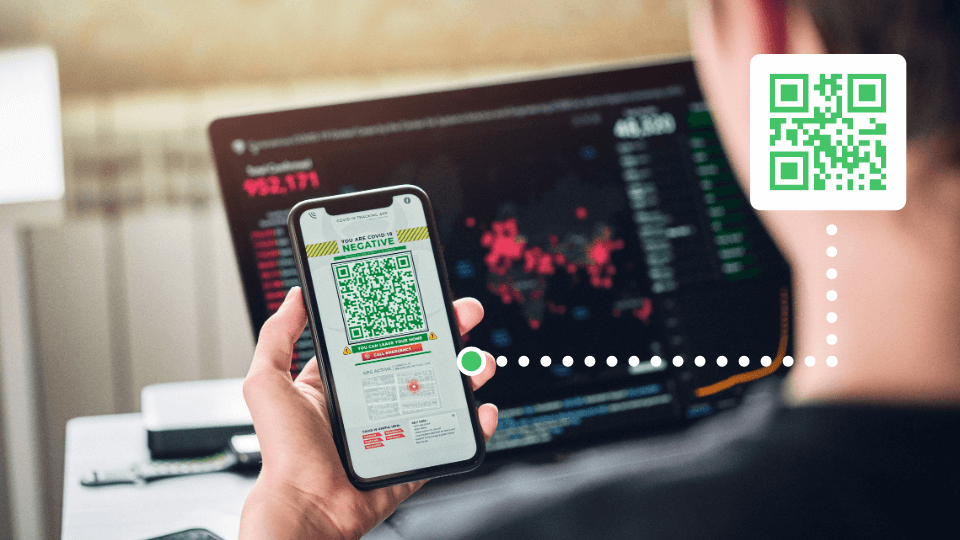
Vaccination passport QR Codes are health QR Codes on passports and travel passes that have to be presented to enter countries, establishments, and venues, which assures that the user is vaccinated against COVID-19 and is free of the disease.
Apps such as CO-WIN, IBM’s Digital Health Pass, and The Common Pass have been developed in a bid to offer digital health certificates entailing vaccination QR Codes on them.
Vaccination passport QR Codes can be presented to authorities without revealing sensitive information.
How are vaccination QR Codes and vaccination passport QR Codes being used across the globe?
#1 Vaccination QR Codes on secondary packaging of vaccine vials
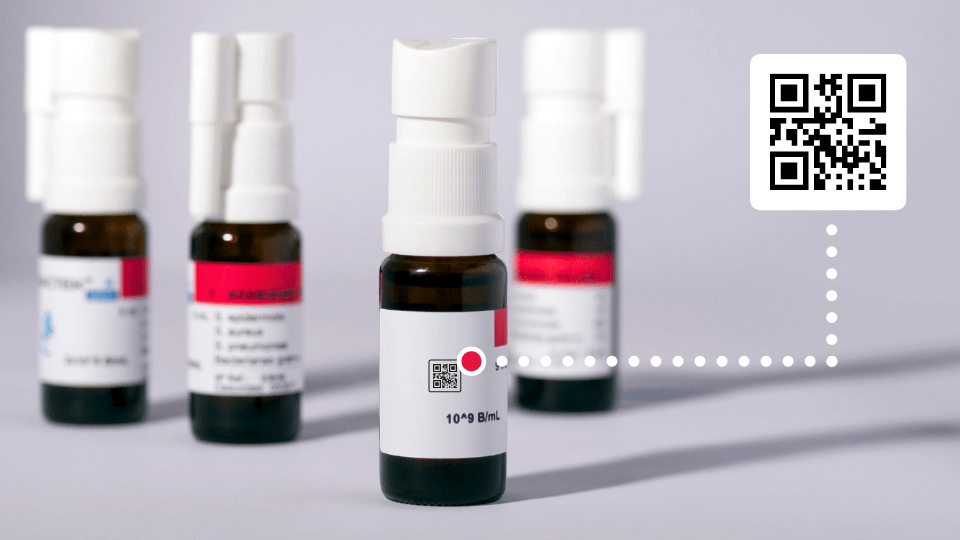
WHO strongly encourages the usage of COVID vaccine QR Codes on secondary packaging of vaccine vials since QR Codes can provide instant access to electronic versions of printed information like labels and provide additional information about the vaccine that may not be printed on the vaccine.
Vaccination QR Codes on secondary packaging of vial labels can guide health administrators of the route of administration, date of manufacture/expiration, doses per vial, temperature requirements, and batch number to facilitate vaccine management,
COVID vaccine QR Codes can also enhance supply chain management to track and trace the inventory, provide leaflet information for training purposes, and access warehouse information.
WHO also states that the substitution of QR Codes for statutory printed information is not an established system, creating liability risks, particularly around unauthorized users, thus making vaccine QR Codes the preferred tool on vaccine packages.
CDC adds QR Codes to Vaccine Information Statements (VIS)
CDC has added QR Codes to Vaccine Information Statements (VIS), including COVID-19 vaccines, namely Pfizer and Moderna, to help immunization providers record crucial information about the VIS as required by the National Childhood Vaccine Injury Act (NCVIA).
These vaccine QR Codes allow health providers to scan the name and the VIS’s edition into an electronic medical record (IMR), IIS, or any other electronic device. Choosing the best EMR for a small practice ensures seamless integration of such technologies, improving efficiency and accuracy in healthcare management.
#2 Vaccination passport QR Codes on digital health certificates
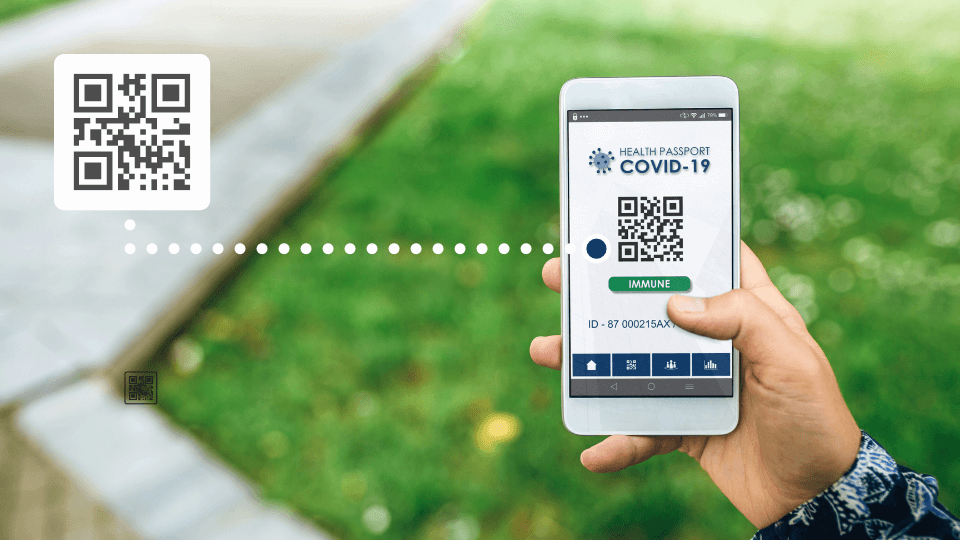
The primary application of the COVID-19 vaccine is to establish safety with precise immunization practices in place to stop the spread of the virus.
To enter establishments, airports, sports venues, and restaurants, a certificate proving the individual’s immunization status must be presented. Paper certificates cannot be relied upon entirely because they can be easily misplaced and challenging to monitor.
For this reason, vaccine passport QR Codes on digital health certificates are being employed by governments and provinces worldwide to ease the process of verifying the public.
A vaccination passport QR Code can be easily scanned by a smartphone, making it economical and reliable to permit access to establishments and venues.
Usage of vaccination passport QR Codes in various countries
Several nations such as the United States, the United Kingdom, and India have established mandatory digital health certificates embellished with vaccination passport QR Codes to permit admission to their countries.
In conjunction with each other, companies and governments have begun developing apps and digital systems using QR Codes for people to upload their COVID-19 data, including vaccinations, to allow into establishments.
Let’s look at the usage of vaccine passport QR Codes in the following countries –
The United States
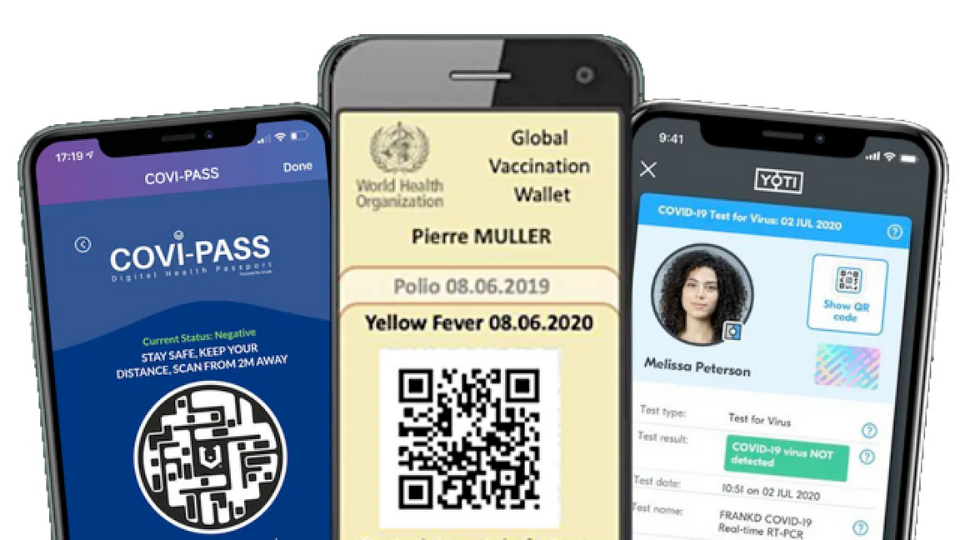
As the United States distributes vaccines for the virus, a digital health credential is essential for reopening its economy to normal.
Several airlines, including United, JetBlue, and Lufthansa, are planning on introducing the health passport app called CommonPass to verify their travelers’ virus test results and, soon, vaccinations.
CommonPass, an app created by the Common Trust Network, enables individuals to upload their medical data such as their vaccination proof and COVID-19 test results and then converts the data in the form of a QR Code, which can be presented to authorities.
These digital passes or vaccination passport QR Codes can help people enter stadiums, movie theatres, concerts, and even for traveling with ease.
The United Kingdom
The UK government already uses QR Codes for their NHS COVID-19 tracking app to trace its users of their health status and possible exposure to the virus.
Baroness Harding, leading the government’s testing and tracing effort, has the Immunity Certificate as part of her remit. On November 17th, 2020, the Telegraph reported that the government ministers were discussing issuing vaccination passport QR Codes to allow entry to high-risk venues and events.
The United Kingdom government later handed two firms the responsibility to begin exploratory work on an app to authenticate proof of vaccination to COVID-19.
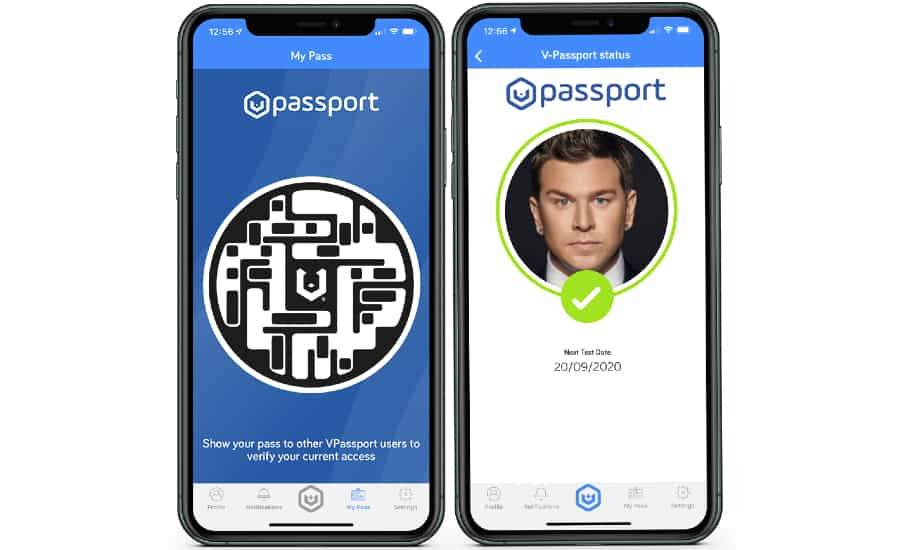
VST Enterprises developed a digital health passport and wallet, the V-Health Passport that converts the digital health certificate to a QR Code to authenticate its COVID-19 test results and vaccination.
The V-Health Passport also has its tracing capabilities using anonymized data to protect its citizens’ data and privacy with the concept of self-sovereign identity.
Citizens can use the app to prove their immunization status and present their COVID-19 results to authorities across the country and even for safe traveling.
India
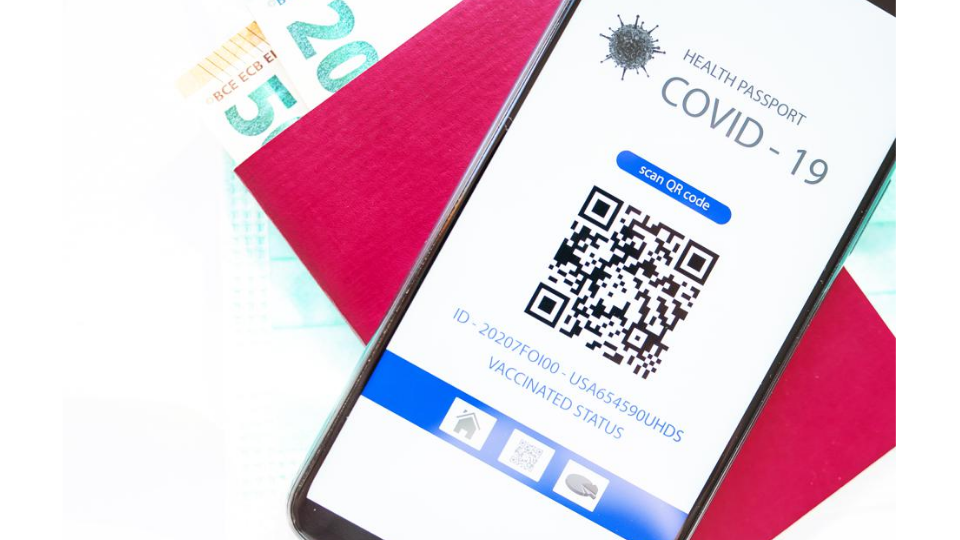
As the COVID-19 vaccinations are nearly here, the Indian government is preparing for a colossal vaccination drive across the country.
Some of the measures implemented are likely to include SMEs delivered to beneficiaries days before the vaccination and a QR Code certificate after each dosage is administered.
A key feature of the vaccination drive is to track the individual is likely to be added to the eVIN (Electronic Vaccine Intelligence Network) that tracks the reserve digitally. The system is scheduled to generate a QR Code health certificate for users as proof of vaccination.
According to the Hindustan Times, all vaccine beneficiaries in Maharashtra will be assigned a QR Code-based vaccination certificate to prove their COVID-19 immunization.
The Co-WIN app, a repurposed form of the eVIN platform, is officially recommended by the government for citizens to use. The app includes various features such as automated session allocation, send SMSes in 12 languages that will be sent to health providers, and a QR Code-based vaccination certificate to store in their mobile phones.
The downloaded vaccine passport QR Code can also be integrated to store and fetch with the government’s document storage app, DigiLocker.
Union Health Minister Harsh Vardhan Thursday said, “This platform will assist the program managers across all levels through automated session allocation for pre-registered beneficiaries, their verification, and for generating a digital certificate upon successful completion of the vaccine schedule.”
Why are QR Codes the right fit for vaccination vials and certificates?
#1 Easy traceability
QR Codes can be easily tracked and analyzed in real-time, making it a favorable tool for governments and companies to leverage the technology to track supply chain management.
The WHO highly encourages vaccine manufacturers to embed QR Codes on their secondary packaging since they can be easily tracked and used to identify their unique serial numbers.
Since all COVID-19 vaccination is supposed to follow the international standard regulations, vaccination QR Codes help government officials authenticate its manufacturing source and support ongoing efforts to scale up traceability systems in countries that receive COVID-19 vaccines.
#2 Ensure the authenticity of vaccine vials
COVID-19 vaccines are novel, meaning a lot of health workers and supply chain management are quite unaware of what the international regulations should be.
Vaccine QR Codes on secondary packaging of vaccine vials are intended to provide instant access to essential information such as labels and leaflets that are not available on the product packaging, such as date of package/expiry, batch number, procurement source, appropriate temperature storage, and supplementary information.
Separate guidance to include statutory label requirements, including communication changes, has been added to the vaccination QR Codes.
In addition, a QR Code for COVID vaccine offers multi-language support, making it a highly viable tool to be supplied in various countries.
#3 Economical
Scanning QR Codes do not require additional hardware and tools/system, since smartphones can scan QR Codes via their cameras making them the go-to tool for accessing vital information about the vaccine, traceability, and even register.
Vaccine QR Codes allow healthcare professionals to learn more content density like vaccine identification, serialization, statutory regulations, batch number, and even quality only by scanning the QR Code.
Can vaccination QR Codes be promising?
The arrival of the COVID-19 vaccination shows a promising future for governments, employers, businesses, and the general public by restoring the economy to normal. Electronic vaccination credentials or having an app to prove immunization status could profoundly impact efforts to control the virus.
However, having a mandatory app for digital passes raises a community’s specter into haves and have-nots, particularly if establishments begin demanding these apps as entry tickets.
Vaccination QR Codes can be leveraged in places of these apps to make it easier for authorities and people with limited access to online vaccination certificates to enter venues without a hitch.
The fact that vaccine QR Codes are being favored by several nations to prove their public’s proof of immunization and health status, trace easily, and distribute the vaccines easily demonstrates promising results for countries and their people.
Frequently Asked Questions
- What is the difference between a vaccination QR code and a vaccination passport QR code?
Vaccination QR codes are embedded directly on vaccine vials or secondary packaging to track the supply chain and verify authenticity of the vaccine itself. Vaccination passport QR codes, on the other hand, are digital health credentials on passports and travel passes that prove an individual is vaccinated against COVID-19, allowing entry to countries, establishments, and venues without revealing sensitive personal information.
- What information can vaccination QR codes on vaccine vials provide to healthcare workers?
Vaccination QR codes on secondary packaging of vials provide healthcare administrators with critical information including the route of administration, date of manufacture and expiration, number of doses per vial, temperature requirements, and batch number to facilitate vaccine management. According to WHO guidelines, these QR codes can also enhance supply chain management by tracking inventory, providing training leaflet information, and accessing warehouse data.
- Why does WHO recommend QR codes on vaccine packaging instead of replacing printed information?
WHO strongly encourages the use of COVID vaccine QR codes on secondary packaging because they can provide instant access to electronic versions of printed information and additional details not available on physical labels. However, WHO specifically states that substituting QR codes for statutory printed information is not an established system and creates liability risks, particularly around unauthorized users, making QR codes best suited as a supplementary tool rather than a replacement for printed vaccine information.
About the Author
Tech-aficionado, curious about all things related to marketing, and a severe junkie of The Office.
Related Posts

How Can Healthcare Systems Use QR Codes to Improve Safety, Efficiency, and Compliance

Event QR Playbook: How to Use QR Codes Across the Event Lifecycle

Did You Spot the ‘Deadpool’ Trailer QR Code? Why More Films and Shows Are Hiding Easter Eggs and How to Spot Them
Explainer: GS1 QR Code with Digital Link—And Why You Need It
What You Need To Know about QR Code Scams and How To Stay Safe