QR Codes are useful to share relevant information with consumers to reinforce trust, improve brand reputation, and foster long-term brand loyalty. Check out this insightful article to using QR Codes on product packaging to establish transparency for your CPG brand.
The consumer-packaged goods (CPG) industry is an ever-growing sector, facing increasing demands and consumer concerns. There has been a need for more information about the products being manufactured and sold.
To cater to consumer needs, product packaging can be utilized as a significant medium through which CPG brands can achieve product transparency. The use of transparent packaging can help companies build greater trust with consumers and improve customer satisfaction and loyalty.
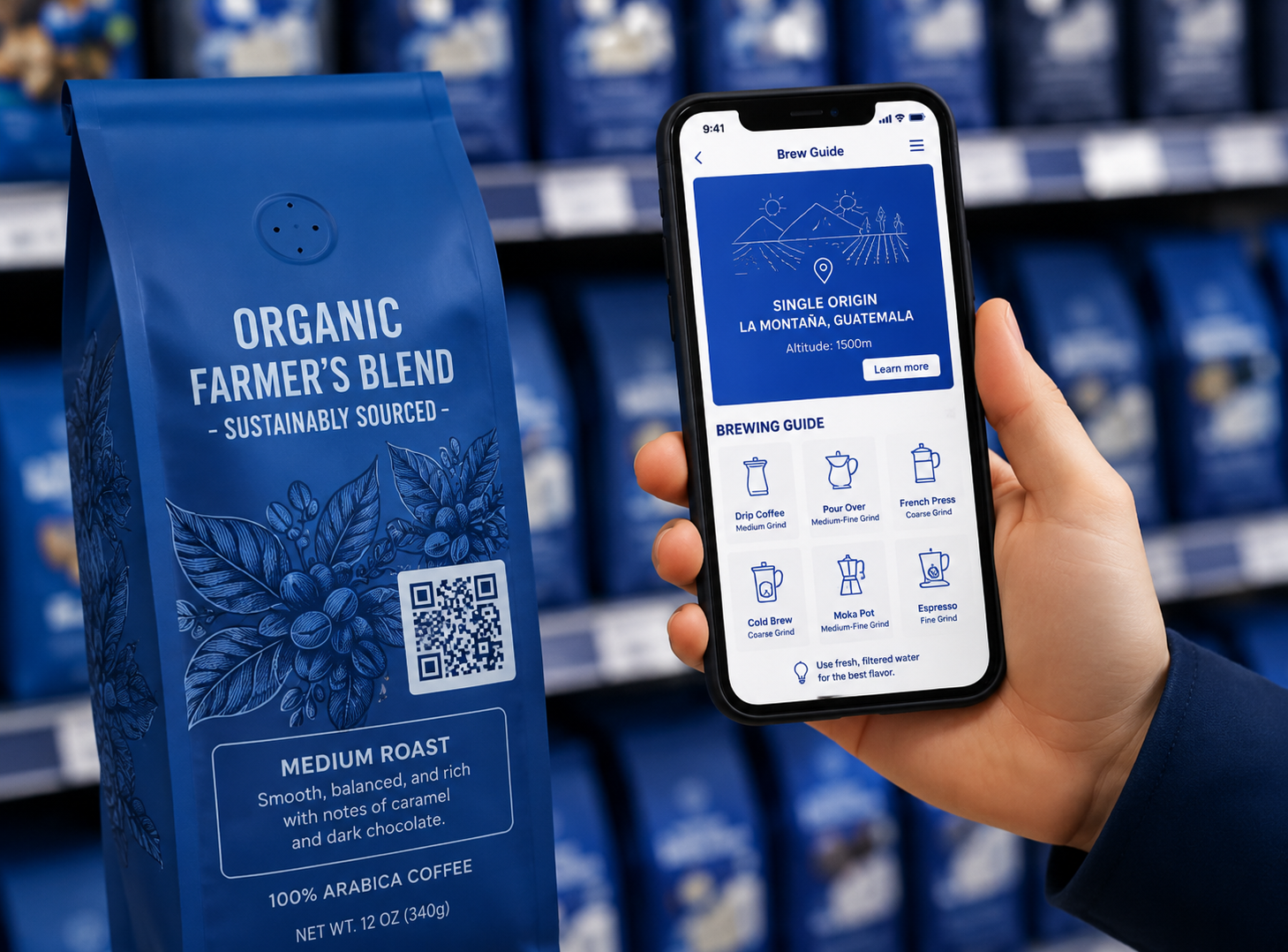
With the rise of QR Code technology and its ability to share ample information to consumers, QR Codes used on product packaging create an effective solution that can aid CPG brands in attaining brand transparency.
3 reasons why CPG brands use QR Codes on packaging
From meeting evolving customer needs to regulatory requirements, QR Codes on product packaging have become a multi-functional element in consumer goods packaging.
#1. Growing consumer concerns
Consumers today have growing concerns about the authenticity and safety of the products they purchase. They require access to product information that will prove the same.
A study by Edelmen in 2024 shows that consumers look to brands for safety, honesty and clear product information. Brand trust is now a critical factor in consumer decisions. This demonstrates consumers' increasing expectation that brands must prove authenticity and safety to earn confidence.
Customers want to delve deeper into the origin of a product before deciding to purchase it. From the product’s manufacture to its point of sale, CPG companies that provide this essential and in-demand information can ease consumers’ concerns and influence their buying decisions for the better.
#2. Builds trustworthy customer relationships
Transparent brands earn customer loyalty and referrals. A QR Code on packaging gives you the space to share what the label cannot: sourcing details, certifications, manufacturing practices, or sustainability commitments. That single scan is also one of the most effective marketing ideas with QR Codes, turning verified trust into word-of-mouth and repeat business. Customers who can verify what they are buying are more likely to come back and more likely to recommend the brand to someone else.
#3. Meeting regulatory requirements
Transparency is no longer optional for CPG brands—it’s expected. QR Codes offer a practical way to meet new regulatory demands and deliver clearer supply chain insights to regulators, partners, and consumers.
With the FDA encouraging scannable labels to modernize certificate checks and improve food traceability, brands can replace time-consuming manual steps with instant digital verification. Early adopters in the CPG space are already gaining an edge, proving that proactive compliance can also be a competitive advantage.
6 ways CPG brands can achieve transparency using QR Codes on product packaging
Let’s look at how CPG brands can gain customer loyalty and trust with QR Codes.
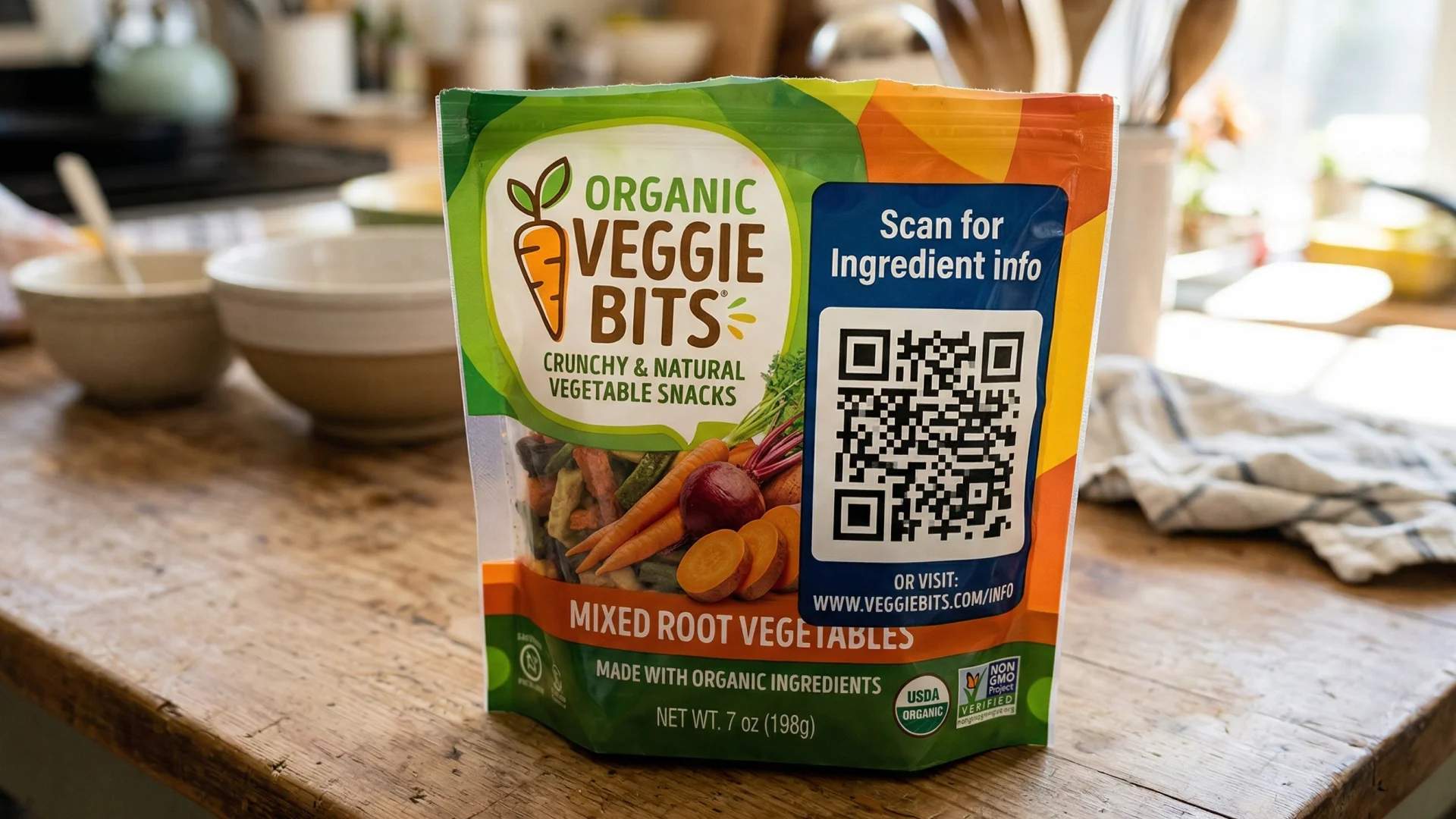
#1. QR Codes to display nutritional information, ingredients, and allergens

Consumers are always on the lookout for the healthiest product out there, and also one that doesn’t trigger their allergies.
So, it’s best to embed QR Codes on product packaging that display the nutritional value, allergens, and ingredients used. This additional information can majorly help consumers make quick purchase decisions and also prevent health risks.
#2. QR Codes to share product safety information & disclosures

Brand transparency can also be achieved by communicating information about product safety, such as cautionary instructions (for example, wearing safety goggles during use, keeping drill bits sharp) and certifications that the product has been tested and evaluated.
Dynamic QR Codes can display the product’s date of manufacture to prove its quality and mention its expiration date (if it’s a perishable product) to inform consumers about its shelf life. Providing this information can significantly increase brand reliability and revenue.
#3. QR Codes to achieve supply chain transparency
As a CPG brand, besides providing information about the product and its contents, it’s also a great practice to go beyond the product.
Have QR Codes available on the packaging that direct consumers to detailed information such as where the product materials or ingredients are sourced from, the supply chain process followed, the factory or farm locations, how fairly the employees are treated, and additional information about the suppliers.
Providing this level of supply chain transparency through your products can increase your brand’s credibility and prove its quality to consumers, increasing sales on a larger scale.
For example, according to an article by Dairy Foods, Midwest Dairy uses dynamic QR Codes on its packaging to link consumers to on-farm information, animal care, and other relevant information. Since the QR Codes are dynamic, they can modify the information as and when needed, without the hassle of reprinting and redistribution.

#5. QR Codes to display CoA on CBD products
In the CBD industry, the Certificate of Analysis (CoA) is a requirement set forth by state-wide regulations. It’s required that all CBD products must have labels that disclose the CoA and the ingredients used. This information is vital to consumers when making a purchase.
To establish brand transparency, earn consumers’ trust, and promote stress-free buying decisions, print QR Codes on CBD product packaging such as oils and makeup products to display all the information that consumers need to know.
Information such as the ingredients used, the side effects, the date of expiry, the concentration of CBD used in the product, and most importantly, the Certificate of Analysis (CoA) are necessary to consumers.
This can potentially elevate your CBD brand’s customer experience. Due to the established trust, it can lead to repeated purchases and brand advocacy.
For example, Maesa, a CBD cosmetic brand, achieves transparency with the use of Uniqode’s QR Codes on their product packaging to direct customers to detailed product information, tutorials, and the Certificate of Analysis.
#6. QR Codes to display information about product sustainability

Information about product sustainability is another driving force that can help with brand transparency, influence positive buying decisions, and improve your CPG brand’s overall reputation.
According to Statista, 36% of consumers look for information about the social, health, environmental, and safety impact of the products they buy on the product labels.
Use QR Codes on your packaging to communicate the eco-friendly processes your brand follows during manufacture. Include details such as the recyclable materials used and how consumers can reuse and recycle the packaging. This will not only promote sales but also drive zero wastage to aid the environment.
For example, Lush, a UK-based brand that creates fresh handmade cosmetics, had launched their Lush Labs mobile application at the South By Southwest trade show in Austin, Texas. Guests could easily download the app with a swift scan of a QR Code.
They could use the app’s visual search feature to scan the unwrapped bath bombs and access information such as the ingredients, prices, and videos of how it’ll look when dropped in water.
Lush had developed this app to promote sustainability and incorporate waste-reduction initiatives into their company strategy. Because of the app, the company states that it can save water since it doesn’t require in-store demonstrations of its bath products.
QR Codes can be your bridge to customer trust
QR Codes are no longer just a novelty on packaging. They are a practical, scalable tool that helps CPG brands meet rising consumer expectations, stay ahead of regulatory requirements, and build the kind of trust that turns first-time buyers into loyal advocates.
From sharing sourcing details and safety certifications to communicating sustainability commitments, every scan is an opportunity to give consumers something the label alone never could: the full picture. Brands that embrace this level of transparency are not just winning customer confidence today. They are building a foundation that is far harder for competitors to replicate.
If your brand is ready to move beyond surface-level packaging and create a genuine connection with your customers, sign up for a free trial on Uniqode.
Frequently Asked Questions
- 1. What information can a CPG brand share through a QR Code on packaging?
A QR Code on packaging can link consumers to a wide range of information including nutritional details, allergens, ingredient lists, sourcing and supply chain information, safety certifications, sustainability practices, and expiration dates. Essentially, anything the physical label does not have space to communicate.
- 2. Are QR Codes on packaging a regulatory requirement for CPG brands?
In some categories, yes. The FDA has been encouraging scannable labels to improve food traceability, and the CBD industry already requires brands to disclose Certificates of Analysis. Even where QR Codes are not yet mandatory, adopting them early positions brands ahead of compliance requirements and gives them a competitive edge.
- 3. What makes dynamic QR Codes better than static ones for product packaging?
Dynamic QR Codes allow brands to update the information they link to without reprinting the packaging. This is particularly useful for CPG brands that need to reflect changes in sourcing, certifications, or product details over time, making them a far more flexible and cost-effective option.
- 4. How do QR Codes on packaging help build customer trust?
When customers can scan a code and verify exactly what they are buying, where it came from, and how it was made, it removes doubt from the purchase decision. That transparency builds confidence, encourages repeat purchases, and drives word-of-mouth referrals.
- 5. Can QR Codes on packaging help CPG brands collect consumer data?
Yes. QR Code analytics can provide brands with valuable first-party data including scan location, device type, and browser information. This is especially relevant now that third-party cookies are being phased out, making QR Codes a practical alternative for understanding consumer behavior.
Related Posts
Louisiana SB 14 Requires QR Codes on Food Packaging
What Expo West 2026 Taught Us About the Future of CPG (And Why Your Packaging Is at the Center of It)
What the FDA’s New Traceability Requirements Mean for CPG Brands
Reduce Customer Support Calls with Product QR Codes: A Complete Guide for Brands
How to Drive App Downloads from Product Packaging Using QR Codes