Louisiana and Texas now require QR Codes and warning labels on food packaging containing certain additives. Here's what the law says, who it applies to, and how to get compliant fast.
If you sell packaged food in the U.S. and your ingredient list includes Red 40, BHA, or aspartame, new state laws are about to change your packaging.
Louisiana's SB 14, signed in June 2025, is one of the first state mandates requiring QR Codes on food products containing specific additives. It's not the only one. Similar bills are already moving through Indiana, Tennessee, Wisconsin, and Mississippi.
Here's what Louisiana SB 14 actually requires, who it applies to, and how to build for it without disrupting your next packaging run.
Louisiana's Senate Bill 14 (SB 14) explained
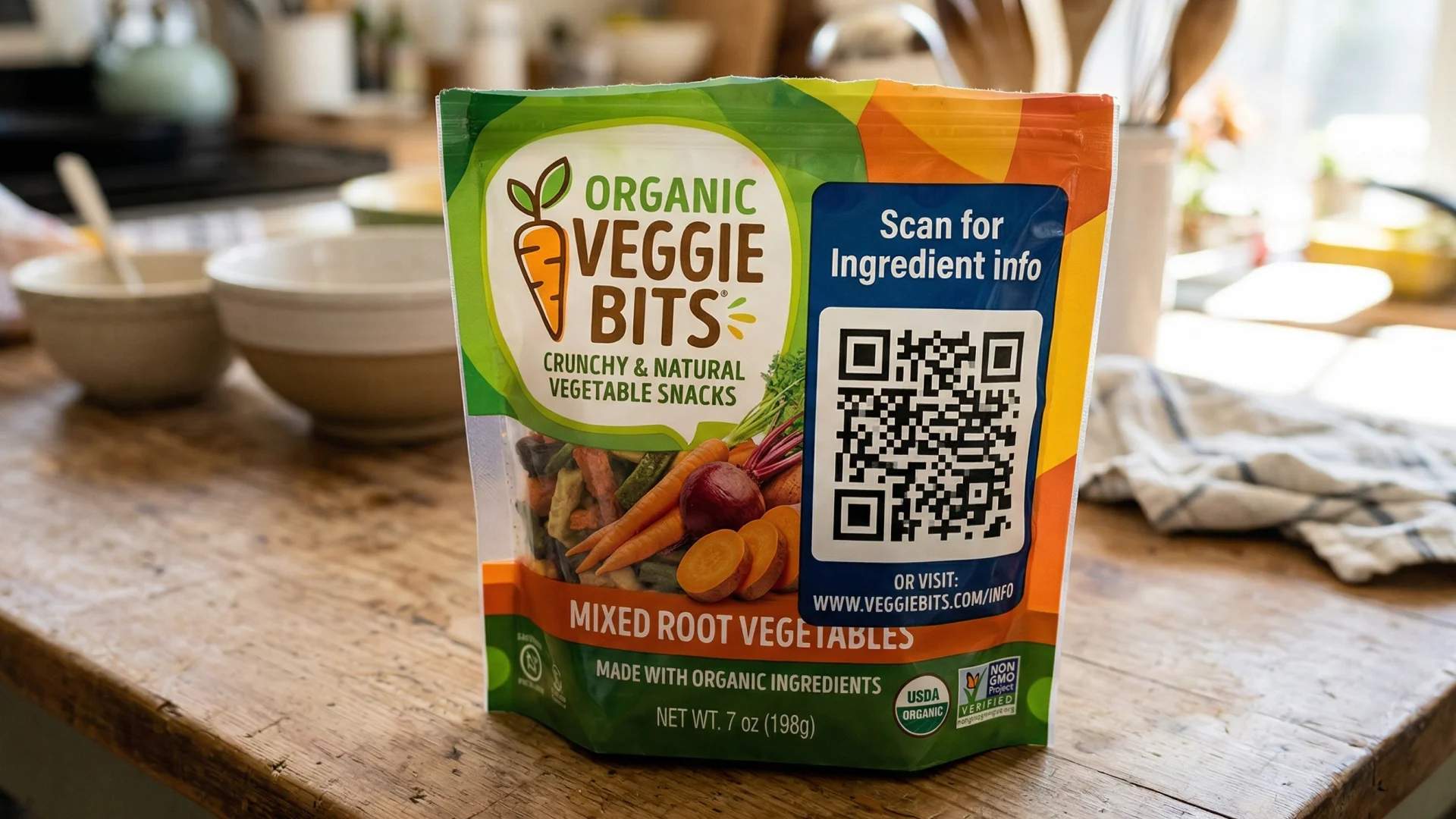
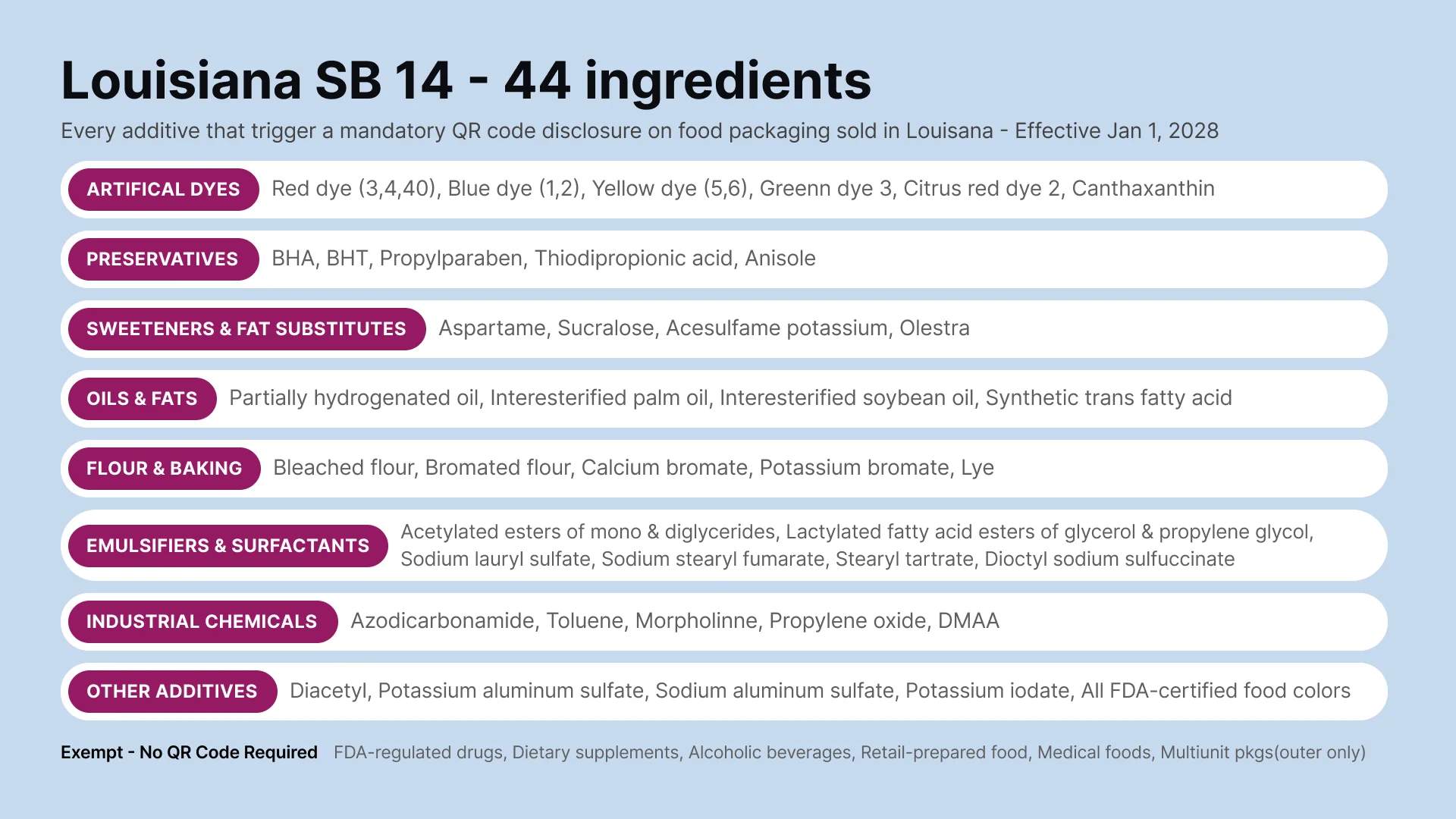
Effective January 1, 2028, any food sold in Louisiana that contains one or more of the 44 listed ingredients must carry a QR Code on its packaging. When that product is sold in a multi-unit package (a variety pack, a bundle, a case), the QR Code must appear on the outer container, not just the individual units inside.
Beyond QR Code placement, the law specifies two more things:
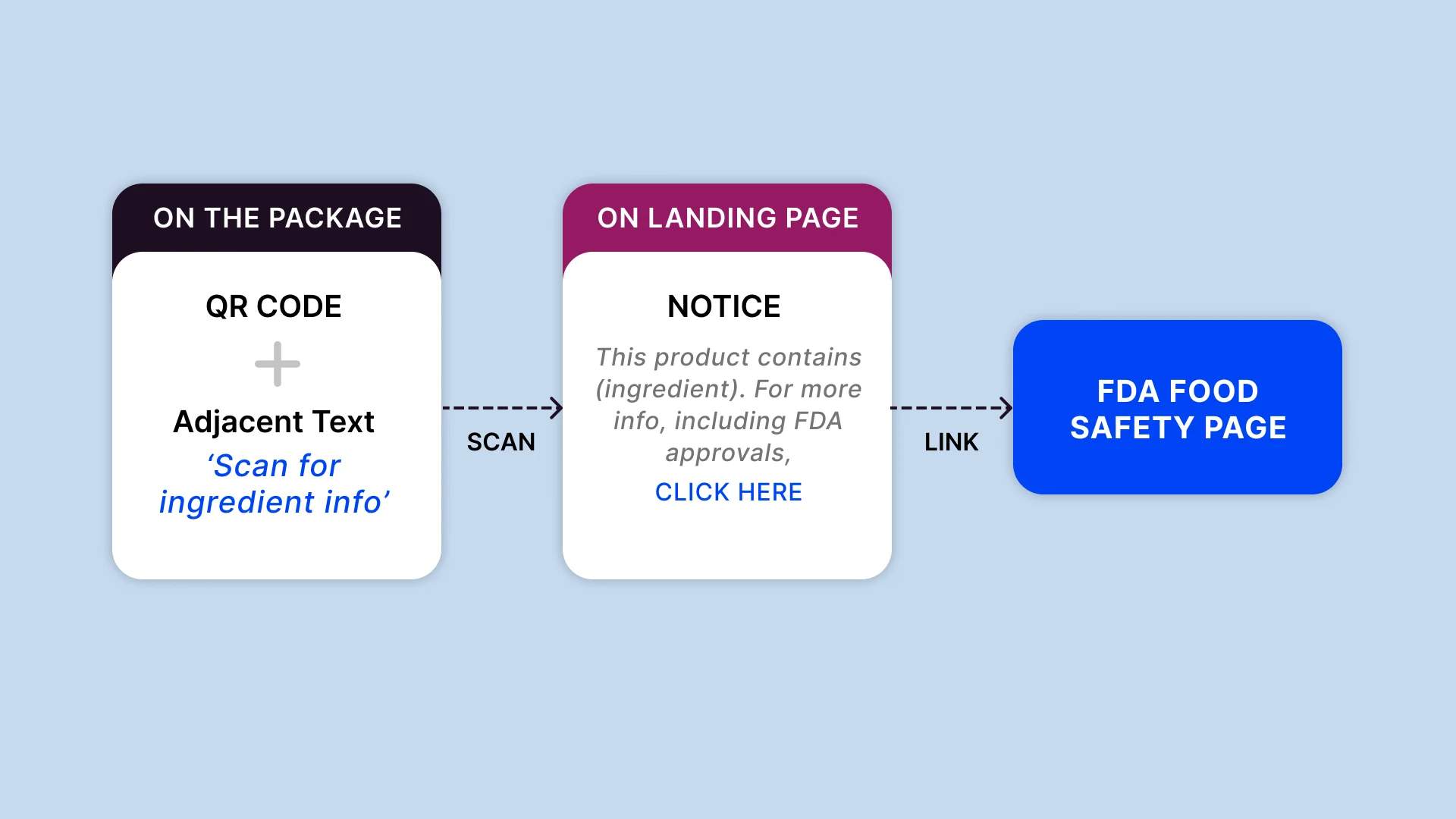
- Text: A text statement must appear adjacent to the QR Code, informing consumers that scanning it gives them access to additional ingredient information. The exact wording isn't prescribed, but the intent must be clear from the label.
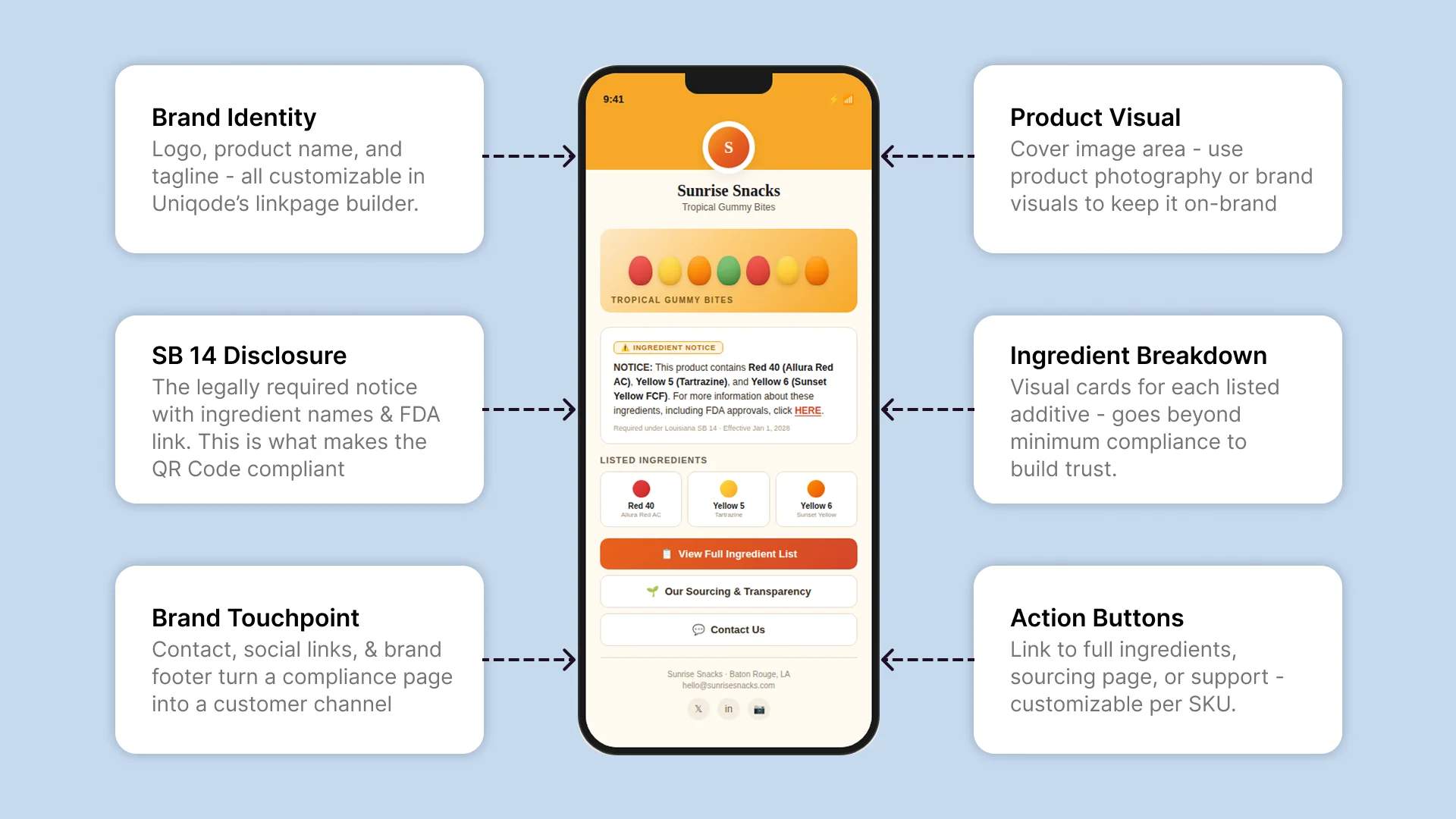
- Landing page: The QR Code must link to a manufacturer-controlled webpage. That page must display a disclaimer that is prominently worded like: "NOTICE: This product contains [name of ingredient]. For more information about this ingredient, including FDA approvals, click HERE." The word "HERE" must then link directly to the FDA's food-chemical safety information.
The landing page is the brand's responsibility to build, host, and keep it up to date.
If you sell food in Louisiana and your ingredient list includes any of the 44 listed additives, the law applies regardless of where the product was made or who distributes it.
The most commonly used ingredients on the list:
- Synthetic dyes: Red 3, Red 40, Yellow 5, Yellow 6, Blue 1, Blue 2, Green 3
- Preservatives: BHA, BHT, propylparaben, potassium bromate
- Sweeteners: aspartame, sucralose, acesulfame potassium
- Others: azodicarbonamide, brominated vegetable oil
The law does not apply to dietary supplements, alcoholic beverages as defined under Louisiana law, or food prepared and labeled at a retail food establishment. Non-compliance carries civil fines, injunctions, and other remedies under Louisiana's Sanitary Code.
Will Louisiana SB 14 apply to other U.S. states?
No, Louisiana SB 14 will apply only to food sold in Louisiana, while other U.S. states are also working towards similar bills. Over 140 food additive bills were introduced in 38 states in 2025 alone. Louisiana's approach, a QR Code linking to a digital disclosure, rather than a printed warning on the label, is being watched as a workable model.
Texas went the other direction: SB 25 mandates a printed warning label on the package itself. However, a federal court issued a preliminary injunction in February 2026 on First Amendment grounds, and that case is ongoing.The operational question for any brand selling across multiple states isn't "how do we comply with Louisiana?" It's "how do we build a compliance system that doesn't require a new print run every time a state passes something new?"
How to get compliant with Louisiana's (SB 14): A practical checklist
Step 1: Audit your product portfolio
Pull every ingredient list. Cross-reference against the 44 specified additives. Flag every SKU sold or likely to be sold in Louisiana. This step takes longer than expected for brands with 10+ SKUs and is worth starting now.
Step 2: Plan your QR Code placement
Work with your packaging design team to identify placement that meets the adjacent text requirement without disrupting your existing label layout.
Step 3: Build compliant landing pages and QR Code
You need two things for each product (or SKU):
- a compliant landing page that includes the exact notice language required by the law, with a working link to the FDA food chemical safety page and
- a dynamic QR Code that points to it.
Uniqode brings both into the same dashboard, so you can build them in one place.
- Landing page: Go to Campaigns → Landing Pages, pick a template or build custom, add your disclosure content, style it to your brand, name it and save. Here's what a finished one looks like for a fictional brand, Sunrise Snacks (contains Red 40, Yellow 5, and Yellow 6):
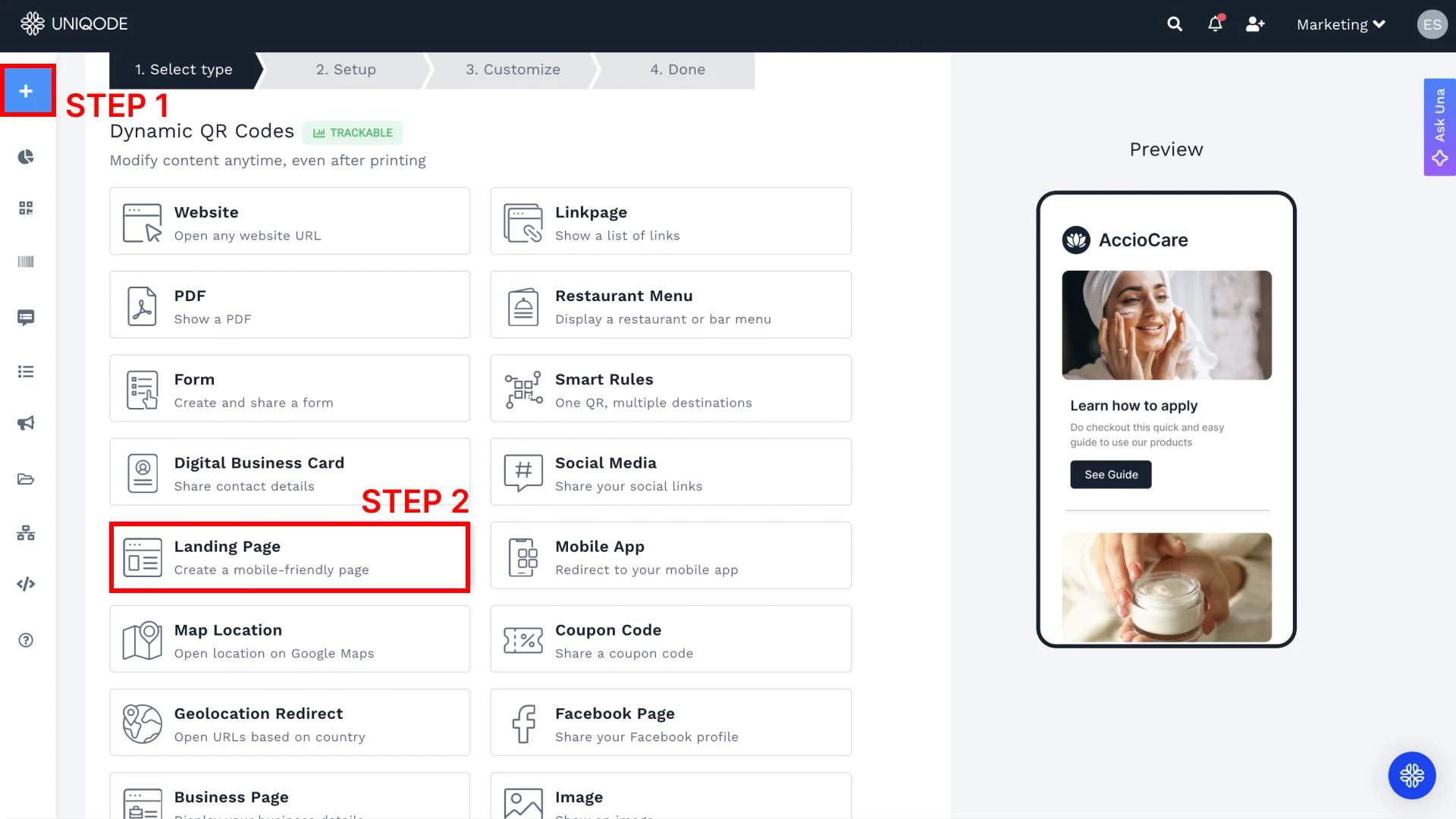
- QR Code: Go to Create New → QR Code → ‘Landing Page’ type. Select your landing page by name, customize the design and save. That's it, your QR Code now links directly to your compliant page, with scan analytics built in.
💡Pro tip for multi-state brands: Uniqode's Smart Rules let a single QR Code serve different landing pages based on scan location. Louisiana scan? SB 14 disclosure. Texas? Their version. State with no additive law? Route to a product page, a recipe, a loyalty program. One QR Code, one print run, serves numerous personalized experiences.
Choose dynamic QR Codes over static QR Codes (this is critical)
Here's where the choice of QR Code technology matters more than you'd expect.
With a static QR Code, the URL is encoded into the QR Code itself. If you need to update the landing page URL, fix a broken link, or adjust the disclosure for a reformulated product, you'll have to reprint the packaging with new QR Codes.
With a dynamic QR Code, the destination can be changed at any time. The printed QR Code on your package stays the same, and the link it serves can be updated instantly. This is particularly important because:
- Regulations are still evolving. What Louisiana requires and what five other states require may not be identical. A dynamic QR Code lets you adapt without reprinting.
- Products get reformulated. If you remove a listed ingredient, you can update the disclosure page or redirect the QR Code entirely without changing the packaging.
- Packaging lead times are long. You don't need to lock in the final landing page URL on the day you send the packaging to print.
QR Codes can do a lot more than point to an ingredient list
If you're already using QR Codes on packaging, there’s one question worth asking before 2028: are they dynamic? If yes, you're mostly set. You can update destinations, track analytics, and reroute scanners (example: if they are from outside Louisiana, they can be routed to a different campaign). If they're static QR Codes, this is a good moment to switch to dynamic ones, before the next print run locks you in again.
If you're not using QR Codes yet, SB 14 is the forcing function that pays back beyond compliance and opens a direct channel with your customers.
Read how Mr. Apple used Uniqode’s QR Code to unlock a direct relationship with their customers. Uniqode offers dynamic QR Codes, bulk generation across SKUs, Smart Rules for condition-based routing, and scan analytics that feed into Google Analytics.
About the Author
Ektha is a QR code expert with years of research and analysis into the evolution of QR codes. Having written over 70 in-depth articles on QR technology, she has developed a comprehensive understanding of how QR codes are transforming industries. Her insights, including The State of QR Report, have been featured in leading publications. With a passion for simplifying complex topics and providing actionable strategies, Ektha helps businesses leverage QR codes to enhance their 'phygital' connections.
Related Posts
How CPG Brands Use QR Codes on Packaging
What Expo West 2026 Taught Us About the Future of CPG (And Why Your Packaging Is at the Center of It)
What the FDA’s New Traceability Requirements Mean for CPG Brands
Reduce Customer Support Calls with Product QR Codes: A Complete Guide for Brands
How to Drive App Downloads from Product Packaging Using QR Codes