
QR Code Posters: How to Design, Test, and Print One That Actually Scans
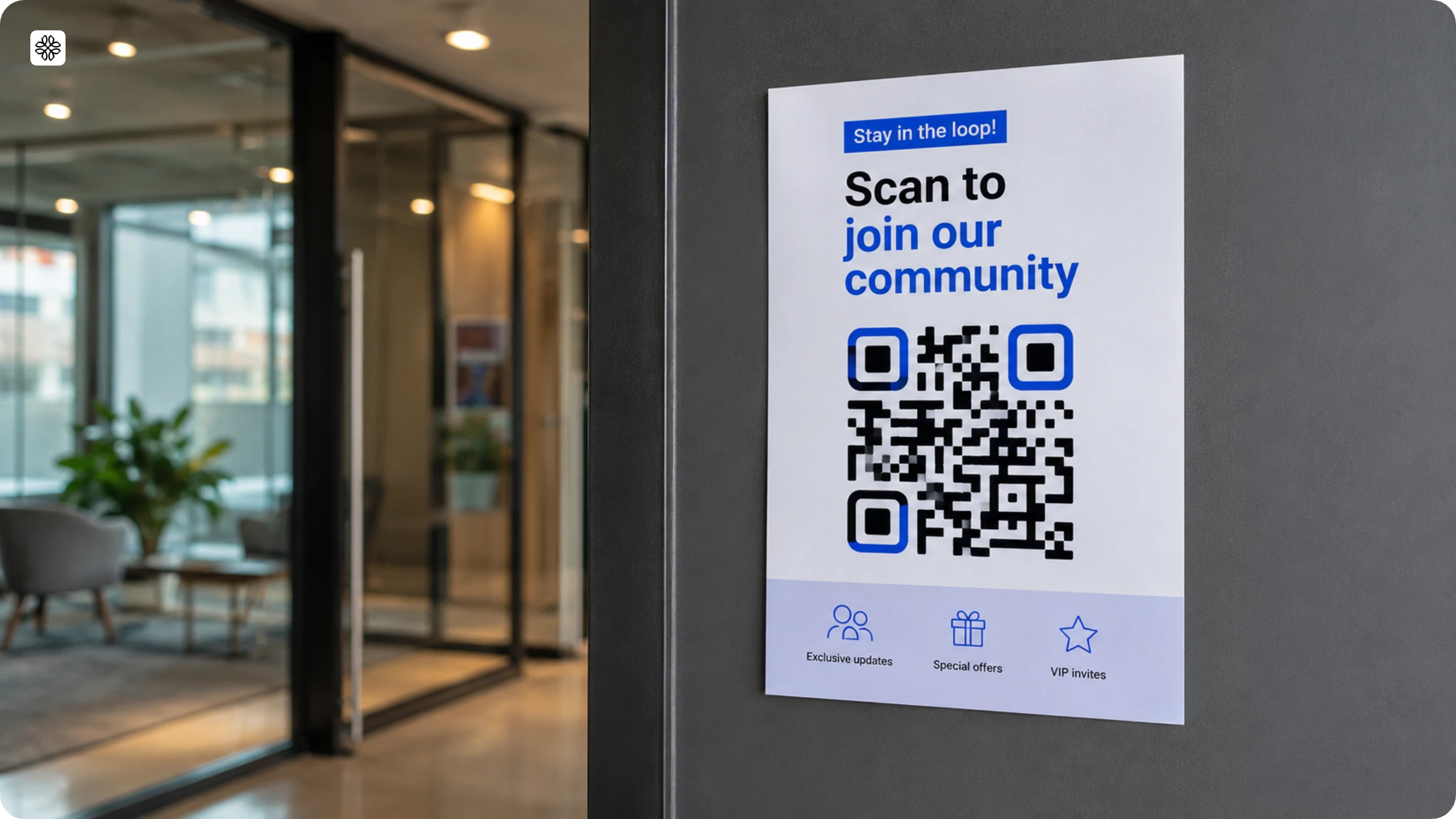
Learn how to design, test, and print a QR Code poster that actually scans: sizing, placement, CTA copy, a pre-print testing checklist, and free templates.
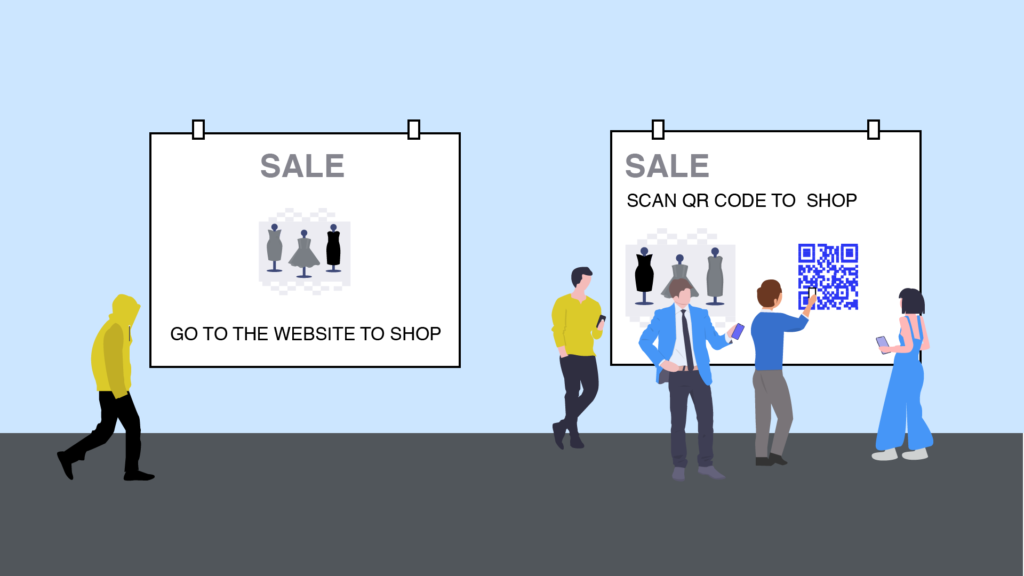
A QR Code poster is a printed poster with a scannable QR Code that links to a digital destination: a menu, a sign-up form, a review page, or a product listing. It turns a flat piece of print into something a customer can act on immediately, without typing a URL or hunting for your business online.
Most guides will tell you to focus on design: choose the right size, the perfect spot, and a color that complements your poster. While design is important, it is rarely the reason a QR Code poster falls short. The real challenges appear after printing, when a destination link changes unexpectedly, a print run alters a color you never saw on screen, or no one tests the code under the actual lighting where the poster will be displayed. Imagine printing 500 copies with a code that does not work. At that point, the solution is not a quick redesign. It is a costly reprint.
This guide takes you through every step: from creating a QR Code poster with Uniqode’s dynamic QR Code generator, to finding free templates, to sizing and designing your code so it truly earns the scan. You will also learn how to test your poster before sending it to print, and how to craft a call-to-action that actually encourages people to scan.
What is a QR Code Poster?
A QR Code poster is a poster that carries a scannable QR Code, linking a physical display to a digital destination. The QR Code poster works as a bridge between offline and online marketing: a customer sees the print, scans the code, and lands on a webpage, form, or menu without searching for the business by name.
A QR Code poster offers a range of benefits, such as:
- Simplify access to information. With a quick scan, viewers can instantly access important information such as product details, promotional offers, or event registrations.
- Avoiding reprinting costs. Using a dynamic QR Code allows you to edit the QR Code after printing, saving you from reprinting your posters just for the QR Code alone.
- Enable quick actions. QR Codes on posters empower customers to take actions such as making purchases, booking services, or downloading apps in seconds.
- Enhance campaign tracking. You can monitor and measure the success of your campaigns by tracking QR Code scans and understanding engagement metrics such as location, time, and device type.
- Boost offline-to-online conversions. They guide offline audiences to digital platforms, reducing friction in the customer journey and improving conversion rates.
Do not underestimate the value of the second benefit. With a static QR Code, your destination is set in stone the moment you print. A dynamic QR Code, on the other hand, gives you the freedom to update the link at any time. This difference can mean the choice between a quick five-minute fix and the costly ordeal of reprinting an entire batch, a point worth remembering as you read on.
How to make a QR Code poster with Uniqode's generator
Adding a QR Code to your poster is simpler than you might think. Just follow these five steps: sign up for a generator, choose your QR Code type, customize the design, download the file, and place it into your poster layout.
Step 1: Sign up and access Uniqode's QR Code generator
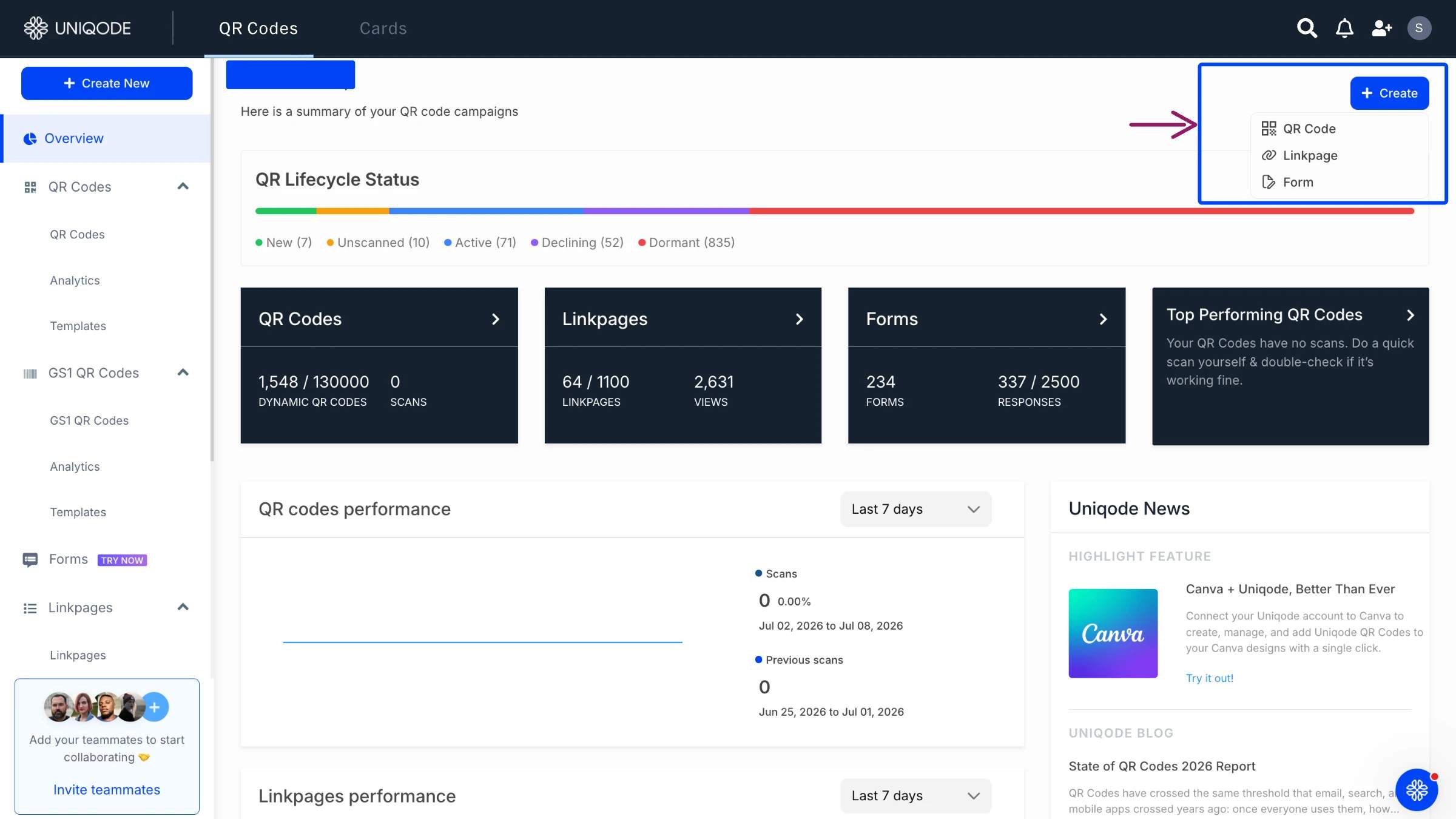
Once you're inside the Uniqode dashboard, click "+CREATE." Select "QR Code" from the dropdown menu.
Step 2: Choose your QR Code type and enter details
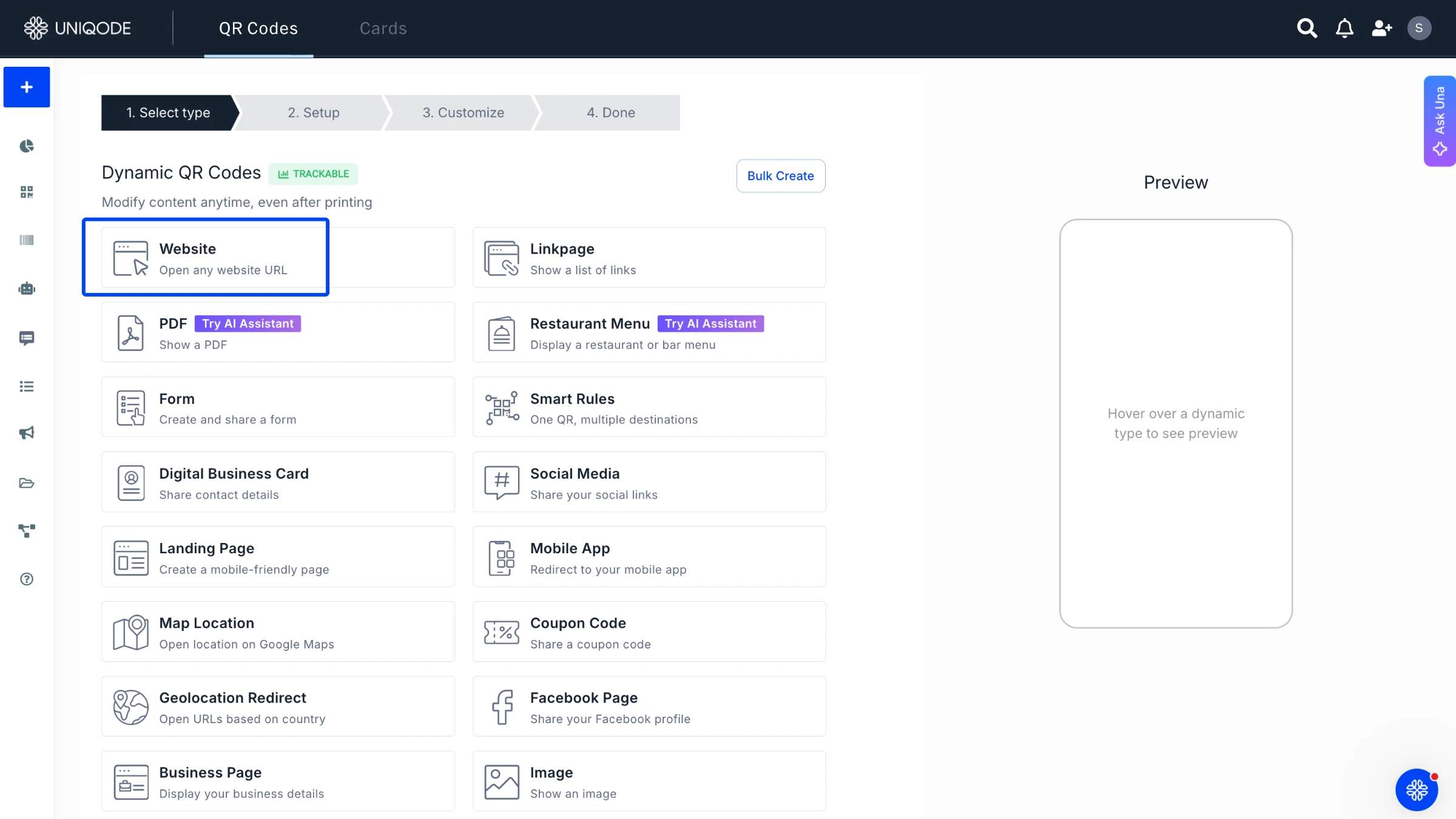
Select the QR Code type you want to create. For example, choose the "Website" option to redirect customers to your website after scanning the QR Code. Once you've selected the type and filled in the necessary details, click "NEXT" to proceed.
Pro tip: Choose a dynamic QR Code so you can update the content whenever you need to, without touching the printed poster.
Step 3: Customize your QR Code
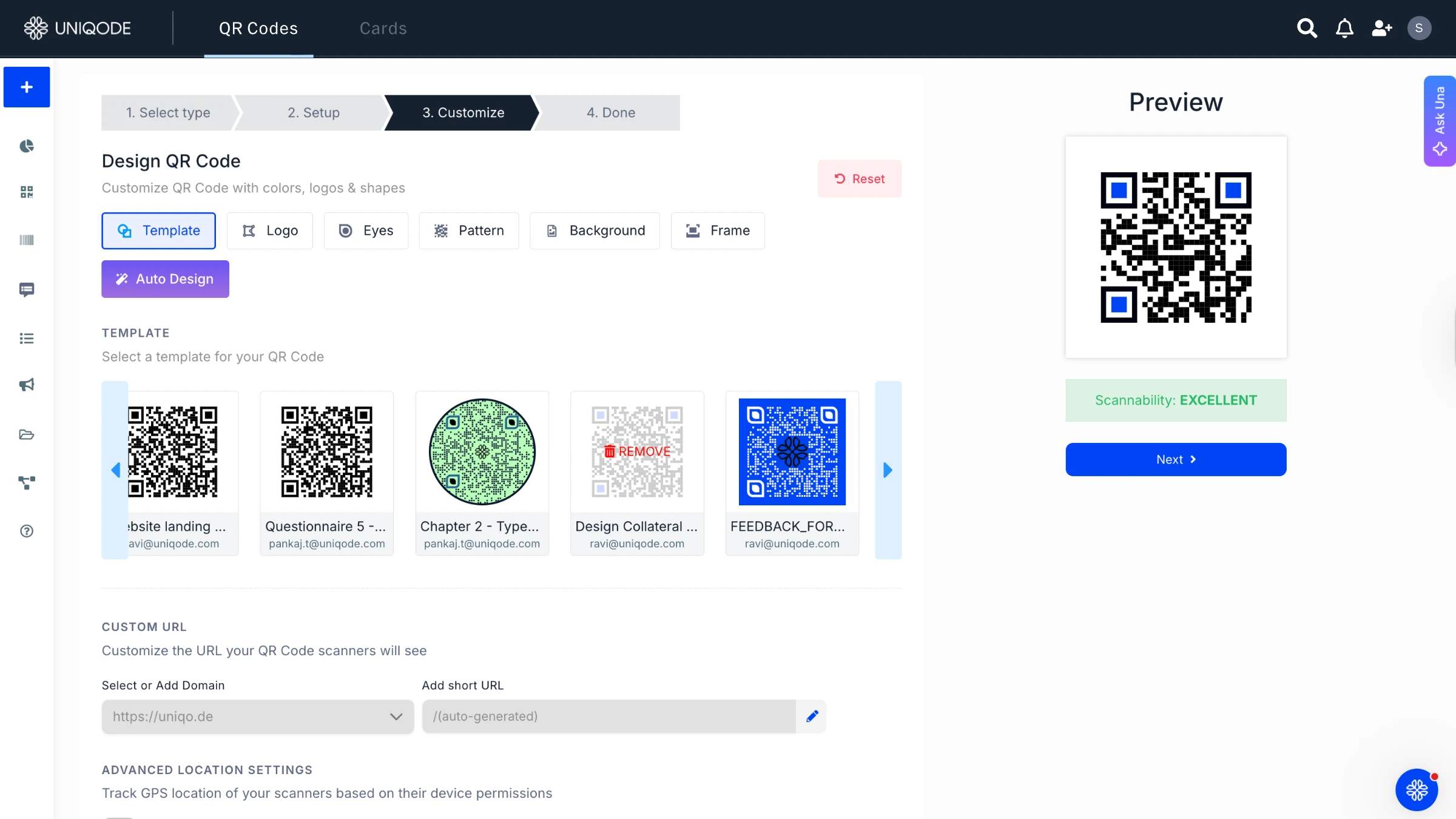
Select a shape, frame, and CTA, and match colors with your poster design. Use the real-time scannability tool to confirm "EXCELLENT" scan quality before moving on.
Step 4: Save and download
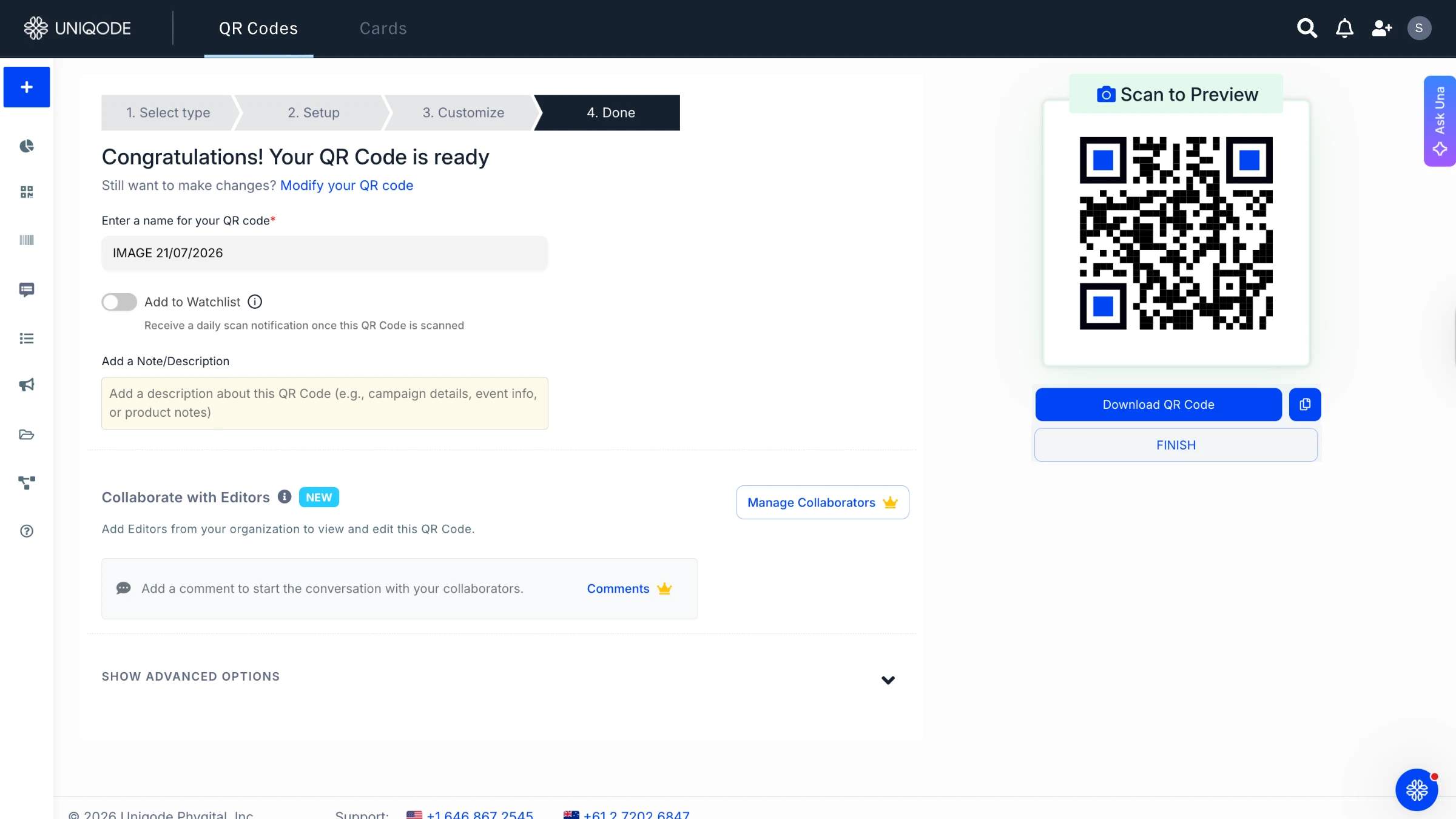
Test-scan the QR Code with your device, then download it in PNG format to use in your existing poster design. Save the QR Code design as a template if you'll run similar campaigns again.
Step 5: Optional, if you're using Canva templates
In Canva, open the "Apps" panel on the left, search for "Uniqode QR," and click "Use in existing design." Connect your Uniqode account by entering your API key and Organization ID: go to the Uniqode dashboard, click "API" in the menu, and copy the credentials, then paste them into Canva. Once connected, access your saved QR Codes directly on Canva, customize them, and drag and drop the code on top of the Uniqode logo.
Uniqode’s real-time scannability tool helps you spot issues while your design is still on screen, but it can’t check what happens after you print it. The checklist below explains what to look for once your file goes to the printer, since that’s where most poster QR Codes run into trouble.
Free QR Code poster templates
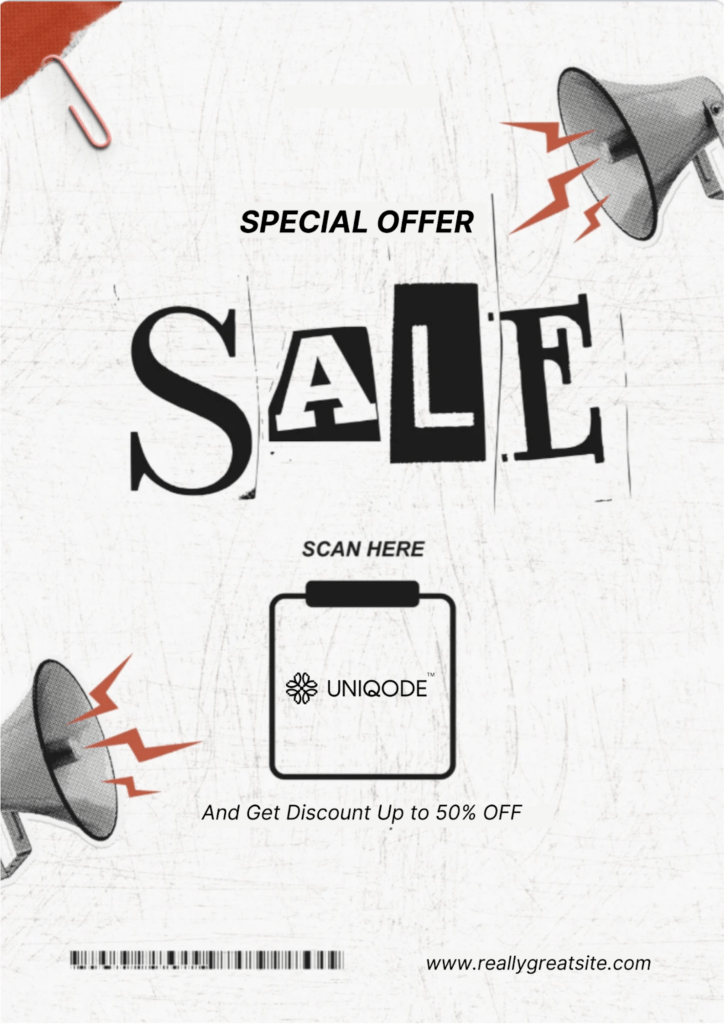
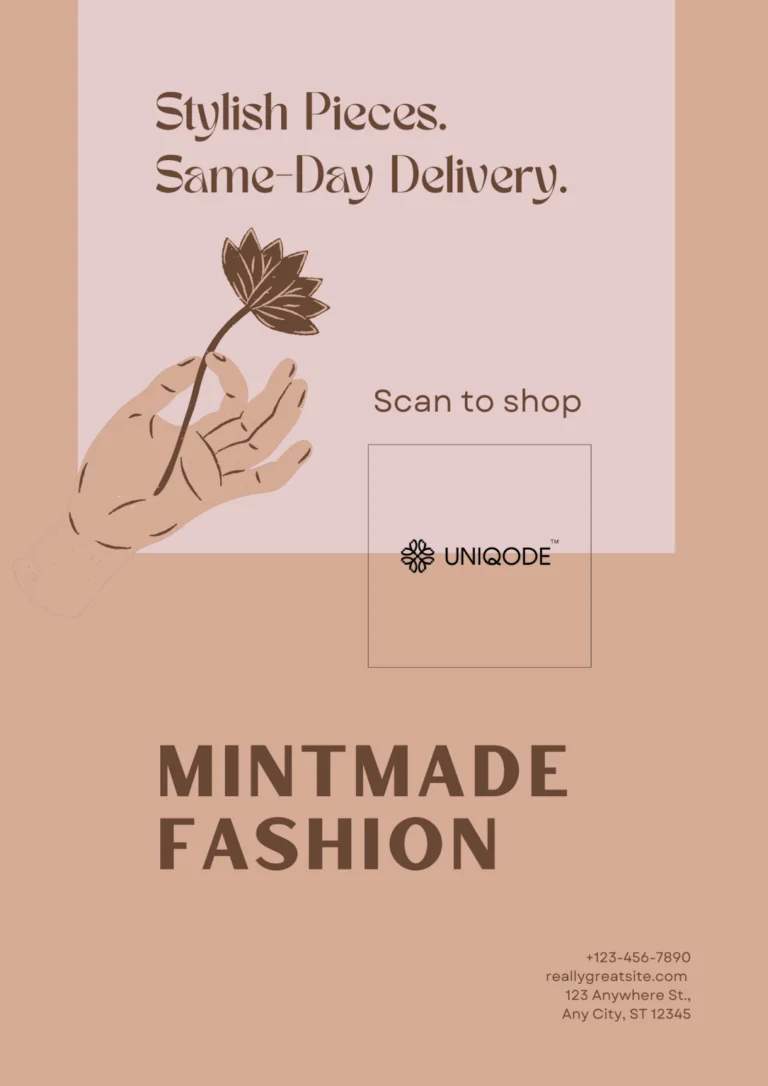
Uniqode offers four free QR Code poster templates that show exactly what a great design looks like. Each template is ready to use, easy to customize, and the QR Code is placed for the best scan results. You can access all these templates at no cost. Our design team made sure the QR Code stands out while still looking good, so you get more scans.
Holiday sale QR Code poster
A simple, bold call to action for the physical world for your holiday sales.
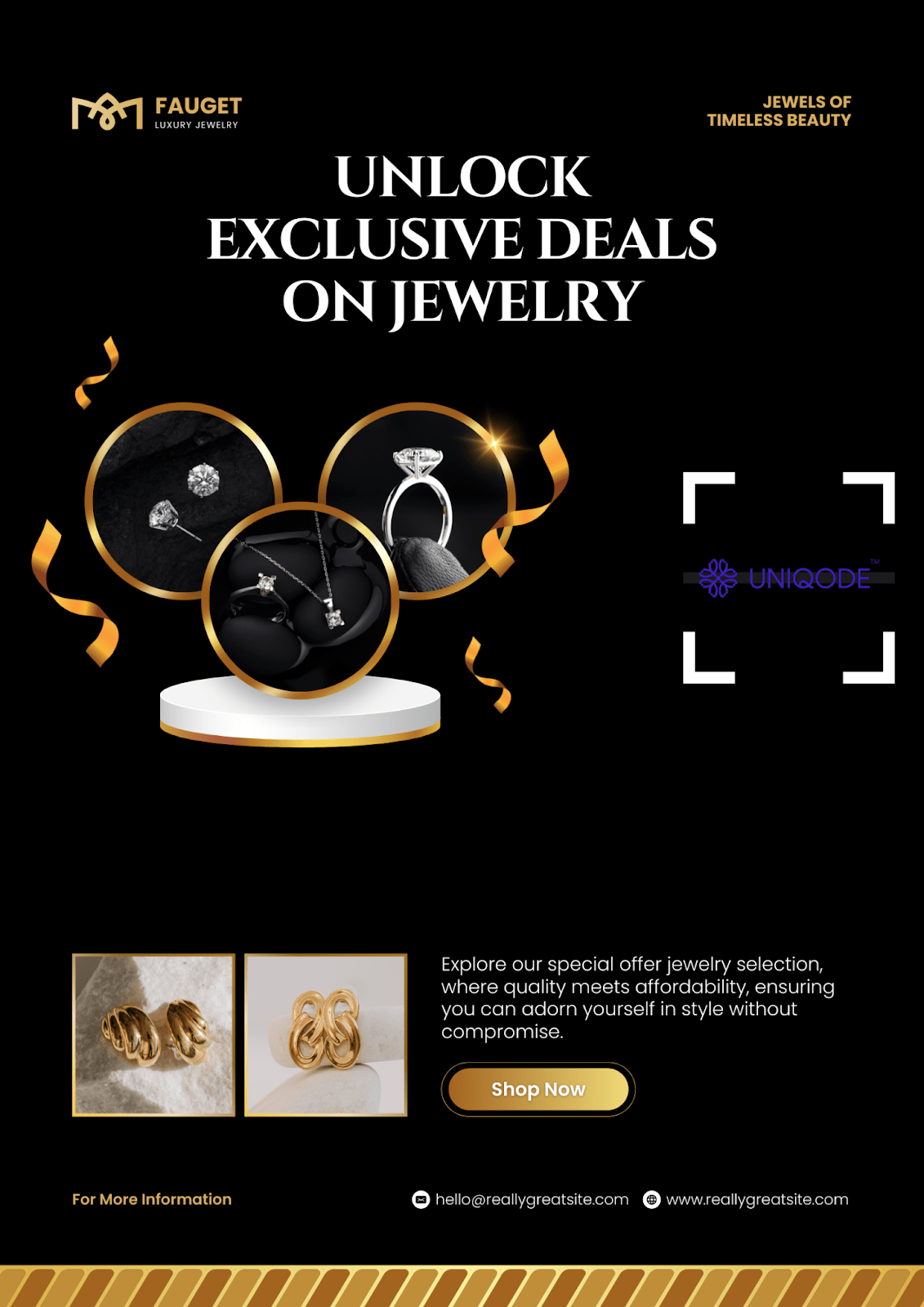
Luxury jewelry QR Code poster
Showcase exclusive deals for luxury jewelry enthusiasts in opulence.
Business webinar QR Code poster
A sleek and professional template to boost webinar registrations.

QR Code poster design: sizing, placement, and CTA best practices
Most QR Code poster design mistakes are set in motion long before you even open your layout tool. The context of use is everything. For instance, a QR Code that works perfectly on a tabletop tent card will be lost on a billboard, and a call to action crafted for a store aisle simply will not work at a bus stop. To help you get it right, the table below breaks down sizing and placement.
| Best practice | How to do it |
|---|---|
| 📏 Size the QR Code for viewing distance | Use the 10:1 rule: the QR Code should be at least 1/10th of the intended viewing distance. A 5-meter viewing distance needs a 50 cm QR Code. |
| 👁️ Position the QR Code at eye level or lower | Place the code at a convenient height for scanning, avoiding placement too high or too low on the poster. |
| 🎯 Make it the visual focal point | Highlight the code if it's the poster's primary focus, using bold outlines, surrounding whitespace, or directional design elements like arrows. |
| 🌞 Consider environmental lighting | Use high-contrast QR Codes to keep them scannable under varying lighting conditions, such as bright sunlight or dimly lit areas. |
| ✅ Test across locations and time cycles | Test the code in its actual poster location to confirm it scans despite glare, shadows, or awkward viewing angles. |
| 🚦 Avoid overcrowding the poster | Leave whitespace equal to at least 4 times the width of one module around the code, so it stands out and stays easy to scan. |
| 📣 Provide a location-relevant CTA | Customize the CTA to the poster's environment: "Scan for deals" in a store, "Scan for route info" at a bus stop. |
A poster CTA should do more than just instruct you to scan; it should offer a clear promise of information. Interestingly, Uniqode’s State of QR Codes 2026 report reveals that 75% of consumers scan QR Codes mainly to access information, not just for discounts or payments. Yet, only 36% of marketers actually design their QR Codes to deliver that information directly. A vague CTA like “Scan here” does little to bridge this gap. Instead, a CTA such as “Scan for the full menu” or “Scan to see this week’s schedule” tells your customer exactly what to expect, making it far more likely they will reach for their phone.
There are three golden rules for crafting effective CTAs on QR Code posters. First, always begin with a verb. Think “Scan,” not “You can scan.” Second, keep the payoff short and sweet, ideally four words or fewer. Third, position the CTA close enough to the code so viewers instantly connect the message with the action. If you ever need to update where the QR Code leads, a dynamic QR Code lets you make changes remotely, saving you from reprinting posters. With Uniqode’s QR Code frames, you can even embed the CTA directly into the code’s design, like “Scan for the menu,” “Scan to register,” so your message stays with the code, no matter how the layout changes.
How to test a QR Code before printing posters
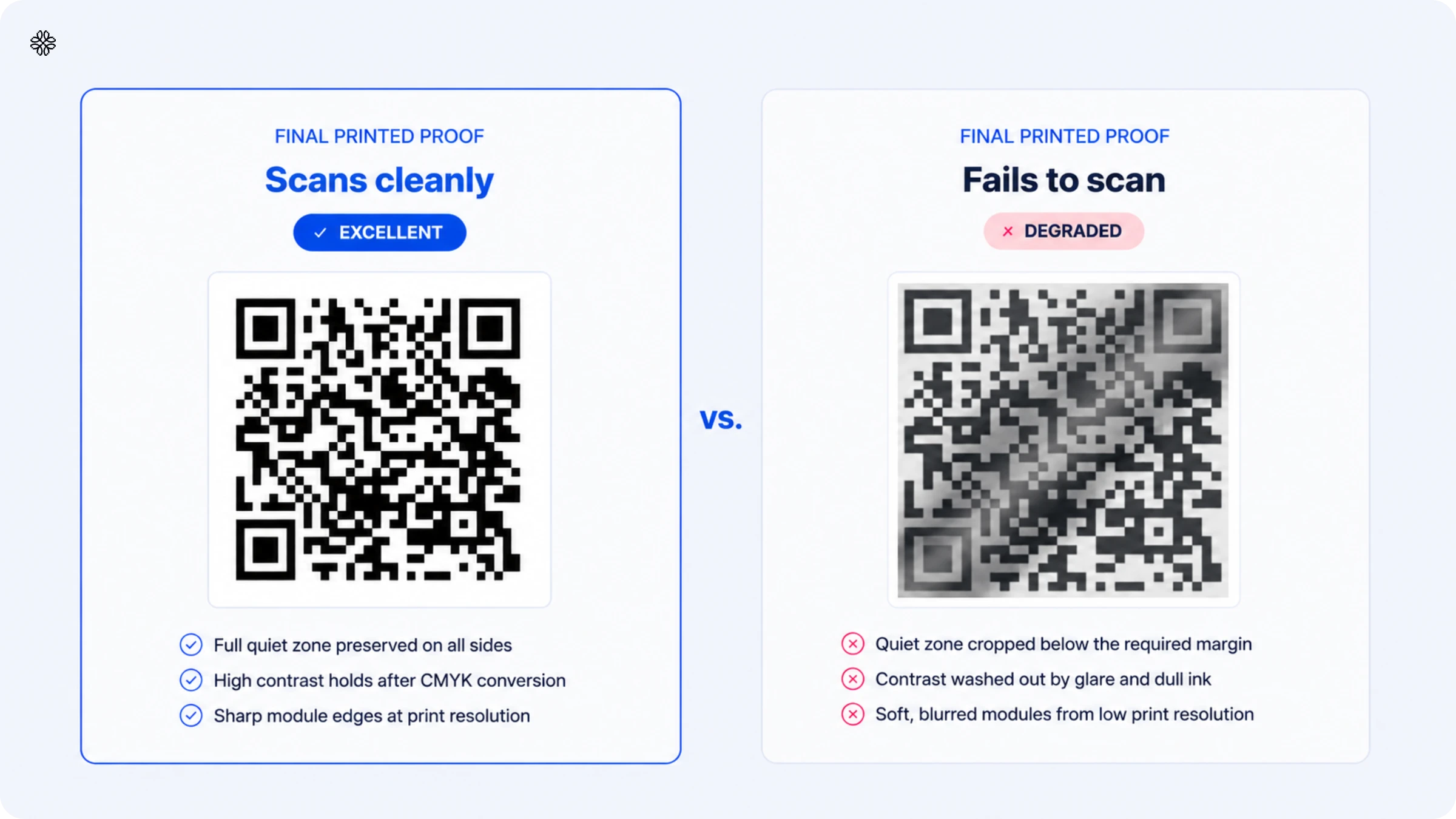
Always test the QR Code on the final printed proof rather than relying on the digital design file. The printing process can alter how a code scans in subtle ways that simply do not appear on a screen.
Before sending your poster run to print, make sure to complete these five essential checks:
- Begin by scanning the code from three different distances: up close, at mid-range, and from the intended viewing distance of the poster. A QR Code that works perfectly at arm’s length may still fail when viewed from across the room.
- Scan in two lighting conditions. Test under bright, direct light and again under dim, indoor light. Glare and shadow behave differently on paper than they do on a monitor.
- Test the code using both iOS and Android native camera apps, rather than relying solely on dedicated QR scanner apps. Most users will simply use their phone’s built-in camera to scan the code.
- If your QR Code uses colors other than classic black on white, be sure to check for any color inversion issues. A code that appears crisp and clear on screen can easily lose contrast once it is converted for CMYK printing.
- After the final design has been approved, take a moment to verify the destination URL once more. One of the most common mistakes is leaving a QR Code linked to a staging URL that was never updated to the production link before printing.
While Uniqode’s scannability check may confirm an ‘Excellent’ rating on screen, it cannot reveal how the code will perform under gallery lighting on a printed proof. This is precisely why the physical checks above remain essential, even after a digital check passes. The goal is to catch any issues before the print run ships: with a static code, any mistake is permanent, while a dynamic code can be fixed remotely, but only if someone notices the error. For added peace of mind, consider setting up a custom error page to display a branded message instead of a broken 404 if a link ever goes dead on an older poster.
QR Code poster examples and ideas
QR Codes used to be just a small detail at the bottom of posters, but now they play a big role in marketing campaigns. They give brands a new way to connect with people. Here are six QR Code poster campaigns and tips on how you can achieve similar results.
1. Intel’s “Visibly Smart” Campaign
🤩 What we liked: Intel used the QR Codes strategically in the design of the billboards, blending harmoniously with the campaign’s visuals to ensure a cohesive and engaging user experience.
💡 Areas of improvement: The QR Code’s connection to the overall “Visibly Smart” campaign theme could have been more explicit by implementing Augmented Reality experiences after scanning the QR Code.
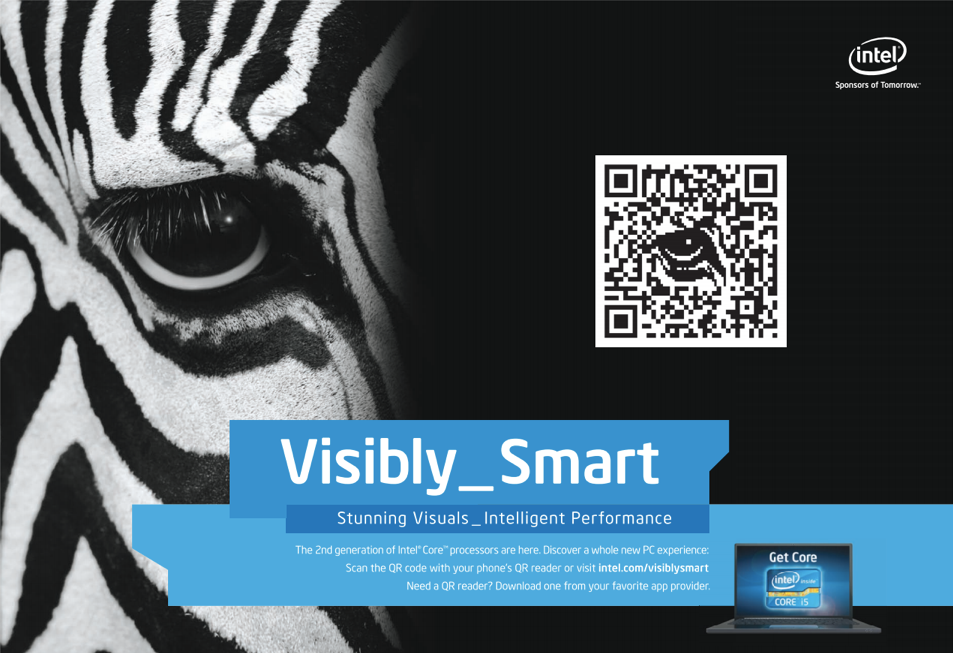
Intel pioneered QR Code on posters a decade ago with their “Visibly Smart” campaign, part of a larger marketing initiative launched in 2010. It aimed to highlight Intel’s focus on innovation and performance, emphasizing how their processors could enhance the visual experience on computers.
The QR Code on the billboard was used to redirect users to a dedicated microsite or landing page with more information about the campaign, product specifications, and potentially exclusive offers.
💡Pro tip: If you’re a small or medium-sized business without a dedicated mobile-friendly webpage for your poster QR Code, use a Linkpage to create a custom microsite in minutes. Uniqode will host this website for you without any extra charges. Make one from scratch or use one of our existing templates to get started.
2. Nutrichoice’s AR-powered ad campaign
🤩 What we liked: Creative implementation where the poster pops out of the newspaper, creating an immersive and interactive experience
💡 Areas of improvement: Nothing, it’s a brilliant execution.
Nutrichoice’s AR-powered ad turned mundane newspapers into something straight out of Hogwarts!
Upon scanning a seemingly standard newspaper ad, the static image came to life with a video showing Britannia NutriChoice Digestive biscuits made with 100% whole wheat flour and 0% refined flour.
This interactive experience was also made available through posters at various retail touchpoints, enhancing consumer engagement beyond print ads.
3. Taco Bell’s Edible QR Code campaign
🤩What we liked: A well-done skeuomorphic design in QR Codes for promotional materials
💡Areas of improvement: The campaign could incorporate a clearer CTA to scan the QR Code
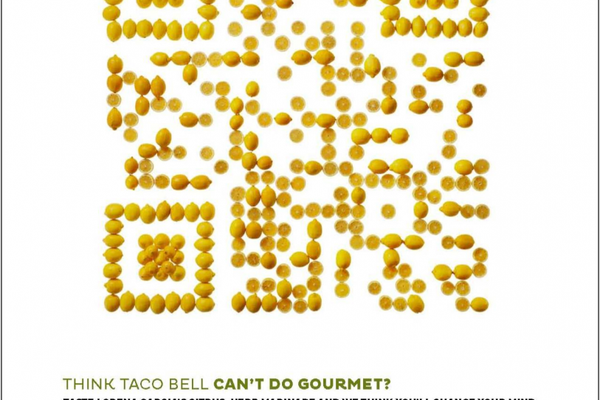
Taco Bell has been incorporating QR Codes into its promotional campaigns for many years. In this example, the food chain nailed the creative with skeuomorphic—designs that mimic real-life objects—QR Codes which looked like the main ingredients on its menu, such as lemons and avocado.
Taco Bell placed these QR Codes in print ads published in US Weekly and People magazines. The campaign was an initiative to promote “Taco Bell Cantinas,” the restaurant’s attempt at serving a gourmet menu.
4. The Oglivy QR Codes
🤩What we liked: A visually engaging and artistic QR Code design that effectively integrates branding elements into the poster while sparking curiosity.
💡 Areas of improvement: The campaign could benefit from a stronger and more prominent call-to-action (CTA) to encourage scanning, ensuring maximum engagement.
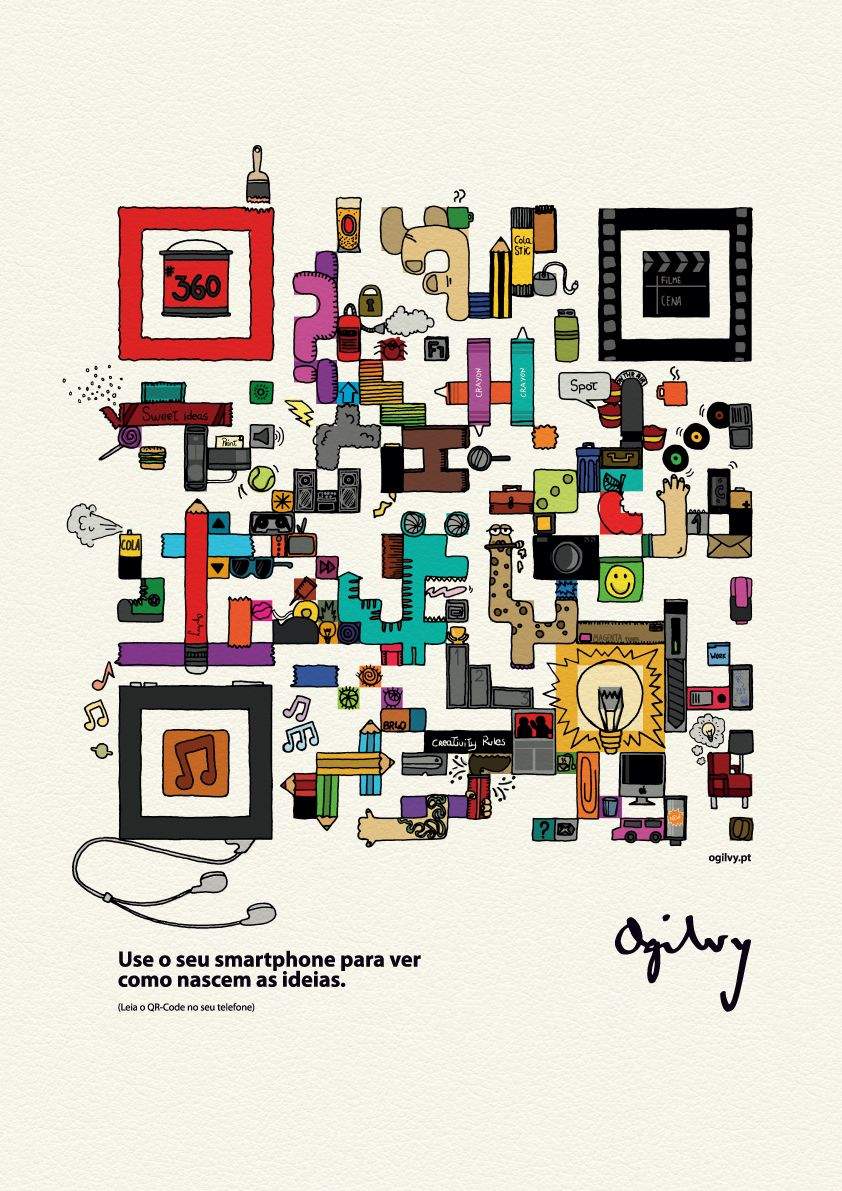
Ogilvy Portugal used this QR Code poster as part of a creative campaign displayed at Praça Duque de Saldanha.
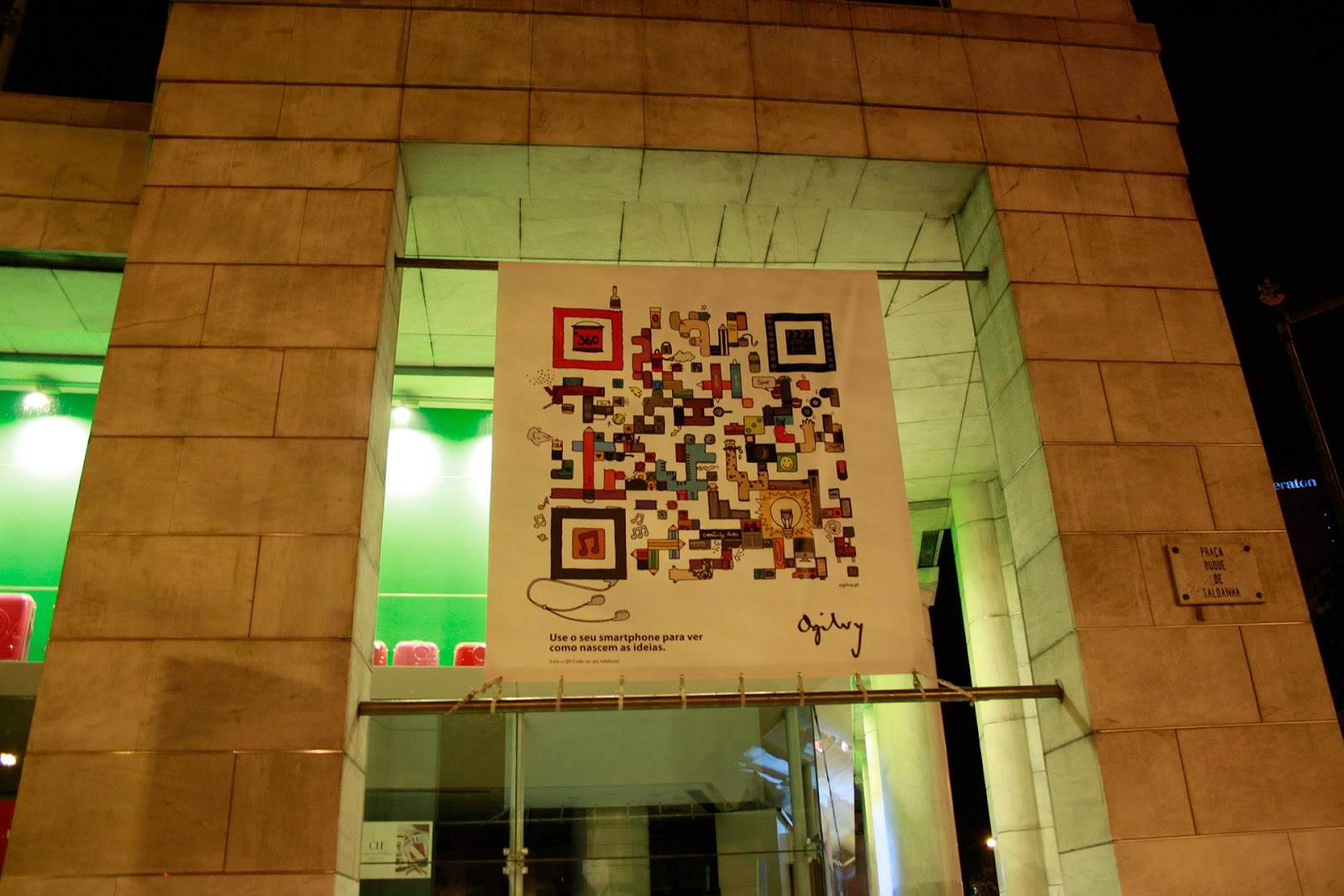
The QR Code pointed users to their website, showcasing how ideas are born. This innovative design combines the utility of QR Codes with a visually rich, illustrative style to capture attention and emphasize creativity.
5. VIVA Cash’s QR Code Campaign
🤩 What we liked: A creative integration of QR Codes into product-themed visuals (e.g., burger, perfume, shopping cart) that effectively captures attention while linking directly to the VIVA Cash app.
- The campaign’s visually diverse designs aligned well with its multi-platform adaptability, making it stand out in outdoor and social media spaces.
💡Areas of improvement: Nothing, it’s a brilliant execution.
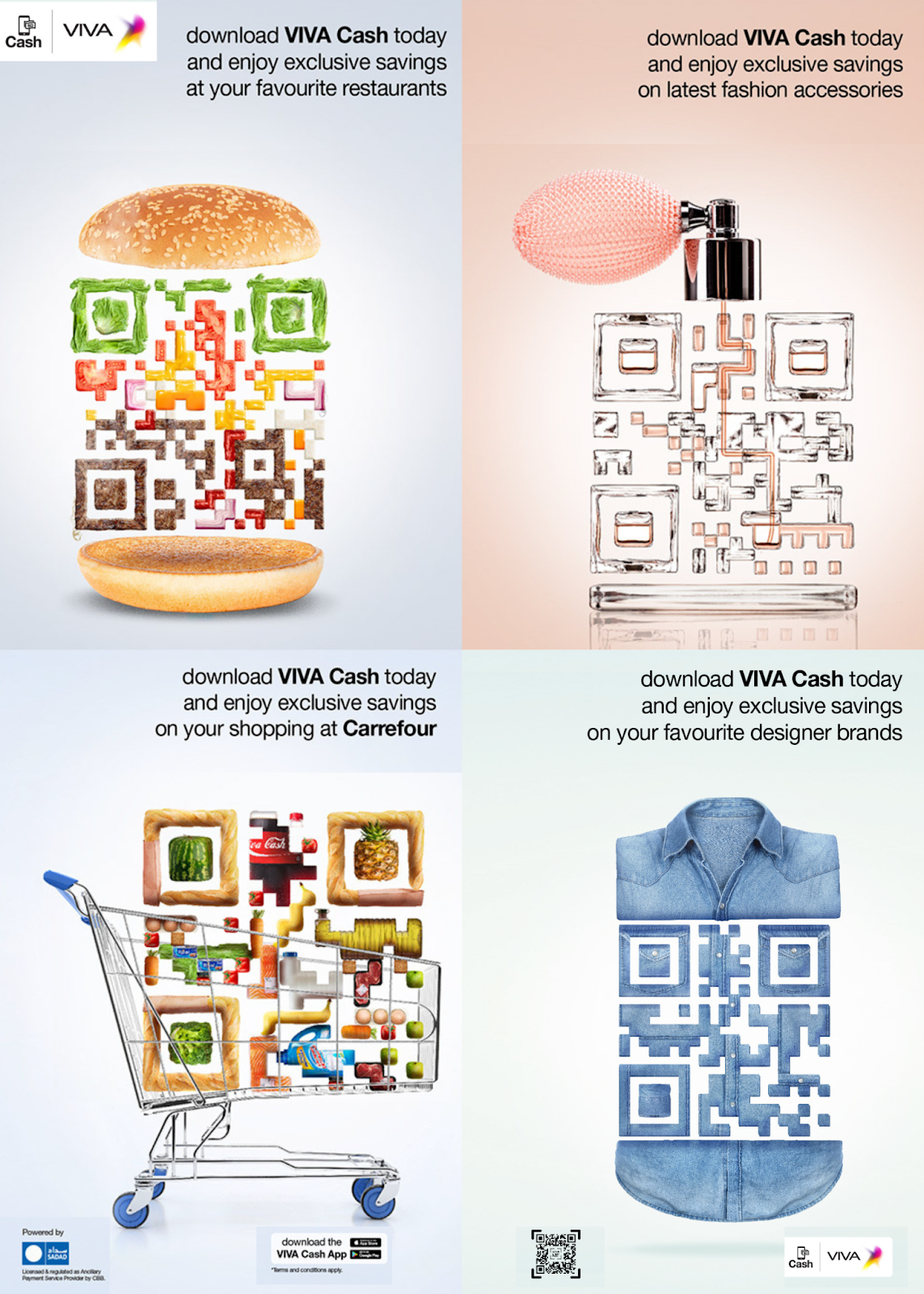
VIVA Cash used this QR Code campaign to promote its mobile wallet app across platforms, creatively embedding QR Codes in visuals representing shopping, dining, and fashion.
With over 800 merchant partnerships in Bahrain, the campaign showcased adaptability and collaboration through partner-specific executions. And their use of QR Codes as a central branding theme is commendable.
🪞Mirror these campaigns with a trackable poster QR Code
Create a Uniqode account to access all the premium features free for 14-days—no credit card required.
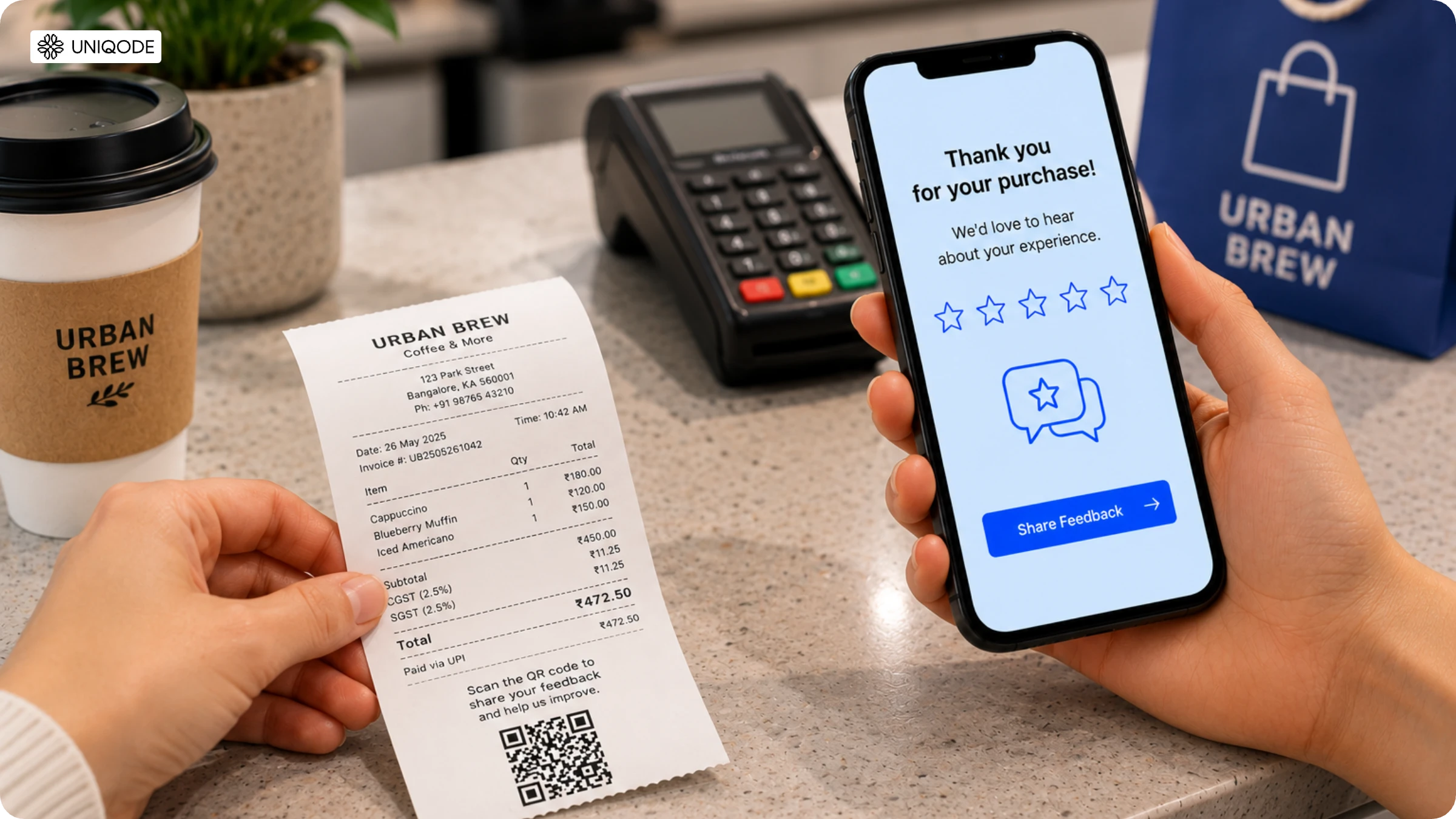
QR Code posters for review collection
A review-collection poster is a QR Code poster with a single, focused purpose: encouraging a happy customer to leave a Google review before they walk out the door. Unlike a typical marketing poster, the details here matter. Get them right, and your poster will quietly work for you, gathering valuable feedback. Get them wrong, and it risks becoming just another piece of branded decor.
To create an effective review-collection poster, you need just five essentials: your logo, a QR Code, a concise call-to-action, a warm invitation to leave a review, and your contact details. Placing a star-rating graphic beside the code instantly signals the poster’s purpose, even before a single word is read.
Here’s the most important detail that many posters miss: your QR Code should take customers straight to the Google Maps review-submission screen, not just your business profile. If you only link to the profile, customers are left searching for the ‘write a review’ button. By guiding them directly to the submission page, you remove unnecessary steps, and that small change can be the difference between a customer who leaves a review and one who only intended to.
To make things easier, use Uniqode’s Google Review QR Code generator. It automatically creates a direct link to the review submission page, saving you the trouble of piecing together the URL yourself. Be sure to opt for a dynamic code: if your Google Business listing changes or the review link ever breaks, you can simply update the destination without having to reprint your poster. This flexibility is especially important for review posters, which often stay up for months near your register or entrance.
QR Code poster statistics
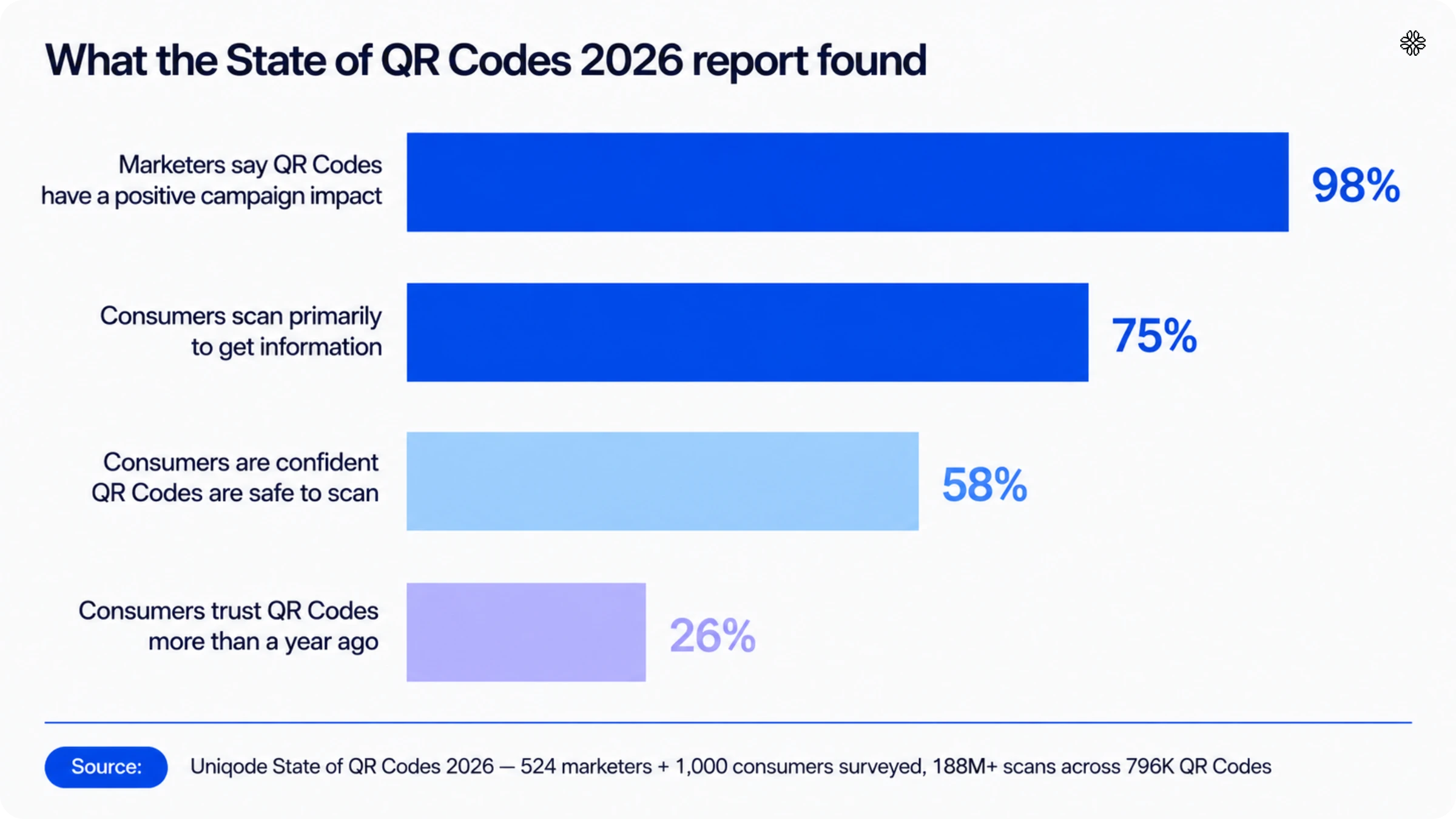
Across 524 marketers and 1,000 consumers surveyed for Uniqode’s State of QR Codes 2026 report, and 188M+ scans analyzed across 796K QR Codes, the numbers behind QR Code posters look like this:
An impressive 98% of marketers report that QR Codes have positively influenced their campaigns, with 60% planning to use them even more in the future. On the consumer side, 75% scan QR Codes mainly to access information, rather than for discounts or payments. However, only 36% of marketers actually design their code to provide information directly. This disconnect highlights the importance of crafting a poster call to action that promises valuable information rather than simply instructing people to scan. Encouragingly, 58% of consumers now feel confident scanning QR Codes, and 26% trust them more than they did just a year ago.
The report also points out that fragmented tracking, mentioned by 33% of marketers, and duplicate codes, cited by 28%, are the main challenges to expanding a QR Code program. Both issues stem from the same source: when a poster campaign begins with just a few static codes and then expands to dozens across multiple locations, it quickly becomes clear that a scalable system is essential from the outset.
Get your QR Code poster print-ready
Before you send your poster for printing, take a moment to check it against the testing checklist once more, this time using the actual printed proof, not just the design file. This simple step can save you from the most common pitfall: a QR Code that appears perfect on screen but fails to work once printed.
Choose a template from the gallery above, size your QR Code thoughtfully, and test it following the guidelines here. With these steps, your poster will achieve what a simple printed URL never can.
Frequently Asked Questions
- Can you track how many people scan QR codes on posters?
Yes, dynamic QR codes provide detailed tracking and analytics for poster campaigns. You can monitor the number of scans, identify when scans occur, determine geographic locations of scanners, and understand what device types are being used. This tracking capability allows you to measure ROI and make data-driven decisions to optimize your print-to-digital marketing campaigns.
- Do I need to reprint posters if I want to change the QR code destination?
No, if you use dynamic QR codes, you can edit the destination URL and linked content after printing without needing to reprint your posters. This feature saves significant reprinting costs and allows you to update campaign information, fix errors, or redirect users to seasonal content while keeping the same physical QR code on your printed materials.
- Will QR Codes work on printed posters?
Yes, QR Codes can work on printed posters. You can integrate QR Codes on posters of all sizes.
- How do I create a free QR Code for a flyer?
You can create and put a QR Code on a flyer using Uniqode’s QR Code generator:
- Go to Uniqode’s QR Code Generator and click “+Create”
- Choose the QR Code campaign type and input the details
- Customize the QR Code
- Save, download, and share your QR Code
- Can you add a QR Code to a poster?
Yes, any poster design can carry a QR Code, whether it's a print file made in Canva, Adobe, or a design agency's own tools. Generate the code separately using a QR Code generator, download it as a PNG or SVG, then place it into the poster layout the same way you'd place any other image.
- How large should a QR Code be on a poster?
Size the QR Code using the 10:1 rule: the code should measure at least 1/10th of the intended viewing distance. A poster meant to be scanned from 5 meters away needs a code roughly 50 centimeters wide.
- How often should I update a QR Code poster?
Update a QR Code poster's destination whenever the campaign, offer, or linked page changes, and confirm the link still works during any routine poster maintenance. If you're using a dynamic QR Code, updates take a few minutes in the dashboard and require no reprint. If you're using a static code, weigh the cost of a reprint against how long the poster is expected to stay up before deciding whether an update is worth it.
About the Author
Shashank - Enthusiastic about marketing and improving the ROI of businesses.
![How to Create a Free QR Code For Print [No Sign-In Required]](https://cdn.sanity.io/images/0aocp9sp/production/afcd69c772a56757c43e20499cf8d36a3d64e3da-960x540.png?w=3840&q=65&auto=format&fit=max)