QR Codes in ecommerce: 9 ways to turn packaging scans into repeat revenue
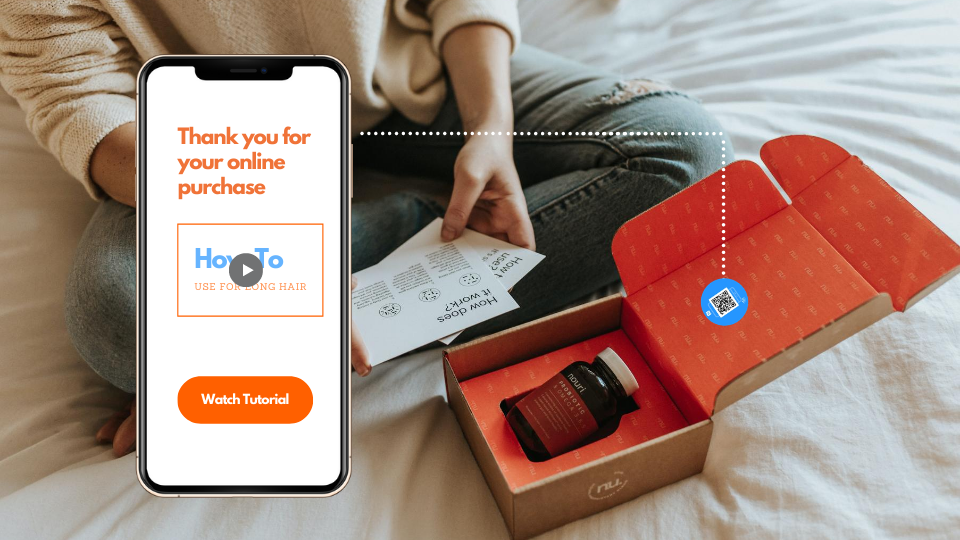
Many successful ecommerce brands use QR Codes in their business strategy to increase sales, get repeat customers, and build their brand. QR Codes have become a strategic tool rather than a one-time printout.
QR Codes for ecommerce go beyond just contactless payments.
Brands are now building measurable marketing campaigns and bringing in sales with QR Codes.
Let’s look at how top brands use QR Codes for their marketing and sales activities. And learn how you can implement them for your ecommerce business.
Why ecommerce brands use QR Codes
A QR Code in ecommerce does one of two things: moves a buyer to the next step in the funnel, or wastes the highest-intent moment a physical touchpoint can generate. Most brands do the latter. Here is what a program built around the former actually does:
- The box, packing slip, and receipt are touchpoints most brands leave blank. A QR Code turns passive packaging into a live post-purchase channel.
- Re-order codes on consumable products catch buyers in the moment before they search for a competitor. When the empty tub is in front of them and the decision takes four seconds.
- Every scan is a data event. QR Codes on physical materials capture engagement signals that website analytics never see.
- Contactless payment via QR replaces card readers at pop-ups and seasonal retail activations.
- A scan on a promotional landing page automatically seeds a Meta or Google Ads audience from anonymous visitors, no form, no opt-in.
- Unique codes per store or SKU surface which locations and products generate real engagement, before the next display refresh cycle.
How top ecommerce brands use QR Codes to improve sales
Ecommerce brands use QR Code in both physical and digital channels. Their use cases span from sales to loyalty. The brands getting measurable returns have made specific choices about which moment to intercept, what the scanner sees in the first three seconds, and whether the code updates itself or dies the day a promotion ends. Let’s look at the top nine ways you can use QR Codes for brand, inspired from top ecommerce brands.
1. Post-purchase experience: closing the loop after the sale
The moment an order is marked delivered, most ecommerce brands stop communicating. The customer has the product. The brand considers the job complete.
Brands spend significantly more to acquire an ecommerce customer than to run a post-purchase QR Code program. The post-purchase QR program determines whether that acquisition generates a second purchase or a single transaction. A packing slip QR Code that captures a warranty registration gives the brand a durable reason to follow up with that buyer indefinitely.
Portronics, an electronics brand, uses three different QR Codes on the packaging: two routed to setup guide pages, the third to warranty registration. This is exactly the "know what the buyer needs after purchase" principle in practice, not a single code pointing everywhere.
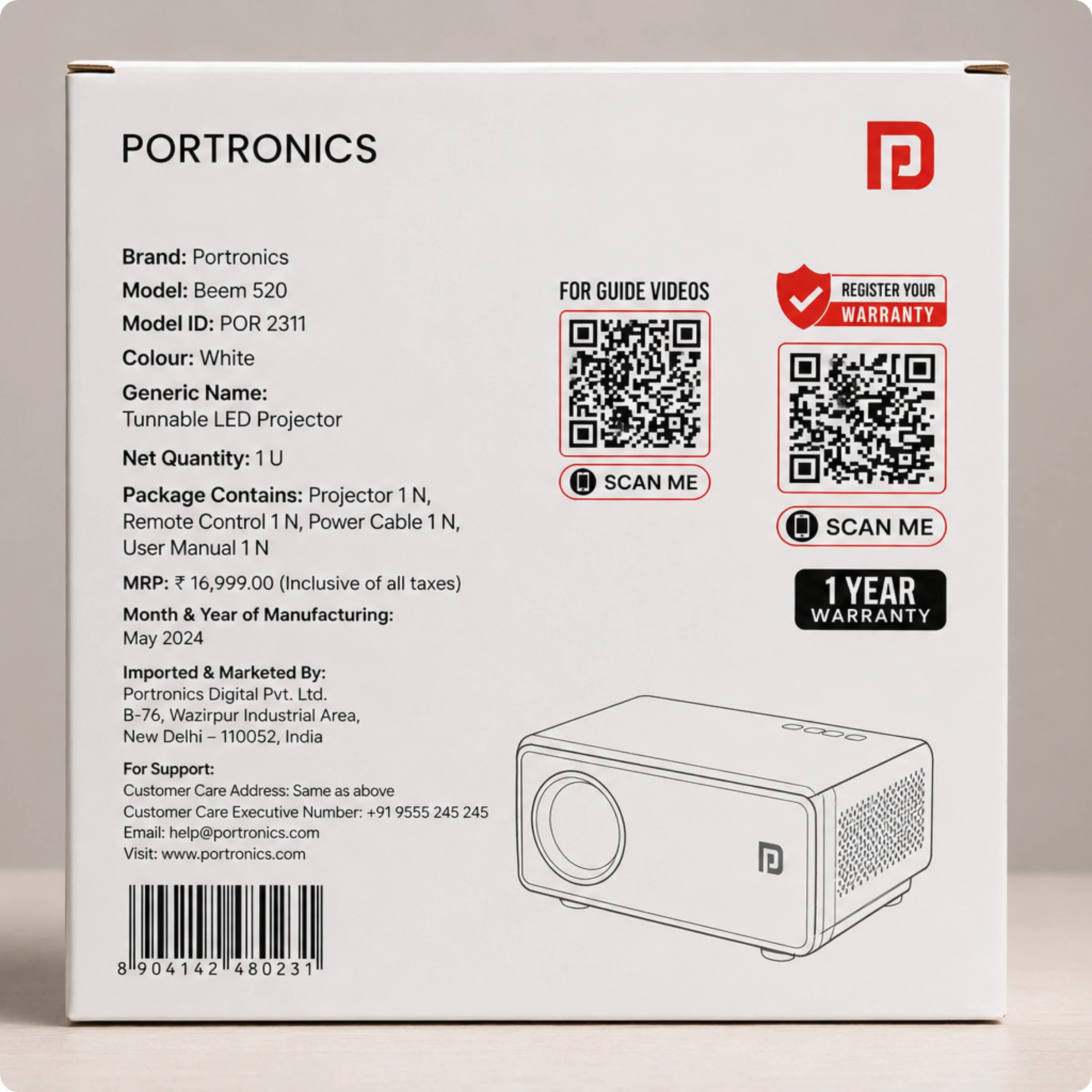
For example, you can route the QR Code on the packing to the buyer to a 30-second warranty registration form. Here are a few other post-purchase moments worth putting a QR Code on product packagings:
- Digital receipt: opens a returns portal pre-populated with the order number, so the buyer skips the "find my order" step entirely.
- Shipping label: shows real-time tracking without requiring them to dig through email for a tracking number.
- Warranty card insert: routes to a 30-second registration form, giving the brand a durable reason to follow up long after the sale closes.
2. Re-order QR Codes: the retention mechanic hiding in every shipment
Every unit you ship, be it protein powder, pet food, or skincare, can go with a potential re-order mechanism. You can create repeat purchases if you know how to use QR Codes the right way: by putting the re-order decision exactly where the repurchase moment happens. The buyer scans and lands on a pre-filled cart for that exact SKU.
Uncorked Jamaica, a wine bar and restaurant, took a simpler physical route, a QR Code fridge magnet on takeout orders, designed purely to bring the customer back for the next order.
A re-order QR Code on the bottom of the tub, or on a card inside the box, routes them to a pre-filled cart for the same SKU. No search, no navigation, no decision fatigue.
⚡Pro tip: It’s best to keep the re-order code a dynamic QR Code. When the product goes out of stock or the URL changes, a static code sends the buyer to a dead page at the worst possible moment. A dynamic code redirects to the next available variant without reprinting the packaging.
3. Loyalty program enrollment and rewards access
Most loyalty programs are promoted at checkout, before the customer has fully experienced what they bought. You can also use the unboxing moment to enroll loyal members.
A pet-care brand, Tomskoi, runs its rewards program the same way: give a mobile number at checkout to start earning immediately, then finish registration later by scanning the QR Code on the packing slip or box insert. Completing the profile unlocks a sign-up bonus, and every subsequent order adds points automatically.
A well-built flow asks for nothing more than a name and phone number or email, verifies the purchase against the order ID already encoded in the code, and credits starting points before the customer has closed the tab.
For existing members, the same QR Code framework works in reverse. A code on the loyalty card, the packing slip, or the order confirmation opens current tier status and available rewards, pulled straight from the account instead of asking the customer to log in anywhere. Keep the code dynamic so the landing page and the offer behind it can change for seasonal campaigns without reprinting a single insert.
4. Product authentication: the trust signal that drives conversions
Twenty-eight percent of consumers scan QR Codes for security or authentication, according to the State of QR Codes 2026. They are already looking for proof the product is real.
Maesa, a beauty brand, uses dynamic QR Codes to link Certificates of Analysis on cannabis-infused products, covered as both a compliance and anti-counterfeit play.
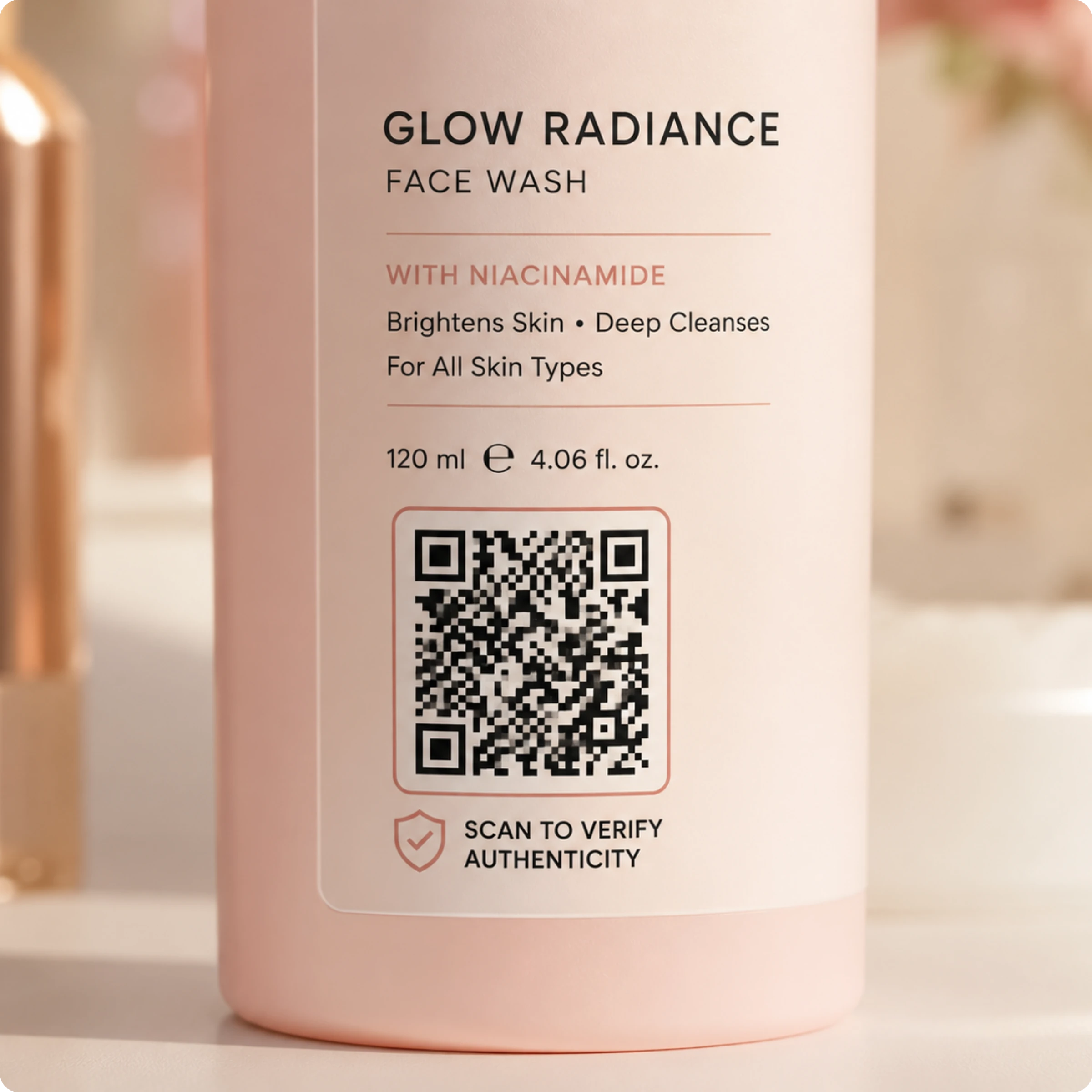
For brands selling through Amazon, third-party retailers, or channels where grey market volume is high, a QR Code embedded in or on the product routes the buyer to a verified authentication page. The page confirms the product is genuine, shows the manufacturing batch or provenance detail, and links to warranty registration and the brand's own loyalty program.
This matters most in categories where grey market volume is documented: luxury accessories, consumer electronics, nutritional supplements, and fashion. A buyer who purchased through an Amazon third-party seller and is uncertain about what they received scans the code and either gets confirmation or discovers a problem.
5. Customer reviews and UGC collection
A QR Code for reviews works well on packagings. A packaging insert that says "find us on Google and leave a review" converts at a fraction of the rate of a QR Code that opens the review modal directly. The buyer does not need to search, navigate, or remember. They scan and the form is open.
QR Code on the packing slip or a follow-up card should link to the review modal on Google Reviews or Trustpilot. Not the search results page. Not the reviews landing page. The modal.
The 14-day post-delivery window is the highest-intent review moment. The buyer has used the product, the memory is fresh, and their verdict has formed. A packing slip QR Code timed for that window captures the signal before it decays.
The UGC extension: the same QR Code can route to a branded landing page with a hashtag prompt or "share your unboxing" call to action. Every piece of UGC is content the brand did not pay to produce.
6. Flash sales and promotional campaigns with dynamic QR Codes
According to the State of QR Codes report, 52% of consumers scan QR Codes to access discounts and offers.
Limelight, a lab-grown diamond brand, ran a print insert offering discounted rates on making charges. Rather than routing the QR Code to a generic homepage, they pointed it to a store locator, pushing the time-bound, high-value offer directly into a physical visit. Limelight makes use of packaging inserts to convert existing customers with the help of discount QR Codes.
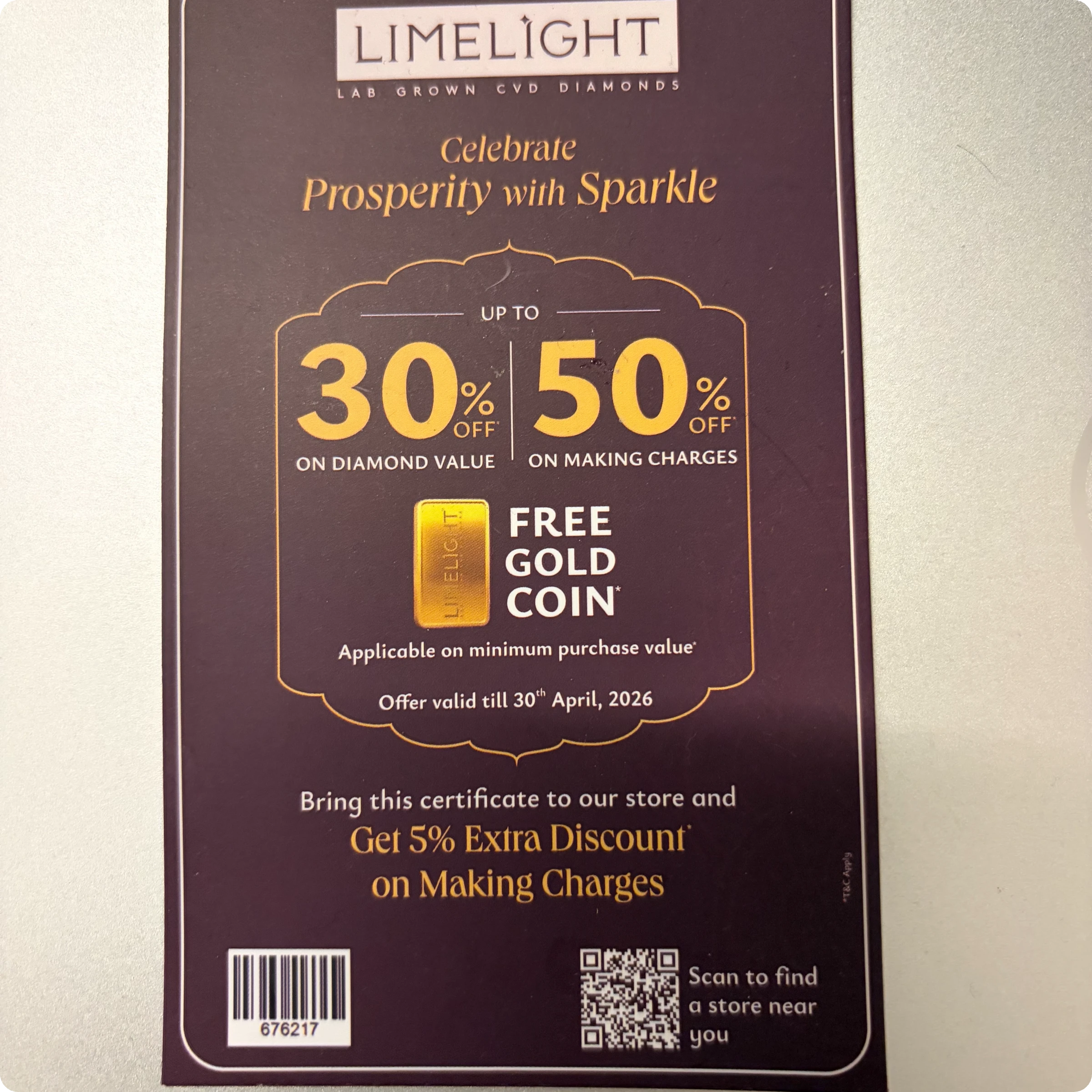
QR Codes give ecommerce brands a way to move fast without reprinting anything. A dynamic code on packaging, a display, or a social post can point straight to the live discount page, skipping the homepage and the search bar entirely.
When the sale ends, the destination updates in the dashboard, not on the printed material. That single code can also seed a retargeting audience: every scanner who doesn't convert gets tagged for Meta or Google Ads automatically, no email required. The result is a promotional channel that updates in real time, tracks its own performance, and keeps working on shoppers who didn't buy the first time.
7. Product information and usage guidelines: making the packaging do more
Around 75% of consumers scan QR codes specifically to find information, according to the State of QR Codes report.
Most packaging QR Codes point to a warranty form or a review request, both useful, but neither answers the question a curious buyer actually has in the moment: what is this, why does it exist, and what else does this brand make? A code that opens brand story, usage guidance, or the full product catalog turns a single SKU into a discovery point for everything else you sell.
4700BC, a gourmet popcorn brand, does this on its packaging. The QR Code doesn't repeat the ingredient list already printed on the bag. It opens the brand's origin story, tracing back 6,700 years to the earliest known popcorn, along with its full range across popcorn, crunchy corn, and chips, plus links to social channels. The code adds context the packaging has no room for, using the scan to extend the shelf, not just confirm what's already there.
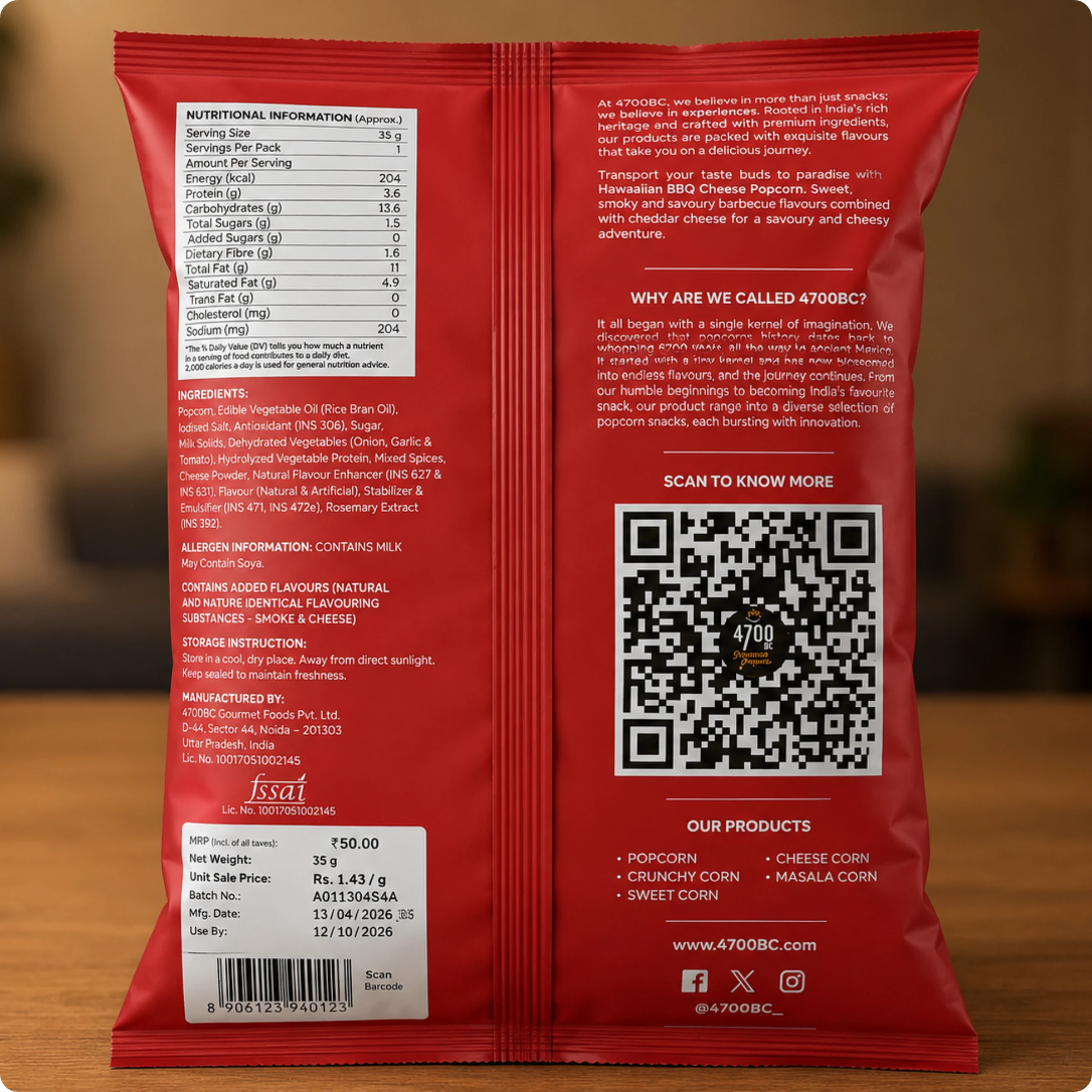
You can also use it to write guidelines on how to use the product, recipes, etc.
8. Scan analytics: knowing what happens after the scan
Total scans confirm the code was scanned. They do not show which store drove engagement, which product generated repeat purchase interest, or where buyers dropped out of the post-scan funnel. That is the analytics gap most ecommerce QR programs run inside for years.
Canada Beef put QR Codes on beef packaging, expecting most scans to happen in-store, alongside recipe cards and posters. The data told a different story: men accessed the codes more than women, and scans mostly came from home, not the store. Customers were taking the package home and scanning it later, sometimes days afterward, when they were actually about to cook the meat. The team used that gap between assumption and behavior to reshape their content strategy around when and where the audience was really engaging.
9. Retargeting scanners who don’t convert
A QR Code scan is anonymous, but it isn't invisible. Connect the code's landing page to a Meta Pixel or Google Ads tag, and every scan that reaches the page registers as a visit, whether or not the person converts. That single signal builds a retargeting audience automatically, with no email address, no opt-in form, and no login required.
This matters most for promotional and flash-sale codes. Most scanners on a discount page don't buy immediately, but they've already raised their hand. Retargeting closes that gap, putting the same or a related offer back in front of them across the open web instead of losing them the moment they close the tab.
The mechanic scales cleanly. A single store-level or campaign-level dynamic code generates the retargeting audience from every anonymous scanner it gets, so a brand running codes across dozens of locations doesn't need a separate code per customer to make this work.
Keep the code dynamic. That way, if the offer changes or the link breaks, you can update the destination without reprinting anything.
Where to start: three levels of QR Code program maturity
Level 1, no QR program today: Start with product packaging. One dynamic QR Code per primary SKU, one SKU-specific landing page, analytics switched on from the first scan. The goal for the first 60 days is understanding what buyers do in the 48 hours after delivery. That data determines what you build next.
Level 2, QR Codes exist but no analytics: Switch to dynamic QR Codes for existing campaigns. Do not reprint anything yet. Reassign destination URLs from a dashboard and turn on tracking. The scan data from existing placements will surface which touchpoints generate engagement and which are idle.
Level 3, dynamic QR Codes and basic analytics: Add the scan-to-retargeting loop for your highest-traffic SKUs. Every non-converting scanner becomes a retargeting audience. The QR Code on your packaging is already generating that data. The only question is whether you are using it.
Uniqode covers all three levels: folders for location tracking, UTM passthrough for GA4 attribution, and Una for cross-campaign analytics without pivot tables.
Every QR Code on your packaging is a decision the buyer makes to trust you with their attention. The codes that deserve it have a job. The ones that redirect to the homepage do not.
Turning every scan into a measurable channel
QR Codes in ecommerce aren't a packaging afterthought. They're a data channel, a retention mechanic, and a retargeting engine, all running through a single scan. The brands getting real returns aren't using more codes. They're using them with intent: SKU-specific destinations, dynamic links that update without reprinting, and analytics that connect a scan to what happened after it.
Start small if you need to. One dynamic QR Code, one landing page, analytics switched on from day one. The data from those first 60 days will tell you what to build next, whether that's a re-order flow, a loyalty program, or a retargeting loop.
Uniqode gives ecommerce teams everything covered in one platform. Start your free trial and check out how you can use QR Codes for your brand.
Frequently Asked Questions
- 1. How do I create a QR Code for my ecommerce store?
Two paths: static or dynamic. Static codes are free, cannot be changed after printing, and produce no scan data. Dynamic codes require a paid platform, can update their destination at any time, and track scan volume, device type, location, and time of day. For ecommerce, where offers change and analytics matter, dynamic is the correct starting point in almost every case. Create a dynamic Website QR Code in your platform of choice, point it at a SKU-specific landing page, and activate analytics before you print anything.
- 2. What is the difference between static and dynamic QR Codes for ecommerce?
A static QR Code encodes the destination URL permanently. Changing the URL means printing a new code. There is no scan data. A dynamic QR Code stores a redirect URL that can be changed without touching the printed code. Every scan is tracked. For any use case that involves changing offers, seasonal promotions, or retargeting, static codes fail immediately and dynamic codes earn their cost.
- 3. How do I use QR Codes for discounts?
Point the code at a live, specific offer, not a generic sale page, and keep the code dynamic. Fifty-two percent of consumers scan QR codes specifically to access discounts, but 29 percent have hit an expired or dead link doing it. A static code can't be updated once a promotion ends. A dynamic code lets you swap the destination in under 60 seconds without reprinting packaging or display materials.
- 4. How do I retarget people who scan a QR Code?
Connect the QR Code's landing page to a Meta Pixel or Google Ads tag. Every scan that reaches the page, even if the person doesn't convert, registers as a visit and seeds a retargeting audience automatically. You don't need an email address or an opt-in form to do this, and a single store-level or campaign-level code can generate that audience from every anonymous scanner who lands on the page.
- 5. Do QR Codes in ecommerce actually work?
Yes. CPG packaging codes averaged 253 scans per code in 2025, with 27.5 million total scans across the industry in that year, according to the State of QR Codes 2026. A QR Code pointed at a homepage with no analytics is not a working program. A QR Code pointed at a SKU-specific destination, tracked, and connected to a re-order or loyalty flow is a working program. The technology works. The strategy is the variable.
- 6. How do I track QR Codes from product packaging?
Three steps. First, use a dynamic QR Code platform with built-in analytics. Free static generators do not include tracking, and you cannot update the destination if something breaks after printing. Second, assign unique codes per product SKU or store location, not one code across all packaging. Third, connect the platform to GA4 with UTM parameters so every scan registers as a tagged session rather than a raw scan count. In Uniqode, the Insights add-on extends tracking to the funnel stage: you can see which scanners reached the product detail page, which continued to the cart, and which dropped off at the comparison step.
- 7. How do I create a QR code for my Shopify store?
Shopify has two native paths. Shopify Shopcodes — Shopify's built-in QR Code tool — generates codes that route directly to any product, collection, or checkout page in your store. Shopcodes are static: no scan analytics, no destination updates after printing. For analytics and dynamic control, use a third-party platform like Uniqode or The QR Code Generator and point the code at your Shopify product URL. Both paths connect to your Shopify checkout; the difference is whether you can measure what happens after the scan and update the destination without reprinting.
- 8. What is the best QR Code generator for ecommerce?
It depends on what you need from the code. For free, static codes with no analytics — any generator works; The QR Code Generator handles that use case well at no cost. For ecommerce programs that need scan tracking, dynamic destination updates, retargeting integration, and per-location reporting, Uniqode is built for that use case: folder-level analytics, UTM passthrough to GA4, and native integration with Meta Pixel and Google Ads. The right tool matches the sophistication of your QR program, not just the one that generates the prettiest code.
- 9. Are QR Codes free to use for ecommerce?
Static QR Code generators are free. Static codes have no analytics and cannot be updated after printing. Dynamic QR Code platforms, required for any serious ecommerce program, require a paid subscription. If one re-order or one loyalty enrollment pays for a month of the platform, the math is clear. For individuals and small businesses starting out, The QR Code Generator, Uniqode's sister brand built by the same team, offers a free plan as a starting point before scaling to a full dynamic QR program.