QR Codes for Non-Profits: Fundraising, Donations, and 10 Ways to Use Them
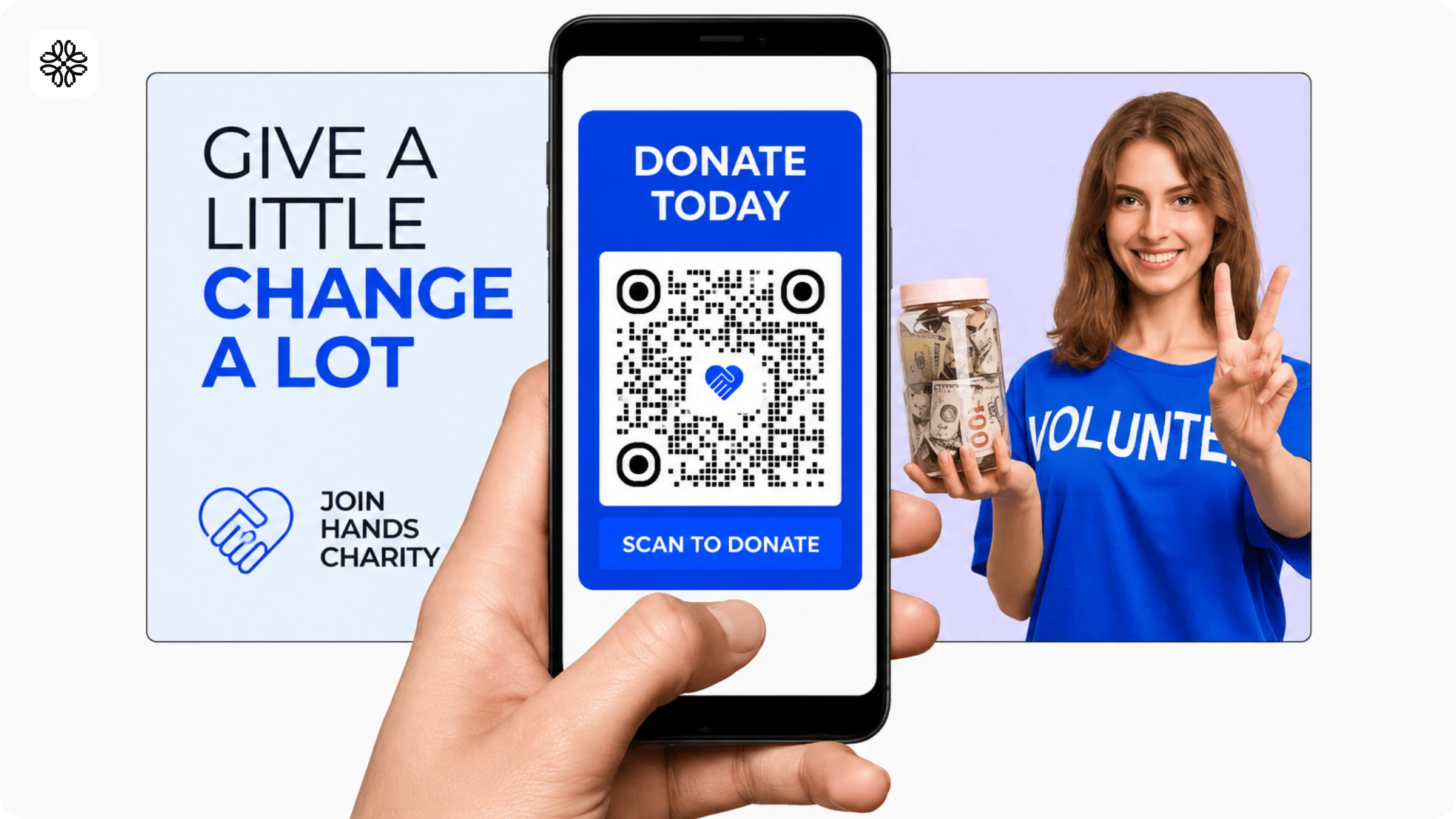
Share information about your cause and increase impact with QR Codes for non-profits. Explore how your NGO can use QR Codes for events, fundraising, donations and more.
QR Codes give non-profits a direct way to attribute donations by linking offline fundraising materials to online giving and tracking which campaigns generate revenue. They show organizations when, where, and how supporters engage with print campaigns, events, and fundraising appeals.
According to Uniqode's State of QR Codes 2026 report, only 12% of marketers connect QR Code scans to actual revenue. For non-profits, that measurement gap is a real fundraising problem. Organizations invest in direct mail, events, and community campaigns without knowing which touchpoints influenced donations.
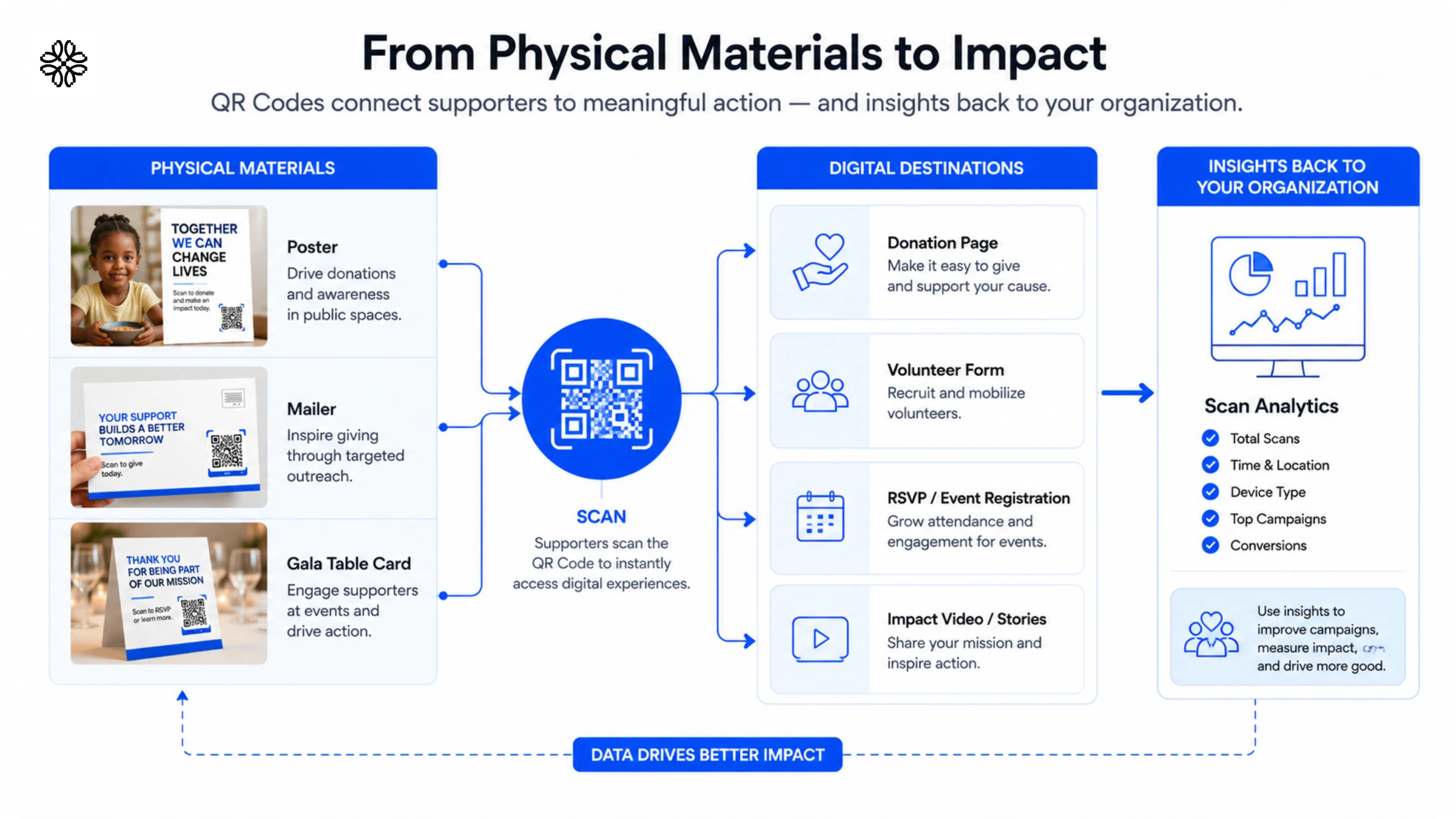
QR Codes solve that problem by acting as the attribution layer between offline supporter interactions and online conversions. A QR Code on a flyer, gala table card, event banner, or direct mail piece captures scan data like location, time, device type, and campaign source. That data tells nonprofits which fundraising channels drive donations, volunteer sign-ups, event registrations, and recurring donor acquisition.
Tracking QR Code engagement lets non-profits make decisions based on measurable fundraising performance and direct resources to the campaigns that actually work.
This guide covers how non-profits can use QR Codes, presents ten practical use cases, outlines the key decisions to make before printing, and explains how to choose a QR Code generator that protects donor data and supports fundraising analytics.
What QR Codes do for non-profits
A QR Code for non-profits is a scannable link that connects physical materials to digital actions. One scan on a smartphone camera takes supporters directly to donation pages, volunteer applications, event RSVPs, feedback surveys, impact videos, and annual reports without the requirement for an app.
But the mechanics are only part of the value. QR Codes serve as a donor attribution tool, bridging your offline presence with online fundraising. When a supporter scans a QR Code at your event and donates later, you capture data that would otherwise disappear. Without the code, you record a donation. With it, you can identify which channels drive better results and make smarter budget decisions as a result.
According to Uniqode's State of QR Codes 2026 report, which analyzed 188 million scans across 796,000 QR Codes, 98% of marketers report a positive impact from QR Codes. For non-profits, this technology is mainstream. The real risk is deploying it without measuring the results.
Your organization chooses between two formats: static QR Codes, which lock in a fixed URL with no analytics or editing after printing, and dynamic QR Codes, which are editable, trackable, and require a generator account. The right choice depends on your print materials and how long they'll stay in circulation.
10 ways non-profits use QR Codes
Non-profits use QR Codes across fundraising, events, volunteer management, communications, and donor stewardship. Scan-to-donate is the most common application, but attribution, the ability to identify which physical materials drove each conversion, remains largely untapped.
Here are ten applications, each with a distinct organizational function.
1. Scan-to-donate
Add a QR Code to any printed material or display screen, and supporters reach your donation page with a single scan, no URL to type, no searching required. The code works on flyers, mailed cards, event banners, and digital screens.
New Life Community Alliance used QR Codes at community and hiring events and saw a 20-fold increase in attendance alongside double the feedback collected. Removing friction made the difference. One scan replaced URLs, paper forms, and manual sign-ins entirely.
2. Event check-in and RSVP
Put a QR Code on event invitations linking directly to your RSVP form, and place a second code at the entrance for contactless check-in. Attendees scan to confirm attendance, join the post-event email list, or access the event program, all without paper forms or manual sign-ins. Scan records track attendance by invitation type, showing you which outreach channels actually drove turnout.
3. Volunteer recruitment
Place a QR Code on community boards, flyers, or social posts linking directly to your volunteer application form. Track scan analytics to see which locations generate the most applications, a library poster, and a flyer at a local business attract different applicants, and that data tells you exactly which materials are worth reprinting.
4. Feedback collection
After an event or donation, a QR Code gives supporters instant access to a brief feedback survey, no paper forms, no manual data entry, no follow-up emails. According to Uniqode's State of QR Codes 2026 report, 83% of consumers are willing to share data via QR Codes when consent or an opt-out option is available. A three-question post-event survey on a table tent consistently outperforms paper forms handed out at the door.
5. Mission storytelling with video
Add a QR Code to gala table cards, direct mail, or thank-you letters, and donors get instant access to a 90-second impact video. Research in non-profit fundraising shows that donors who see direct evidence of their gift's impact give again at higher rates than those who receive text-based reports alone. Scan records show exactly how many supporters watched the video before making a second gift.
6. Impact report and PDF distribution
Replace printed annual reports with a dynamic QR Code. Supporters scan to access the PDF, and you update the document each year without reprinting the code. Printing costs are often one of the largest line items in a non-profit communications budget. This approach eliminates that recurring expense entirely.
7. Social media growth
Add a QR Code to event materials, direct mail, or signage linking directly to your non-profit's Instagram, LinkedIn, or Facebook page. Supporters reach your online community with one scan, removing the hassle to remember your handle or search for it.
8. Digital business cards for staff and board
Staff and board members at donor events, conferences, or community gatherings can share digital business cards with a single QR Code scan. Supporters save contact information directly to their phone. Every interaction logs automatically. At a gala with 300 attendees, that's 300 potential contacts captured without exchanging a single paper card.
9. Capital campaign and major gift solicitation
Add a QR Code to a capital campaign brochure or pledge card and major donors land directly on a page featuring campaign goals, named giving opportunities, and a direct donation option. The code also tracks engagement by campaign material, showing you which brochure version generated more scans and which event drove the most pledge form opens.
10. Walking tours and location-based storytelling
Place QR Codes on plaques, buildings, or historical markers and supporters connect directly to your organization's story. Community non-profits, historic preservation groups, and arts organizations use location-based QR Codes to deliver self-guided tours making their mission accessible to every visitor who walks through the door.
Each of these works as a distinct QR Code type, including URL, PDF, Form, Social Media, Video, and Digital Business Card, with dedicated analytics per code.
Are QR Codes safe for nonprofit donors?
QR Codes that your non-profit generates and distributes on a compliant platform are safe for donors. The FBI's 2022 alert on QR Code fraud targeted a specific threat: criminals placing malicious QR Codes over legitimate ones in public areas to redirect users to phishing sites. That risk doesn't apply to codes your organization creates and controls.
Donor confidence in QR Codes is growing. According to Uniqode's State of QR Codes 2026 report, 58% of consumers feel confident scanning QR Codes, and 26% trust them more than they did last year. Your focus should be on maintaining that trust, not overcoming skepticism.
For non-profits handling donor information like names, email addresses, donation history, and payment records, the real safety question is whether your QR Code platform meets enterprise data protection standards.
Uniqode holds SOC 2 Type II certification and is compliant with GDPR, HIPAA, and ISO 27001. That compliance stack meets the requirements of enterprise healthcare and financial organizations, which means the infrastructure routing donors from a QR Code scan to your donation form has been independently audited for security. Always point codes to HTTPS destinations, include a clear call-to-action like "Donate here" or "Join us" so donors know what to expect before scanning, and never place codes over existing signage where a supporter might question their origin.
Dynamic vs. static QR Codes: what non-profits need to know before printing
Dynamic QR Codes are the right choice for non-profits producing fundraising materials that will outlast their current donation platform contract. Static codes are free, and dynamic codes require a paid plan, but for anything beyond a single-use, single-event print run with no risk of a URL change, long-term flexibility matters more than upfront cost.
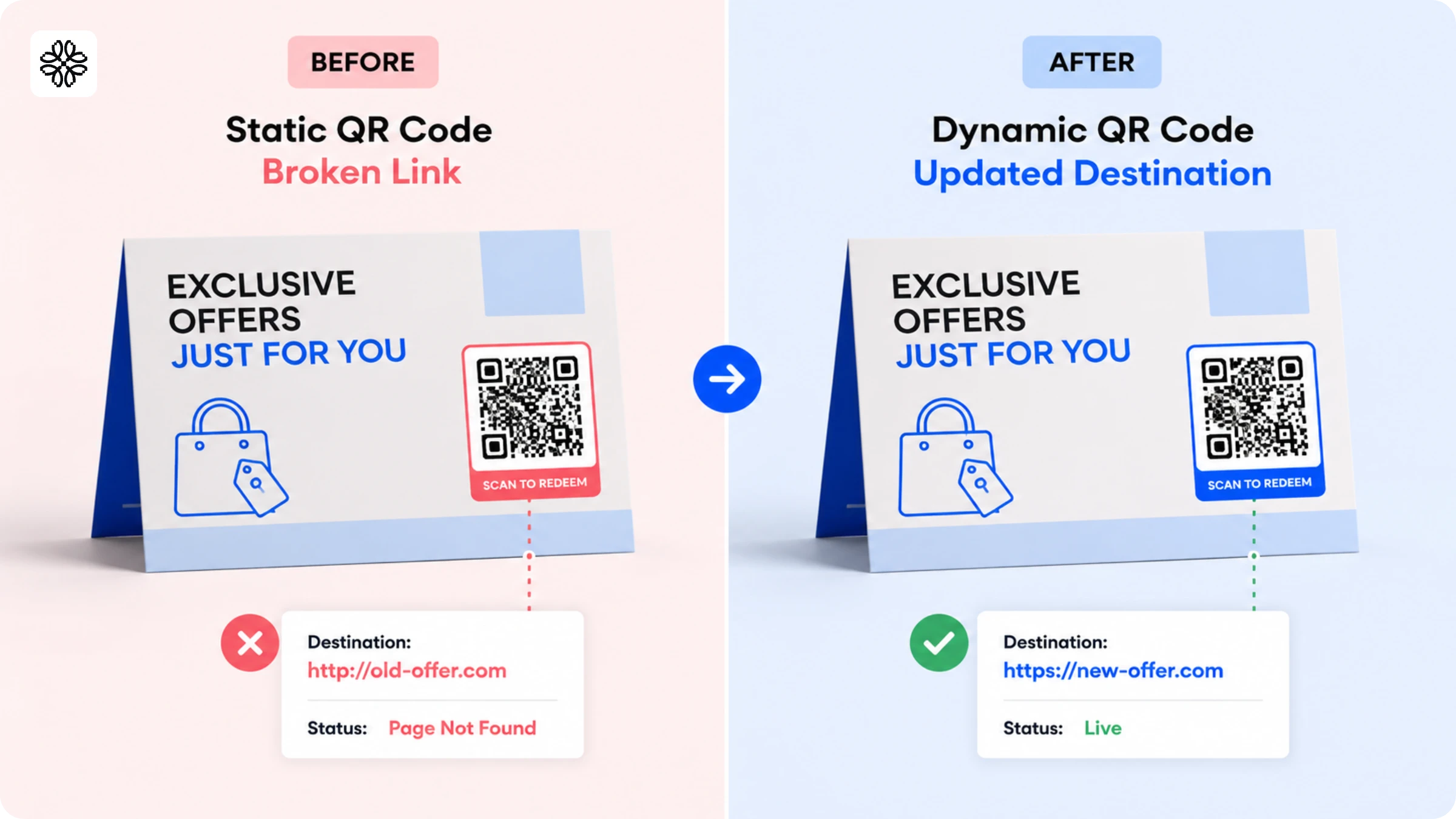
Here's why: a non-profit that prints 5,000 direct mail pieces with a static QR Code linked to a PayPal giving page and later switches to Donorbox ends up with 5,000 pieces pointing to an inactive URL. Reprinting costs the full amount, and every supporter who scans after the migration never reaches the donation page.
A dynamic QR Code uses a redirect URL you control. Update the destination in the dashboard at any time and every printed piece like direct mail, event signage, annual reports stays effective through platform changes and campaign updates.
Use static codes for one-time events with permanent URLs, test prints before full production, or internal materials with a short lifespan. Choose dynamic codes for recurring campaigns, print runs over 500 pieces, materials intended to last more than three months, or any URL tied to a platform that might change.
For guidance on QR Code sizing and resolution for print, the QR Code printing guidelines cover minimum dimensions, contrast requirements, and quiet zone specifications for reliable scanning.
How to create a QR Code for your non-profit with Uniqode
Creating a QR Code for your non-profit in Uniqode takes under five minutes, following the same process regardless of QR Code type.
💻 Before you proceed… Sign-up for a 14-day trial to add and edit the QR Code anytime. You can also add CTAs and make other customizations easily. No credit cards required.
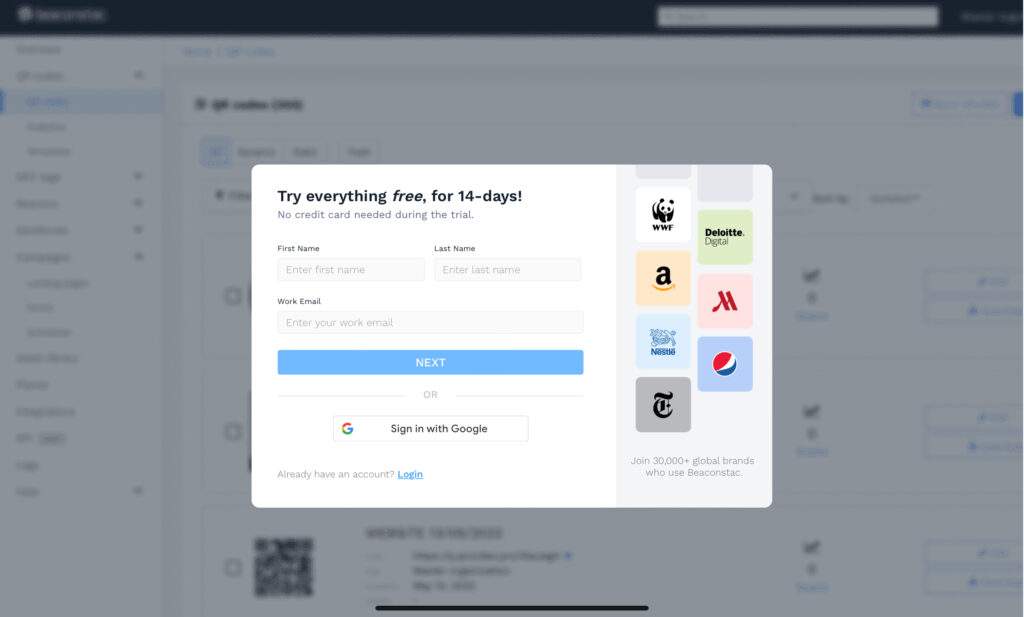
For long-term use, Uniqode offers 10% off your plans for non-profits.
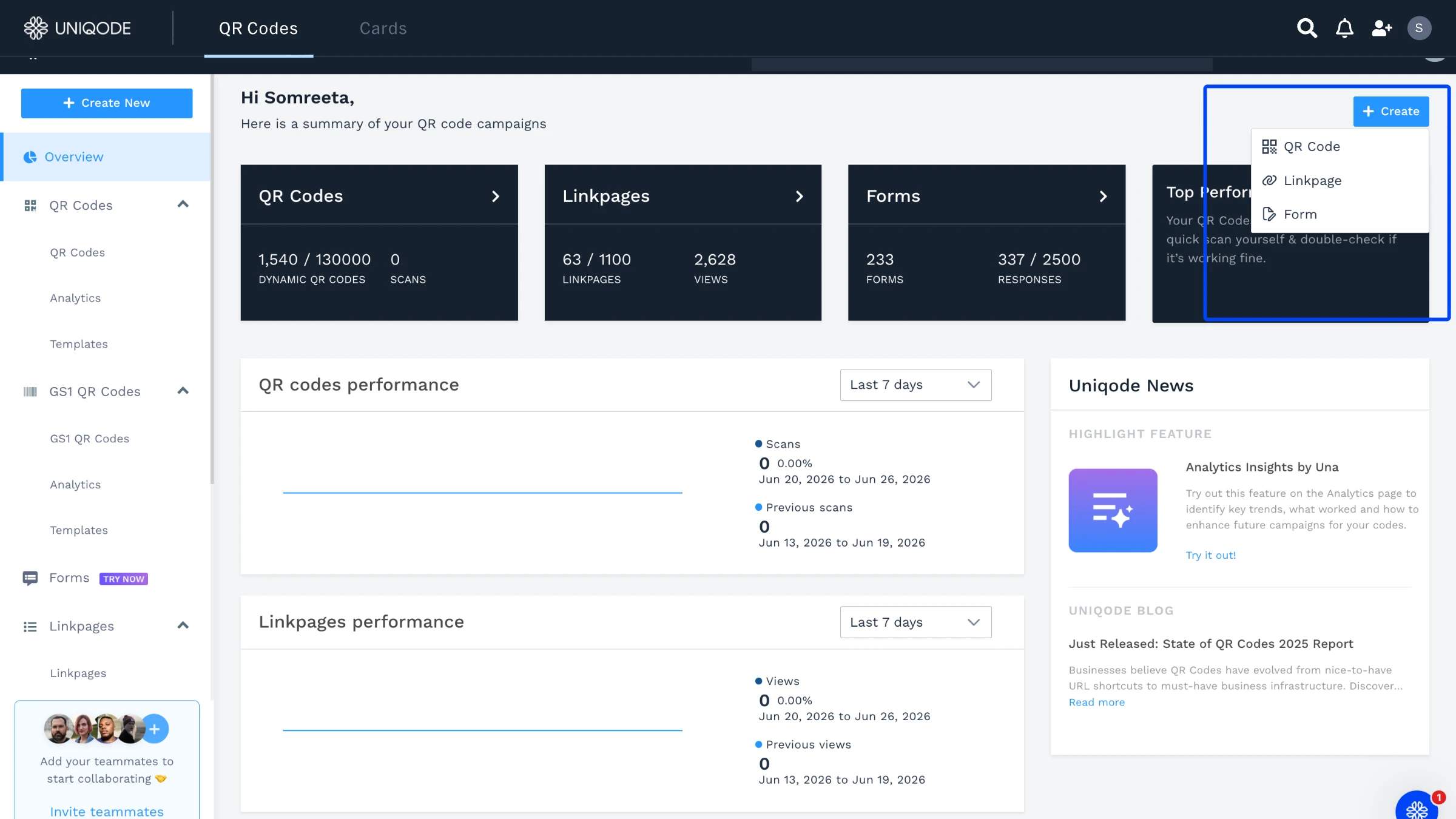
Step 1: Log in and select your QR Code type
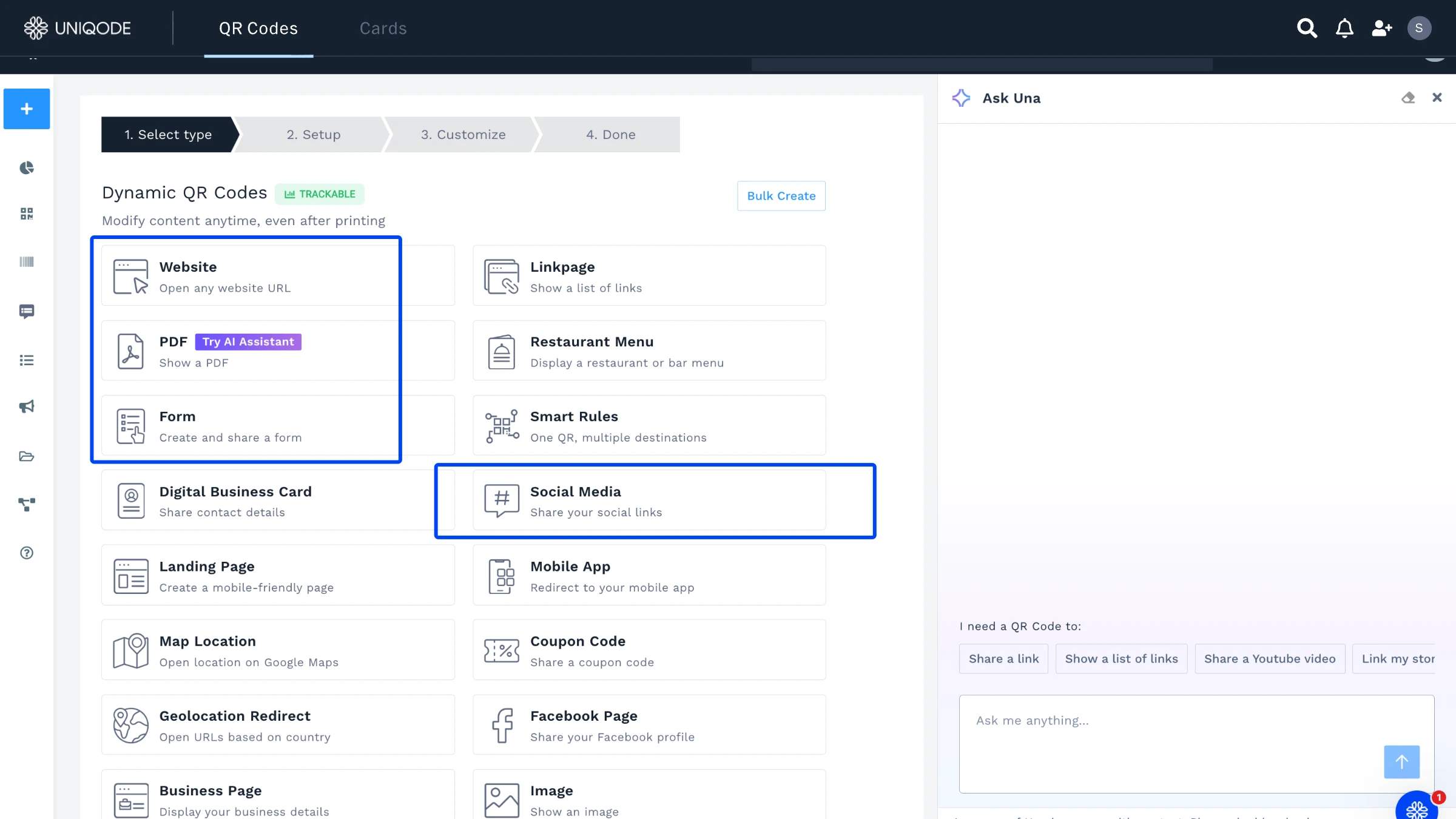
Log in to the Uniqode dashboard and click +Create New, then select QR Code. Choose the type that matches your use case: Website QR Code for a donation page or event registration URL, Form QR Code for a volunteer application or feedback survey, PDF QR Code for an annual report or program brochure, or Social Media QR Code for your organization's profiles.
Step 2: Add your destination URL
Enter the destination URL for the QR Code. For a donation QR Code, this is your donation form URL (Donorbox, PayPal Giving Fund, Funraise, GoFundMe Charity, or your direct payment page). For a volunteer QR Code, this is your application form link.
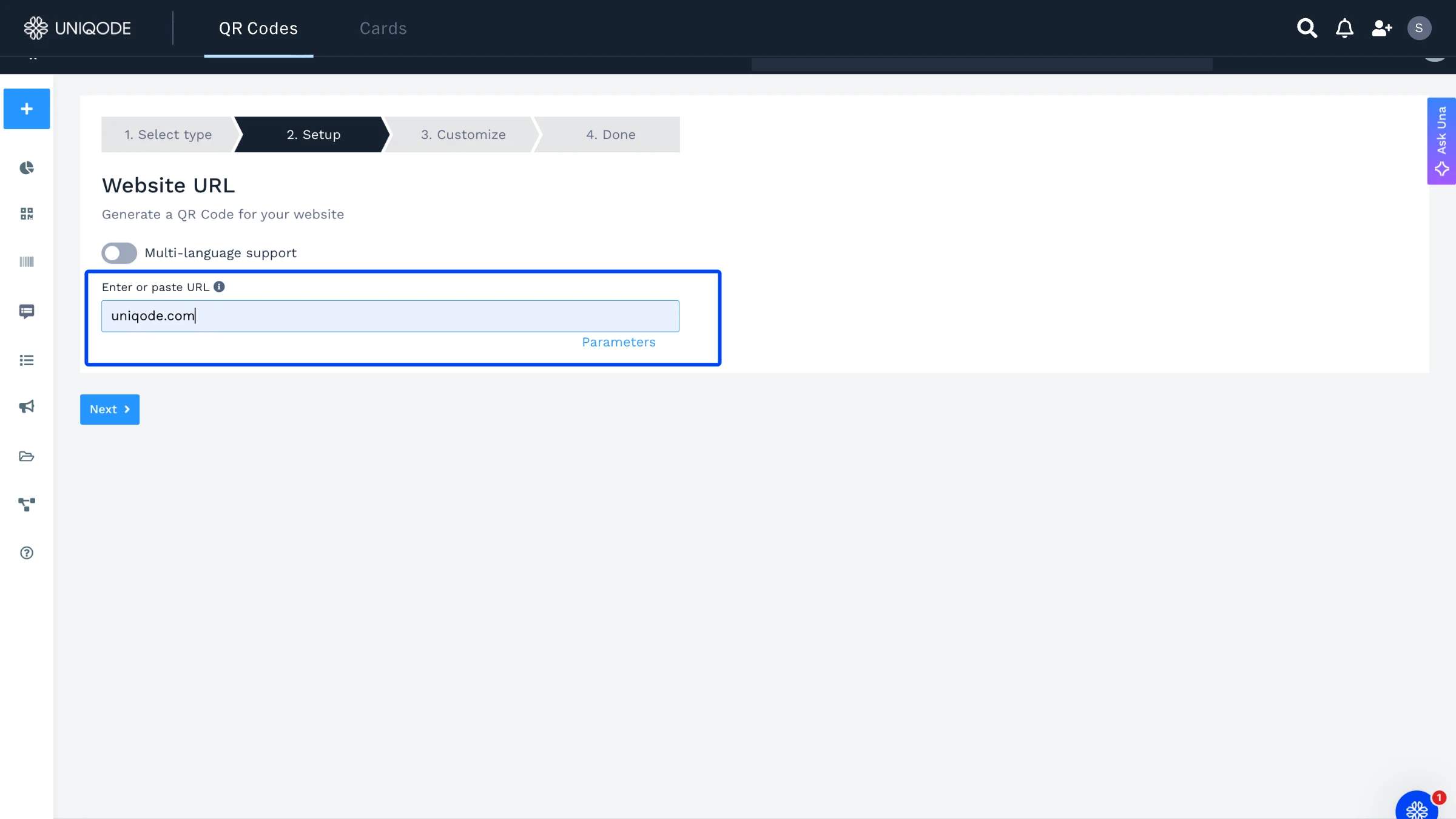
📝Note: Ensure the URL you add has the required access for your audience to scan and view it.
Step 3: Customize the donation QR Code
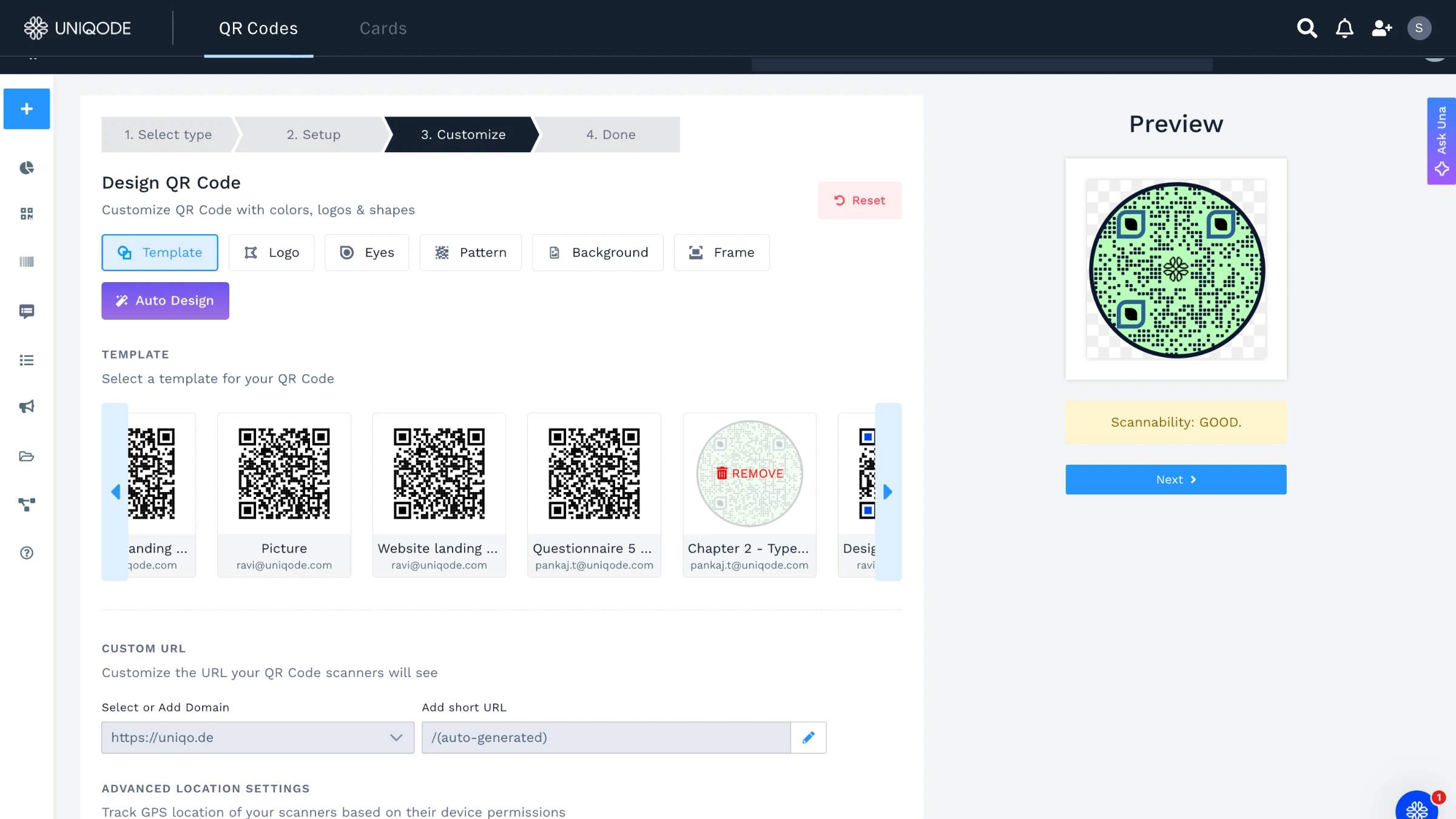
Add your non-profit's logo to the center of the code. Match the code colors to your brand palette. Add a frame with a clear CTA such as "Donate here," "RSVP now," or "Volunteer with us." Branded codes generate more scans than plain black-and-white codes because donors recognize the source before scanning.
Step 4: Download and test the QR Code
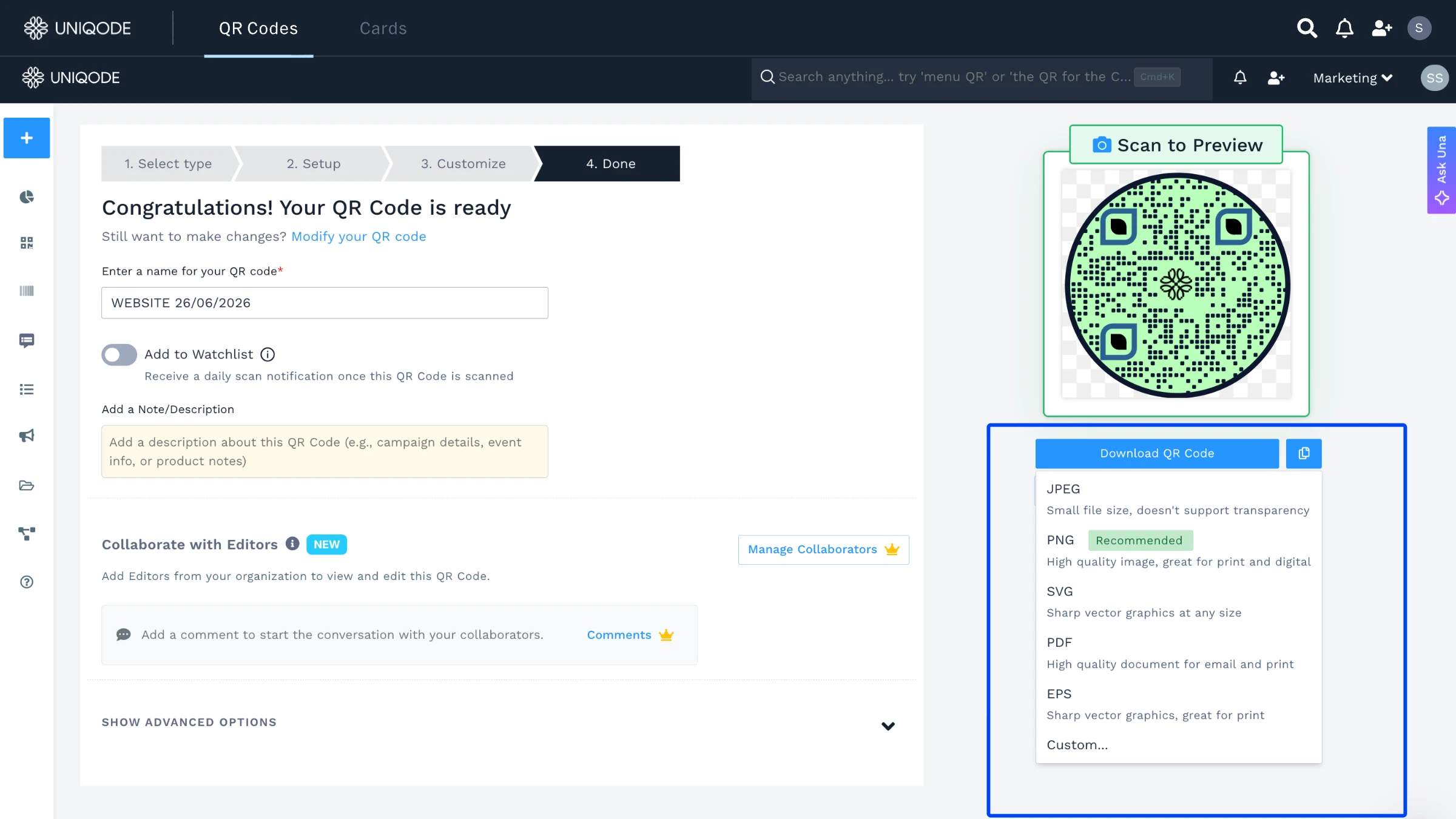
Download in PNG for digital use (email, social media, website) or SVG for print materials. SVG files scale without quality loss, which matters for large-format printing. Before sending any file to print, test the code from the intended scan distance with at least three different smartphone models. What scans cleanly on an iPhone may fail on older Android hardware at certain distances.
How to choose the right QR Code generator for non-profits
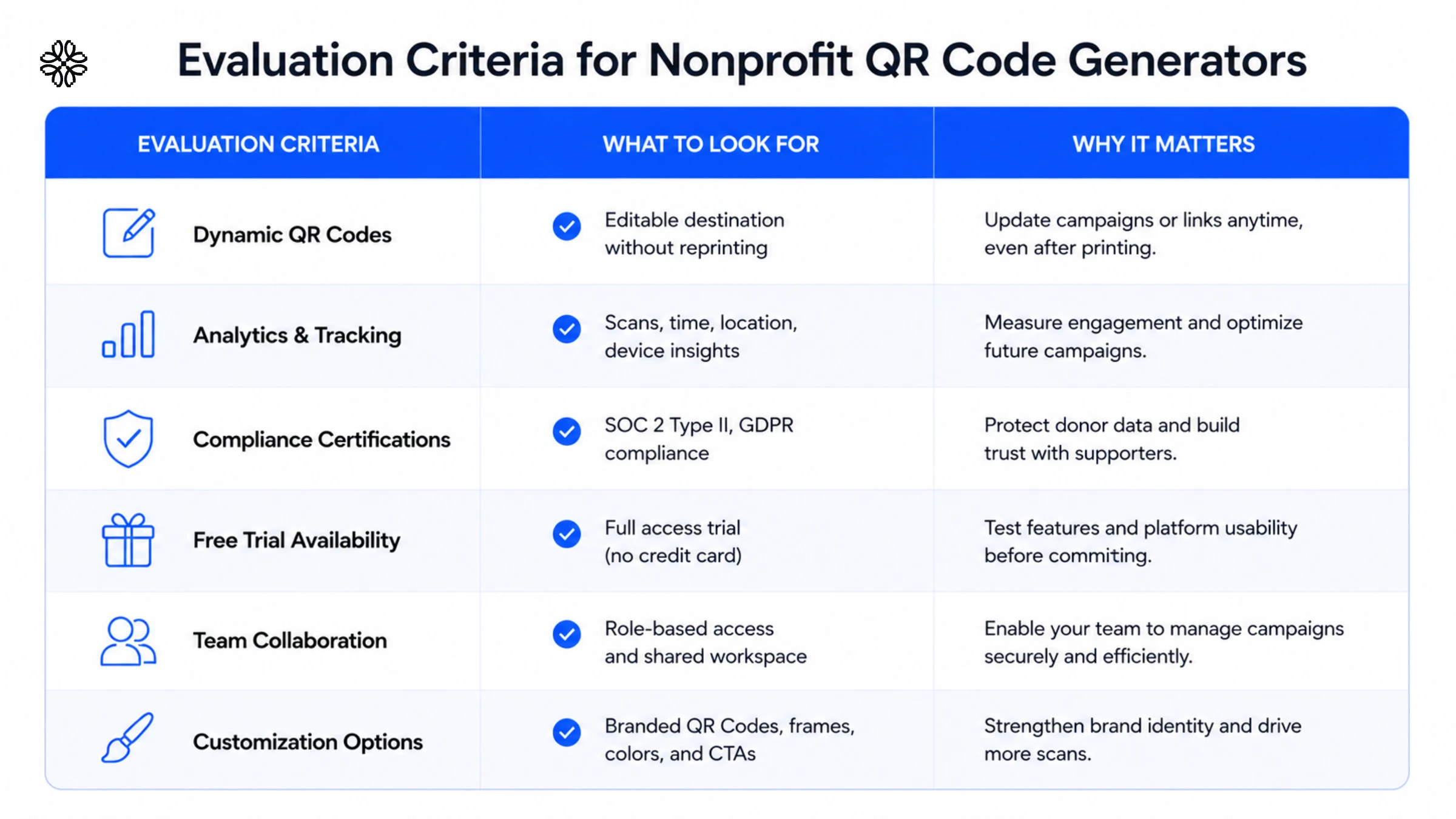
The right QR Code generator for a non-profit delivers dynamic codes, scan analytics, compliance certifications, and a free trial. Those features separate platforms built for ongoing fundraising from tools designed for single events.
1. Dynamic QR Code support
Any fundraising materials with a shelf life beyond one event require dynamic QR Codes. Confirm the generator supports post-print URL editing before committing to a print run.
2. Scan analytics
According to Uniqode's State of QR Codes 2026 report, 44% of marketers rank analytics and reporting as their top QR Code priority. For non-profits, the stakes are higher as every fundraising dollar needs to connect to a measurable outcome. Scan data shows which physical materials drive donor conversion. Choose a QR Code generator that tracks scan volume by date, location, and device type.
3. Compliance certifications
Non-profits managing donor personal information need platforms that meet enterprise data protection standards. SOC 2 Type II, GDPR, and HIPAA compliance are non-negotiable for any organization processing donor PII. Most free QR generators don't disclose compliance certifications at all. For healthcare-related charities and organizations handling donor payment data, compliance isn't optional, it's the baseline.
4. Free trial and nonprofit pricing
Most QR Code generators offer free static codes, while dynamic codes, analytics, and compliance features require a paid plan. Before committing, check exactly what each generator's free tier includes. If it only supports static codes, it won't hold up across multiple fundraising campaigns or fiscal years.
Uniqode provides dynamic QR Codes, scan analytics, SOC 2 Type II, GDPR, and HIPAA compliance, and a 14-day free trial with full access. Evaluate it alongside the features already available in your donor management platform.
5. Team collaboration
If multiple staff members or volunteers manage QR Codes, use a platform with team accounts and role-based access. Without it, one accidental overwrite can redirect an entire campaign to the wrong destination.
6. QR Code customization
Branded QR Codes featuring your organization's logo and colors consistently outperform generic ones. Choose a generator that offers logo embedding, color customization, and frame call-to-actions, even if you have no design experience.
Do's and don'ts for non-profit QR Codes
The most common QR Code mistakes in non-profit use are printing without testing, using static codes for long-shelf-life materials, and creating codes without a clear CTA. Each of these is avoidable.
- Do: Add a clear, specific CTA to every QR Code. "Scan to donate," "Volunteer here," "RSVP now," "Watch our impact story." A QR Code without a CTA asks supporters to trust an unfamiliar prompt. A code with a specific CTA tells them exactly what they will receive.
- Do not: Use a QR Code smaller than 2cm x 2cm (0.8 x 0.8 inches) for print materials. Below this threshold, many smartphone cameras struggle to focus and scan reliably, particularly on glossy surfaces under direct lighting. For large-format materials such as event banners or outdoor signage, minimum 5cm x 5cm.
- Do: Use dynamic QR Codes for any print material with a shelf life longer than three months. If your donation platform, event registration URL, or volunteer form link changes before the material stops circulating, a static code becomes a broken link in every supporter's hand.
- Do not: Skip the multi-device test before sending to print. Test the final printed code (or a proof print at full scale) on at least three different smartphone models across iOS and Android. Contrast, minimum quiet zone, and scan distance all affect performance differently across hardware generations.
- Do: Ensure your QR Code destination is HTTPS only. HTTP redirects can trigger browser security warnings that interrupt the supporter experience and create unnecessary friction at the point of conve
Use QR Codes as organizational infrastructure, not just campaign tools
Most non-profits start with QR Codes for a single purpose like a donation page, a gala table card, a volunteer flyer. That's a solid starting point. The real value comes when organizations treat scan data as organizational intelligence rather than just campaign metrics.
Non-profits that grow fundraising from existing materials know which physical touchpoints convert, which events attract new versus returning donors, and which printed pieces keep generating scans long after a campaign ends. You don't need an advanced analytics team to get there. You need dynamic QR Codes on all physical materials and a generator that presents scan data clearly.
Frequently Asked Questions
- How much does it cost to make a QR Code?
Static QR Codes are free, but have limited features. Editable, dynamic QR Codes start at a price of $5/month.
- Can QR Codes be used for donations?
Yes QR Codes can be used for donations, and you can create them in 4 easy steps:
1.Go to Uniqode’s QR Code generator and log in to your dashboard. (Sign up for a free trial if you don’t have access to the dashboard)
2.Click on ‘+Create QR Code’ and choose the type of QR Code you want to generate.
3.Enter the required details and customize your QR Code.
4.Click ‘Next,’ and your QR Code is ready for download.
- Can QR Codes be printed for fundraising events?
You can easily download a QR Code in the format of your choice for it to be printed on physical materials such as flyers and brochures. For printing QR Codes, formats such as PNG and JPG are recommended for smaller print and non-resizing needs. If you need to resize for bigger materials such as billboards, EPS is the recommended format.
- How do I get a QR Code for my non-profit?
Create a free account on a QR Code generator. Select the QR Code type that matches your destination: Website QR Code for a donation page, Form QR Code for a volunteer application or feedback survey, or PDF QR Code for an annual report. Add your URL, customize the code with your organization's logo and colors, and download in PNG or SVG. Uniqode offers a 14-day free trial with full dynamic QR Code and analytics access. No credit card required.
- Are QR Codes free for non-profits?
Static QR Codes are free on most generators. Dynamic QR Codes, which let you change the destination after printing and track scan analytics, require a paid plan. For any non-profit running ongoing campaigns or printing materials with a shelf life beyond a single event, a dynamic plan protects the print investment. Evaluate free tools against what "free" actually includes before building a campaign around them.
- What is the difference between a static and dynamic QR Code for non-profits?
A static QR Code encodes a fixed URL. If that URL changes after printing, the code permanently points to a broken destination. A dynamic QR Code stores a redirect URL you control. Change the destination any time from the dashboard without touching the printed code. For non-profits printing fundraising materials, event collateral, or annual appeal pieces, dynamic codes protect the print investment if a platform migration or URL change occurs after materials ship.
- What QR Code size works for print materials?
The minimum for print is 2cm x 2cm (0.8 x 0.8 inches). For materials viewed from a distance such as event signage or posters, use a minimum of 5cm x 5cm. Always download in SVG format for print so the code scales without quality loss, and test on at least three smartphone models before sending to the printer.
- Do non-profits need a QR Code generator specifically built for them?
Any QR Code generator serves non-profits effectively. The criteria that matter for nonprofits specifically are dynamic QR Codes, scan analytics, compliance certifications (SOC 2 Type II, GDPR, HIPAA), and a free trial period. Fundraising platforms like Donorbox and Givebutter include scan-to-donate features but do not offer the full QR Code management capabilities of dedicated generators: custom types, team collaboration, multi-campaign analytics, and branded customization.
About the Author
Ektha is a QR code expert with years of research and analysis into the evolution of QR codes. Having written over 70 in-depth articles on QR technology, she has developed a comprehensive understanding of how QR codes are transforming industries. Her insights, including The State of QR Report, have been featured in leading publications. With a passion for simplifying complex topics and providing actionable strategies, Ektha helps businesses leverage QR codes to enhance their 'phygital' connections.