QR Codes on CBD Packaging and Labeling: State Compliance Guide
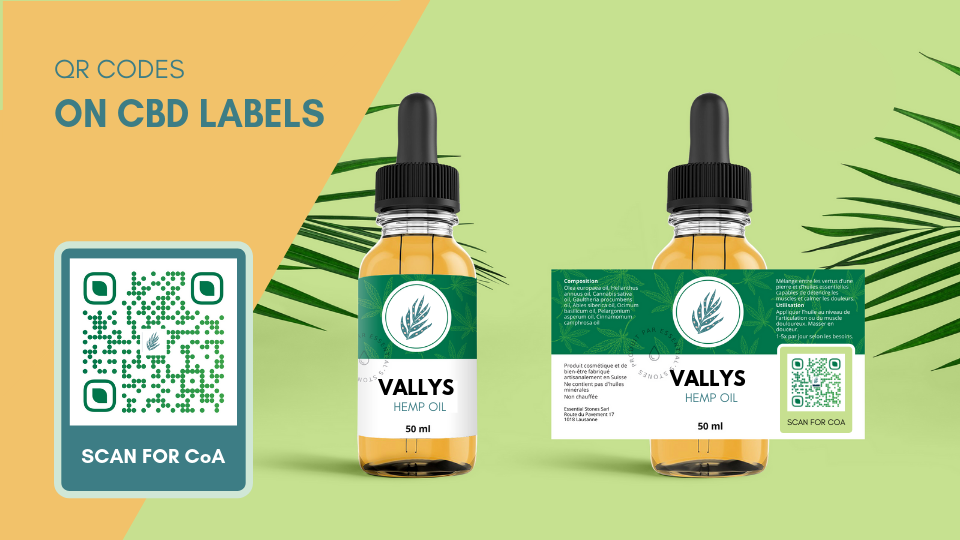
Create tailored QR Code CBD labels with customization and tracking features. Easily provide access to information, such as ingredients, CBD concentration, certificates, etc.
💻 Key takeaways:
1. QR Codes on CBD packaging and labeling can display information such as the ingredients, certificate of analysis, and expiration date. They can also be used to track scans and retarget consumers.
2. Some states mandatorily require QR Codes on CBD products.
3. Dynamic QR Codes from Uniqode comply with labeling regulations and do much more, such as customization, tracking, age-gated access, and offer a layer of security over static QR Codes used in packaging.
With strict regulations and hyper-aware consumers, the Cannabis industry is a uniquely challenging one. Cannabis is also one of the fastest-growing industries in the US.
Correct labeling is an essential aspect to keep your CBD brand compliant. In this guide, we’ll discuss the critical points in the regulation guidelines put forward by Utah, Oregon, and Indiana. We’ll also show you how your CBD product packaging can go beyond just meeting regulatory requirements and become a marketing powerhouse with the help of QR Codes.
Why accurate CBD labeling is a legal must
Proper labelling for CBD products is important for building customer trust, getting sales, as well as meeting compliance.
The FDA has stated that current federal frameworks for food and supplements are not appropriate for CBD, highlighting the need for clear safeguards such as accurate labeling, potency transparency, and contamination testing.
Mislabeling, such as inaccurate THC levels, expired Certificates of Analysis (CoA), or incomplete ingredient lists, can result in fines, product seizures, or removal from retail shelves, depending on the state. Brands must maintain label accuracy because regulators can issue penalties for any deviation, even if unintentional.
QR codes help reduce this risk by ensuring regulators and consumers always have access to the most current version of your CoA or product data, even if you update the information after printing labels.
Accurate CBD labels also support consumer safety. It ensures users can verify that products are free from pesticides, heavy metals, residual solvents, and other contaminants.
Consumers increasingly want visibility into how CBD products are made, what they contain, and whether they’ve been independently tested. QR Code labels provide this transparency at a glance. They can view ingredients, potency details, and manufacturing information. This not only strengthens credibility but also boosts sales by meeting modern expectations for traceability.
State-specific CBD QR Code requirements
Because federal guidance is limited, U.S. states have created their own labeling laws, making accuracy legally mandatory for brands selling across multiple jurisdictions. Let’s look at some of these states in brief:
1. Oregon CBD packaging guidelines
Oregon enforces one of the strictest sets of rules, requiring pre-approved labels, accurate potency values, ingredient listings, net quantity statements, and compliance with state testing standards. Here are the important points:
- Labels must stay unobstructed, clear, and readable.
- All required label information must appear in English and be clearly visible. If space is limited on the container, details can spill over onto other packaging material such as the outer box.
- Oregon’s labeling rules permit brands to add, remove, or modify a QR code or other 2D barcode without requiring resubmission to the label for OLCC approval. This gives manufacturers the flexibility to update digital information linked through the code at any time.
- The OLCC treats QR codes in the same category as UPC barcodes, meaning they are fully permitted (and preferable) as part of compliant packaging and can be updated without triggering a new review.
2. Utah CBD labeling laws
Utah legally requires a QR Code, batch number, and link to a Certificate of Analysis (CoA) directly on the CBD label to ensure instant consumer access to lab results.
- The rule requires a scannable barcode, QR Code, or web address on the label that links to a document with batch-specific data, including a downloadable certificate of analysis for that batch.
- Regulators accept a QR code or website link as the method to making the certificate of analysis available to consumers and inspectors.
- The certificate of analysis must show the product’s cannabinoid profile, and testing must include solvents, pesticides, microbials, heavy metals, and mycotoxins. QR Code links should therefore resolve to full, batch-level lab reports that include these analytes.
- Noncompliance with labeling, testing, or CoA requirements is explicitly categorized as a violation and may trigger fines.
3. Indiana CBD labeling laws
Indiana mandates clear disclosure of CBD content and requires that products include scannable links to third-party test results to prevent mislabeling and fraud.
Indiana’s framework treats each noncompliant package as a distinct violation; connecting the product to an up-to-date CoA via QR reduces the risk of violations for missing or inaccessible testing documentation.
The law explicitly expects the QR Code/barcode or a web address to make certain manufacturing and traceability details available to consumers and regulators, including the certificate of analysis for the product.
The linked document must include core traceability fields such as batch identification, batch date, expiration date (often limited to two years in Indiana), and batch size.
Indiana requires disclosure of ingredient details and lot/ingredient identifiers.
What information must a CBD QR Code contain?
QR Codes go beyond basic manufacturing and ingredient info. They give your CBD packaging the ability to act as a 24/7 marketing channel. Let’s look at what QR Codes can contain – both mandatory and optional.
Mandatory details to be covered
Based on regulations and guidelines, here are the mandatory details your CBD product packaging must contain. This will ensure you are compliant and also build trust with customers.
- Batch-specific Certificate of Analysis (CoA): QR Codes should link directly to a downloadable CoA for the exact batch, covering cannabinoid profile, potency values, and required safety testing.
- Full contaminant testing results: The QR Code landing page must include results for pesticides, heavy metals, microorganisms, residual solvents, and mycotoxins — aligning with the testing requirements of Utah and Indiana.
- Accurate THC and CBD concentrations: Include total THC/CBD values, how they were calculated, and any required conversion formulas (e.g., THCA → total THC).
- Batch identification details: Display batch number, batch date, batch size, and expiration date to meet Utah and Indiana traceability rules.
- Manufacturing and ingredient information: Provide full ingredient lists, lot/ingredient identifiers, and manufacturer or processor details that may not fit on the physical label.
- Product lineage and traceability: Include production timestamps, test dates, and links to third-party lab information to reduce mislabeling risk and support audits.
- Regulatory compliance documents: Make all state-required documentation accessible — including CoAs, potency verification, and testing summaries.
- Updatable digital fields: Because states like Oregon allow QR Codes to be added or modified without reapproval, use the landing page for any information that may change between batches (new test results, reformulations, updated expiration dates, etc.).
- Clear consumer-facing product information: Use the QR Code to expand on what cannot fit on the physical label — dosage guidance, usage instructions, allergen statements, storage recommendations, and warnings.
- Inspector-friendly verification: Ensure the QR Code resolves instantly to a page that inspectors can use for compliance checks.
Advanced applications of QR Codes for CBD brands
Instead of treating QR Codes as static compliance tools, many cannabis companies are transforming them into gateways for discovery, education, and brand storytelling.
- Seasonal and limited-edition experiences: QR Codes can link to rotating content for holiday drops, special releases, or campaign-based storytelling.
- Dynamic content updates: Brands can regularly change the QR Code destination (without reprinting labels) to share new promotions, product education, behind-the-scenes content, or launch announcements.
- Personalized customer journeys: QR Codes can lead to content tailored to customer profiles or past interactions, offering more relevant recommendations, education, or loyalty incentives.
- Direct feedback channels: Connect shoppers to quick surveys, reviews, or satisfaction check-ins, making it easy for brands to collect real-time consumer insights.
- Two-way customer engagement: By using QR Codes as a gateway for customer conversation, including feedback, preferences, and questions.
- Actionable market intelligence: Scan data combined with feedback tools helps brands understand consumer behavior, refine products, and optimize future marketing strategies.
How to create compliant QR Codes for CBD labels with Uniqode
1. Design a branded QR Code for your packaging
Create a QR Code that matches your brand identity while staying compliant. Customize colors, frames, and call-to-action text to make it scannable and visually aligned with your packaging design.
2. Link the QR Code to verified lab reports (CoA)
Connect the QR Code to batch-specific Certificates of Analysis so consumers and regulators can instantly verify potency, safety testing, and compliance information.
3. Use dynamic QR Codes to update information easily
With Uniqode’s dynamic QR Codes, you can update CoAs, test results, or product information without reprinting labels. This is ideal for multi-batch products and evolving regulatory requirements.
4. Track scans to understand customer engagement
Monitor real-time scan data, including location, device type, and scan frequency, to understand buyer behavior and measure how well your packaging drives engagement.
Why use Uniqode dynamic QR Codes for CBD label compliance
CBD brands need a way to stay compliant, accurate, and trusted — all without constantly reprinting packaging. That’s where Uniqode’s dynamic QR Codes make a real difference.
Uniqode gives CBD and cannabis companies a compliant, flexible system for delivering batch-level transparency. Each QR Code links directly to verified, updateable CoAs and testing documentation, ensuring that every product in the market reflects the most current information. Whether regulations change, new lab results come in, or a batch needs updated data, Uniqode lets you revise the digital content instantly while keeping your existing labels in circulation.
Turn a complex regulatory requirement into a competitive advantage. But don’t take our word for it. Start a free trial and get to know how you can transform your CBD brand’s packaging with Uniqode.
Frequently Asked Questions
- Are QR Codes legally required on CBD product labels?
Some states such as Utah and Indiana do require QR Codes or scannable links on CBD packaging, while others simply allow them as part of compliant labeling.
- What information should a QR Code on CBD packaging link to?
A compliant CBD QR Code should lead to batch-specific Certificates of Analysis, potency details, contaminant testing results, ingredient information, and other required traceability data.
- How do QR Codes help brands meet Oregon’s CBD labeling requirements?
QR Codes support Oregon’s labeling rules by providing a compliant way to share detailed product information without overcrowding the physical label, and they can be added or updated without resubmitting the label for approval.
- Can I update the information behind a QR Code without reprinting my labels?
Yes, dynamic QR Codes allow you to update CoAs or product information instantly while keeping the same printed code on your packaging.
- Can QR Codes be used for both compliance and marketing?
Yes, QR Codes can meet regulatory requirements while also directing consumers to educational content, loyalty programs, product stories, or seasonal campaigns.
- Can one QR Code display different details depending on where it’s scanned?
Yes. QR Codes can detect the scanner’s location and automatically present the appropriate state-compliant information without needing separate codes for each region. You can do this with specific predefined rules available on QR Code platforms like Uniqode.
- What engagement data can brands track from QR Code scans?
Brands can track scan counts, locations, devices, and engagement patterns to understand consumer behavior and optimize packaging performance.
- Can QR Codes work on very small or irregular CBD packaging formats?
QR Codes can be designed for small tincture bottles, vials, or pre-roll tubes as long as minimum size and scannability standards are met.
- How do QR Codes help during inspections or regulatory audits?
Inspectors can scan a QR Code to immediately verify batch-level test results, CoAs, and manufacturing details, making compliance checks significantly faster.
- Are QR Codes secure enough for hosting regulatory documents?
With proper link management, secure hosting, and optional access controls, QR Codes can safely deliver compliance documents while preventing unauthorized modifications.
About the Author
Shashank - Enthusiastic about marketing and improving the ROI of businesses.
Related Posts
Louisiana SB 14 Requires QR Codes on Food Packaging
What Expo West 2026 Taught Us About the Future of CPG (And Why Your Packaging Is at the Center of It)

What the FDA’s New Traceability Requirements Mean for CPG Brands
Reduce Customer Support Calls with Product QR Codes: A Complete Guide for Brands
How to Drive App Downloads from Product Packaging Using QR Codes