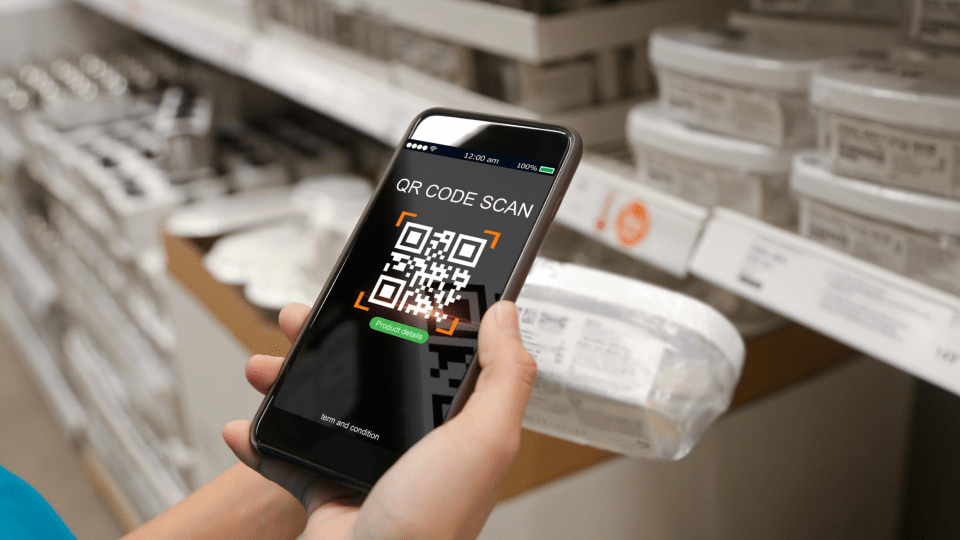
Top QR Code Alternatives 2026: What Works and What Doesn't
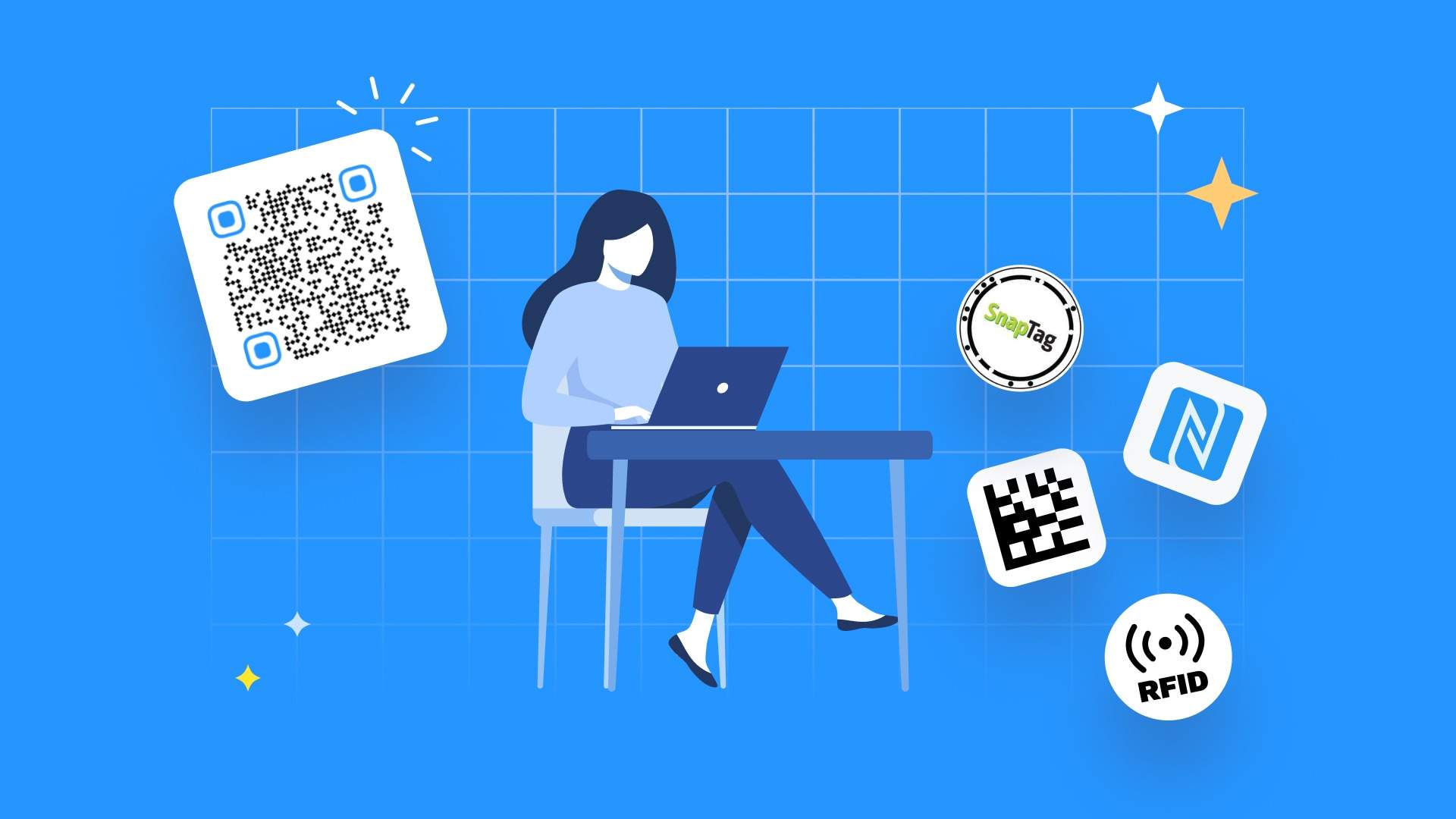
Looking for an alternative to QR Codes? Here’s our take on the available alternatives, their features, and how to choose what works best for your use case.
The most popular QR Code alternatives include NFC, RFID, BLE beacons, Data Matrix codes, 1D barcodes, and short URLs. Each solves a specific problem in a specific context, and the wrong choice creates infrastructure costs that do not show up in the per-tag price.
This guide covers all seven alternatives with details on when they win and when they do not.
What to look for when choosing alternatives to QR Codes?
A QR Code alternative refers to technologies or methods that offer alternative ways to encode and share information. They have different features and capabilities compared to QR Codes.
However, the benefits of QR Code alternatives lie in their specific features and how they may cater to a particular use case. On the other hand, their drawbacks are that they are not as versatile and do not offer all the features that QR Codes provide.
The right way to evaluate any alternative is not "is it better than a QR Code?" but "is it better for this specific deployment?" Five criteria determine whether an alternative is genuinely fit for your context.
| Criterion | What to ask |
|---|---|
| Device requirement | Does the end user need special hardware, a dedicated app, or a particular OS version to interact with it? |
| Cost per touchpoint | What is the all-in cost at 100, 1,000, and 10,000 deployment points? (Tag + reader + installation + maintenance) |
| Data capacity | How much information can the technology encode and carry? |
| Analytics capability | What scan or interaction data does the technology produce without additional middleware? |
| Consumer friction | How many steps does a typical consumer need to take to get from trigger to content? |
Every alternative in the next section is assessed against these five criteria. For a full breakdown of types of QR Codes, Uniqode's guide covers the range of formats available.
The 7 main QR Code alternatives and when each makes sense
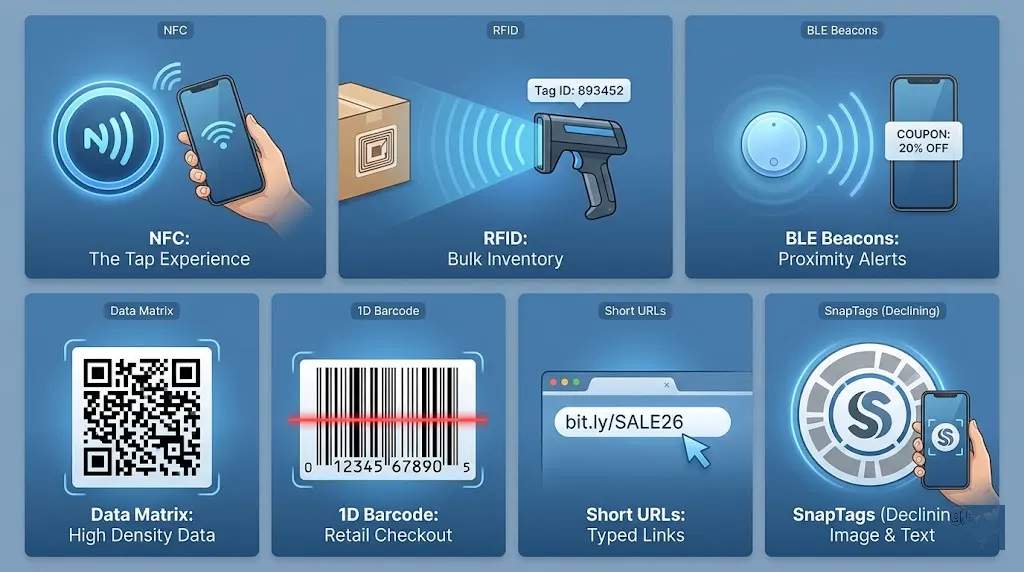
The seven top alternatives to QR Codes are NFC, RFID, BLE beacons, Data Matrix, 1D barcodes, short URLs, and SnapTags. Each of these is suited to a different deployment context. The assessments below follow the same structure: what it is, when it wins, when it loses, and a QR verdict.
1. Near-Field Communication (NFC)
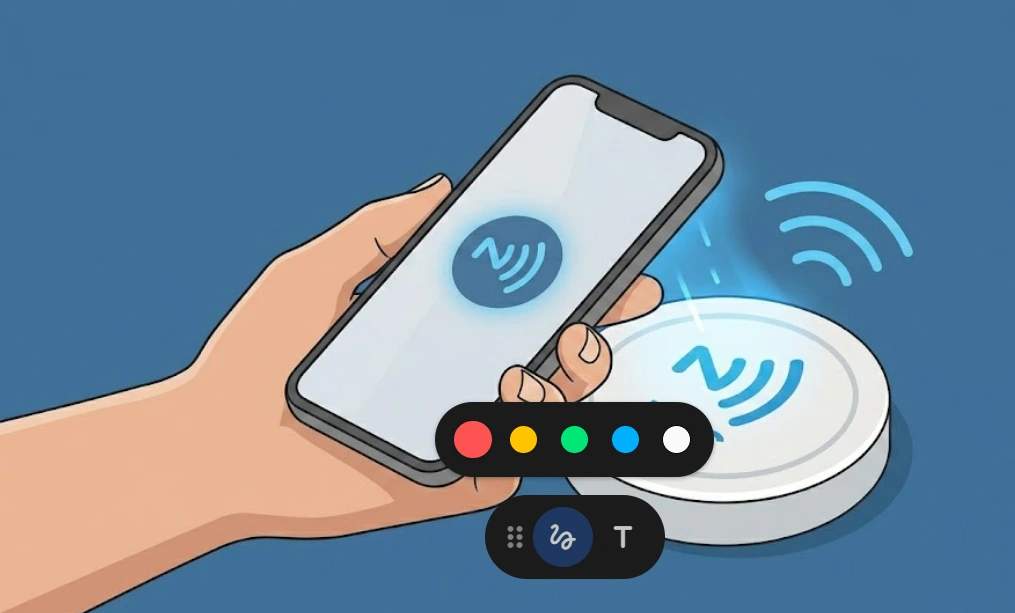
As the name suggests, near-field communication is a short-range, wireless communication technology. NFC enables data exchange between two devices when they are near each other.
Like opening the camera app and scanning a QR Code, NFC technology requires a smart device to be tapped against an NFC tag or card. All modern Android devices and iPhones with iOS 14 and above are compatible with NFC.
Where NFC is used: NFC is widely used for contactless data exchange between mobile devices, smartwatches, and contactless payments. It is widely integrated into smart wearables for health monitoring and payments.
When NFC wins: Luxury goods authentication (LVMH, Prada, and other premium brands use embedded NFC tags for anti-counterfeiting), contactless transit ticketing (London Underground, Paris Metro), point-of-sale payments, and physical access control. In these contexts, the tap interaction is part of the premium experience, and the reader infrastructure already exists.
When NFC loses: About 20% of global smartphones lack NFC capability, which means a QR fallback is needed in most consumer-facing contexts regardless. Per-tag cost runs $0.50 to $2.00 per unit versus near-zero for a printed QR Code. At scale, this changes the economics significantly. NFC also provides only basic tap-count data without additional middleware; analytics at the campaign level require a separate integration layer.
| Feature | NFC | QR Code |
|---|---|---|
| Cost per tag | $0.50–$2.00 | Near zero |
| Device coverage | ~80% of smartphones | ~99% (native camera) |
| Analytics | Tap count only | Full scan data (native) |
| Consumer steps | 1 (tap) | 1 (scan) |
Verdict: NFC is the right choice as a QR Code substitute when tap is the intended interaction and per-item cost is acceptable at your deployment scale. For consumer marketing at scale, or anywhere device compatibility matters, QR Codes are still the best choice.
2. RFID (Radio Frequency Identification)
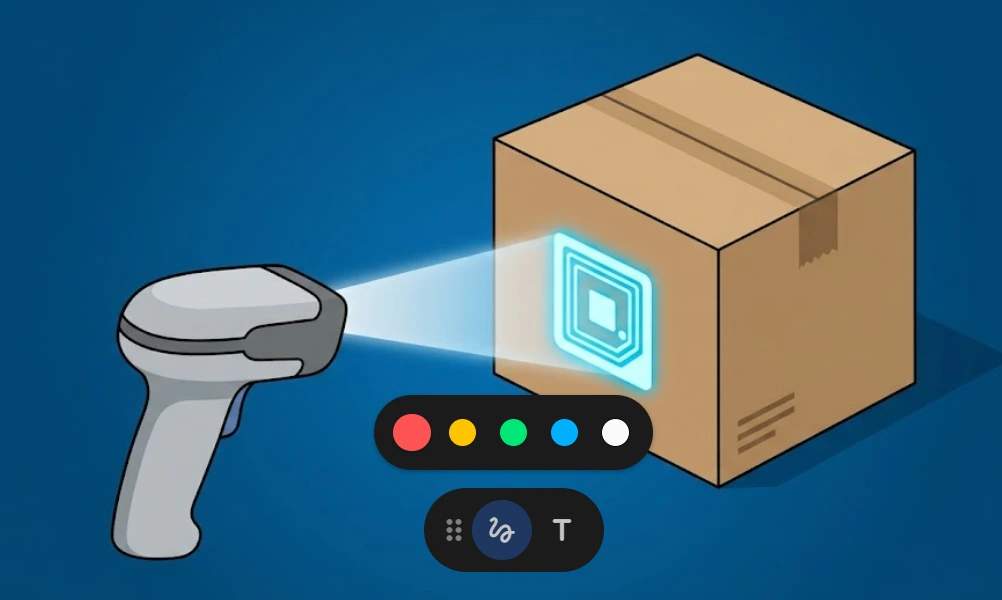
This technology uses radio waves to identify and track information using radio tags and readers. The tag is identified by transmitting its unique identifier to the RFID tag reader.
Where RFID is used: RFID is used in inventory management, anti-theft systems, healthcare patient tracking, access control in contactless entry systems, and pharmaceutical serialization.
When RFID wins: Bulk scanning without line-of-sight is RFID's defining advantage. A forklift can scan hundreds of pallets at once. A hospital can locate assets across an entire floor in real time. No other technology on this list matches RFID for back-of-house tracking at volume.
When RFID loses: Consumer UX is not RFID's purpose. There is no path from an RFID tag to a consumer's smartphone without reader hardware at every interaction point. Passive RFID readers cost $500 to $5,000 per installation. Active RFID systems for real-time location tracking run significantly higher.
| Features | RFID | QR Code |
|---|---|---|
| Scanning | No line-of-sight required | Camera required |
| Consumer access | Requires fixed readers | Native smartphone camera |
| Best context | Back-of-house tracking | Consumer-facing interaction |
| Analytics | Middleware required | Native to platform |
Verdict: RFID is a good replacement for QR Codes for the supply chain industry. They typically coexist: RFID handles logistics tracking, QR Codes handle the consumer-facing label. They are complementary, not competing.
3. BLE Beacons (Bluetooth Low Energy)
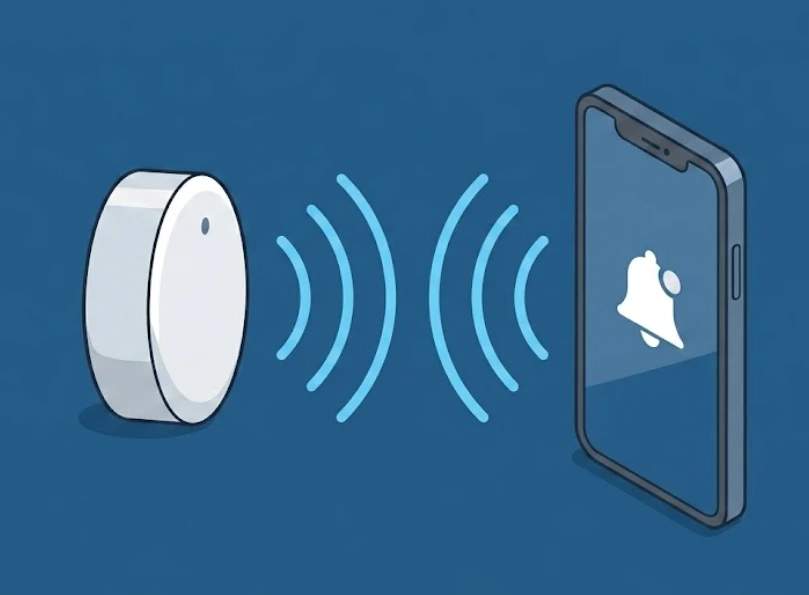
BLE beacons are small, battery-powered transmitters that broadcast Bluetooth signals to nearby smartphones. They operate across a range of 10 to 50 meters and require either a compatible app installed on the user's device or OS-level Bluetooth permission to trigger an interaction.
When BLE beacons win: Proximity marketing in physical retail (triggering zone-specific offers when a customer enters an aisle), indoor navigation in large venues (airports, exhibition halls), event check-in with location verification, and real-time visitor analytics in controlled spaces. For use cases where the interaction is driven by location rather than consumer intent, beacons offer passive triggering without the consumer initiating a scan.
When BLE beacons lose: The app dependency is a significant barrier. Without a retailer's app installed, a beacon broadcast produces no consumer interaction. Battery replacement cycles run every one to two years, creating ongoing maintenance overhead. There is also no visual call-to-action on the physical surface, so consumers may not know an interaction is available.
Verdict: BLE beacons and QR Codes are additive in physical retail, not competitive. A QR Code on a shelf label handles intent-driven scan; a beacon handles passive, proximity-triggered interaction for customers already inside the app ecosystem. Neither replaces the other.
4. Data Matrix
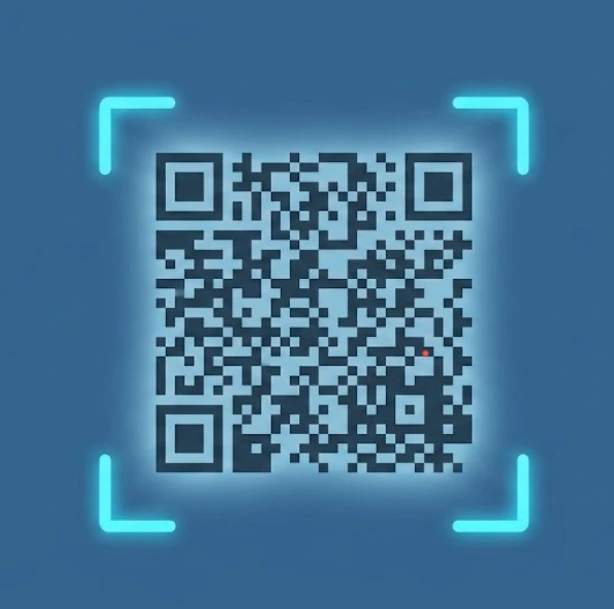
Of the QR Code alternatives available, a Data Matrix is the most visually similar to QR Codes. It is a 2D barcode that encodes data in a square or rectangular pattern of black and white cells. It can hold alphanumeric data, numbers, and special characters.
Where Data Matrix is used: Data Matrix is popular in inventory management, product labeling, shipping, and logistics.
When Data Matrix wins: Pharmaceutical labeling under EU FMD and DSCSA serialization requirements, small physical surfaces where a QR Code is too large (circuit boards, surgical instruments), and industrial applications where the format has existing reader infrastructure. The key advantage is density: Data Matrix encodes more data per unit area than most other formats.
When Data Matrix loses: Most consumer smartphones cannot natively scan Data Matrix without a dedicated app. Unlike QR Codes, which route through the camera's native URL handling, Data Matrix typically requires either a barcode reader app or a GS1 Digital Link wrapper to produce a mobile consumer interaction. For any use case requiring a consumer to engage without app friction, Data Matrix is the wrong format.
| Feature | Data Matrix | QR Code |
|---|---|---|
| Native consumer scan | Requires dedicated app | Native camera |
| Data density | Higher | High |
| Pharma compliance | Yes (EU FMD, DSCSA) | Yes (GS1 QR Code) |
| Analytics | Requires middleware | Native to platform |
Verdict: Data Matrix is the right format for pharmaceutical serialization and industrial labeling where format is dictated by regulation or existing infrastructure. For consumer-facing interactions, QR Codes are more practical.
→Related: How to check if a QR Code is safe
5. 1D barcodes (Traditional Barcodes)
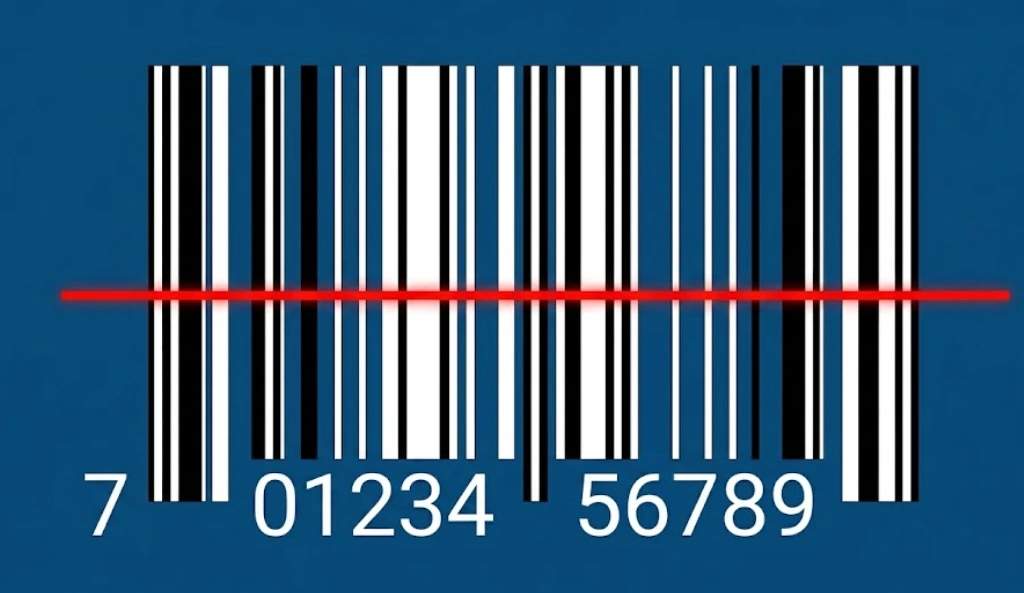
A 1D barcode is a linear barcode that encodes a string of numbers. The most common formats are EAN-13 and UPC-A for retail, and Code 128 for logistics. Every retail POS scanner in operation today reads them.
When 1D barcodes win: Point-of-sale checkout, where established POS infrastructure already reads them; mass production labeling, where print speed and cost at volume is the primary concern; and supply chain contexts where the receiving system is built around legacy barcode formats.
When 1D barcodes lose: 1D barcodes encode numbers, not URLs. They cannot drive a mobile interaction without significant middleware. A consumer with a smartphone cannot natively translate a UPC code into a webpage. They are not a substitute for QR Codes in any consumer engagement context.
Verdict: 1D barcodes and QR Codes serve different purposes on the same package. The EAN or UPC handles POS checkout. The QR Code handles consumer engagement. The more relevant data point here is GS1 Sunrise 2027, which explicitly transitions EAN/UPC at retail POS to GS1 QR Codes by 2027. The technology being phased out is the 1D barcode, not the QR Code.
→Related: How much data can QR Codes hold
6. Short URLs and Branded Links
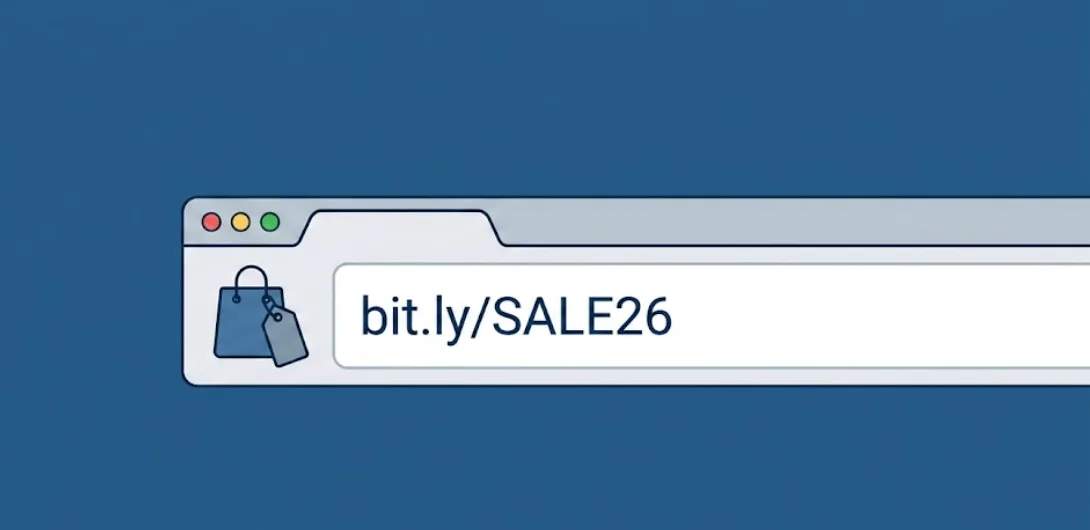
A short URL is a redirect link, typically created through a service like bit.ly or rebrand.ly, or through a custom branded domain. Typing or tapping a short URL achieves what scanning a QR Code achieves: a redirect from a physical or audio trigger to digital content.
When short URLs win: Audio channels where visual scanning is not possible (podcasts, radio advertising, TV), SMS campaigns where a tappable link is more familiar than a QR Code, and audiences who are more comfortable typing a URL than scanning. For these use cases, a short URL is not competing with a QR Code; it is serving a different interaction model entirely.
When short URLs lose: Short URLs cannot be scanned offline. There is no visual call-to-action on the physical surface. URL legibility depends on character count and typeface legibility. Unlike a QR Code, a short URL requires the audience to correctly recall and type a string of characters after seeing or hearing it.
Verdict: Short URLs and QR Codes work together. A QR Code carries a short URL as its destination. They serve different channels for the same redirect objective. A short URL is not a QR Code alternative in the sense of replacing it; it is a complement for contexts where scanning is not the right interaction mode.
7. SnapTags
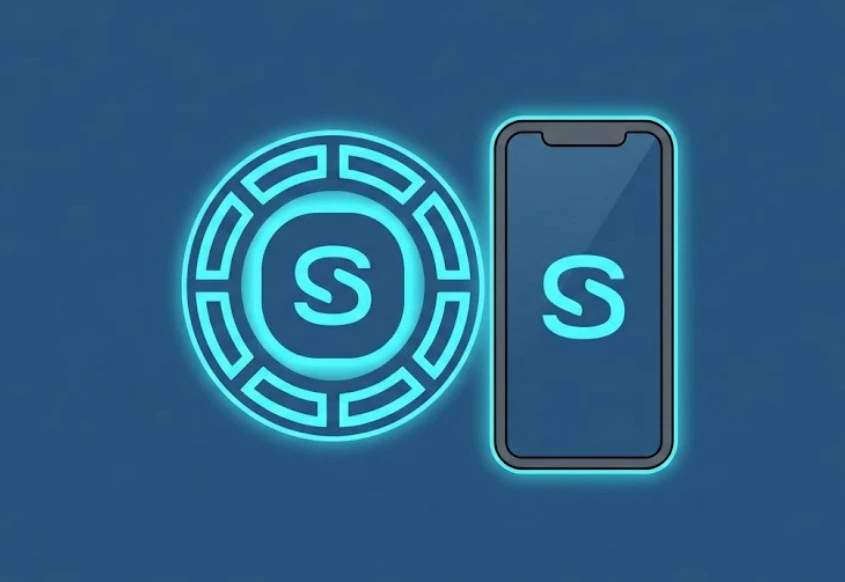
Invented by SpyderLynk, SnapTags are a form of 2D mobile barcode. These QR Code alternatives are depicted as a ring-shaped code surrounding an icon or company logo.
Like QR Codes, SnapTags require users to scan using their mobile device. The user has to snap a picture of the code and then text the photo to a short code indicated on the SnapTag. Users can also download a SnapTag reader to directly scan the tag.
Where SnapTags were used: The use of SnapTags has declined significantly in recent years, with their usage being popular in magazines around the time the technology launched (2011 to 2013).
2026 status: SnapTags are not a viable enterprise option. SpyderLynk no longer actively markets the product, and the infrastructure required to process SnapTag scans (SMS routing, proprietary reader apps) has not kept pace with smartphone development. If you encounter SnapTags referenced in a QR Code alternatives article, check the publish date.
Verdict: SnapTags are a historical footnote. Listing them as a current alternative would mislead any buyer doing a genuine technology evaluation in 2026.
GS1 Sunrise 2027 and what it means for alternatives
If you’re in the CPG industry, the format decision is largely already made. GS1 announced Sunrise 2027, which requires all retail packages in participating markets to carry a 2D barcode readable at point-of-sale scanners by 2027, with the GS1 QR Code as the preferred format. Walmart, Target, and Kroger have committed to accepting GS1 QR Codes at POS by the deadline.
The formats getting phased out are EAN-13 and UPC-A barcodes, not QR Codes. If you switch to an alternative for packaging in 2026, you may need to switch back within 12 months.
How to choose the right technology for your use case
Below are five common cases where QR Codes or their alternatives are better.
Case 1: Consumer-facing marketing (campaigns, packaging, events, menus)
Use QR Codes. They work on every smartphone camera, require no reader hardware, deliver scan analytics, and — through platforms like Uniqode — support dynamic QR Code destination editing without reprinting. If your primary audience is a consumer with a phone in their pocket, QR Codes have no serious competition on cost and accessibility.
70% of consumers scan QR Codes at least once monthly, according to the State of QR Codes Report 2026.
Case 2: Supply chain inventory or pharmaceutical serialization
Use RFID for back-of-house tracking and QR Codes for the consumer-facing label. These are not competing technologies in this context. RFID handles bulk, no-line-of-sight tracking at the warehouse and logistics level. QR Codes handle the consumer-side interaction at the shelf.
A finished pharmaceutical package often carries both: a Data Matrix or RFID tag for serialization compliance, and a QR Code pointing consumers to dosing instructions or product authentication. Neither replaces the other.
Case 3: Luxury goods authentication or premium tap interaction
Use NFC. The tap UX is part of the premium brand experience. Budget for per-item cost and confirm device compatibility with your target market. In markets with lower NFC penetration, a QR Code backup is included on the same package.
Case 4: Pharmaceutical labeling with specific regulatory compliance
Your regulatory affairs team determines the format. EU FMD requires Data Matrix. DSCSA accepts Data Matrix or GS1 QR Code. Retail POS in GS1 Sunrise markets requires a GS1 QR Code or GS1 DataMatrix with Digital Link by 2027. Confirm your applicable regulation before evaluating formats.
Case 5: Audio advertising, podcasts, or SMS channels where visual scan is not possible
Use short URLs. A QR Code requires the audience to point a camera at a physical surface. Audio and SMS campaigns cannot do that. A branded short URL handles the redirect through typing rather than scanning. Short URLs and QR Codes coexist in multi-channel campaigns.
When QR Codes outperform every alternative
QR Codes outperform alternatives like NFC, RFID, and Data Matrix in the use cases that make up the majority of the market: consumer-facing campaigns, product packaging, and event marketing. Four capabilities drive that advantage.
- Analytics: QR Codes deliver scan-to-conversion attribution that RFID and NFC cannot match. Device, location, time-of-day, and campaign data all feed into GA4 via UTM parameters. Alternatives require additional middleware to get any interaction data at all.
- Security: The answer to quishing is not switching to NFC or RFID, as both have their own attack vectors. A managed platform like Uniqode validates destination URLs, detects anomalous scan patterns, and secures every interaction (ISO 27001:2022, SOC 2 Type II, GDPR, and HIPAA compliant).
- Brand recall: Around 42% of consumers say a code that looks legitimate and safe is what drives them to scan, according to the latest State of QR Codes report. RFID tags and Data Matrix codes offer no visual customization. Branded QR Codes with logos, colors, and frame CTAs signal intentional brand investment.
- Versatility: One format handles 20+ content types: URL redirects, vCards, Wi-Fi credentials, app store links, PDF downloads, and more. Alternatives are built for a single action.
Frequently Asked Questions
- 1. What can I use instead of a QR Code?
There are several alternatives to QR Codes, including NFC, RFID, BLE beacons, Data Matrix, 1D barcodes, and short URLs. Each is better suited to specific use cases: NFC for luxury authentication and payments, RFID for supply chain tracking, Data Matrix for pharmaceutical labeling. None of them replaces QR Codes across the full range of consumer-facing use cases where QR Codes currently operate.
- 2. Are QR Codes good forever?
Dynamic QR Codes are good for long-term usage as they can be edited and do not expire. Static, free QR Codes tend to expire if the content that they redirect to expires, or if the QR Code is damaged or unscannable.
- 3. Is NFC better than a QR Code?
NFC is better in specific contexts: luxury goods authentication, contactless payments, transit ticketing, and access control. In those settings, the tap interaction is the intended experience and the reader infrastructure already exists. For consumer marketing at scale, QR Codes hold the advantage: they work on approximately 99% of smartphones via the native camera, require no reader hardware, and cost near zero per touchpoint.
- 4. What is replacing QR Codes?
Nothing is replacing QR Codes across their primary use cases. In retail packaging, GS1 Sunrise 2027 mandates a transition from 1D barcodes (EAN-13, UPC-A) to GS1 QR Codes at POS — meaning QR Codes are the replacement technology for 1D barcodes, not the one being replaced. In supply chain contexts, RFID and QR Codes coexist, serving different tracking needs.
- 5. Are QR Codes becoming obsolete?
No. QR Code scan volume has increased year-over-year through 2025, with 188M+ scans processed on Uniqode's platform alone in 2025 (State of QR Codes 2026). The GS1 Sunrise 2027 mandate, which requires QR Codes on retail packaging globally, points toward further adoption rather than obsolescence.
- 6. What is GS1 Sunrise 2027 and how does it affect QR Codes?
GS1 Sunrise 2027 is a global initiative requiring all retail packages to carry a 2D barcode readable at POS scanners by 2027, replacing traditional EAN/UPC barcodes. The preferred format is the GS1 QR Code, which encodes both product data and a consumer-scannable URL in a single code. For retail and CPG brands, this mandate means QR Codes are the required future format for packaging, not an alternative to retire.
- 7. What is the difference between a barcode and a QR Code?
Barcodes (1D) store data in horizontal lines and typically encode limited information such as product IDs (EAN, UPC). They require a dedicated scanner and are designed for inventory and point-of-sale systems. QR Codes (2D) store data both horizontally and vertically, allowing them to hold significantly more information, including URLs, contact details, and app links. QR Codes can be scanned using any smartphone camera, making them more versatile for consumer-facing use cases.
- 8. Can NFC and QR Codes be used together?
Yes. NFC and QR Codes are often used together in omnichannel experiences. QR Codes provide a low-cost, camera-based entry point for all users, while NFC enables a faster tap interaction for devices that support it. Many brands use both on the same asset, such as packaging or posters, to maximize accessibility while offering a seamless tap experience where possible.
About the Author
Ektha is a QR code expert with years of research and analysis into the evolution of QR codes. Having written over 70 in-depth articles on QR technology, she has developed a comprehensive understanding of how QR codes are transforming industries. Her insights, including The State of QR Report, have been featured in leading publications. With a passion for simplifying complex topics and providing actionable strategies, Ektha helps businesses leverage QR codes to enhance their 'phygital' connections.
Related Posts
GS1 QR Codes: What Brands Need to Know for 2027
How To Create a QR Code With Dots
Audio QR Code: Convert and Share Any MP3 in a Flash
How to Create a Canva QR Code: Optimize Your Canva Designs
QR Codes in Healthcare: Use Cases & HIPAA Compliance Guide