
How Covid to Kanye helped us double our customer base in four months
We are thrilled to announce that we have doubled our customer base from 5,000 paying customers to 10,000 and counting in just four months. In this article, I reflect on how QR Codes have transformed the world’s imagination and will continue to empower Phygital customer engagement in 2022 and beyond.
Today, I’m excited to share that we signed on our 10,000thpaying customer, essentially doubling our customer count in just four months and bringing QR Codes to many more businesses in the US looking to leverage this transformational technology. With our current growth trajectory, I believe that we are well on our way to becoming a leader in the exponentially growing QR Code engagement market.
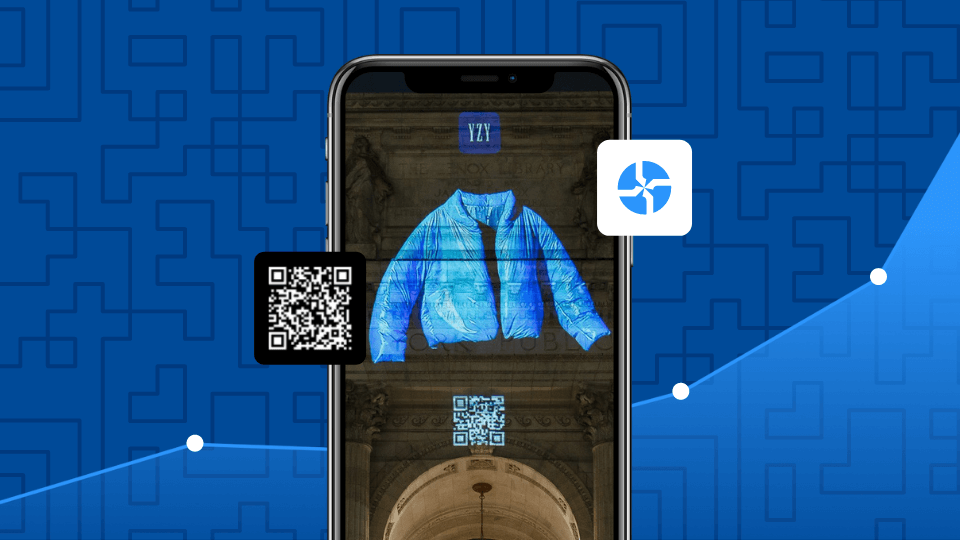
It was only in June this year that we witnessed a watershed moment for QR Codes – Kanye West’s full-page New York Times ad that had a jacket, a QR Code, and nothing else. Let’s rewind to see how QR Codes reignited the world’s imagination and became such an integral part of customer engagement in such a short period.
Switch in the perception of QR Codes in the United States
A few years back, Comscore reported that QR codes had fallen in and out of favor with the general public through 2010 to early 2020 in the United States.
Scott Stratten, president of Unmarketing, wrote a satirical yet popular book about QR Codes in 2013 called QR Codes kill kittens that highlights why the consumers in the United States never adopted QR Codes.
Some of the reasons included the lack of awareness among consumers about QR Codes to ill-advised QR Code placements (like a trail behind the airplane, partially obstructed billboards, and no-network subways).
However, all that changed in the last two years. Restaurants nudged us to try QR-based menus, and national vaccine drives educated consumers on scanning QR Codes, setting an example for using QR Codes the right way. These changing perceptions, coupled with native support in iOS and Android camera apps, removed all the friction driving mass adoption.
Growing adoption meant brand managers and marketers proactively explored ways to leverage QR Codes to establish a direct communication channel with the consumer with resounding success.
50X more QR Codes have been deployed in 2021 in the United States compared to 2020
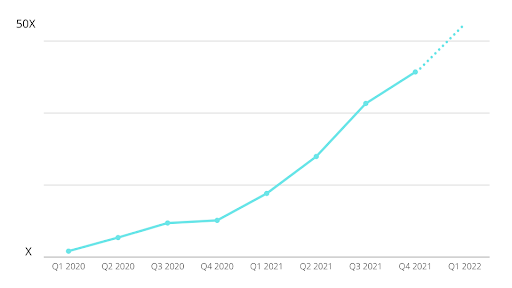
Uniqode has seen an exponential deployment of QR Codes across various industry verticals, as indicated by the chart above.
We have CPG customers using QR Codes to share their sustainability initiatives, financial institutions integrating QR Codes into their marketing collateral, real estate firms using QR Codes at open houses, and hotels using them for on-site activities, restaurant menus, and to streamline their operations.
The use-cases are tailored to each vertical, but the imperative need to digitize processes and build direct relationships with their end consumers stands out.
Positive self-reinforcing value loop helping customer engagement
What’s been heartening to see is not only have the QR Code deployments grown, but the consumer engagement with these codes has also risen exponentially.
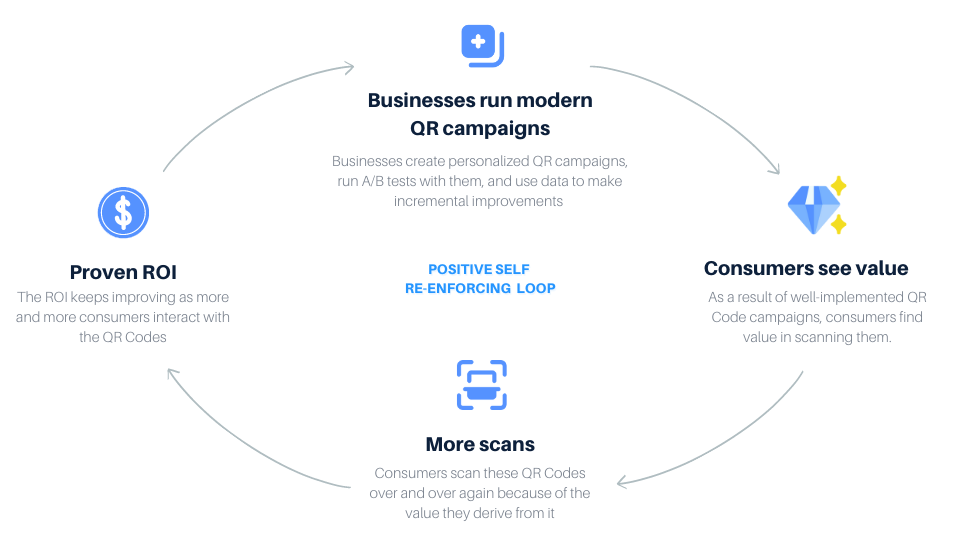
A self-reinforcing value loop is at play, helping businesses realize the value of leveraging robust dynamic QR Code platforms like Uniqode. As they deliver more sophisticated value-driven campaigns, consumers reward them with compelling engagement that encourages businesses to expand the use-cases beyond their original intent.
This has resulted in the scans having grown 400% over the last 12 months across the same set of customers, positively impacting the ROI for each customer.
Finally, where are QR Codes headed in 2022?
It is clear from the above data that QR Codes are growing by leaps and bounds. Here are two core trends I predict for the near future:
- Increasing enterprise demand for QR Codes for a diverse range of use-cases, both internal and consumer-facing. Phygital engagement for QR Codes is no longer being looked at in a siloed manner; they have arrived as a comprehensive strategy in the C-suite.
- QR Codes will emerge as a reliant source of first-party data in businesses’ quest to build a direct-to-consumer relationship. In the age of disappearing third-party cookies etc., this will be critical.
I am stoked about everything we have achieved in this short duration and excited about the possibilities of what QR-enabled Phygital customer engagement holds for 2022—looking forward to empowering the next 100,000 customers!
Read our official press release here.
Frequently Asked Questions
- What is phygital customer engagement?
Phygital customer engagement combines physical and digital experiences, typically using technologies like QR codes to bridge offline and online interactions. This approach increased by 300% post-pandemic as retailers and restaurants discovered customers who engage through phygital touchpoints spend 25% more on average than those using single-channel experiences. QR codes serve as the primary gateway, allowing customers to instantly access menus, product information, loyalty programs, and payment systems from physical locations
- How fast can a business grow using QR code technology?
Businesses implementing strategic QR code campaigns can see customer base growth of 100-200% within 4-6 months, as demonstrated by companies scaling from 5,000 to 10,000 customers in a single quarter. QR codes reduce customer onboarding friction by 85% compared to traditional methods requiring manual URL entry or app downloads. The key drivers include contactless convenience, instant access to digital experiences, and the ability to track and optimize every customer interaction through scan analytics.
About the Author
Enabling digital connection with every physical object and place on the planet