How marketers use QR Codes

Marketers are all in on QR Codes. The next step is proving what they're worth.

QR Code adoption has reached near-universal levels among users and marketers, with 98% of marketers reporting a positive impact on their marketing over the past 12 months. This level of agreement is rare in marketing.

When nearly every team reports positive results, it signals that QR Codes have moved past experimentation into standard practice. The enthusiasm is well-founded, and the outlook is bullish.

OPTIMISM
98
%

report QR Codes had a positive impact

MOMENTUM
60
%

plan to increase QR Code usage

OUTLOOK
56
%

expect higher revenue from QR Codes

QR Codes appear to have earned their place in the modern marketing tech stack. But sentiment alone won't survive budget scrutiny. To maintain investment, teams must prove QR Codes deliver measurable business outcomes, not just positive sentiment.

QR Code tracking is evolving, with room to connect activity to outcomes.

The majority of marketers focus on activity metrics like clicks, engagement, and conversion rates, while only 12% measure revenue impact.

The activity metrics are valuable indicators that campaigns are working and audiences are responding. The gap, however, is in connecting these interactions to business outcomes. As QR Codes become more integral to marketing strategy, teams that can draw a clear line from scans to revenue will be better positioned to demonstrate ROI and justify continued investment.

How do you typically measure the effectiveness of your QR Code campaigns?

Click-through rate
30%
Customer engagement
30%
Conversion rate
22%
Sales/revenue
12%
Don't measure
6%

Most teams have adopted dynamic QR Codes, unlocking flexibility and measurement.

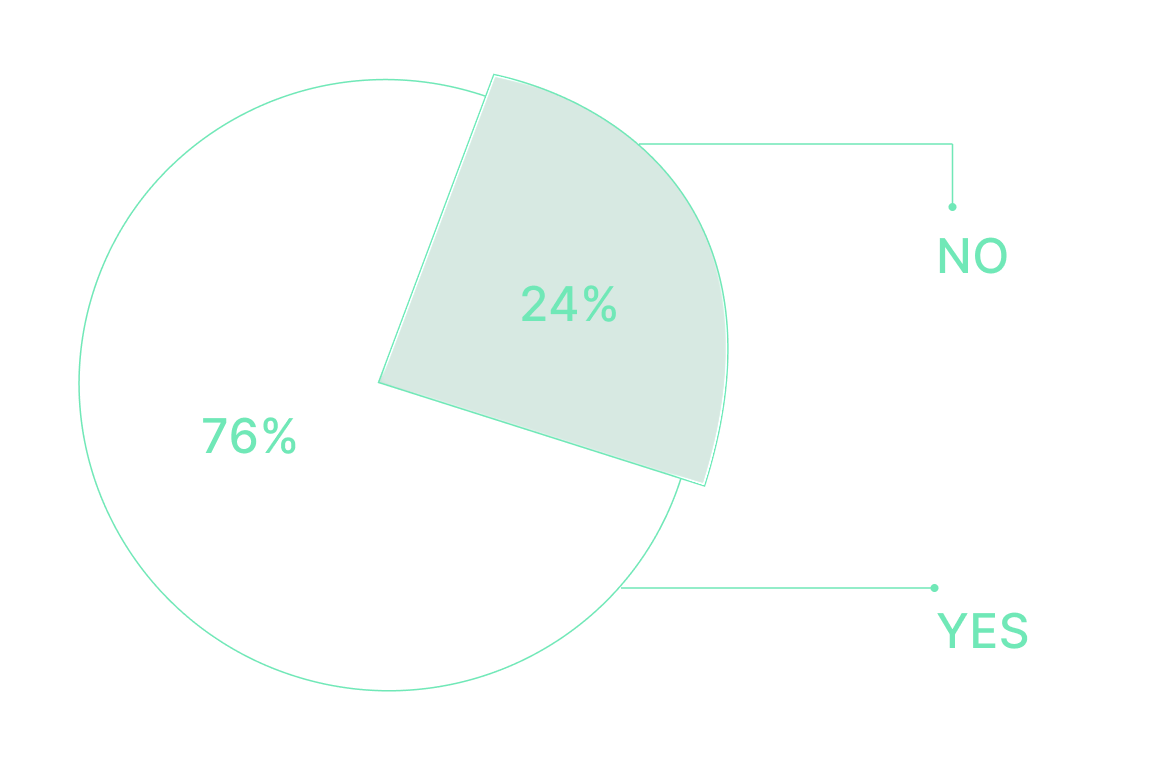
Does your company currently use dynamic QR Codes?

76% of marketers use dynamic QR Codes. That's 3 out of every 4 teams. With dynamic QR Codes, you can track scans in detail, personalize user experiences, set expiration dates, add password protection, and integrate retargeting pixels. 

Unlike static QR Codes that always point to the same destination, dynamic ones also let you update the linked content anytime without changing the QR Code itself. This flexibility matters when information changes frequently, whether due to updated menus, revised product details, or evolved campaign messaging.     

Has using QR Codes reduced printed materials or reprints for your organization?

Yes (significant)
28%
Yes (some)
45%
No impact
22%
Increased printing
3%
Not measured
2%

QR Codes are distributed across diverse marketing channels.

What are the primary channels for distributing QR Codes?

Social media
64%
Digital ads
60%
Print
50%
product packaging
42%
Out-of-home
14%
None
3%

QR Codes have become truly multi-channel. Social media (64%) and digital ads (60%) are the most common channels for QR Code distribution. On these channels, users can already tap a link. QR Codes add a layer: app installs, scan-based personalization, or richer analytics than a standard click. 

Physical placements like print, packaging, and OOH are where QR Codes do something that nothing else can. They turn a static surface into a clickable one. Half of marketers use print, and 42% place codes on product packaging. And the consumer data backs this up: the places where people scan most are physical environments. These aren't just popular distribution channels; they're also the highest-engagement ones.     

Note: The percentages presented reflect responses to multiple, non-exclusive options. Respondents may have selected more than one answer, resulting in an aggregate total that exceeds 100%.

QR Codes started as a link. Marketers are using them as a channel.

Website visits
61%
App downloads
39%
Customer service
38%
Lead generation
37%
Program signups
36%
Conveying information
36%
Product purchases
35%
Referrals
32%
Improving packaging
19%
Inventory management
19%
Logistics tracking
28%

When QR Codes first went mainstream, their role was simple: access. Access to menus. Access to payments. Access to basic information. That role still matters, but it’s no longer enough. Today, every scan represents a decision point. You can treat it as a one-time access point or use it to start a relationship.

The data suggests marketers are increasingly choosing the latter. While website visits remain the most common use case, the middle of the list tells the more interesting story. Lead generation, program signups, and customer service all rank nearly as high. These aren’t traffic goals, they’re relationship-building ones.

In other words, QR Codes are no longer just a way to send people somewhere. They’re increasingly used to capture intent, support customers, and move people deeper into owned journeys. Primary QR Code marketing goals cluster around growth (54%), engagement (52%), and operational efficiency (39%). Teams are aligning QR Codes with real business objectives — not treating them as standalone experiments.      

Note: The percentages presented reflect responses to multiple, non-exclusive options. Respondents may have selected more than one answer, resulting in an aggregate total that exceeds 100%.

QR Codes are becoming a valuable source of first-party data.

94% of marketers agree that QR Codes help their organization gather first-party data.

On the consumer side, the alignment is striking: 83% of consumers say they’re willing to share data after scanning, as long as consent and opt-out options are clear. 

Every QR Code scan is a direct interaction between a brand and an individual without an algorithm in between. This interaction comes without platform mediation, cookie dependency, and audience renting. Yet, only 34% of marketers clearly disclose how scanned data will be used.

Consumers aren’t resistant to sharing data. They’re resistant to ambiguity. Teams that clearly explain the value exchange — what’s being collected and why — are better positioned to turn scans into trust, and trust into long-term relationships.      

Marketers
94
%

agree QR Codes help gather first-party data

CONSUMERS
83
%

willing to share data with consent or an opt-out option

The barriers to adoption are solvable, and many teams have already solved them.

In trying to adopt QR Codes, what roadblocks have you experienced?

Technical obstacles
36.8%
Security concerns
26.1%
Poor understanding
29.6%
Budget constraints
18.3%
Incompatible audience
26.9%
Lack of buy-in
20.2%
weak value proposition
17.2%
None
17.4%
Other
0.2%

When marketers describe what's held them back from adopting QR Codes, technical obstacles lead at 37%, followed by poor understanding of the category (30%) and concerns about audience compatibility (27%). Security worries and lack of organizational buy-in round out the top challenges.

But look at what these barriers have in common: none of them is permanent. Technical obstacles disappear with modern platforms that handle the complexity. Poor understanding improves with education and clearer use cases. Audience compatibility concerns fade as consumer behavior data shows scanning has become mainstream. And buy-in follows when teams can demonstrate measurable results.

The 17% reporting no roadblocks at all proves the point that these challenges are already behind many organizations. The question isn't whether QR Codes can work. It's whether teams have the right tools, knowledge, and internal alignment to make them work.

Note: The percentages presented reflect responses to multiple, non-exclusive options. Respondents may have selected more than one answer, resulting in an aggregate total that exceeds 100%.

Scaling QR Code campaigns requires organizational infrastructure

In trying to scale QR Code usage, what roadblocks have you experienced?

Inconsistency in tracking
33%
Duplicate codes
28%
Integration with existing systems
24%
Lack of employee training
24%
Difficulty retiring obsolete codes
22%
High operational costs
18%
Security breaches
18%
None
20%

The most common challenges have little to do with QR Code capabilities themselves. They’re symptoms of how QR Codes are managed inside organizations.

QR Codes are often created and maintained by multiple teams: marketing, brand, growth, operations, retail, and customer support. Without shared infrastructure, visibility fragments, QR Codes get duplicated, data becomes siloed, and tracking becomes inconsistent.

But look at the 20% who report no roadblocks at all. That suggests these are just process problems, which can be solved by the right system.

Note: The percentages presented reflect responses to multiple, non-exclusive options. Respondents may have selected more than one answer, resulting in an aggregate total that exceeds 100%.

Analytics is both the most valued feature and the biggest improvement opportunity.

When asked which feature matters most in a QR Code solution, analytics and reporting won decisively at 44%.

Which feature of a QR Code solution is most important to you?

Analytics and reporting
44%
Ease of use
31%
Customization options
14%
Integration with other tools
11%

And, when asked what improvements they want most in QR Code technology? Better analytics tracking topped the list again at 49%. 

The feature marketers value most is also the one they believe needs the most improvement. Teams have access to analytics. What they're looking for is deeper insights, better integration with existing data systems, and clearer connections between scan activity and business outcomes.

What improvements would you like to see in QR Code technology/design?

Better analytics tracking
49%
Faster loading
45%
Dynamic QR Codes
41%
Greater compatibility
38%
More encryption/security
33%
Greater transparency about destination
23%
AR integration
18%

Faster loading (45%) and dynamic QR Codes (41%) are close behind better tracking (49%). Marketers want the QR Codes that load fast enough to keep scanners engaged, QR Codes that can be tracked and updated in real time, and better analytics.

Note: The percentages presented reflect responses to multiple, non-exclusive options. Respondents may have selected more than one answer, resulting in an aggregate total that exceeds 100%.

Ready to turn these insights into action?                

We can help you design QR Code strategies that convert, benchmark your performance, and unlock untapped potential.

What does the marketer survey data tell us?

What gets measured gets managed, what gets managed gets scaled. 

98% of marketers say QR Codes have a positive impact. But only 12% measure that impact in revenue.

The data points to three specific gaps.

  1. Attribution: teams track clicks and engagement, but rarely connect scans to sales. 
  2. Consistency: 33% struggle with fragmented tracking across teams, and 28% deal with duplicate codes — problems that compound as programs scale.
  3. Transparency: 83% of consumers are willing to share data with consent, but only 34% of marketers clearly disclose how their data is used. The first-party data opportunity is sitting right there. Most teams just haven't built the trust to unlock it.

None of these are technology problems. They're operational problems.

20
%

of marketers who report zero roadblocks to scaling aren't using better QR Codes. They've built better systems around them that handle QR Code creation, management, and tracking.

The teams that close these gaps in 2026 won't just generate more scans. They'll be the ones who can prove what those scans are worth.

Understand why your customers scan

Chapter 02