


.png)

Why Your QR Codes Shouldn’t Always Lead to the Same Place

In 2023, Audi ran a national ad featuring a single QR Code. When viewers scanned it, 115 different things happened. Each person was routed to the Audi dealership nearest to their location.
Most marketing teams wouldn’t think to do this with a QR Code. Most wouldn’t know they already have the capability they need to.
According to Uniqode’s State of QR Codes 2026, 76% of marketers are already using dynamic QR Codes. Many use them the same way: update the destination when a campaign ends, fix a broken link, swap out seasonal content. While that’s a valid use of the technology, it’s also the most basic one.
Dynamic QR Codes can also automatically route different scanners to different destinations based on conditions such as time of day, location, device type, or how many times someone has scanned. Restaurants show what that looks like in practice.
How restaurants cracked it
When restaurants replaced physical menus during COVID, they ran into an immediate problem: one menu doesn’t work all day. A diner scanning at 8 AM wants eggs and coffee. The same person scanning at 8 PM wants steak and wine.
Printing separate menus for each daypart means constant reprints, multiple codes on the table, or staff manually swapping menus between shifts.
The solution restaurants landed on was time-based routing, a form of context-aware routing in which a dynamic QR Code reads the time at the moment of scanning and redirects accordingly. With one QR Code, they could now show different menus for breakfast, lunch, and dinner.
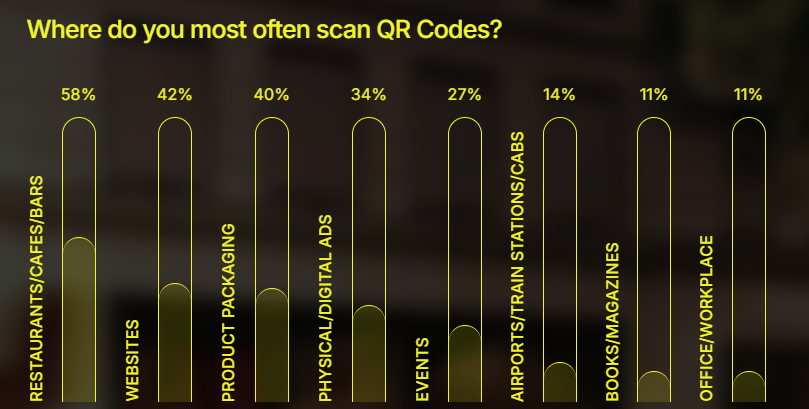
The approach stuck. According to the 1,000 consumers surveyed for the report, 58% said they scanned QR Codes at restaurants, more than in any other setting. The menu is still one of the most scanned use cases in the world. Part of the reason is that restaurants made the scan worth doing.
Every industry has a version of this
The logic restaurants used isn’t unique to food service. It’s a response to a universal problem: the same QR Code is scanned by different people at different points in their relationship with a brand, each wanting different things.
Product packaging is a good example of how quickly these compounds. A first-time buyer scanning a protein powder needs to know how to use it. Someone, six weeks in, wants recipes. Someone on their third purchase wants a refill link. The packaging hasn’t changed, but the person scanning it is at a completely different point in their relationship with the product, and a static destination treats all of them the same way.
Event organizers face a version of this that plays out over days. A QR Code on a conference badge means something different the week before the event (hotel bookings, session registration, travel logistics) than it does on the day itself, when attendees need live schedules and room locations. After the event, the same scan leads to recordings and speaker slides.
Retail, on the other hand, compresses all of this into a single week. A weekday shopper researching during a lunch break wants specs and comparisons. A weekend browser with family in tow wants to know what's in stock and what the bundle deal is. A QR Code on that display is seeing both of them. Right now, it's answering neither with context-aware routing.
The seven types of context-aware routing
Each routing type reads a different signal at the moment of scan. The condition is set in advance. The redirect happens automatically.
How brands have applied context-aware routing
A few brands have already begun implementing the routing types mentioned above.
Audi and location-based routing
Audi of America ran a national OTT campaign with a single QR Code embedded in the ad. Based on where each viewer was sitting when they scanned, the code automatically routed them to one of 115 zip-code-specific dealership pages. The campaign reached 14.1 million viewers, held the attention of 98% of them, and drove over 23,000 additional minutes of engagement.
One video, one code, 115 different destinations — none of them requiring a separate creative or a manual update.
Ketel One and access-based routing
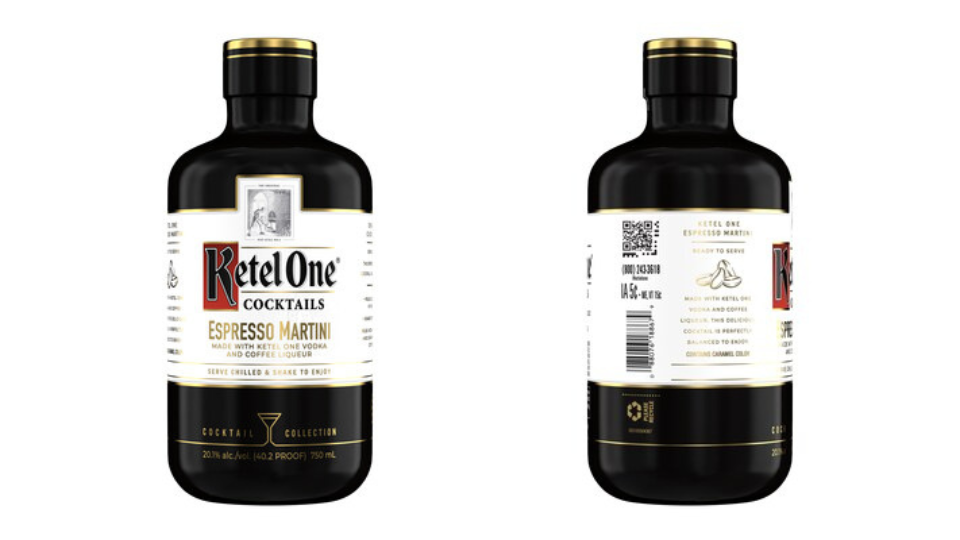
Ketel One deployed accessible QR Codes on its bottled Espresso Martini and Cosmopolitan products.
For most scanners, the code routes to the brand’s website as any standard QR Code would. When the same code is detected by accessibility apps such as Microsoft Seeing AI, Be My Eyes, or Envision, it triggers a completely different experience: text-to-speech product announcements, distance detection, allergen information, and recipe suggestions in formats built for people who are blind or have low vision.
Same QR Code, same shelf, different destination, based entirely on how it's scanned. Ketel One built a single QR Code that reads its scanning context and responds accordingly.
Coinbase and device-based routing
During the 2022 Super Bowl, Coinbase ran a 60-second ad showing nothing but a bouncing QR Code on a black screen. iOS users were routed to App Store flows, Android users to Google Play. The QR Code processed over 20 million scans and drove 445,000 signups in the first minute.
The routing logic was simple. A single broadcast code served two technically different user journeys simultaneously, with neither audience aware that any branching was happening behind the scan.
One QR Code, infinite contexts
The customer physically walked up to the QR Code, pulled out their phone, and chose to engage. That’s a level of deliberate attention most marketing channels spend significant budget trying to manufacture.
When the destination doesn’t match what they came for, that moment is gone. With an ad, the brand interrupts. With a scan, the customer volunteers. A bad experience at that moment of intent is harder to shake. With an ad, the brand interrupts. With a scan, the customer volunteers. A bad experience at that moment of intent is harder to shake.
According to Uniqode’s State of QR Codes 2026, 49% of consumers are most likely to scan when a QR Code provides clear relevance or context. Context-aware routing is what builds that relevance in. The right destination at the right moment, without manual updates, separate codes, or reprinting anything.
For marketers, that means higher scan-to-conversion rates, less wasted print spend, and more return from a touchpoint the customer already chose to engage with.
The technology supports it. Most teams already have it. The question is how many high-intent moments have to land on the wrong page before the routing logic gets built.
Context-aware routing is one piece of a larger shift in how brands are using QR Codes. Uniqode’s State of QR Codes 2026 maps out where the rest of that shift is going.