



.png)

The Traveler's Journey Told Through QR Codes


There's always that moment in every trip when you're holding your phone up, desperately searching for a WiFi signal, while standing next to a sign that probably has all the information you need—if only you could read it.
QR Codes were supposed to solve these frustrations. One quick scan should connect travelers to WiFi passwords, local maps, menu translations, or boarding updates. The technology works perfectly when travelers actually notice and scan the codes.
That's where placement becomes everything. Uniqode's QR Code placement guide for travel reveals a clear pattern: Put a QR Code where travelers are rushing past, and it gets overlooked. Place it where they naturally pause while waiting for elevators, standing in queues, or sitting at gates, and scan rates soar.
This article breaks down the eight phases of the traveler's journey, showing travel and hospitality teams exactly how to use QR Code placement to influence behavior, reduce operational friction, and increase conversions.
You'll find practical examples and placement strategies you can implement immediately.
Strategic QR Code placement across the travel journey
Every traveler's journey unfolds in predictable stages, and each stage offers specific moments where QR Codes can create value.
From the initial booking to the flight home, travelers move through distinct phases with different needs, attention levels, and decision-making patterns. Understanding these phases and where QR Codes fit naturally within them transforms random placements into strategic touchpoints that deliver measurable ROI.
Phase 1: Planning the trip
Phase 1 offers airlines, hotels, and online travel agencies (OTAs) high-conversion opportunities with minimal implementation costs. The travel journey usually begins long before anyone arrives at the airport. This is where travel and travel-adjacent brands can nudge upgrade, pre-arrival, and app-download decisions with almost zero extra cost.
A few examples of how brands can integrate QR Codes into the existing materials travelers interact with during this stage stand out:
- Airlines placing a QR Code inside booking confirmations for seat upgrades: This works because travelers usually revisit their confirmation at least once to check times, verify details, or share the itinerary. A scan placed here removes the extra steps of reopening the airline app or navigating through menus. It converts upgrade intent into immediate revenue with zero additional marketing spend.
- Hotels using pre-arrival emails to let guests select room preferences: Pre-arrival messages are already part of most hotel workflows, so adding a QR Code here keeps the experience clean. Travelers can choose pillows, amenities, or early check-in while they’re still planning, which reduces lobby delays and helps the hotel prepare ahead. This drives ancillary revenue while reducing front desk workload.
- Travel agencies embedding QR Codes in booking summaries to surface updated itineraries: Booking summaries are often referenced multiple times before a trip. A QR Code that opens the most current version of the itinerary avoids confusion, especially when plans change. This reduces support requests and keeps the traveler up to date with the latest schedule.
The QR Codes that perform best in this phase make the next step obvious and remove any friction slowing the traveler down.
Pro Tip: Include QR Codes as the first element in booking confirmations. Travelers often skim these emails quickly, so front-load the scan opportunity before they scroll away.
Phase 2: The journey to the airport
Phase 2 gives mobility, retail, and transit partners multiple high-intent touchpoints with predictable dwell time. Travelers have their phones out, with some idle time, and specific needs such as navigation, payments, and last-minute planning checks.
Because of this, QR Codes placed in transit environments tend to work best when they’re tied to something immediate, such as payments, playlists, app downloads, or simple information that helps the traveler move with more confidence.
Cab and ride-share operators can place QR Codes on headrests or dashboards for tipping, providing feedback, or downloading their app. It’s a natural scan point because travelers typically have a few idle minutes during the ride and are already using their phones. A scan here becomes an easy, low-effort interaction that can drive app adoption rates better than traditional methods.
Retail brands around airports can also capitalize on this pre-arrival window. Some can place QR Codes on ride receipts or door panels to surface time-sensitive promotions. Because travelers often arrive early or wait around before check-in, offering something relevant before they even step inside the terminal increases the chance of discovery.
Public transit operators have predictable engagement windows. QR Codes placed at station entrances, inside buses, or on platform signage make real-time schedules or navigation tools accessible and can reduce customer service inquiries.
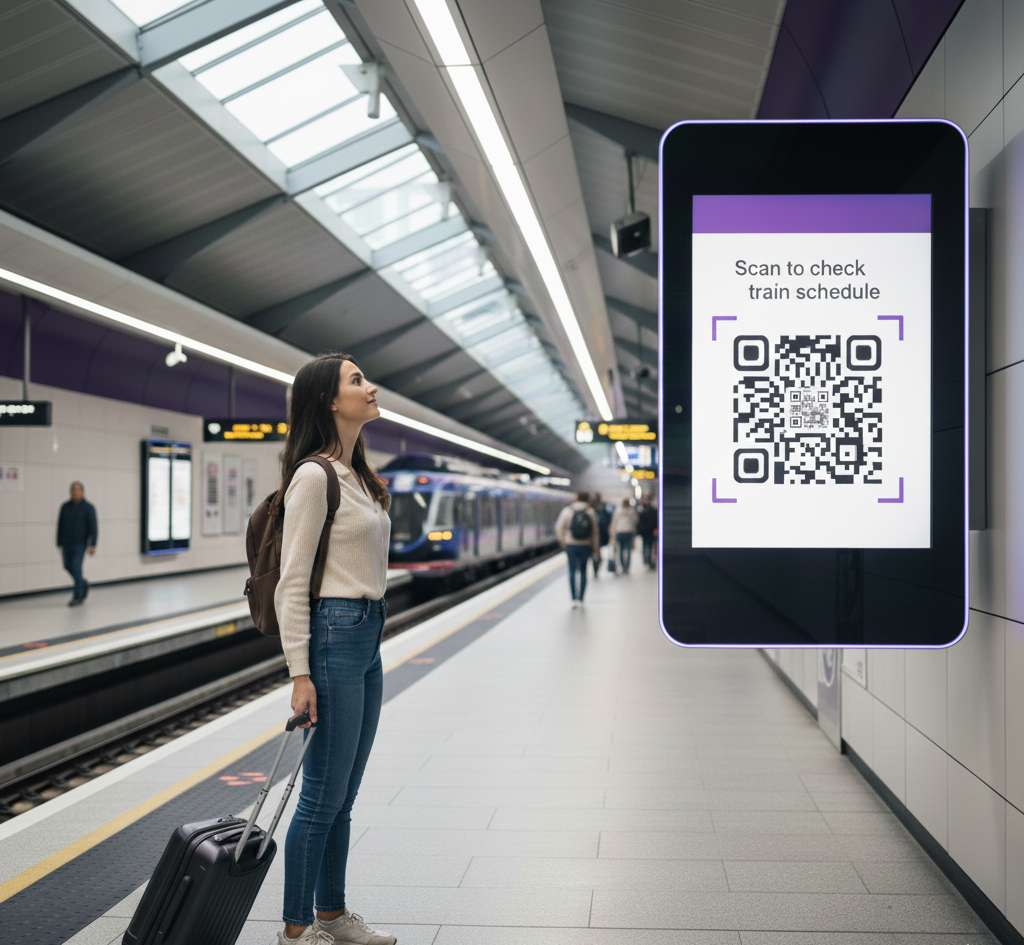
This phase is more about momentum, because travelers are moving, but they still have a few seconds to scan when something feels within reach. QR Code placements that respect that flow perform well here. They give clarity, speed up small tasks, and keep operations running smoothly.
Phase 3: Check-in and screening
Check-in and screening provide airlines and airports with some of their highest-volume QR Code opportunities, including boarding education, loyalty sign-ups, and queue management.
Airlines use this phase to surface practical information. A QR Code placed at a self-service kiosk or check-in counter can link to baggage policies, boarding instructions, or a quick walkthrough of how to tag a bag. Because travelers often pause here anyway, a scan replaces costly staff interactions while improving customer satisfaction scores.
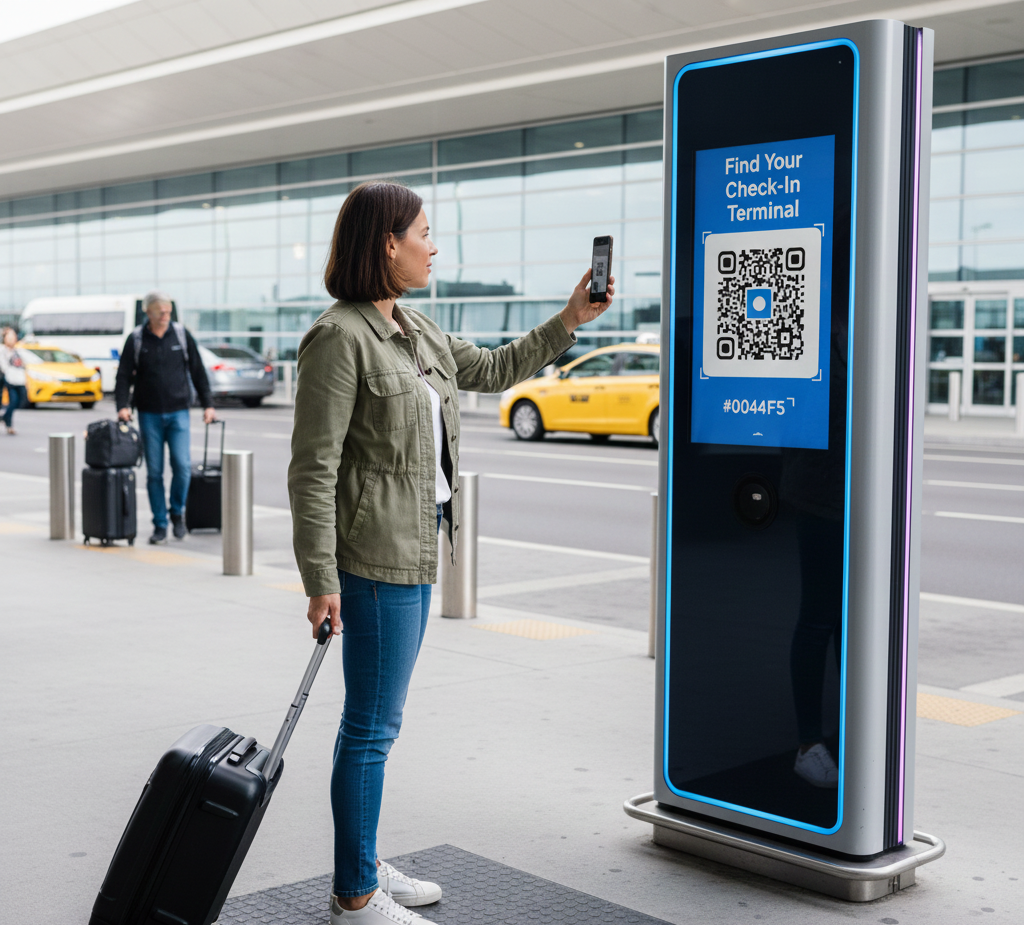
Airports maximize operational efficiency through strategic placement. QR Codes can be placed near queue entrances, barriers, or digital boards to help travelers check real-time wait times, find multilingual support, or access routes. The QR Code placement here reduces bottlenecks and improves passenger flow.
Other areas, include:
- Frequent flyer enrollment: Some airlines can place QR Codes at boarding zones or ticketing counters to make loyalty sign-ups a quick action instead of a long form. It works because travelers often wait here with their phones in hand.
- Security and accessibility information: Airports can use QR Codes around security checkpoints to surface queue times or mobility assistance options. This provides travelers with a sense of orientation, eliminating the need for staff intervention.
Pro Tip: Place QR Codes on surfaces that already carry instructions, such as baggage drop zones or counter signage. Travelers instinctively check these spots when they need help, and they catch the eye without breaking the flow.
Phase 4: Waiting to board
Phase 4 is the moment where the rushing stops and people finally have time to look around, send updates to their friends or family through their phones, or simply wait for the flight announcement.
This is where QR Codes become easy to use and notice, especially when they surface something relevant: flight updates, entertainment, airport maps, or nearby retail offers. Travelers aren’t trying to complete complicated tasks here; they’re mostly trying to fill the time, confirm details, or explore what’s around them.
Airlines can place QR Codes on gate display screens to provide real-time updates, entertainment options, or quick access to their app.
Retailers around gate areas can use QR Codes on storefronts or counter displays to offer time-sensitive promotions or tax calculators. Airports can use them near seating zones and digital boards to help travelers navigate the terminal or check amenities before boarding begins.
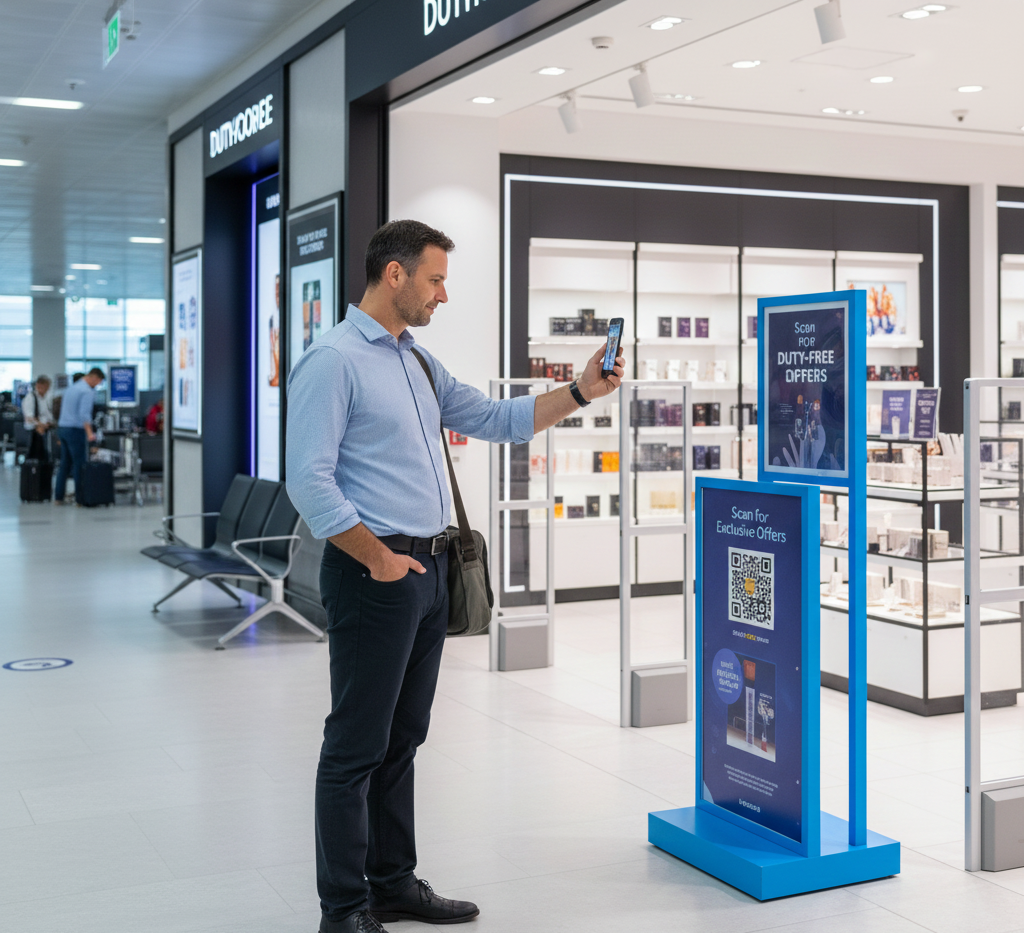
Pro Tip: To make the most of this phase: QR Codes should stay as close as possible to where travelers naturally face, i.e., gate screens, seating clusters, and storefronts. Anything placed behind or far away from where travelers are seated tends to be ignored because people rarely get up once they’ve found a spot.
Phase 5: In-flight
The in-flight environment is one of the most predictable phases of the journey. Travelers are seated, mostly stationary, and interacting almost entirely with what’s directly in front of them.
In this phase, QR Codes work well when they connect travelers to something they can use during the flight or right after landing, such as a network connection, content, meal information, and quick access to destination details.
For example:
1. Wi-Fi access from seatback trays or display panels
Placement: Beside the cup holder, on the tray table, or on the seat display
Why it works: it’s the first surface travelers see and interact with after sitting down, and the action (connecting to Wi-Fi) is immediate.
2. Destination content through in-flight magazines or menu cards
Placement: Inside the menu, in-flight magazine, or on the seatback pocket insert
Why it works: Travelers browse these materials to pass the time, so linking to guides, shopping, or local tips fits naturally into the browsing moment.
3. Meal and product details from packaging or snack catalogs
Placement: On meal trays, snack packaging, or duty-free catalogs
Why it works: Passengers already check labels or flip through catalogs; a QR Code reduces questions about ingredients or product information and makes browsing easier.
Phase 6: Arrival and stay
Phase 6 shifts the traveler into another round of important decisions, including navigating immigration, locating baggage, arranging transportation, and checking into the hotel.
These are moments where travelers are actively searching for direction, and that makes QR Codes especially useful when they’re placed where they naturally stop or ask questions.
QR Codes can be placed in arrival halls for customs, baggage claims, or onward travel details. Because most travelers walk into this area looking for instructions anyway, the scan becomes the shortest path to the information they need.
Hotels can use this same pattern in phase 6. Place QR Codes at the front desk or on room doors to enable digital check-in, Wi-Fi access, or room keys. Guests often arrive tired or in a hurry, so giving them a way to complete these steps instantly helps them avoid waiting in line.
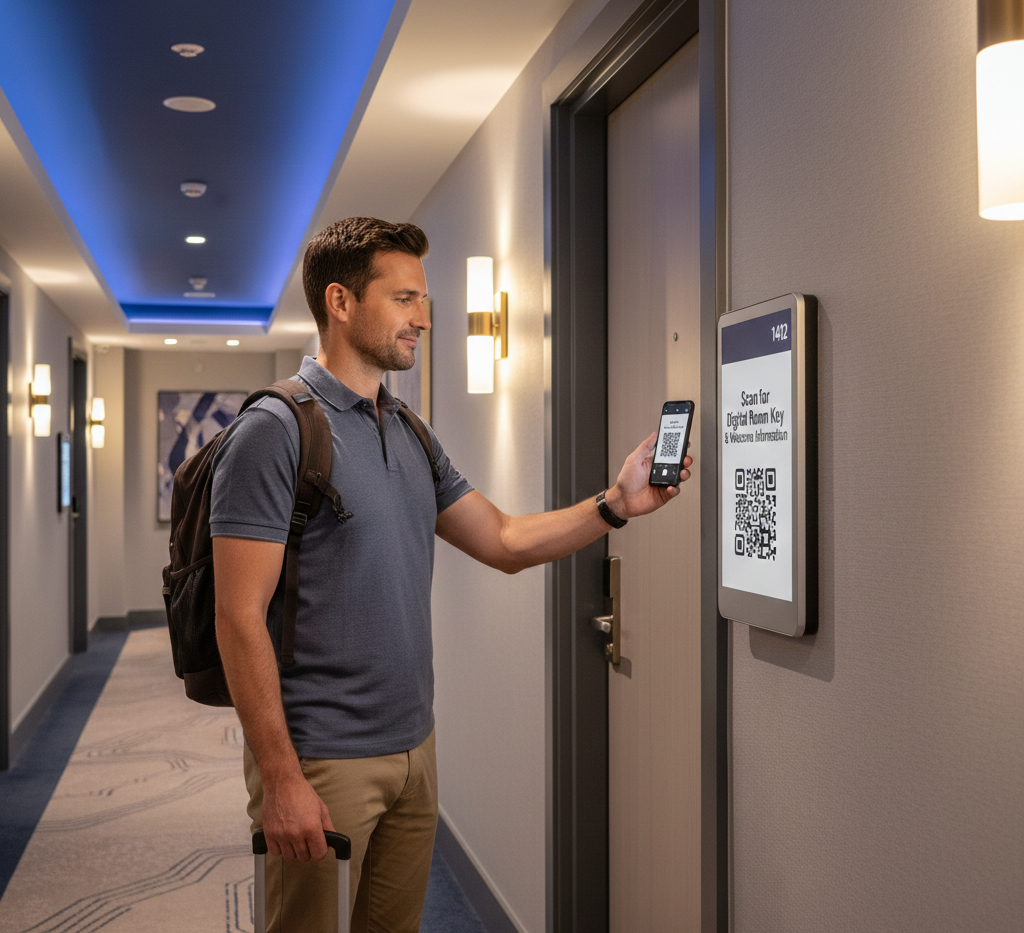
In pickup zones, QR Codes can be placed near taxi stands or curbside waiting areas to help travelers book rides or understand local regulations. This is relevant because travelers arriving in a new city often need quick guidance on how to get started, and a scan here removes uncertainty before they step into a vehicle.
Arrival and stay moments are full of micro-stops where travelers lean on signage or staff for direction. QR Codes placed in those exact touchpoints give them a faster route, reduce the questions staff have to answer repeatedly, and keep the arrival experience smooth for everyone.
Phase 7: Sightseeing and exploration
Once travelers settle in, the journey shifts from logistics to discovery. This is the phase where people explore museums, neighborhoods, parks, restaurants, and cultural sites.
Since travelers are looking around, taking photos, or trying to understand their surroundings, it naturally increases the moments when a scan feels useful.
A few examples from the report show how this plays out:
- Immersive cultural experiences: Museums and cultural centers can place QR Codes beside exhibits so visitors can open audio guides, AR layers, or artist notes that add depth to what they’re viewing.
- Retail and F&B discovery: Restaurants and shops can include QR Codes on menus or storefront displays to help travelers browse items, check ingredients, or redeem small offers while deciding where to eat or what to buy.
- Emergencies and health support: Pharmacies and clinics can add QR Codes to prescription labels or checkout counters, giving travelers access to instructions, translations, or quick links to telehealth when they need clarity.
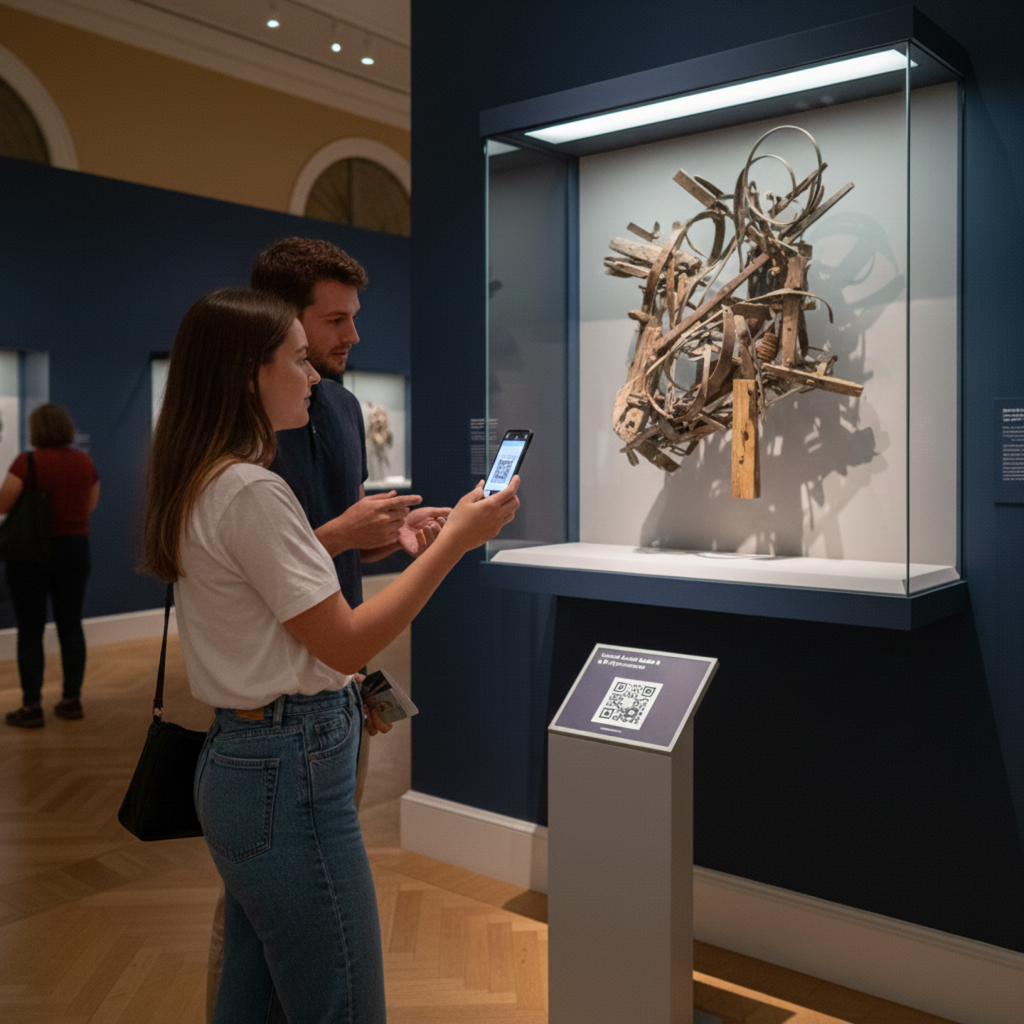
Sightseeing is full of optional interactions, and QR Codes fit naturally into these moments because they give travelers more context at the exact places they pause.
Pro Tip: Use dynamic QR Codes in sightseeing areas to update content seasonally without reprinting. You can switch from summer events to winter activities, update hours, or change featured exhibits while keeping the same physical code in place.
Phase 8: Returning home
The final phase offers high-leverage post-trip conversion moments. Brands can use QR Codes to collect reviews, deliver invoices, promote loyalty offers, and keep travelers engaged even after their trip ends.

Here’s how the report shows airlines, hotels, and retailers can use QR Codes at this point in the journey:
- Airlines: QR Codes in post-trip emails make it easy for travelers to leave reviews, access invoices, or unlock loyalty offers.
- Hotels: QR Codes on room doors or checkout counters simplify digital checkout and give travelers quick access to invoices.
- Retailers and tour operators: QR Codes on receipts or thank-you notes let travelers track deliveries, view trip photo albums, or claim post-trip rewards.
Pro Tip: Time post-trip QR Code communications for when travelers are most likely to engage. This could be typically 2-3 days after return when they're settling back into routines and processing their experience.
Placement as the lever for better QR Code performance
Across every phase, the strongest results come from QR Codes placed inside moments travelers pay attention to.
For travel and hospitality brands, these placement recommendations for each stage of the journey can help make incoming marketing campaigns yield better results. Start by placing your QR Code correctly, and the rest of your QR Code strategy becomes easier to execute and measure.
You’ll find more use cases, pro tips, and what to do next when placement is correct in Uniqode’s QR Code placement guide for travel.