


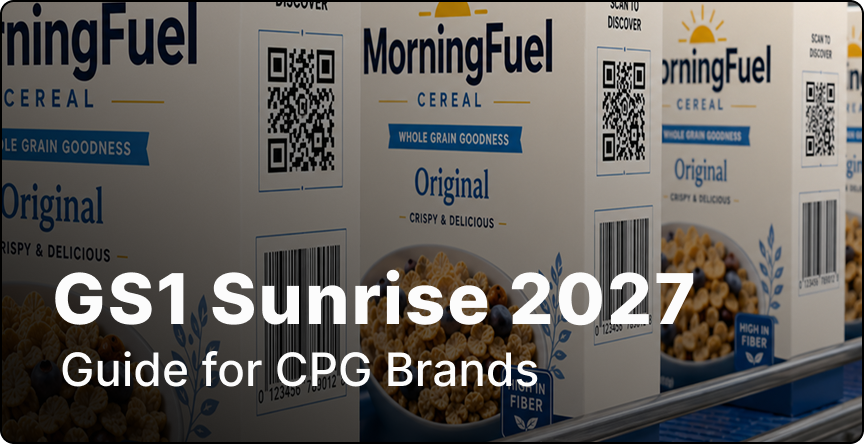
.png)

How QR Codes Are Turning CPG Packaging Into Updatable Infrastructure


Have you ever paid to print a fresh batch of product packaging, only for a last-minute change in ingredients or regulations to make them all obsolete?
With packaging already eating up about 15–20% of a brand’s fulfilment costs per order, any small tweaks can increase expenses. That is the packaging lock-in problem: once it is on the box, you are stuck with it.
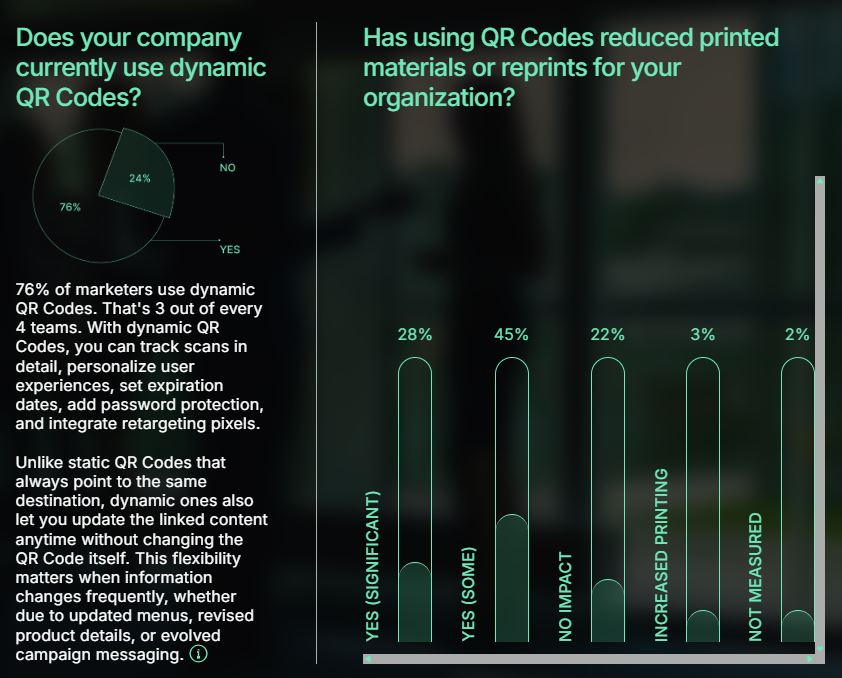
Dynamic QR Codes break that lock-in by decoupling content from the container: the box stays the same, while the digital destination updates in real time. It is a shift many brands are already making, with 76% of marketers in The State of QR Codes 2026 saying they use dynamic QR Codes, and 73% reporting fewer print revisions because of them.
This article explores why dynamic QR Codes are becoming central to modern packaging and how they help brands maintain consistent packaging while keeping digital content flexible.
Why packaging timelines demand dynamic solutions
CPG packaging operates on 3-6 month lead times, but markets don't wait. By the time packs hit shelves, competitor pricing shifts, retailers change promotional calendars, regulations update, and campaigns pivot. Static packaging forces you to either predict the future perfectly or pay for reprints every time reality diverges from your locked-in design.
The constraint shows up everywhere: testing new messaging requires separate print runs with high minimum quantities, regional variants multiply the SKU count, and every relabeled or scrapped box counts as waste and Scope 3 emissions. With 73% of marketers already cutting printed materials and reprints due to QR Codes and about 60% planning to increase usage, the shift is clear: treat packaging as permanent infrastructure and content as the variable you optimize continuously.
Dynamic QR Codes break the locked-in constraints by separating what must be permanent (the physical pack) from what needs to stay flexible (the content behind the code).
Here's where that separation delivers the most operational value.
Four ways dynamic QR Codes move faster than print cycles
Dynamic QR Codes unlock four operational areas, enabling CPG teams to gain control after packaging ships. These aren't theoretical benefits but operational workflows that packaging managers, brand teams, and product managers are using right now to move faster than their print cycles.
Here's how the flexibility shows up in practice:
1. Post-launch control
Post‑launch is where static packaging usually lets brands down. Dynamic QR Codes change that by turning every pack into a doorway you can keep updating without another print run.
Campaign evolution
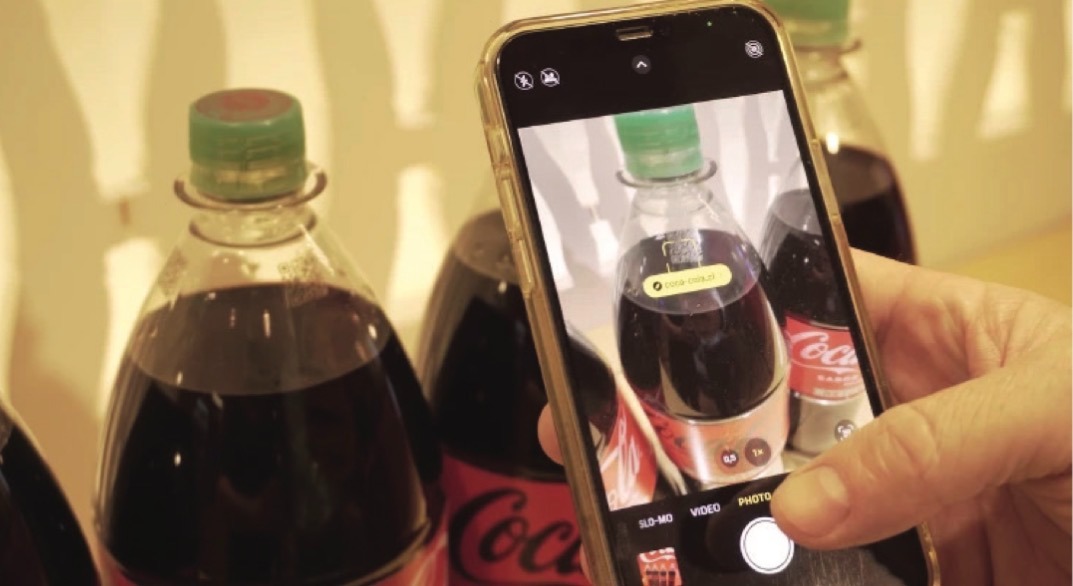
In March 2025, The Coca-Cola Company relaunched its “Share a Coke” campaign with QR Codes on select cans and bottles that directed consumers to a digital hub. There, people could personalize virtual bottles, create shareable content, and engage with interactive experiences tied to the campaign.
While Coca-Cola continued offering popular names on physical packaging, the QR Code layer extended the campaign beyond what was possible on pack. It gave the brand the flexibility to refresh digital experiences, highlight new features such as the “Memory Maker” tool, and sustain engagement throughout the campaign without changing the printed cans.
Regulatory compliance
Global CPG brands, including Coca-Cola, use dynamic QR Codes to keep allergen, nutritional, and sourcing information current across markets without reprinting labels every time a formula or disclosure rule changes. When operating in dozens of countries with varying requirements, one code serves all markets, with the destination updating to match local regulations.
Promotional rotation
A single dynamic QR Code lets you line up Halloween offers, December holiday bundles, and New Year rewards on the same pack. The code stays useful year‑round, but what people see shifts with the calendar.
Seasonal adaptation
Generic on‑pack copy has to stay bland enough to work in January and July, so it never quite lands fully for either. A dynamic QR Code lets you keep neutral packaging but swap in season‑specific content. For example, a soup brand can serve light summer recipes when it is hot, heartier cold‑weather ideas in winter, and back‑to‑school lunch hacks in September — all from one code.
2. Regional and market flexibility
Managing regional variants is one of the biggest operational headaches in CPG packaging. Different languages, state-specific warnings, retailer requirements — each one traditionally meant a separate SKU.
Let’s look at how dynamic QR Codes help here.
Geographic routing
One dynamic QR Code localizes everything behind it. Spanish content in Miami, English in Boston, state-specific warnings in California, Texas scans going to an in-state retailer while Oregon scans go somewhere else, all without changing the carton.
Since about 32% of marketers already monitor scan locations, many brands already have the insights needed to tailor each destination by region.
Retailer-specific experiences
The same printed code can direct a Walmart shopper to Walmart rewards and a Target shopper to Target's ecosystem, eliminating the need for separate "Walmart packs" and "Target packs." This consolidation reduces SKU complexity while delivering retailer-specific experiences that drive loyalty program enrollment and repeat purchase.
Market testing without inventory risk
Dynamic QR Codes also help brands test broader positioning and demand signals before committing to large-scale packaging changes. Instead of printing multiple regional variants, brands can route scans from different locations to tailored messaging. Premium storytelling might resonate more in one region, while value-driven offers or bundle messaging perform better elsewhere.
Because the packaging stays the same, brands can compare engagement and conversion data across markets before deciding which positioning to scale. This reduces the risk of overproducing region-specific SKUs and ensures future print runs are guided by real consumer behavior, not assumptions.
3. Performance testing
Performance improves when brands treat QR Code destinations as flexible, testable touchpoints rather than fixed endpoints. Dynamic QR Codes allow marketers to experiment with different experiences and quickly double down on what works.
A/B test landing pages
A dynamic QR Code lets you optimize what happens after someone scans, focusing on improving engagement and conversions rather than testing entire market strategies.
You can split your audience into two or more post-scan experiences without changing the code itself. One version might lead with a bold discount, while another opens with a short explainer or recipe and places the offer further down the page.
By comparing performance metrics, you learn which structure, messaging order, and calls to action resonate best. Once a winner emerges, all future scans can be routed to the higher-performing experience, refining the user journey in real time.
Message hierarchy
The first screen after a scan matters. Some brands may choose to lead with quick instructions or product guidance, while others highlight offers or brand stories. Deciding what appears first is a strategic choice about whether utility, education, or promotion takes priority.
Given that 75% of consumers primarily scan to access information or support, dynamic QR Codes let brands test different content sequences and refine the hierarchy based on user behavior.
Offer optimization
Brands can use the same code to test different reward structures — points, instant coupons, or punch‑card-style rewards. Given that 52% of consumers scan for deals or offers, and 83% are willing to share data for rewards, dynamic QR Codes serve as a live test bed for comparing "10% off vs. free shipping vs. bonus item vs. extra points" before rolling out the best‑performing offer across future campaigns.
Continuous improvement
Once your split‑test habit is in place, the dynamic QR Code becomes a permanent optimization loop. Launch with your best guess, track where people drop off (scan but no click, click but no form, form but no use), adjust the wording, layout, or offer, and relaunch. Each iteration makes the same printed code more effective over time — every new batch of scans teaches you something without requiring reprints.
4. Crisis response
When unexpected challenges arise, dynamic QR Codes give brands an immediate communication channel that doesn't depend on recalls, reprints, or waiting for consumers to visit a website. The codes already in the market become real-time response tools.
Product recall/safety
If you discover a safety issue on Tuesday, the dynamic QR Code on every pack can point to a clear "check your batch, here is what to do next" notice by Tuesday afternoon. Because 75% of people say they scan mainly to get information, and 40% already scan from product packaging, you are meeting them exactly where they expect answers immediately, while you prepare for other forms of communication.
Supply disruption
Danone's Track & Connect program puts unique QR Codes on baby formula so parents can see where a specific tin was produced and how it moved through the supply chain. That same setup lets Danone update the digital page for a given batch when sourcing or recipe details change. So, if an ingredient is switched or temporarily unavailable, a QR Code scan shows the latest composition, safety information, and explanation, even though the physical tin was printed long before the disruption.
Competitive response
Let's say a competitor undercuts your price or launches a campaign you have in mind; you do not have to wait months for new packaging. As a marketer, you can switch the QR Code destination in hours to highlight a stronger benefit, add a limited-time offer, or point to comparison content, using the same printed code that is already on the shelf. This allows you to quickly determine whether the new message is landing and keep iterating for a better experience.
Making dynamic QR Codes work at scale
A dynamic QR Code works best when the printed code stays stable, and everything else, such as content, offers, and targeting, can change without issues.
Let’s look at some best practices:
Design for flexibility
Keep CTAs evergreen, so they survive campaign rotations. "Scan for current offers" works year-round; "Scan for our 2025 promotion" dies when the promo ends. Over 60% of marketers use short, clear CTAs such as "Scan for product information" or "Scan for savings" that cover multiple jobs. Make the visual treatment brand-consistent, not campaign-specific. Your QR Code should look like part of your design system, not a one-off holiday sticker.
Plan your content calendar
Map QR Code updates to your existing marketing calendar so content stays relevant without constant firefighting. Before launch, load the destination with product information and setup guidance.
During promotional periods (holiday, back-to-school, summer), rotate to seasonal offers and recipes. During quiet periods, focus on education, sustainability stories, or loyalty program enrollment. Schedule at least one substantive update per quarter so the experience doesn't go stale.
Also, build in testing windows: run a baseline experience for two weeks, test a variation for two weeks, then scale the winner.
Test and iterate
Before launch: verify the page loads quickly on weak networks, works cleanly on mobile, and analytics fire correctly. The most common issues consumers face with QR Codes are failed scans, expired or dead links, and slow loading or broken experiences.
After launch: watch week one for technical issues, weeks 2-4 for engagement and conversion, then schedule at least one content update by month two. Keep a quarterly refresh so the experience doesn't go stale.
Coordinate cross-functionally
Customer service, sales, regional teams, and compliance should know what the QR Code currently does and when it will change. A simple "before/after" protocol with a screenshot and a go-live check avoids surprises when people are on calls with customers.
Build structure from day one
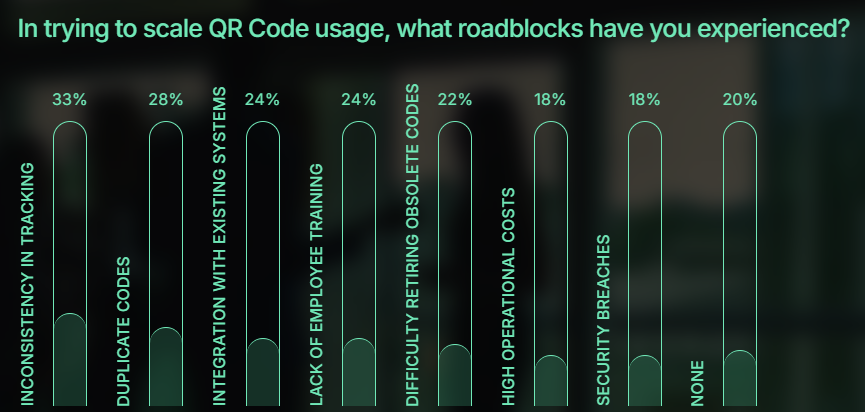
When you're managing a handful of QR Codes, organization doesn't matter. But as you scale across products, regions, and campaigns, structure becomes critical. The roadblocks show up fast: 33% of marketers report inconsistent tracking, 28% struggle with duplicate codes, and 22% have trouble retiring old codes.
Prevent this by establishing conventions early. Use a consistent naming system (product-region-campaign-date), assign clear ownership for each code or campaign, and document where each code lives (packaging, in-store display, print ad).
Set up a retirement process to prevent old codes from piling up. These simple practices prevent the "which code is this?" problem that kills teams at scale.
Packaging agility without the reprint
Packaging used to lock messaging at print time. Once the box was done, you were stuck with it for the life of that production run. That constraint is breaking with QR Codes.
Today, 76% of marketers use dynamic QR Codes, and 60% plan to increase their use in the next year, which shows that most brands now treat the scan as a living layer on top of their strategy.
The playbook: keep physical packaging evergreen with flexible CTAs, then use the QR Code destination to rotate offers, education, safety updates, and regional tests as often as needed without going back to press. Teams that embed this workflow move faster than their print cycles, waste less budget on obsolete inventory, and learn from real scan and conversion behavior instead of pre-launch guesswork.
The gap is widening. Some CPG teams are already treating packaging as fixed hardware and QR Codes as software they update in real time. Others are still locked into print cycles that can't keep pace with the speed at which markets, regulations, and competitors move. The operational advantage belongs to the former.
Get more insights from the State of QR Codes 2026!